

3 min walk
Terrace of the Elephants
- Must see
- Historic monument
Language · 11 published
Historic monument · Siem Reap
ប្រាសាទសួព្រ័ត
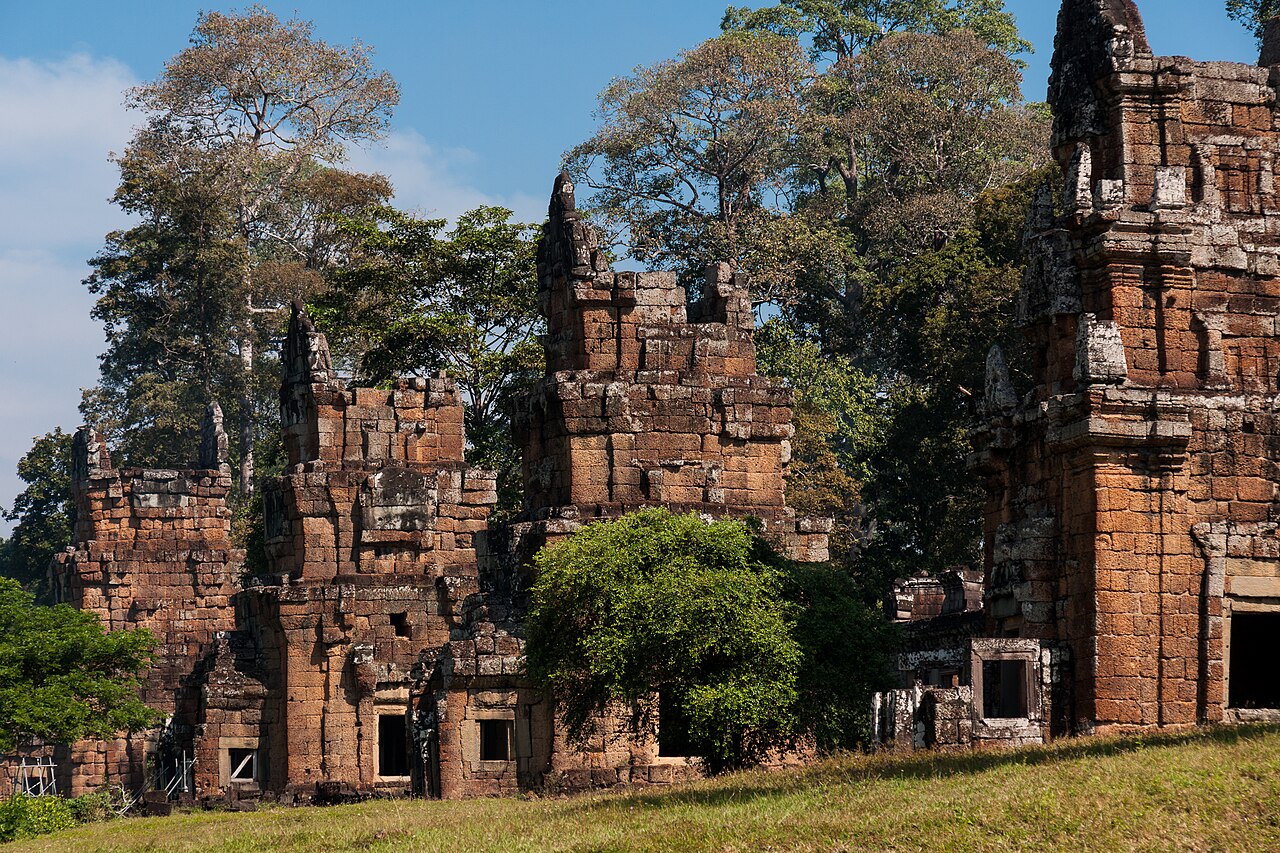
Prasat Suor Prat is a row of twelve laterite and sandstone towers situated opposite the Terrace of the Leper King and adjacent to the Royal Palace enclosure within Angkor Thom, Siem Reap Province, Cambodia. The structures date to the early thirteenth century during the reign of King Jayavarman VII. Their exact function remains debated among scholars; theories range from serving as celestial towers for royal rituals to functioning as reception halls for foreign dignitaries. The name translates approximately to towers of the rope dancers, though this interpretation carries folkloric uncertainty. The towers stand in linear formation across a grassy plain.
Checked 2026-08-26
Each tower follows a similar cruciform ground plan with diminishing upper tiers and open doorways oriented toward the east. Interior chambers are modest in scale with corbelled vaulting. Decorative elements include minimal carved lintels and colonettes, notably less ornate than contemporary Bayon-style monuments. No significant statuary remains in situ. The structures exhibit weathered surfaces with vegetation encroachment typical of unrestored Angkorian sites. Visitors may enter several towers though floors are uneven and debris-strewn. The atmospheric setting amid mature trees and scattered laterite blocks conveys archaeological authenticity rather than reconstructed monument presentation.
Checked 2026-08-26
A thorough visit to Prasat Suor Prat requires approximately twenty to thirty minutes, though dedicated Angkor enthusiasts may linger longer examining architectural details and comparative photographic studies. The site naturally combines with adjacent Royal Palace enclosure monuments including Phimeanakas and the Terrace of the Leper King, constituting a half-day itinerary within Angkor Thom. Early morning or late afternoon timing optimizes lighting conditions and temperature comfort. The towers lack seating or shelter; visitors should factor brief standing exposure into duration planning. Minimal signage necessitates prior research or guided interpretation for meaningful engagement.
Checked 2026-08-26
Cambodia's dry season from November through March offers most favorable conditions for Angkor Thom exploration with reduced rainfall and moderate temperatures. The wet season brings lush vegetation and fewer visitors though afternoon thunderstorms disrupt itineraries. Sunrise and sunset periods provide dramatic lighting across the tower silhouettes. Dawn photography requires valid Angkor Pass admission from previous day purchase. Local guides recommend avoiding midday hours when heat and exposure are most intense. Check the operator's own site for the travel date before relying on a schedule or fare.
Checked 2026-08-26
Prasat Suor Prat falls within the Angkor Archaeological Park admission system. Pass categories have previously included one-day, three-day, and seven-day options with purchase at official ticket booths west of Siem Reap town. Passes are non-transferable with photographic identification. No separate monument-specific fee applies to Prasat Suor Prat specifically. Visitors should confirm current pass validity periods, purchase locations, and accepted payment methods through official channels before arrival. Check the operator's own site for the travel date before relying on a schedule or fare.
Checked 2026-08-26
Prasat Suor Prat occupies the central Angkor Thom complex approximately eight kilometers north of Siem Reap town center. Access requires Angkor Pass purchase before monument entry. Transportation options include hired tuk-tuk, bicycle, motorbike taxi, or private vehicle with driver. Organized tour itineraries typically include the site within broader Angkor Thom circuits. The towers stand immediately east of the Royal Palace enclosure road, visible from the main thoroughfare connecting the South Gate to Bayon. No dedicated parking infrastructure exists; vehicles stop on adjacent tracks. Walking from Bayon or Baphuon through shaded forest paths offers atmospheric approach alternatives.
Checked 2026-08-26
Uneven laterite surfaces and scattered debris present trip hazards throughout the monument zone. Tower interiors contain bat colonies; visitors should exercise respiratory caution in enclosed spaces. No guardrails protect upper platform edges. Limited shade creates significant sun exposure during midday visits; adequate hydration and protective clothing are essential. The isolated setting attracts persistent souvenir vendors though less aggressively than major monuments. No emergency services or first aid facilities operate nearby. Mobile telephone coverage is intermittent. Visitors should remain on established paths to avoid unstable structural elements and respect archaeological integrity. Solo exploration after dark is inadvisable.
Checked 2026-08-26
The linear tower arrangement offers strong symmetrical compositions from multiple angles, particularly effective with telephoto compression against sky or vegetation backdrops. East-facing doorways capture morning sidelight; west-facing elevations glow at sunset. Wide-angle lenses accommodate tower proximity though perspective distortion requires correction. Tripod use is permitted without flash restrictions for still photography. Drone operation falls under Cambodian aviation and heritage regulations requiring advance permits. Commercial or publication usage necessitates APSARA National Authority licensing. The adjacent grassy plain permits unobstructed elevation shots. Weathered textures and lichen patterns reward macro examination. Shadow patterns through doorways shift rapidly; patience yields dramatic illumination moments.
Checked 2026-08-26
The name translates approximately to towers of the rope dancers, though this interpretation carries folkloric uncertainty and scholarly debate persists regarding both naming origins and monument function.
The towers date to the early thirteenth century during the reign of King Jayavarman VII, the prolific builder responsible for Bayon, Ta Prohm, and numerous Angkorian monuments.
Visitors may enter several towers though floors are uneven and debris-strewn; interior conditions require cautious movement and appropriate footwear.
The towers lie within Angkor Thom, a separate walled city complex distinct from Angkor Wat temple, though both fall under the Angkor Archaeological Park admission system.
The symbolic significance of twelve towers remains uncertain; theories connect to zodiacal representation, directional guardianship, or administrative functions without scholarly consensus.
The structures exhibit weathered surfaces with vegetation encroachment typical of unrestored Angkorian sites, conveying archaeological authenticity rather than reconstructed monument presentation.
Loading the interactive map…
The interactive map could not be loaded.

Last updated:
Source: OpenStreetMap contributors, Wikidata ·