
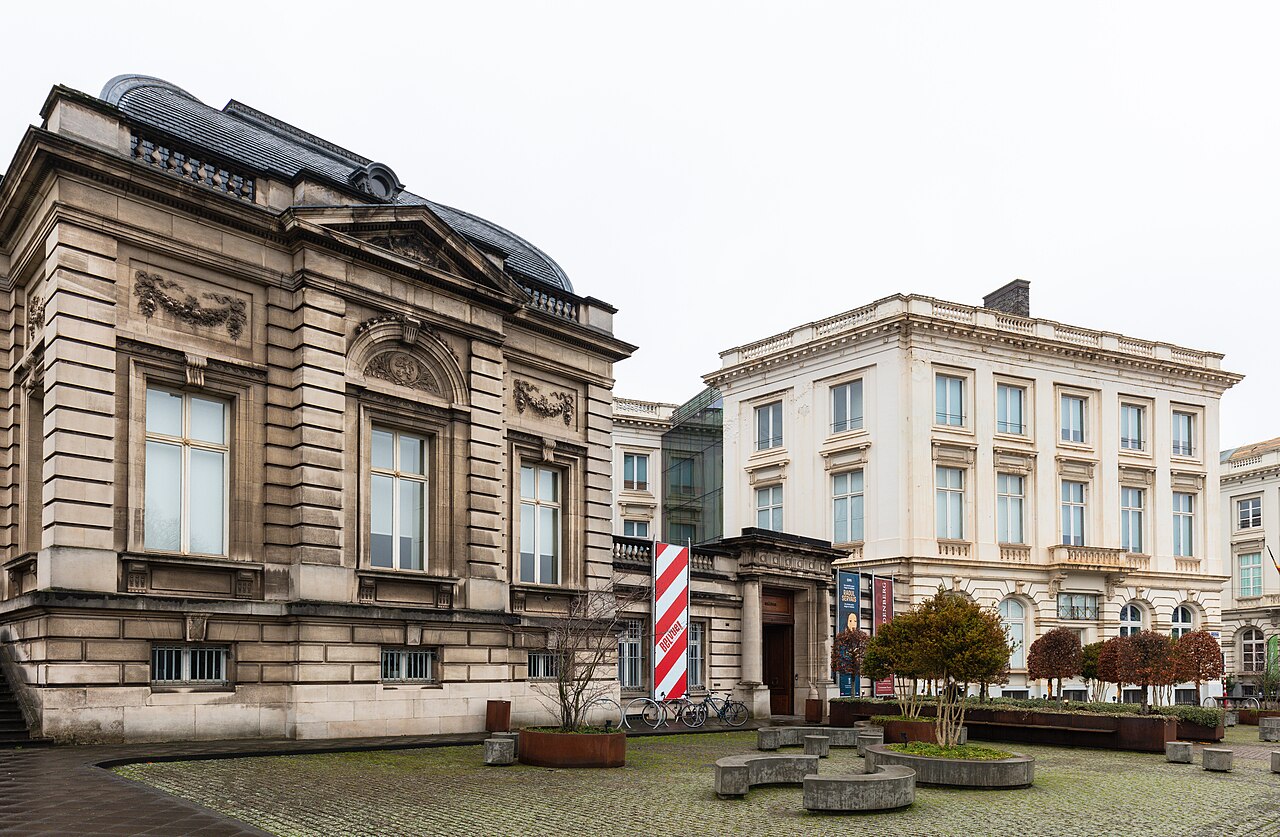
2 min walk
BELvue
- Must see
- Museum
Language · 11 published
Historic monument · Brussels
Palais Royal - Koninklijk Paleis
Read from the OpenStreetMap access tags; anything not listed has no tag recorded.
Set the group type to family in the planner and the day window contracts to about three quarters of a solo day.
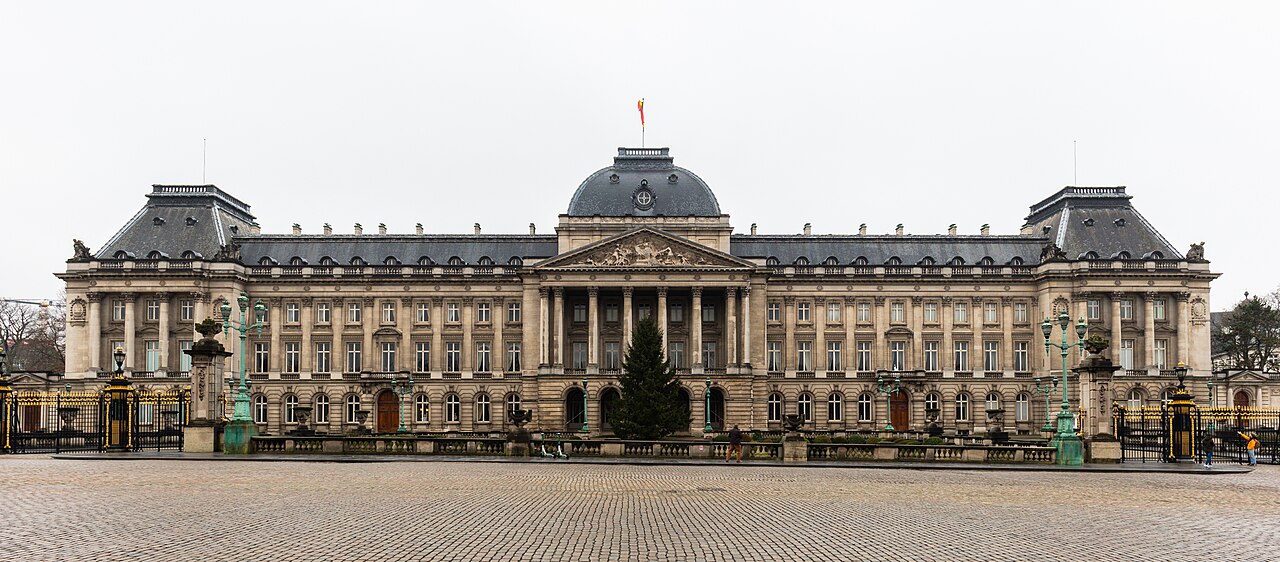
The Royal Palace of Brussels serves as the official palace of the Belgian King and houses the administrative services of the monarchy. Despite its name, it is not the royal residence; the King lives at the Palace of Laeken. Located opposite Brussels Park, this neoclassical building stands as a significant symbol of Belgian state institutions. The palace opens to visitors during summer months when the royal family is absent. The 2026 public-opening season ran 3 July–16 August, Tuesday–Sunday 10:30–17:00; last admission was 16:00. Closed on Mondays and additionally on 15, 16, 21 and 22 July. The Palace is closed to public visits after 16 August 2026.
Checked 2026-08-31 · Source
Visitors can explore state rooms including the Throne Room, Mirror Room, and various reception halls used for official ceremonies. The palace contains significant decorative elements including ceiling paintings, tapestries, and period furnishings reflecting Belgian heritage. The Mirror Room features ceiling decorations incorporating beetle wing cases, creating distinctive iridescent effects. Historical portraits and sculptures of Belgian monarchs appear throughout. Some rooms display gifts received by the royal family during state visits. Closed on Mondays and additionally on 15, 16, 21 and 22 July. The Palace is closed to public visits after 16 August 2026.
Checked 2026-08-31 · Source
A thorough visit to the state rooms typically requires between one and two hours depending on individual pace and crowd conditions. The self-guided route follows a predetermined path through accessible ceremonial spaces. Visitors interested in architectural details and decorative arts may prefer extended examination of individual rooms. Audio guides or informational materials, when available, can extend visit duration. The palace does not offer extensive interactive elements, focusing instead on static displays of historical interiors. The first part of the tour, covering the first-floor state rooms, was wheelchair-accessible by lift when wheelchair access was declared during booking.
Checked 2026-08-31 · Source
Summer opening coincides with the royal family's residence at Laeken. Exact dates vary annually based on institutional decisions not publicly standardized. Visitors should verify current season schedules directly with official sources before travel planning. Weekday mornings typically experience lower visitor volumes than afternoons or weekends. The 2026 public-opening season ran 3 July–16 August, Tuesday–Sunday 10:30–17:00; last admission was 16:00. The first part of the tour, covering the first-floor state rooms, was wheelchair-accessible by lift when wheelchair access was declared during booking. Wheelchair capacity was limited for each time slot, and the Palace recommended visiting with an assistant because the approach included cobblestones and ramps.
Checked 2026-08-31 · Source
No advance booking system operates for standard visits. Special exhibitions or events may occasionally implement separate arrangements. Visitors should carry identification as security screening precedes entry. Group visits or accessibility accommodations may require prior arrangement through official channels. Standard admission was €10 for visitors aged 13 and over; children aged 12 and under entered free. Advance online booking was mandatory for every visitor, including children, and tickets were not sold on site. The first part of the tour, covering the first-floor state rooms, was wheelchair-accessible by lift when wheelchair access was declared during booking.
Checked 2026-08-31 · Source
The palace occupies a prominent position at Place des Palais in central Brussels, adjacent to Brussels Park. Multiple public transport options serve the vicinity. Metro lines 1 and 5 stop at Parc station beneath the park. Central Station provides rail connections within walking distance. The nearest tram stops were Royale and Palais, both about a 2-minute walk and served by lines 92 and 93. Trône metro station on lines 2 and 6 was about a 6-minute walk; Parc station on lines 1 and 5 was about 7 minutes away. Brussels Central railway station was about a 10-minute walk. Trône bus stop, served by lines 12, 34, 38, 54, 64, 71, 80 and 95, was about a 2-minute walk.
Checked 2026-08-31 · Source
Security screening including bag checks operates at entry; prohibited items list remains unspecified in sources. Photography restrictions apply in certain areas though exact policies require on-site verification. The palace maintains formal atmosphere; appropriate dress respects ceremonial nature of spaces. Large luggage or backpacks may face storage limitations. Crowd density peaks during midday summer periods. Climate control varies between rooms. The first part of the tour, covering the first-floor state rooms, was wheelchair-accessible by lift when wheelchair access was declared during booking. The second part was not wheelchair-accessible: its 250-metre outdoor section crossed cobblestones, and steps without a lift connected the garden to the exit.
Checked 2026-08-31 · Source
Photography policies within the Royal Palace remain partially restricted according to standard practices for working royal premises, though exact current regulations require on-site verification or operator confirmation. Flash photography typically faces prohibition to protect sensitive decorative materials including textiles and painted surfaces. Tripods and professional equipment generally encounter restrictions without special arrangement. Some state rooms may permit non-flash photography while others prohibit all image capture. Visitors should observe posted signage and staff instructions. Assistance dogs were permitted. Two toilet facilities were available along the route; one included a baby-changing table.
Checked 2026-08-31 · Source
The complete route took about 60 minutes and combined an indoor section with a 250-metre outdoor section.
Tickets were sold online only for a selected date and time slot, with a maximum of 10 visitors per booking. Late arrivals were not admitted.
No. Visits were self-guided; information panels and an online brochure were provided.
Handbags, small rucksacks and baby carriers were allowed. Large bags, large rucksacks and wheeled luggage were prohibited, and there were no lockers or cloakroom.
Photography and filming were allowed, but tripods and drones were prohibited.
Visitor information, exhibition panels and the brochure were available in Dutch, French, German and English.
Loading the interactive map…
The interactive map could not be loaded.

Last updated:
Source: OpenStreetMap contributors, Wikidata ·