Smart Self-Managed Tours

City guide · Belgium

Brussels

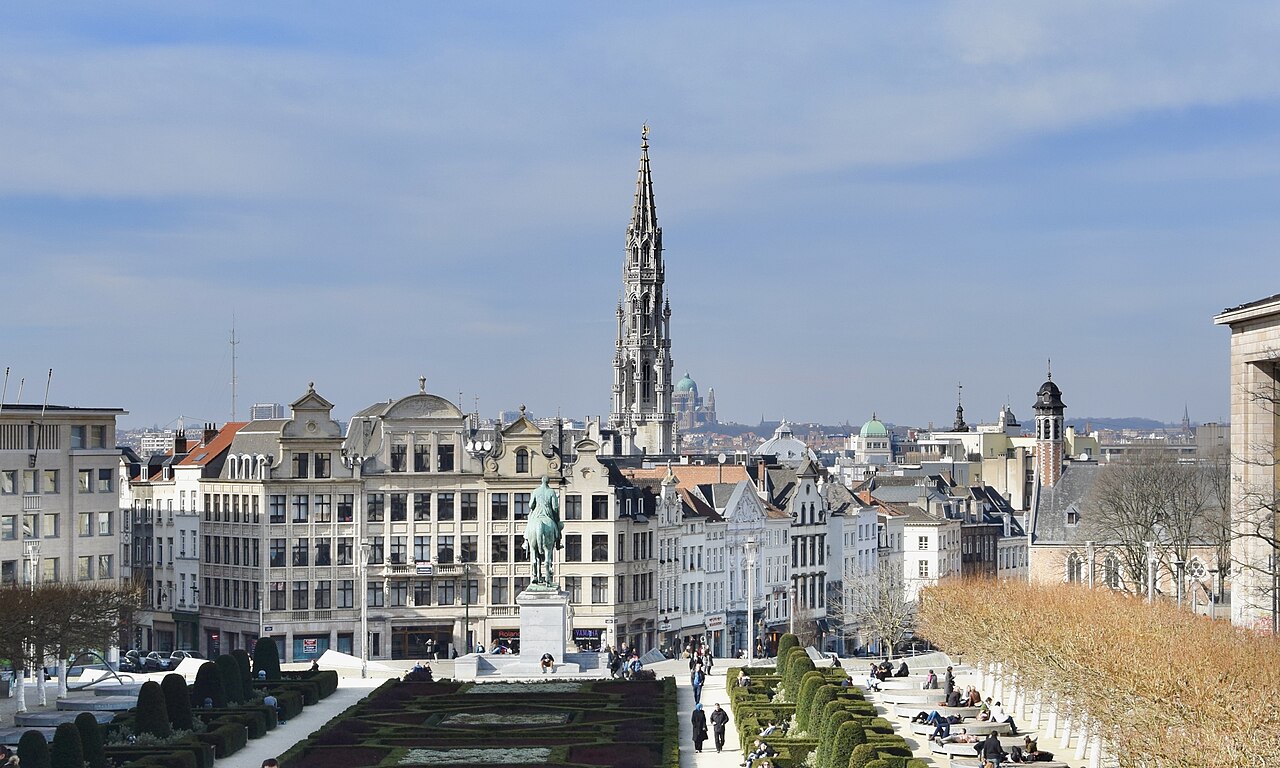
A photograph of Brussels
Photograph · Ank Kumar · CC BY-SA 4.0

The Brussels a visitor walks is the City of Brussels, one municipality among the nineteen of the Brussels-Capital Region: 33.09 km² and 196,828 residents in January 2024, inside a region of 1,249,597. Its outline is strange for a reason — the city annexed a narrow band of land for Avenue Louise in 1864 and took in Laeken in 1921, so it reaches southeast from the Grand-Place to the Bois de la Cambre as a thin tongue. That one municipality holds the Grand-Place, the Royal Palace and the European Quarter, and the ground between the lower town and the upper town is genuinely steep.

Practical information

Not recorded No country-level practical facts — language, currency, emergency number, plug type — are ingested yet. This section will populate once that data source is added.

Planning a visit

Suggested stay
2–3 days
Getting around
STIB metro, tram and walking
  1. January: seasonal closure recorded
  2. February: seasonal closure recorded
  3. March: seasonal closure recorded
  4. April: seasonal closure recorded
  5. May: seasonal closure recorded
  6. June: seasonal closure recorded
  7. July: no seasonality data recorded
  8. August: no seasonality data recorded — this month
  9. September: seasonal closure recorded
  10. October: seasonal closure recorded
  11. November: seasonal closure recorded
  12. December: seasonal closure recorded

Top things to see

Ranked by importance — sitelinks, pageviews and heritage status, not editor preference.

  1. Manneken Pis
    02 10 min

    Manneken Pis

    Manneken Pis is a bronze fountain figure of a small boy urinating, 55.5 centimetres tall, set in a stone niche on the corner where the Rue du Chêne meets the Rue de l'Étuve, a short walk downhill from the Grand-Place.

    • Must see
    • Historic monument
  2. Oldmasters Museum
    03 1 hr 30 min

    Oldmasters Museum

    The Old Masters Museum is one of the four sites that make up the Royal Museums of Fine Arts of Belgium, a federal institution whose main entrance is at Rue de la Régence 3, on the slope below the Place…

    • Must see
    • Museum
  3. Brussels Town Hall
    04 1 hr 30 min

    Brussels Town Hall

    The City Hall of Brussels is the working seat of the city's administration and the only building on the Grand-Place that a visitor can go inside on a ticket.

    • Must see
    • Historic monument
  4. Horta Museum
    05 1 hr 15 min

    Horta Museum

    The Horta Museum is the house and architectural studio that Victor Horta built for himself in Saint-Gilles, and it is the only building on the Art Nouveau circuit in Brussels that a visitor can walk through room by room.

    • Must see
    • Museum
  5. Magritte Museum
    06 1 hr 30 min

    Magritte Museum

    The Musée Magritte Museum is a museum devoted entirely to René Magritte (1898-1967), installed in the Hôtel Altenloh on the Place Royale and run by the Royal Museums of Fine Arts of Belgium.

    • Must see
    • Museum
  6. Cathedral of St. Michael and St. Gudula
    07 1 hour

    Cathedral of St. Michael and St. Gudula

    The Cathedral of St. Michael and St. Gudula stands on the Treurenberg slope in central Brussels, dedicated to the two patron saints of the city and built in Brabantine Gothic.

    • Must see
    • Place of worship
  7. Belgian Comic Strip Center
    08 2 hours

    Belgian Comic Strip Center

    The Comic Art Museum, still widely signposted and registered under its founding name Belgian Comic Strip Center, occupies a department store that was never meant to hold pictures.

    • Must see
    • Museum
  8. Cinquantenaire Park
    09 1 hr 15 min

    Cinquantenaire Park

    Cinquantenaire Park, also called Jubelpark, is the formal park and monumental complex in Brussels' European Quarter, made for Belgium's fiftieth anniversary in 1880. It began on the former Linthout drill ground and expanded after the 1880 national exhibition.

    • Must see
    • Nature site
  9. Mini-Europe
    10 2 hours

    Mini-Europe

    Mini-Europe is a miniature park at the foot of the Atomium in Laeken, in the north of Brussels, where some 350 monuments from across the European Union are rebuilt at a scale of 1/25 and set into roughly 2.5 hectares…

    • Must see
    • Entertainment venue
  10. Musical Instruments Museum
    11 2 hours

    Musical Instruments Museum

    The Musical Instruments Museum, universally called the MIM, is a federal Belgian museum of roughly ten thousand instruments, of which about twelve hundred are on show.

    • Must see
    • Museum
  11. 1040
    13 45 min

    1040

    • Notable
    • Historic monument
  12. 11.11.11
    14 1 hour

    11.11.11

    • Notable
    • Art and culture venue
  13. 1830
    18 45 min

    1830

    • Notable
    • Historic monument
  14. 1940-1945
    22 45 min

    1940-1945

    • Notable
    • Historic monument
  15. 1985
    23 1 hour

    1985

    • Notable
    • Art and culture venue

How the city is laid out

Brussels is best understood as two overlapping cities. The small lower town around the Grand-Place, the Bourse and Sainte-Catherine is the medieval commercial core, tight, busy and walkable. Above it, the upper town rises toward the Royal Quarter, the palace, the museums on Mont des Arts and the European institutions further east around the Leopold Quarter. The canal marks the old industrial edge to the west, while Ixelles, Saint-Gilles and Schaerbeek are separate communes that feel like neighbourhoods to a visitor. The Brussels-Capital Region is made of nineteen municipalities, so a hotel address can say Brussels, Ixelles or Saint-Gilles and still be in the city a visitor means.

Checked 2026-08-26

Getting around

Use the metro and premetro for the longer hops, then walk the middle. STIB-MIVB runs the city network of metro, tram and bus, and its maps are the useful ones because the network crosses municipal boundaries without asking the visitor to care which commune they are in. The central sights from the Grand-Place to Mont des Arts are close enough on foot; the metro matters for Atomium, Parc du Cinquantenaire, the European Quarter and the railway stations. Brussels has several major rail stations rather than one obvious centre. Bruxelles-Central is closest to the old town, Bruxelles-Midi is the international hub, and Bruxelles-Schuman serves the European Quarter.

Checked 2026-08-26

Common questions

How many days does Brussels need?

Two to three. One day can cover the Grand-Place, Galeries Saint-Hubert, Mont des Arts and the Royal Quarter, but it leaves the city feeling like a stopover. A second day adds museums or the European Quarter, and a third gives enough room for Atomium, Cinquantenaire or a slower food-and-beer route.

Where is the centre of Brussels?

For a visitor, the centre is the lower town around the Grand-Place. The administrative reality is wider: the Brussels-Capital Region is made of nineteen municipalities, and places such as Ixelles and Saint-Gilles can feel central even when their address is not the City of Brussels.

Is Brussels walkable?

The historic core is. The walk from the Grand-Place to Mont des Arts, the Royal Quarter and Sainte-Catherine is the right scale for a day on foot. Atomium, Cinquantenaire and the European Quarter sit far enough out that the metro or tram is the better tool.

Which station should a visitor use?

Bruxelles-Central is closest to the old town and most useful for sightseeing. Bruxelles-Midi is the international station for Eurostar and many intercity services. Bruxelles-Schuman is the practical station for the European Quarter.

What public transport network does Brussels use?

STIB-MIVB runs the metro, tram and bus network that visitors use inside Brussels. Its own site presents the network as metro, tram and bus, with journey planning and ticket buying in one place.

Turn this list into a plan

Set your days, your pace and the hours you actually want to be out. The planner works around closing days and travel time, and leaves room to eat.

Plan Brussels