


1 min walk
Choco-Story Brussels
- Must see
- Museum
Language · 1 published
Historic monument · Brussels
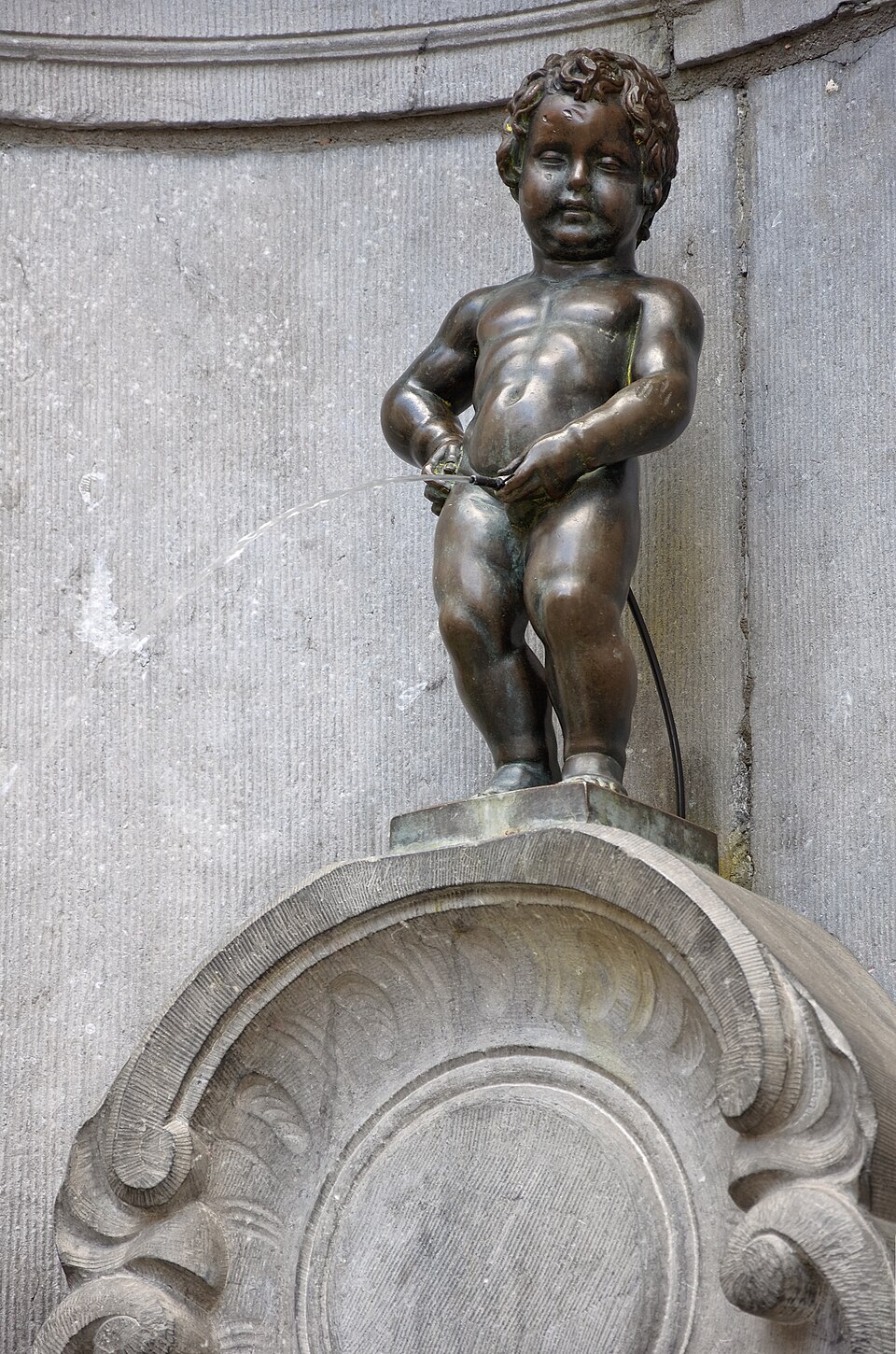
Manneken Pis is a bronze fountain figure of a small boy urinating, 55.5 centimetres tall, set in a stone niche on the corner where the Rue du Chêne meets the Rue de l'Étuve, a short walk downhill from the Grand-Place. A fountain has stood on this spot since at least the middle of the fifteenth century, when it appears in a city document about the pipes that supplied Brussels with drinking water. The figure visitors see today descends from the bronze commissioned by the city council in 1619 from the Brabantine sculptor Jérôme Duquesnoy the Elder, probably cast and installed the following year. The rocaille niche of blue stone behind it dates from 1770 and was salvaged from another dismantled Brussels fountain, and the wrought-iron railings that hold the public back were last renewed in 1851. The size surprises nearly everyone. Postcards and souvenir shops suggest something monumental; the actual figure is about the length of a forearm, and the niche sits above head height, so the boy reads as smaller and further away than expected. Knowing that in advance is the difference between a flat disappointment and a short, genuinely enjoyable stop. What holds the corner is not the sculpture's scale but the four centuries of civic habit attached to it: the thefts, the competing legends, and the costumes.
Checked 2026-08-26 · Source
There is no interior. The fountain is a street corner, and everything there is to see stands within a few metres of it: the bronze, the blue stone niche, the railings, the basin, and whatever the boy happens to be wearing. The costume is the part worth planning around. Manneken Pis is dressed by an employee of the City of Brussels, and the City states that twenty-three dressings are scheduled on fixed dates each year, with new suits arriving regularly on top of those. The wardrobe now runs to more than nine hundred costumes, kept and exhibited at GardeRobe MannekenPis at Rue du Chêne 19, a few doors from the statue itself. A costume is not simply donated. An official request goes to the Board of Mayor and Aldermen, a committee drawn from the Friends of the Order of Manneken-Pis and City representatives assesses it, and a suit carrying advertising, commercial, political or religious content is refused. Accepted costumes arrive by formal ceremony, and on some of those occasions the statue is connected to a keg and pours beer or another drink for the people standing around it. If the boy is dressed when you arrive, the bronze may be almost entirely hidden, which is the tradition working rather than a disappointment.
Checked 2026-08-26 · Source
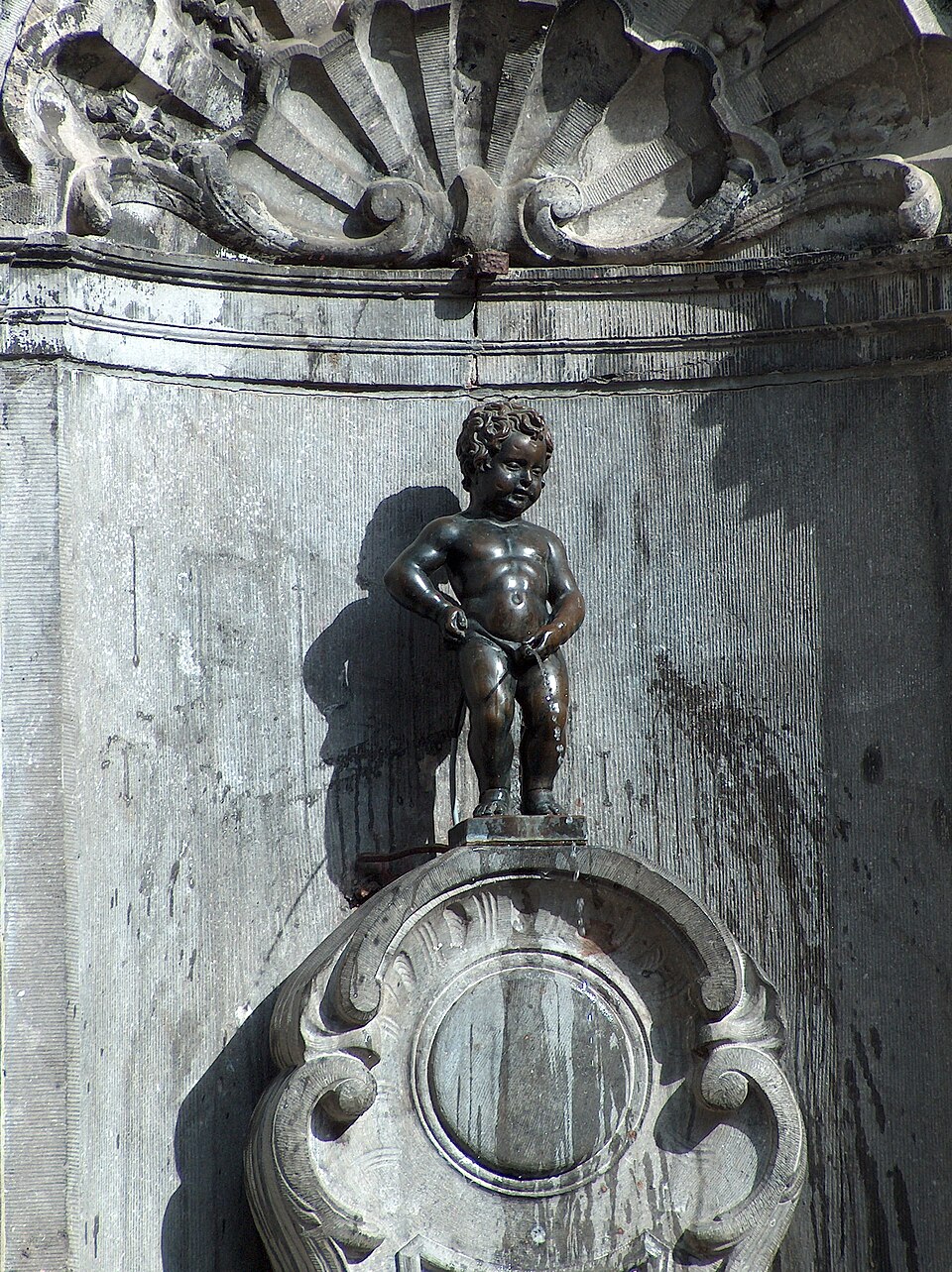
Ten minutes covers it, and that estimate assumes you stop, read the panel, walk once around the corner and take a photograph. There is no queue, no ticket desk, no bag check and no route to follow, so the only thing that costs time is other people: the corner is narrow, tour groups arrive as a block, and finding a clear line of sight can take two or three minutes in the middle of the day. Five minutes is enough early in the morning. Allow a few minutes more if a costume is on and a small crowd has formed to photograph it, and rather more if a dressing ceremony is under way, since those draw a brass band and a genuine gathering. Because the stop is short, Manneken Pis works badly as a destination and well as a link in a chain. It sits between the Grand-Place and the streets running south, so the sensible plan is to reach it on foot from the square, spend the ten minutes, and continue rather than turning back. If the wardrobe museum on the same street interests you, budget that separately; it is a different site with its own admission and its own hours, and this guide does not carry verified figures for either.
Checked 2026-08-26
Early is better. The corner stands on the walking route between the Grand-Place and the shopping streets to the south, so it fills through the middle of the day and thins again in the evening; arriving before the first tour groups is the single change that most improves the visit. The City of Brussels publishes no opening hours for the statue, which stands on a public street behind railings rather than inside anything that can be locked. What the City does publish, on its own listing for each individual dressing, is a display window of 9h to 18h on the days a costume is worn. If seeing him dressed matters to you, that window is the one to aim for. Twenty-three dressings fall on fixed dates each year and further ones are added as new costumes are accepted, so the odds of finding a costume on any given day are decent but not certain. The schedule of forthcoming dressings is posted on the railings around the fountain itself, which is the most reliable thing to read once you are standing there. Season matters less than time of day. The corner is uncovered, so rain is felt directly and there is no doorway close enough to shelter in comfortably while waiting for a gap in the crowd.
Checked 2026-08-26 · Source
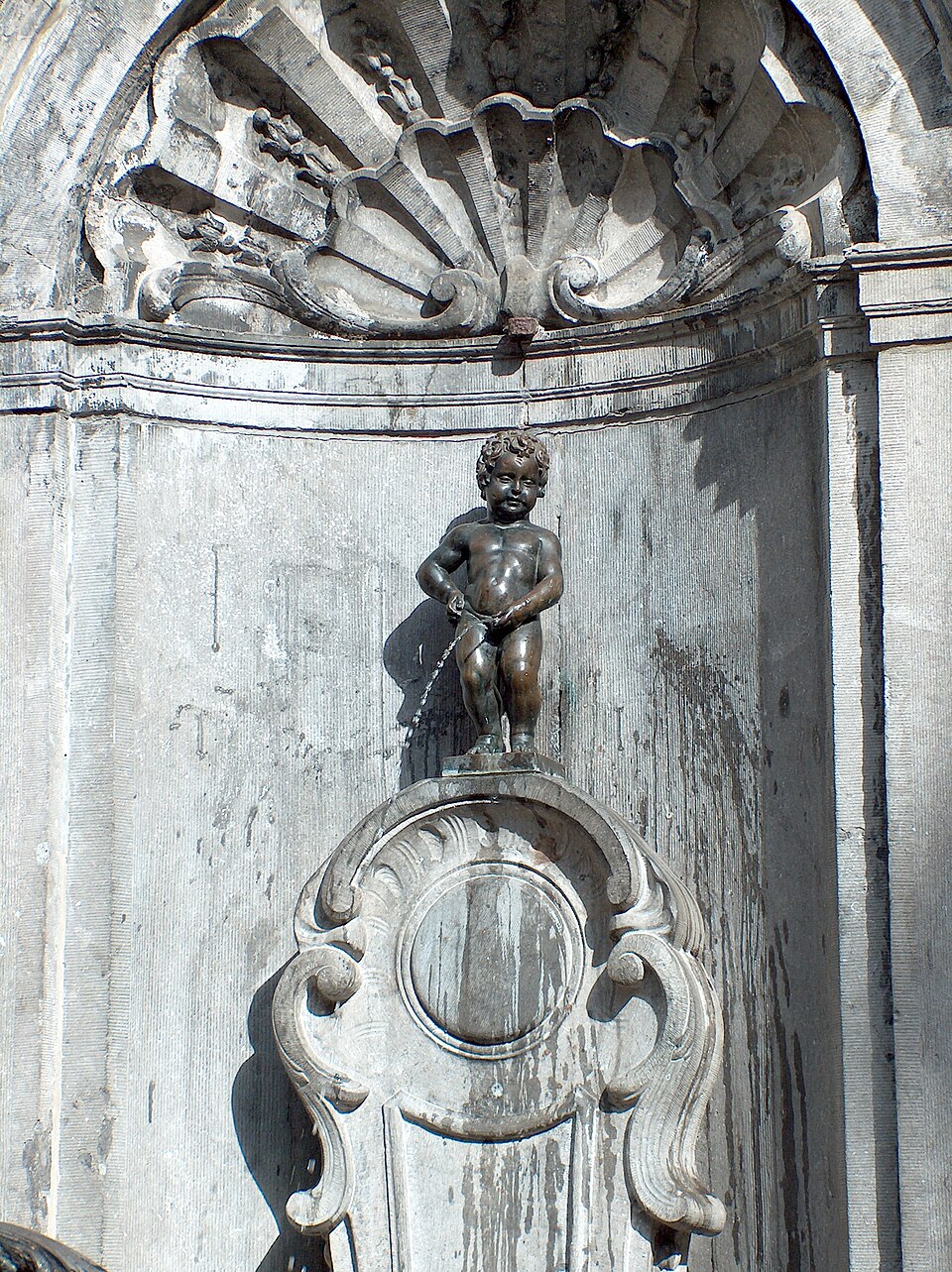
Nothing is charged. There is no ticket, no booking, no timed entry and no barrier: the fountain stands on a public street corner and is looked at from the pavement. The City of Brussels records the price as free on its own event listing for each dressing of the statue, which is the nearest thing to a published tariff that exists for the site, and the listings give a telephone contact for the folklore service rather than a box office. Nobody at the corner has authority to collect money for looking at the statue, so treat any approach of that kind as what it is. Two adjacent costs are worth separating from the statue. GardeRobe MannekenPis, the wardrobe museum at Rue du Chêne 19, is a separate ticketed site with its own admission, and its own opening hours; those figures could not be verified from the operator's website while this guide was written, so they are not stated here. The waffle, chocolate and souvenir shops packed around the junction are private businesses at central-Brussels prices, and the ones directly facing the statue are not where a Belgian would buy either. Walk two streets away before spending anything and the same purchase costs noticeably less.
Checked 2026-08-26 · Source
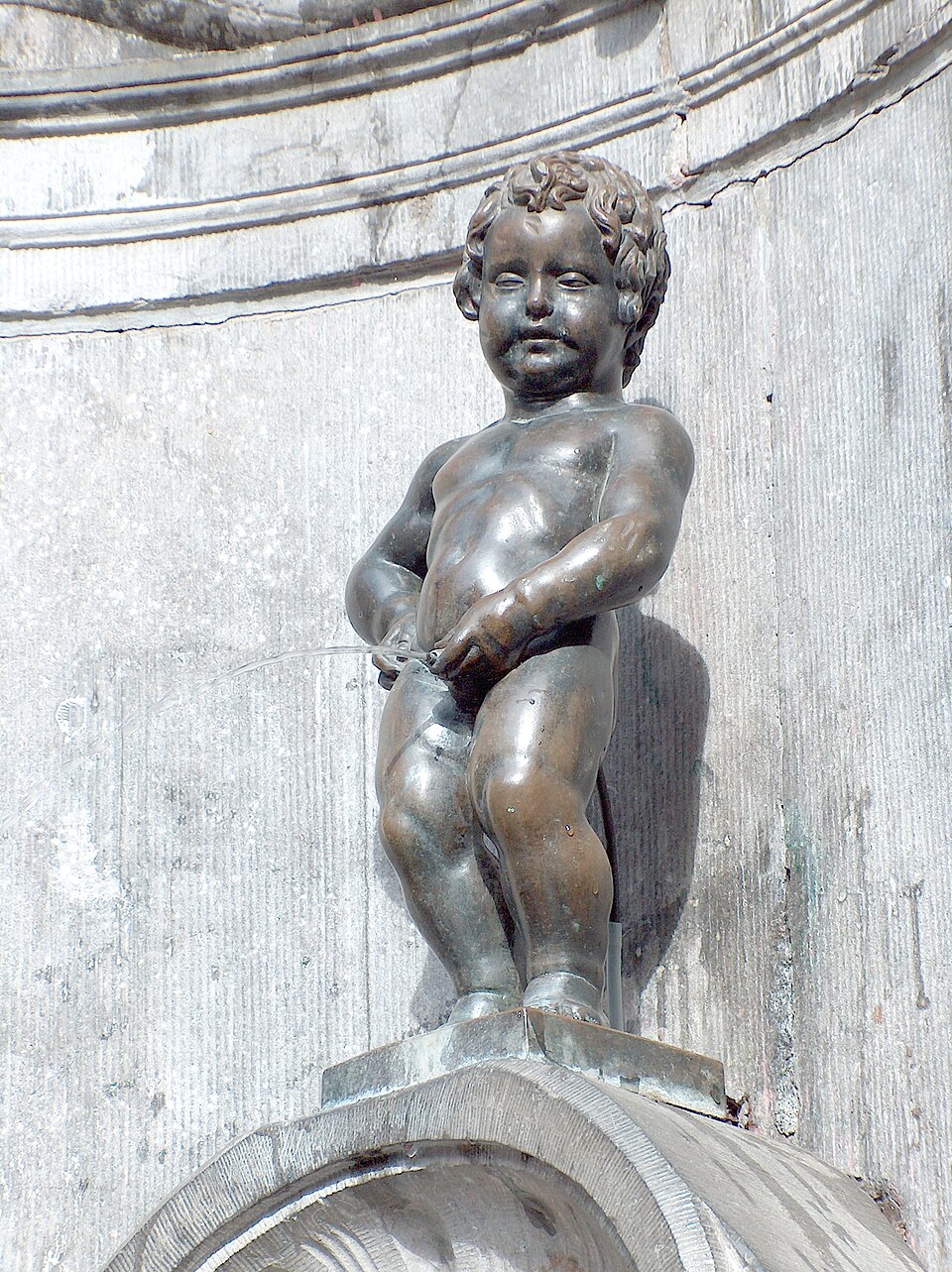
The statue stands at 50.8450 north, 4.3500 east, at the junction of the Rue du Chêne and the Rue de l'Étuve in the 1000 postcode, roughly 250 metres south-west of the Grand-Place. From the square that is a two to three minute walk: leave by the Rue Charles Buls, continue as it becomes the Rue de l'Étuve, and the corner appears on the right with a crowd on it. From Brussels-Central station the distance is about 600 metres, ten minutes on foot including the climb down through the Îlot Sacré. No car is needed and a car is close to useless here. The Rue de l'Étuve is pedestrian, the surrounding lanes are narrow and one-way, there is nowhere to stop at the corner itself, and any driver ends up in an underground car park several minutes' walk away having paid central-city rates for the privilege. Arrive on foot, or by tram or metro to the edge of the pedestrian core and walk the last stretch. The approach is cobbled and slopes, gently along the Rue de l'Étuve and more noticeably on the streets that drop away from the Grand-Place, which is worth knowing if you are pushing a buggy or using a wheelchair.
Checked 2026-08-26 · Source
The most common complaint about Manneken Pis is a mismatch of expectation, and it is entirely avoidable: this is a 55-centimetre figure in a niche above head height on an ordinary street corner, not a monument. Visitors who arrive expecting the second of those leave annoyed; visitors who arrive knowing the first enjoy it. The second thing to know is that the costume can hide almost the whole bronze. If you specifically want to see the sculpture rather than the tradition, a dressing day is the wrong day. The corner concentrates a distracted, tightly packed crowd in a narrow street where everyone is looking up and holding a phone, which is the classic setting for a bag worn on the back to be opened. Carry it in front for the two minutes it takes. Around the junction, souvenir shops and waffle stands trade on the location; the pricing reflects that. Two related figures nearby are sometimes mistaken for this one or sold as a set: Jeanneke Pis, a modern female counterpart in a cul-de-sac off the Rue des Bouchers, and Het Zinneke, a urinating dog. Neither is old, and neither has any connection to the fifteenth-century fountain here beyond the joke.
Checked 2026-08-26
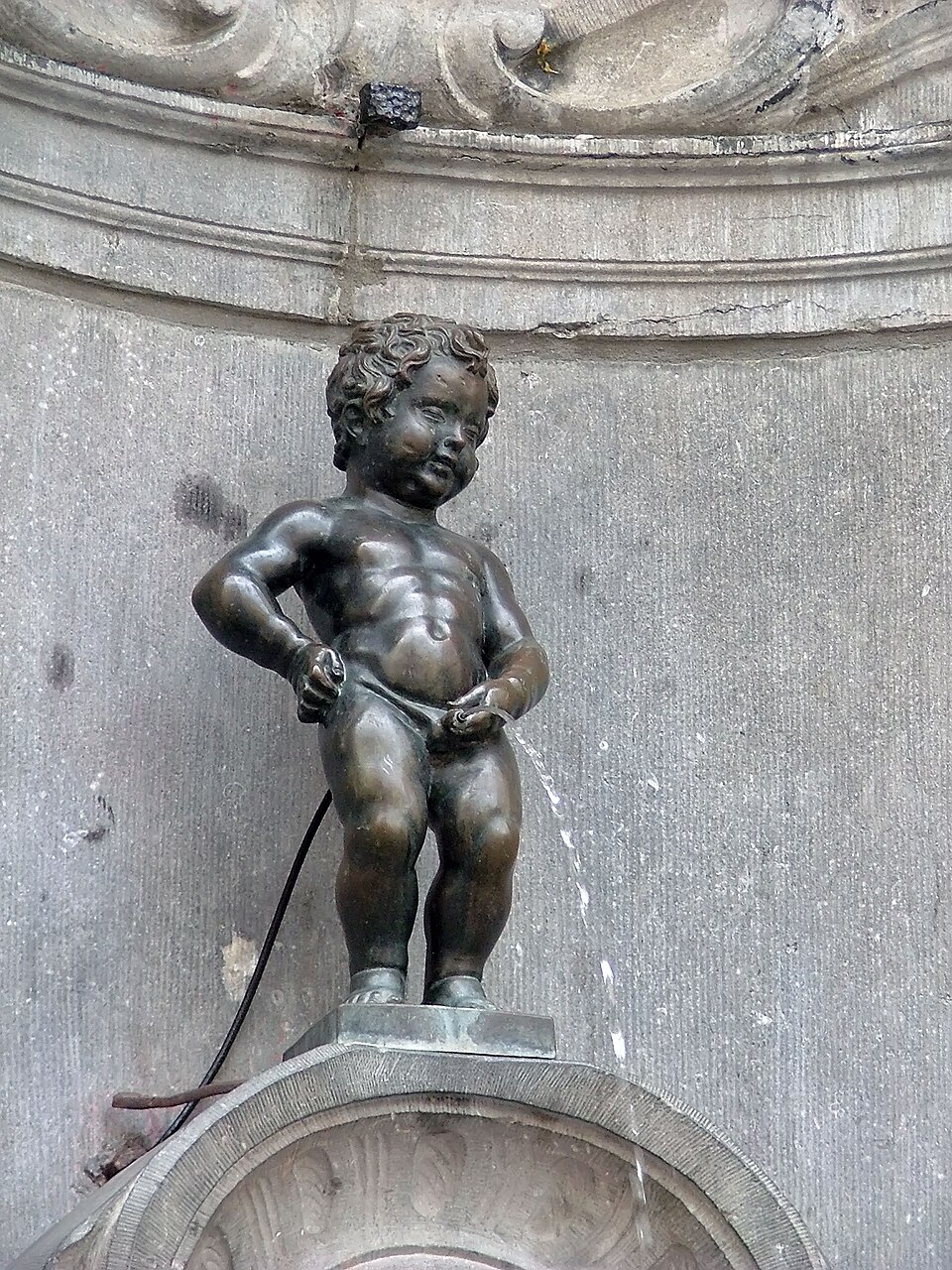
Two things make this a harder photograph than it looks: the figure is small and it sits above eye level behind iron railings. Shooting from directly beneath gives a steep upward angle, the railings across the frame and a bright sky behind the niche. Cross to the far pavement of the Rue de l'Étuve and shoot back at a slight angle instead. The distance flattens the perspective, the railings fall away from the line of sight, and the blue stone niche stays in frame, which is what gives the picture a sense of place rather than a bronze floating in shadow. Modest telephoto framing helps more than a wide lens here. The niche is recessed and usually darker than the street around it, so a camera left to its own devices exposes for the buildings and loses the bronze; deliberately over-expose a little, or meter on the figure. Overcast days are kinder than bright sun, which throws hard shadow into the recess. Early morning is the one time when the corner is empty enough to compose without a stranger's arm in the frame. After dark the light is whatever the street lamps and shop windows supply, so brace against a wall rather than raising the sensitivity until the picture turns to noise.
Checked 2026-08-26
About ten minutes, and five is enough early in the morning. There is no ticket desk, no queue and no route to walk, so the only thing that consumes time is finding a clear line of sight through the crowd on a narrow corner. Allow a few minutes more if a costume is on, and considerably more if you happen to arrive during a dressing ceremony, which draws a brass band and a gathering.
No. The fountain stands on a public street corner and is viewed from the pavement; there is no ticket, no booking and no barrier. The City of Brussels records the price as free on its own listing for each dressing of the statue. The wardrobe museum GardeRobe MannekenPis at Rue du Chêne 19 is a separate site with its own admission charge, which is not stated here because it could not be verified from the operator's website.
The City of Brussels publishes no opening hours for the statue itself, and none are recorded here. It stands outdoors on a public street behind railings rather than inside anything that closes, and the OpenStreetMap record carries no opening-hours value either. The only hours the City publishes are on its listings for individual dressings, which give a display window of 9h to 18h on the days a costume is worn. There is no published closed day and no midday break.
No. The bronze in the niche has been a replica since 1965, when the statue was stolen and broken, leaving only the feet and ankles; the body was recovered from the Charleroi Canal the following June. The restored original is kept and displayed in the Brussels City Museum at the King's House on the Grand-Place. The figure it copies was commissioned in 1619 from Jérôme Duquesnoy the Elder and probably installed in 1620.
The City of Brussels states that twenty-three dressings are planned on fixed dates each year, and that further costumes are added as new gifts are accepted, so a costume is likely but never guaranteed on a given day. Each dressing is listed individually on the City's own site with its date. The forthcoming schedule is also posted on the railings around the fountain, which is the quickest thing to check once you are standing there.
No, and a car is a hindrance. The statue is at the junction of the Rue du Chêne and the Rue de l'Étuve, about 250 metres from the Grand-Place and roughly 600 metres from Brussels-Central station, both comfortably walkable. The Rue de l'Étuve is pedestrian and the surrounding lanes are narrow and one-way, so driving means an underground car park several minutes away at central-city rates. Arrive on foot.
Loading the interactive map…
The interactive map could not be loaded.
Last updated:
Source: OpenStreetMap contributors, Wikidata ·