

7 min walk
Dong Xuan Market
- Must see
- Market
Language · 11 published
Art and culture venue · Hanoi
| Monday | 00:00 – 23:59 |
|---|---|
| Tuesday | 00:00 – 23:59 |
| Wednesday | 00:00 – 23:59 |
| Thursday | 00:00 – 23:59 |
| Friday | 00:00 – 23:59 |
| Saturday | 00:00 – 23:59 |
| Sunday | 00:00 – 23:59 |
Checked 2026-08-31 · Source
Read from the OpenStreetMap access tags; anything not listed has no tag recorded.
Set the group type to family in the planner and the day window contracts to about three quarters of a solo day.
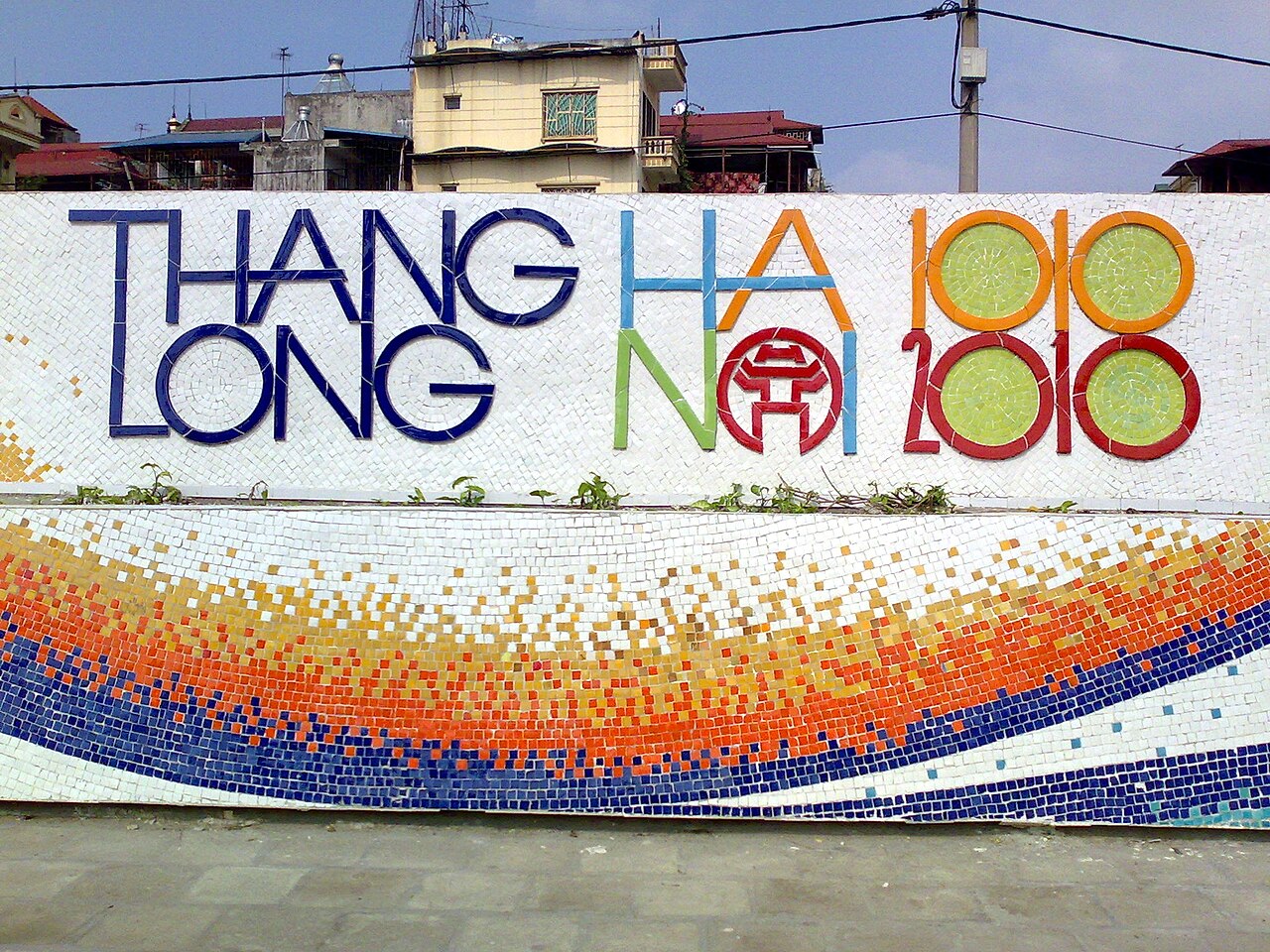
The Hanoi Ceramic Mosaic Mural is a monumental public artwork in Vietnam's capital. Commissioned in 2007 for the Millennial Anniversary of Hanoi, it holds recognition as one of the world's largest ceramic mosaics. The work stretches along a major road corridor, transforming ordinary infrastructure into a continuous artistic installation. Vietnamese and international artists collaborated on its creation, employing traditional ceramic techniques to produce a distinctive visual narrative that celebrates the city's history and cultural identity through handcrafted tilework.
Checked 2026-08-31 · Source
The mural depicts scenes drawn from Vietnamese history, mythology, and daily life. Its imagery traverses epochs from ancient periods through modern times, incorporating representations of folklore, royal processions, agricultural traditions, and contemporary Hanoi. The ceramic panels showcase varied stylistic approaches unified by the mosaic medium. Traditional Vietnamese pottery methods inform the production, with glazed tiles creating durable, colorfast surfaces. The work functions as an open-air gallery, its sequential panels readable as a visual chronicle by pedestrians and travelers moving along the route.
Checked 2026-08-31 · Source
The complete mosaic extends approximately 6. 5 kilometers along the roadway, making comprehensive viewing on foot a substantial undertaking. Visitors typically allocate between thirty minutes and two hours depending on engagement level. Those seeking photographic documentation or detailed examination of individual panels should plan accordingly. The linear format permits flexible visit duration; one may traverse any segment without obligation to complete the entire work. Motorcyclists and cyclists passing through encounter the mural as a sequential visual experience rather than a stationary destination.
Checked 2026-08-31 · Source
Open access daily; no staffed opening period. This is an outdoor public artwork along the Red River dike rather than a gated venue. Hanoi’s responsible public bodies continue to list and maintain it without publishing weekly closure days. The mural exists as permanent public infrastructure without gating or controlled access, rendering traditional opening hours inapplicable. Visibility depends upon natural light conditions; early morning and late afternoon offer favorable illumination for observation and photography. The tropical climate of Hanoi presents seasonal considerations. Rainy season conditions from May through October may reduce comfort for extended outdoor viewing. Dry season months generally provide more predictable conditions for pedestrian examination of the artwork's full extent.
Checked 2026-08-31 · Source
Free general access; the mural occupies public roadside space and has no entrance gate or ticketed interior. The mosaic occupies public thoroughfare space without admission infrastructure. No ticketing mechanism governs access to the artwork itself. Visitors encounter no entrance fees for viewing from sidewalks or public rights-of-way. Ancillary expenditures might include transportation to reach the corridor, refreshments from surrounding vendors, or guided interpretation services if such are independently arranged. The work's integration into urban infrastructure fundamentally distinguishes it from museum or monument contexts where controlled access and admission charges typically apply.
Checked 2026-08-31 · Source
For the central Trần Nhật Duật–Yên Phụ section, use Long Biên bus interchange. Bus 11 serves Long Biên at the Hàng Khoai turning point and travels along Trần Nhật Duật; bus 43 also serves Long Biên interchange, Yên Phụ and Trần Nhật Duật. Continue on foot along the Red River dike wall. The mural follows the route of Âu Cơ Road and surrounding connecting streets in the Tây Hồ district, extending toward the Red River. Multiple access points exist along its length. Visitors may reach the corridor via Hanoi's bus network, taxi services, or ride-hailing applications. The area lies northwest of the Old Quarter. Motorbike rental provides flexibility for tracing the mosaic's full extent. Pedestrian exploration suits those based in nearby accommodations. Specific transit routes and stop locations require verification against current local information due to urban development and service modifications.
Checked 2026-08-31 · Source
Some sections can be viewed from street-level pavement without entering a building. The mural follows a nearly 4-kilometre traffic corridor, so there is no single controlled visitor route. Hanoi’s cultural authority has reported construction materials, rubbish and maintenance works obstructing or affecting parts of the corridor; continuous wheelchair access should not be assumed. There is no dedicated visitor centre, lift or wheelchair entrance because the attraction is the roadside mural itself. Traffic presents the primary hazard; the mural runs alongside active roadways with substantial motorbike and vehicle flow. Pedestrians must remain vigilant when crossing or photographing near the curb. Sidewalk conditions vary, with uneven surfaces, parked vehicles, and commercial encroachment common. The tropical sun demands hydration and sun protection during midday exposure. No dedicated visitor services such as restrooms, shade structures, or information points line the route. Travelers should prepare self-sufficiently for the urban walking environment. Evening visibility diminishes without dedicated artwork illumination at all segments.
Checked 2026-08-31 · Source
The mural permits unrestricted photography from public vantage points. Optimal results require attention to lighting angles given the glazed ceramic surfaces, which produce reflective glare under direct sun. Morning and evening soft light reduces this effect. Wide-angle lenses accommodate the work's scale; detail shots benefit from moderate telephoto reach. Traffic movement creates compositional challenges and safety considerations when positioning for shots. The sequential nature rewards panoramic or series documentation. No commercial photography restrictions are evident, though drone operation would fall under Vietnamese aviation regulations requiring separate authorization in urban areas.
Checked 2026-08-31 · Source
Hanoi’s Department of Culture and Sports describes it as nearly 4,000 metres long with an area of about 7,000 square metres.
It follows the Red River dike through areas identified by the city as Ba Đình, Hoàn Kiếm, Hai Bà Trưng and Tây Hồ; the central visitor approach is around Trần Nhật Duật, Yên Phụ and Long Biên.
It was completed in October 2010 as a cultural project celebrating the 1,000th anniversary of Thăng Long–Hanoi.
Guinness World Records recognized it in 2010 as the world’s largest ceramic mosaic artwork.
The public-art sequence includes historic Hanoi scenes, traditional scholars, flower-market imagery and old-quarter views, made with ceramic material associated with Bát Tràng.
The responsible cultural authority reports deterioration at multiple locations, including detached or cracked ceramic pieces and discoloured sections, while city agencies continue cleaning, protection and maintenance work.
Loading the interactive map…
The interactive map could not be loaded.

Last updated:
Source: OpenStreetMap contributors ·