34 min walk
Kellibaron Monastery
- High
- Historic monument
Language · 11 published
Historic monument · Muğla
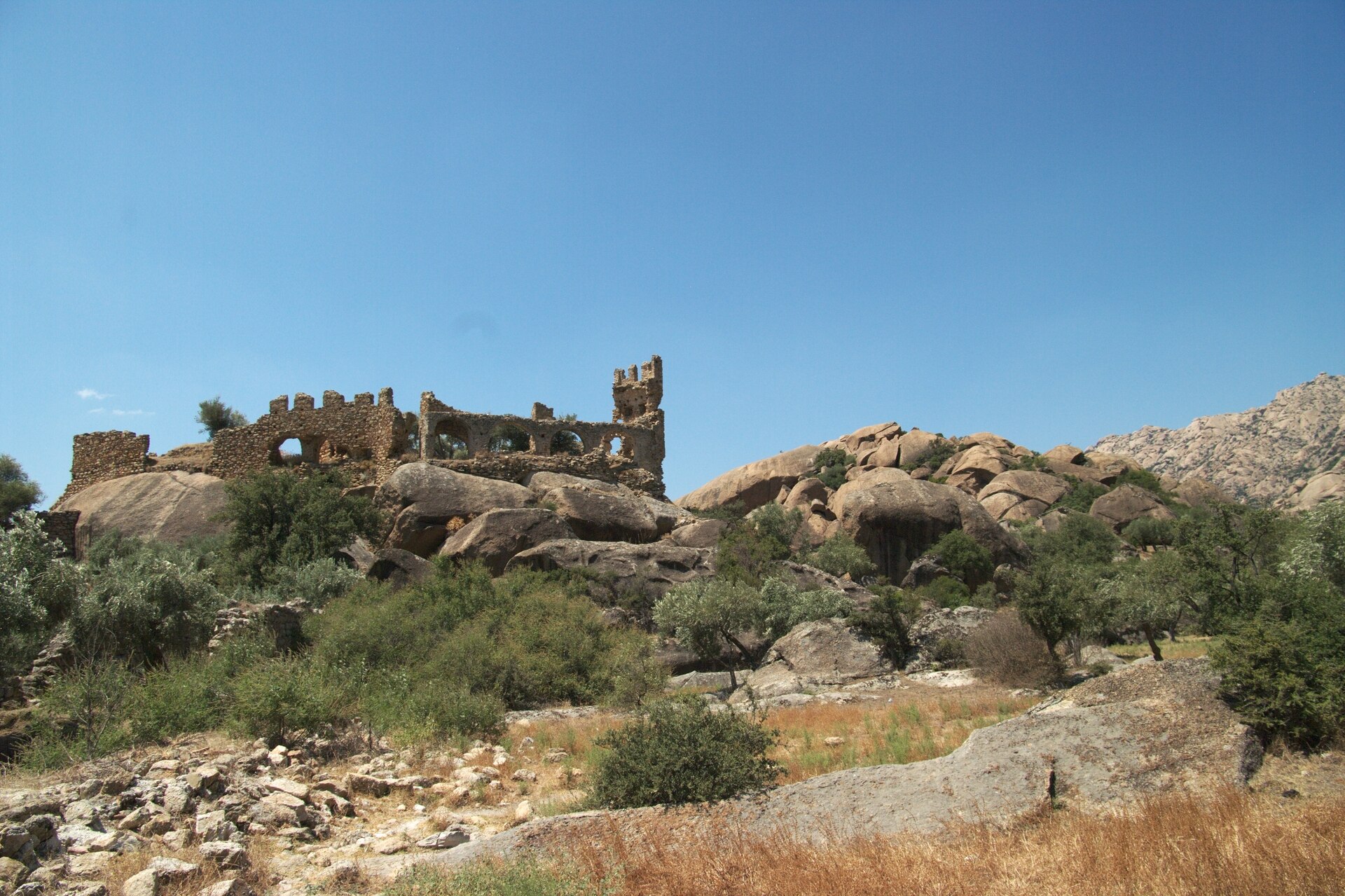
Asarburnu Kalesi is an open-air archaeological ruin in the Kapıkırı–Bafa surroundings, within the wider Herakleia–Latmos historic landscape. The surviving castle remains stand in open countryside rather than inside a restored monument, museum or enclosed attraction. The site is one defensive fragment within the ancient settlement landscape around Lake Bafa. Rocky ground, the approach path and the surrounding terrain are central to the experience. Visit it as an outdoor archaeological walk, where the remains gain meaning from their position in the wider landscape rather than from indoor displays or modern visitor facilities.
Checked 2026-09-02 · Source
The visit focuses on surviving castle masonry and the open terrain around it. The wider Herakleia setting gives the ruin its historical scale: the defensive walls were expanded by Lysimachos in 287 BC, and the fortification circuit is described as 6.5 kilometres long with 65 towers. Those figures belong to Herakleia’s broader system, not to the individual remains at Asarburnu. At the ruin itself, look closely at the relationship between the remaining stonework, the rough approach and the Kapıkırı–Bafa landscape. There is no indoor exhibition or museum collection forming part of this stop.
Checked 2026-09-02 · Source
Treat Asarburnu Kalesi as an outdoor stop that includes both the approach and the time spent at the remains. The total duration depends on where your vehicle journey ends, your walking pace, the rocky surface and the amount of time you devote to the masonry and landscape. Leave room for pauses, photographs and the return walk. It is better suited to a measured archaeological excursion than to a quick roadside glance, because the surrounding terrain forms part of the visit and the same uneven route must be negotiated on the way back.
Checked 2026-09-02 · Source
Plan the visit for daylight and for outdoor walking conditions. Asarburnu Kalesi is an open-air ruin in the Kapıkırı–Bafa surroundings, so the quality of the experience depends on visibility, weather, heat and how comfortably you can cross rocky, uneven ground. Daylight makes it easier to read the remaining masonry and follow the approach and return path. There is no museum timetable shaping the visit; choose a period when you can give the route your full attention. Allow the weather and the terrain to influence the pace of this archaeological stop.
Checked 2026-09-02 · Source
The ruin should be approached as an outdoor archaeological site within the Herakleia–Latmos landscape. The available place information does not establish a standard admission price, a per-person charge, a per-vehicle charge or an on-site ticket arrangement for Asarburnu Kalesi. Do not plan the stop around a fixed ticket purchase. Instead, reserve time for the approach, the remains and the surrounding landscape. The absence of a displayed fare should not be turned into a claim about free entry; the practical experience described here is the outdoor visit itself.
Checked 2026-09-02 · Source
Approach from the Milas–İzmir highway, take the turn-off towards Çamiçi and continue towards Kapıkırı and the Herakleia–Bafa archaeological area. Kapıkırı is placed 39 kilometres from Milas in the official tourism information. That distance refers to the village, not to the final walk to the castle. Once you reach the Kapıkırı area, the vehicle journey does not bring you directly to the masonry: the last section continues through open countryside and along a rough path. Plan for a walking approach after the road journey and allow time to locate where the drive ends.
Checked 2026-09-02 · Source
The route to Asarburnu Kalesi is very rocky and uneven, with open terrain and a path forming the final approach. Wear secure footwear and place each step carefully, particularly where loose or irregular stone affects the surface. Keep away from fragile masonry, do not move archaeological stones and do not use the remains as a handrail. Carry what you need for an outdoor walk and keep the setting undisturbed. The return requires the same care as the outward route, so preserve enough daylight and energy for the journey back to the vehicle.
Checked 2026-09-02 · Source
Photograph the castle remains together with the rocky approach and the wider Kapıkırı–Bafa landscape. Wider frames show how this defensive fragment sits within the Herakleia–Latmos setting, while closer views can reveal the character of the surviving masonry. Take pictures from stable ground and keep your attention on loose stones and uneven surfaces while using a camera or phone. Do not climb, lean on fragile walls or move stones to improve a composition. No separate photography arrangement is stated for this ruin, so preserve the archaeological fabric and the quiet outdoor setting.
Checked 2026-09-02 · Source
It belongs to the Herakleia–Latmos historic landscape around Kapıkırı and Lake Bafa.
From the Milas–İzmir highway, take the Çamiçi turn-off, continue towards Kapıkırı and walk the final section through open ground and along a path.
The official tourism information places Kapıkırı village 39 kilometres from Milas.
The approach crosses very rocky and uneven ground, with the final route continuing through open terrain and along a path.
Lysimachos expanded Herakleia’s walls in 287 BC.
The wider fortification system is described as 6.5 kilometres long and reinforced with 65 towers.
Loading the interactive map…
The interactive map could not be loaded.


Last updated:
Source: OpenStreetMap contributors ·