
2 min walk · Bergama
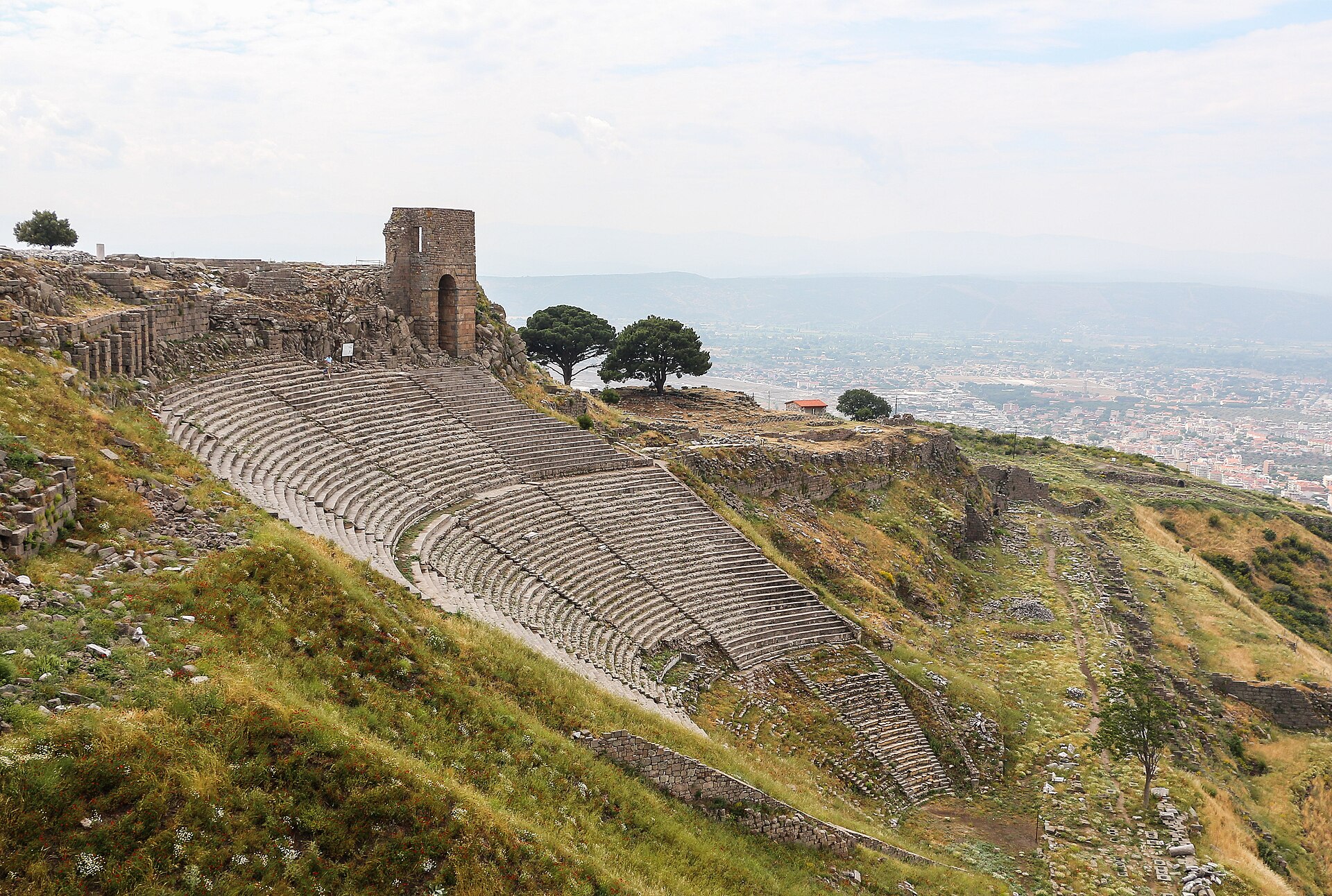
Ancient Greek theatre of Pergamon
- Must see
- Historic monument
Language · 11 published
Historic monument · Bergama, İzmir
Trayan Tapınağı
Reviewed by Elena Voss · SSMTour Travel Editor
| Monday | 08:00 – 18:30 |
|---|---|
| Tuesday | 08:00 – 18:30 |
| Wednesday | 08:00 – 18:30 |
| Thursday | 08:00 – 18:30 |
| Friday | 08:00 – 18:30 |
| Saturday | 08:00 – 18:30 |
| Sunday | 08:00 – 18:30 |
Checked 2026-09-02 · Source
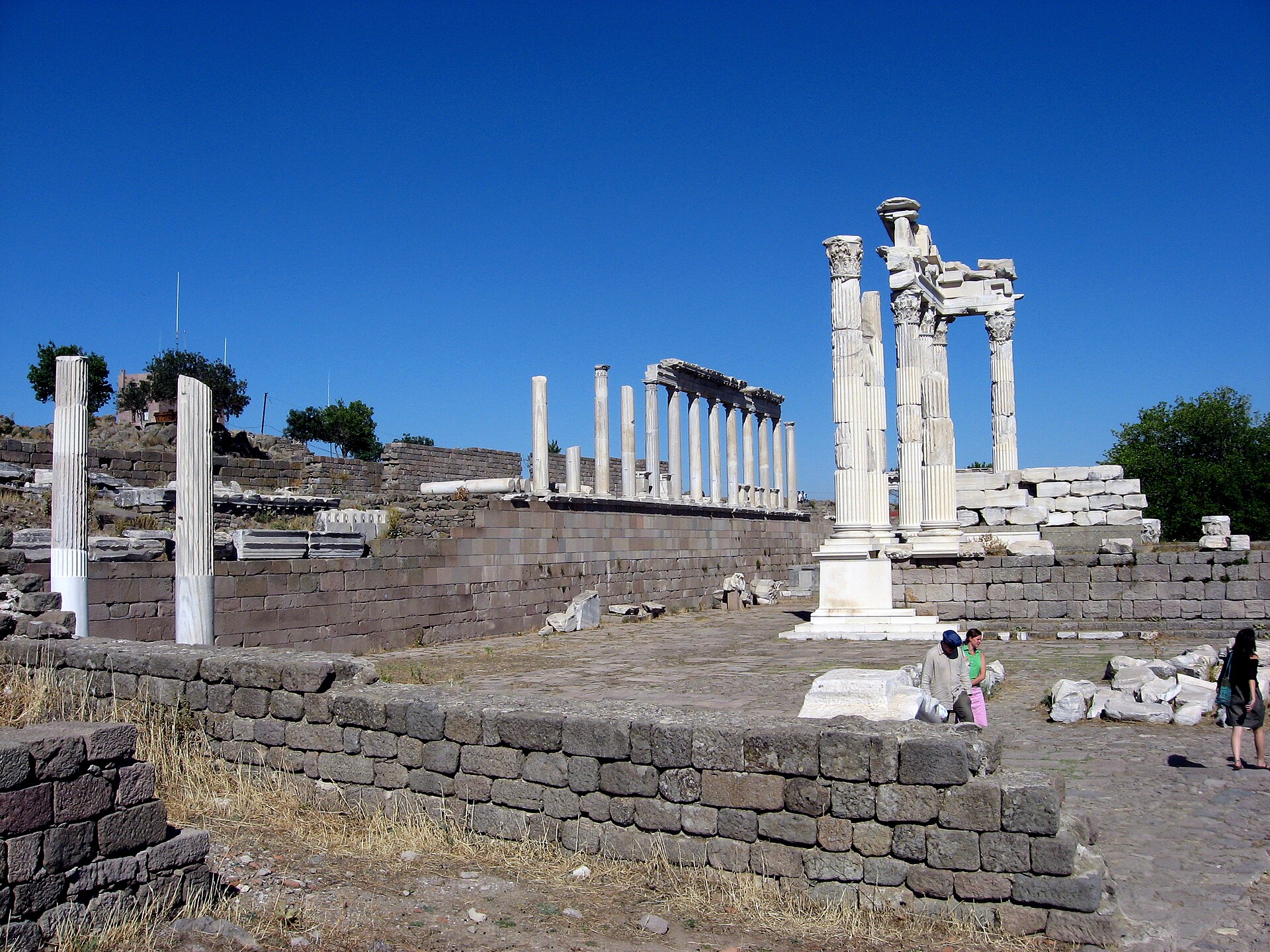
The Temple of Trajan occupies the highest terrace of the Pergamon Acropolis on Kale Hill above Bergama, İzmir. This Roman imperial sanctuary was built in the 2nd century AD for Trajan and Hadrian, placing the monument within the later history of a city better known for its Hellenistic foundations. Its summit position is part of the experience: the temple is encountered as a high sanctuary within an ancient citadel, not as a freestanding building in the modern town. The terrace, surviving marble elements and commanding setting help explain how imperial architecture was inserted into Pergamon’s elevated urban landscape. The monument’s position also makes the approach part of understanding its ceremonial prominence.
Checked 2026-09-02 · Source
The temple complex measures approximately 68 by 58 metres, giving the sanctuary a substantial footprint on the summit terrace. Eyvan-style covered galleries surrounded the temple on three sides and organised the space around the central building. Colossal marble statues of Trajan and Hadrian were found inside, providing unusually direct evidence of the monument’s imperial associations. When viewing the remains, compare the central temple platform with the enclosing gallery arrangement: together they show that the site was designed as a composed architectural complex rather than simply a single row of columns.
Checked 2026-09-02 · Source
Allow about 30 to 45 minutes for the Temple of Trajan itself if you want to inspect the terrace, remaining architectural elements, gallery layout and elevated views. The complete Pergamon Acropolis requires much longer because the temple is one part of a broad archaeological site containing theatres, sanctuaries, stoas and other remains across the hilltop. Walking between terraces and stopping for photographs can turn the visit into a half-day outing. A focused stop is enough to understand the temple’s position and plan, but several hours give the surrounding Acropolis the attention it deserves. Build in additional time if you want to connect the temple with the site’s other major monuments.
Checked 2026-09-02 · Source
The operator’s published schedule for 1 April through 31 October is daily from 08:00 to 18:30, with last admission at 18:30; no weekly closure day is listed for the Acropolis. Early morning is the most comfortable period for walking on the exposed summit and often provides softer light across Bergama. Late afternoon can bring strong atmosphere, but the Temple of Trajan stands on the highest terrace, so leave time for the approach and the wider site before closing. Cooler hours are especially valuable when the steep access and open archaeological ground make extended walking tiring. Visiting early also leaves more time for the extensive ruins below the temple terrace.
Checked 2026-09-02 · Source
The Temple of Trajan is inside the Pergamon Acropolis archaeological site, so the relevant admission is the Acropolis site ticket rather than a separately identified temple ticket. The operator’s recorded base adult prices are €15 for non-Turkish citizens and 200 TL for Turkish citizens. These amounts describe access to the wider archaeological site containing the temple. Keep the ticket during the visit because the monument forms part of the same circuit as the other Acropolis remains. The two recorded prices apply by citizenship category, not as two cumulative charges for one visitor.
Checked 2026-09-02 · Source
From Bergama, the Pergamon Acropolis is reached by the winding access road climbing Kale Hill. The Bergama–Acropolis cable-car station is on Akropol Caddesi, and Bergama Municipality identifies the teleferik as transport serving the Acropolis. The cable car reduces the effort of gaining the hill, but it does not deliver visitors directly to the Temple of Trajan. The temple remains on the highest terrace, so allow for further walking across an archaeological landscape after arriving above the town. In practical terms, the approach combines hill transport with a walk through the site. The final section of the visit is therefore still an archaeological walk rather than a vehicle transfer.
Checked 2026-09-02 · Source
The Acropolis rises on a steep hill of about 300 metres, and the Temple of Trajan is on its highest terrace. Expect gradients, exposed paths and uneven archaeological ground, and choose footwear suited to those conditions. Carry water in warm weather and allow extra energy for the distance between monuments. The temple is part of a large hillside site, not a compact level attraction, so terrain may limit how much of the wider Acropolis is comfortable to explore.
Checked 2026-09-02 · Source
Use the Temple of Trajan’s terrace to photograph the sanctuary together with the steep landscape below. Wider compositions place the Roman monument in its Acropolis setting, while closer views can isolate the marble columns, platform and the three-sided gallery arrangement. Morning light helps reveal architectural detail; later light adds depth to Kale Hill and Bergama. Include the surrounding terrace in at least some frames, because the temple’s scale and position are central to its identity. The elevated viewpoint also makes the relationship between the sanctuary and the landscape part of the subject rather than a background detail.
Checked 2026-09-02 · Source
It stands on the highest terrace of the Pergamon Acropolis on Kale Hill in Bergama, İzmir.
It was built for the Roman emperors Trajan and Hadrian in the 2nd century AD.
The temple complex measures approximately 68 by 58 metres.
Eyvan-style covered galleries surrounded the temple on three sides.
Colossal marble statues of Trajan and Hadrian were found inside the Temple of Trajan.
The temple was restored in 1990.
Loading the interactive map…
The interactive map could not be loaded.


Last updated:
Source: OpenStreetMap contributors, Wikidata ·