.jpg)


4 min walk · Selçuk
Library of Celsus
- Must see
- Historic monument
Language · 11 published
Historic monument · Selçuk, İzmir
Efes
| Monday | 08:00 – 18:45 |
|---|---|
| Tuesday | 08:00 – 18:45 |
| Wednesday | 08:00 – 18:45 |
| Thursday | 08:00 – 18:45 |
| Friday | 08:00 – 18:45 |
| Saturday | 08:00 – 18:45 |
| Sunday | 08:00 – 18:45 |
Checked 2026-09-02 · Source
Read from the OpenStreetMap access tags; anything not listed has no tag recorded.
Set the group type to family in the planner and the day window contracts to about three quarters of a solo day.
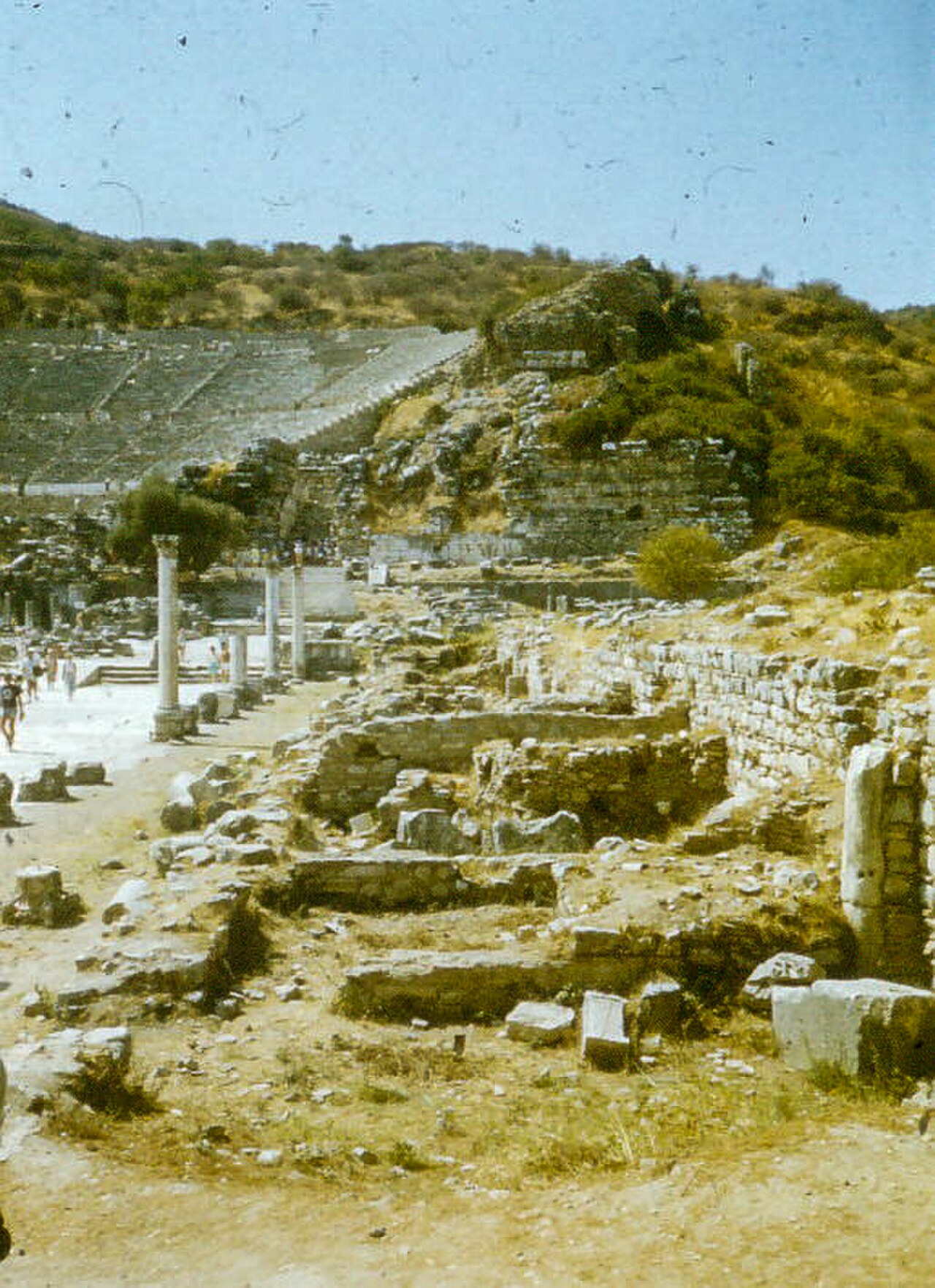
Ephesus is an extensive ancient city in western Türkiye, visited today as an archaeological site near Selçuk in İzmir Province. The city visible today was founded by Lysimachus, one of Alexander the Great’s generals, around 300 BC. Its streets, monuments and civic buildings make Ephesus a place to follow urban history on foot rather than a single isolated ruin. The Artemision at Ephesus is identified by the Ministry of Culture and Tourism as one of the Seven Wonders of the Ancient World. The visit is best understood as a long archaeological walk through a former urban centre.
Checked 2026-09-02 · Source
The archaeological route brings together monumental remains from different periods of Ephesus. The Celsus Library dates to the 2nd century AD and was one of antiquity’s important libraries after Alexandria and Pergamon. The Great Theatre had seating capacity for approximately 25,000 people, so its scale remains clear even as a ruin. The Church of Mary is another major historical point: the Council of Ephesus in 431, where Mary was declared the mother of Jesus, took place there. Broad streets, civic remains and viewpoints explain how the city was organised.
Checked 2026-09-02 · Source
Allow at least half a day for the main archaeological site, with longer needed if you read monument panels, pause for photographs or add the Terrace Houses. The two entrances are about 3 km apart, and the route from the Upper Gate downhill to the Lower Gate is over 2 km. Exposed ancient marble, slopes and steps make Ephesus more demanding than a short museum visit. A slower visit is worthwhile around the Celsus Library, Great Theatre and Church of Mary. Build in pauses, because the scale of the route is part of what makes Ephesus memorable.
Checked 2026-09-02 · Source

The archaeological site is listed as open every day from 08:00 to 18:45. The lower ticket office is listed until 19:00, while the upper ticket office closes at 18:00, so ticket-office times are not extra sightseeing time. A night museum programme runs Wednesday to Saturday from 19:00 to 23:00, with ticket sales closing at 22:00. The daytime route is open and exposed, making an early start practical for a more comfortable walk and clearer monument views. Earlier arrival also leaves more time before afternoon heat becomes tiring.
Checked 2026-09-02 · Source
Base adult admission for foreign visitors is €40 according to the supplied Ministry of Culture and Tourism guidance. MuseumKart is valid for the main archaeological site, while the Terrace Houses require a separate ticket. Entry to the main ruins does not automatically mean that the Terrace Houses are included. Ticket offices follow their own closing times: the lower office is listed until 19:00 and the upper office until 18:00. For the night museum, ticket sales close at 22:00. The admission amount is recorded as a per-person foreign-visitor charge.
Checked 2026-09-02 · Source
Ephesus is about 3 km from Selçuk. Regular minibuses serve the area, and the official transport information names Selçuk–Kuşadası and Selçuk–Pamucak minibuses as options for reaching the ruins. A taxi is another direct choice. Selçuk railway station is on Cengiz Topel Caddesi, useful when combining a train arrival with local transport. Since the entrances are about 3 km apart, confirm which gate you are approaching. The Upper and Lower Gates are not interchangeable starting points, especially when arranging a taxi or meeting vehicle.
Checked 2026-09-02 · Source
Expect uneven ancient marble and stone surfaces, steps and slopes across the main route. The Lower Gate area and first few hundred metres are relatively flat and more manageable for wheelchair users, but the full visit is not step-free. The downhill route from the Upper Gate to the Lower Gate is over 2 km, and the Terrace Houses involve stairs. Wear supportive footwear, carry water and allow extra time for heat and walking. Wheelchair and pushchair users should assess whether the accessible lower section meets their needs before choosing the wider route. These are different physical experiences.
Checked 2026-09-02 · Source
Ephesus rewards photographs that show scale and alignment. Frame the colonnaded streets toward the Celsus Library, then use the Great Theatre to convey how a venue could hold approximately 25,000 people. The long open route gives useful perspective between the Upper and Lower Gates. Early daytime light can make marble details easier to read and usually feels more comfortable for walking. Photograph steps, slopes and uneven surfaces with care. Wider views show the city’s scale, while closer images of stone details reveal the surviving texture of the ruins.
Checked 2026-09-02 · Source
The Lower Gate and Upper Gate are about 3 km apart.
The Celsus Library dates to the 2nd century AD and was one of antiquity’s important libraries after Alexandria and Pergamon.
The Great Theatre had seating capacity for approximately 25,000 people.
Yes. The Artemision at Ephesus is identified by the Ministry of Culture and Tourism as one of the Seven Wonders of the Ancient World.
The Council of Ephesus, where Mary was declared the mother of Jesus, took place at the Church of Mary.
The city visited today was founded by Lysimachus, one of Alexander the Great’s generals, around 300 BC.
Loading the interactive map…
The interactive map could not be loaded.


Last updated:
Source: OpenStreetMap contributors, Wikidata ·