1 min walk · Bergama
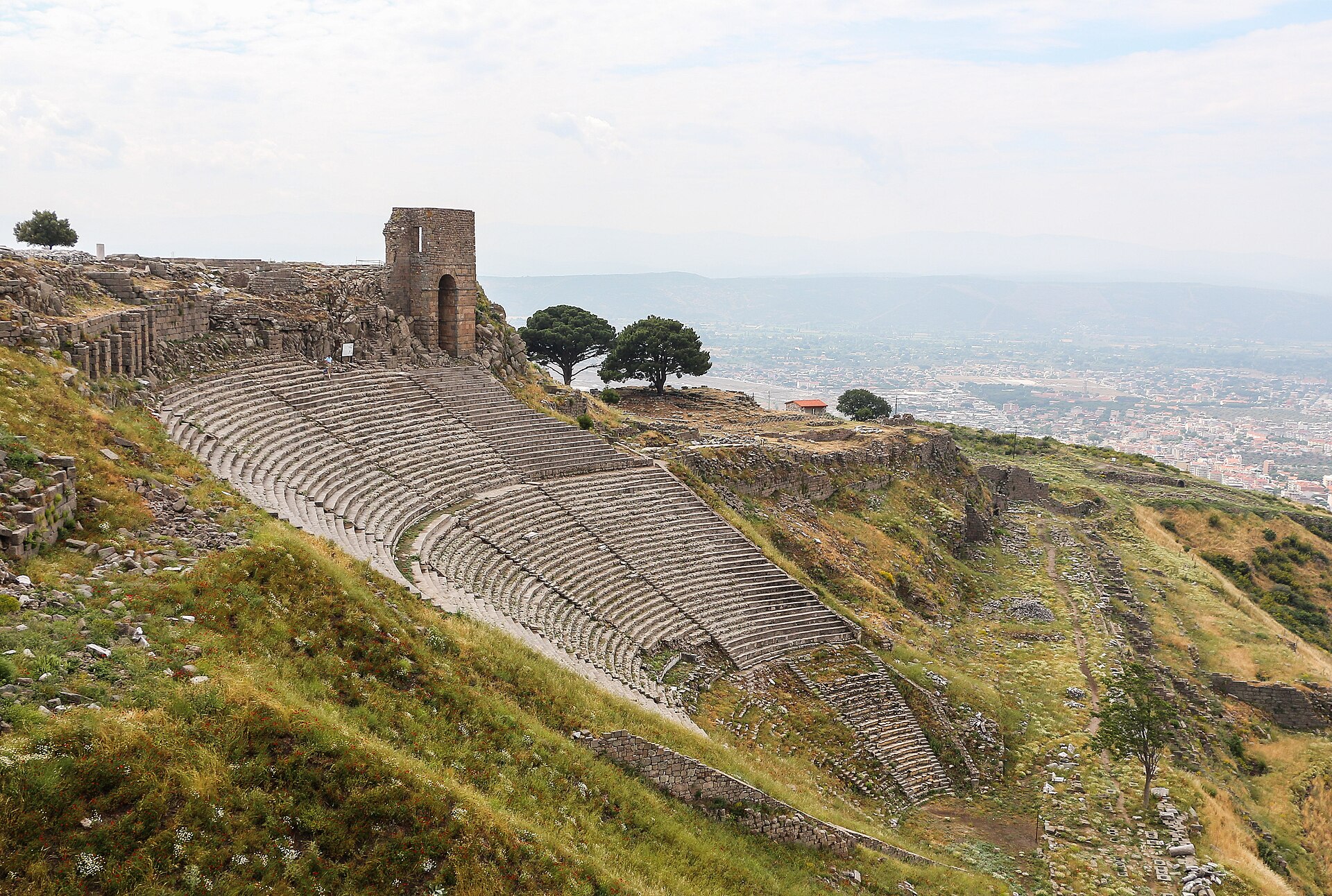
Ancient Greek theatre of Pergamon
- Must see
- Historic monument
Language · 11 published
Historic monument · Bergama, İzmir
Pergamon Kütüphanesi
Reviewed by Elena Voss · SSMTour Travel Editor

| Monday | 08:30 – 20:00 |
|---|---|
| Tuesday | 08:30 – 20:00 |
| Wednesday | 08:30 – 20:00 |
| Thursday | 08:30 – 20:00 |
| Friday | 08:30 – 20:00 |
| Saturday | 08:30 – 20:00 |
| Sunday | 08:30 – 20:00 |
Checked 2026-09-02 · Source
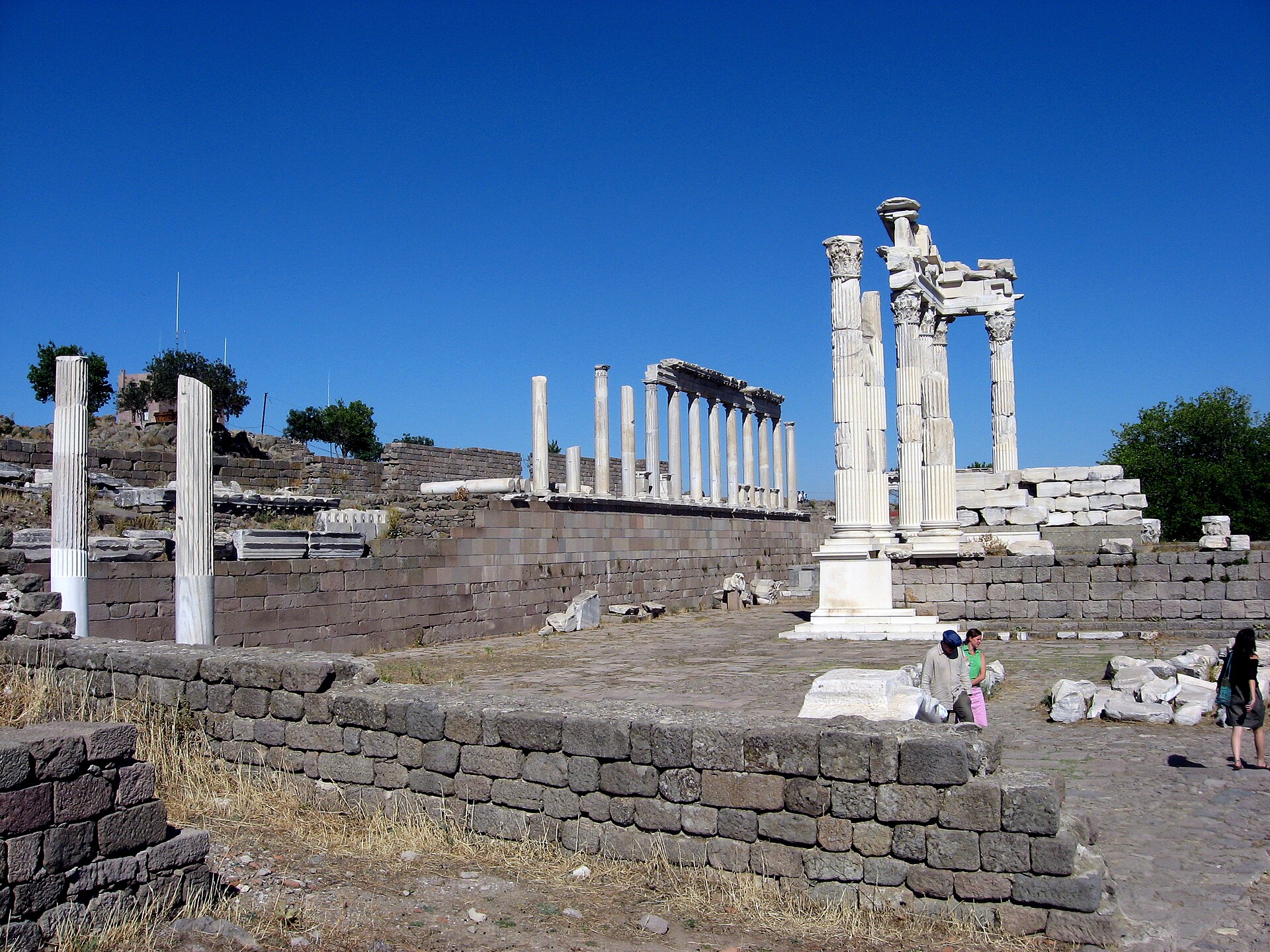
The Library of Pergamum is a specific ruin in the upper city of the Bergama Acropolis, beside the Sanctuary of Athena in Bergama, İzmir. It marks the setting of a major Hellenistic intellectual institution rather than a preserved modern library: visitors encounter surviving archaeological remains within the ancient city’s elevated urban landscape. Official Turkish Museums information describes Pergamum’s collection as approximately 200,000 scrolls or volumes. UNESCO Bergama heritage material associates the library’s major development with the reign of Eumenes II. Its significance comes from reading this monument in relation to the sanctuary, streets and terraces around it, where the library formed part of Pergamum’s upper-city cultural world.
Checked 2026-09-02 · Source
This is an open archaeological ruin, not an intact reading room, reconstructed interior or modern collection that visitors can browse. The remains sit beside the Sanctuary of Athena and among the upper city’s monumental traces, so the visit is primarily about location, surviving masonry and the relationship between buildings. The reported collection of roughly 200,000 scrolls or volumes describes the ancient institution’s scale, not objects displayed on shelves today. Exposed stone, uneven ground and changing levels are part of the Acropolis setting. There are no separate library facilities or independently managed visitor hours; the monument is encountered within the archaeological site.
Checked 2026-09-02 · Source
Allow around two to three hours for an Acropolis visit that includes the Library of Pergamum and the surrounding upper-city monuments. The library remains do not form a separate gallery sequence, so the time spent here depends on how closely you study the stones, read site information and connect the ruin with nearby sanctuaries and urban spaces. Visitors taking photographs or pausing for the hilltop outlook should use the longer end of the range. Because the archaeological route is steep and exposed, the walk between monuments can demand more energy than the library’s footprint suggests, especially in strong summer sun.
Checked 2026-09-02 · Source
The Bergama Acropolis is listed as open daily from 08:30 to 20:00, with ticket sales ending at 19:15; the Library of Pergamum has no separate schedule or listed closed day. Early morning generally makes the exposed hill more comfortable and gives clear light for reading the ruins. Late afternoon can bring warmer colour, but leave time to reach the library area before ticket sales end. The elevated, largely outdoor setting makes heat and direct sun important parts of the experience, even though the official visiting timetable extends into the evening.
Checked 2026-09-02 · Source
The Library of Pergamum has no separate admission. Entry is through the Bergama Acropolis archaeological site, where the official admission information lists €15 per non-Turkish citizen aged eight or over and 200 TRY per Turkish citizen aged eight or over. The Turkish Museum Card is valid for Turkish citizens. Plan the library as one stop within the paid Acropolis circuit, not as an independently priced attraction. Ticket sales end at 19:15 even though the site remains open until 20:00, so admission should be arranged before the final sales time.
Checked 2026-09-02 · Source
The Acropolis address is Ulu Cami Mahallesi, Bergama, İzmir, on the steep hill above Bergama. From İzmir, Bergama Municipality’s access guidance describes taking İZBAN to Aliağa, then continuing by ESHOT bus 835 or an İzmir–Bergama minibus to Bergama. The final approach is not a flat urban walk because the archaeological site rises above town. Allow connection time between services and expect slopes and uneven surfaces inside the Acropolis. This route information identifies the public-transport sequence; it does not establish a separate shuttle or entrance arrangement for the library.
Checked 2026-09-02 · Source
Treat the Library of Pergamum as an exposed archaeological ruin on a steep hill, not as a step-free indoor museum. The official listing’s “Handicap Friendly” wording does not provide enough detail to assign a structured accessibility value for this individual monument, so practical access should be judged on site. Secure footwear is useful for uneven stones and slopes, while water and sun protection matter on a largely open route. The short distance between monuments may still feel demanding. Children and visitors with reduced mobility should allow a slower pace across the Acropolis terrain.
Checked 2026-09-02 · Source
Photograph the Library of Pergamum as part of the Acropolis landscape, framing the surviving remains with the upper city, the Sanctuary of Athena and the hilltop setting. Morning light can clarify stone details; late afternoon adds warmer tones and emphasises the monument’s relationship with Bergama below. Keep a secure footing and avoid climbing or leaning on the remains. A wide composition explains the ancient urban context, while closer, lower-angle views can record masonry and architectural fragments without suggesting that the original library survives as an intact interior. Look for compositions that include the ruin’s position beside Athena’s sanctuary, since that relationship helps distinguish the library from the Acropolis’s other remains.
Checked 2026-09-02 · Source
It is in the upper city of the Bergama Acropolis, beside the Sanctuary of Athena in Bergama, İzmir.
No. The library remains are visited as part of the Bergama Acropolis archaeological site, which requires the site admission ticket.
The Bergama Acropolis is open daily from 08:30 to 20:00, with ticket sales ending at 19:15.
Official Turkish Museums information describes the collection as approximately 200,000 scrolls or volumes.
The library’s major expansion is associated with the reign of Eumenes II during the Hellenistic period.
İZBAN reaches Aliağa; from Aliağa, ESHOT bus 835 or an İzmir–Bergama minibus continues to Bergama.
Loading the interactive map…
The interactive map could not be loaded.
Last updated:
Source: OpenStreetMap contributors, Wikidata ·