City guide
Things to Do in Munich: 12 Essential Sights

Choose Munich sights by district and interest, from the old town and palaces to museums, parks, markets, churches and BMW’s visitor experiences.
This guide is part of our Munich destination coverage. Munich
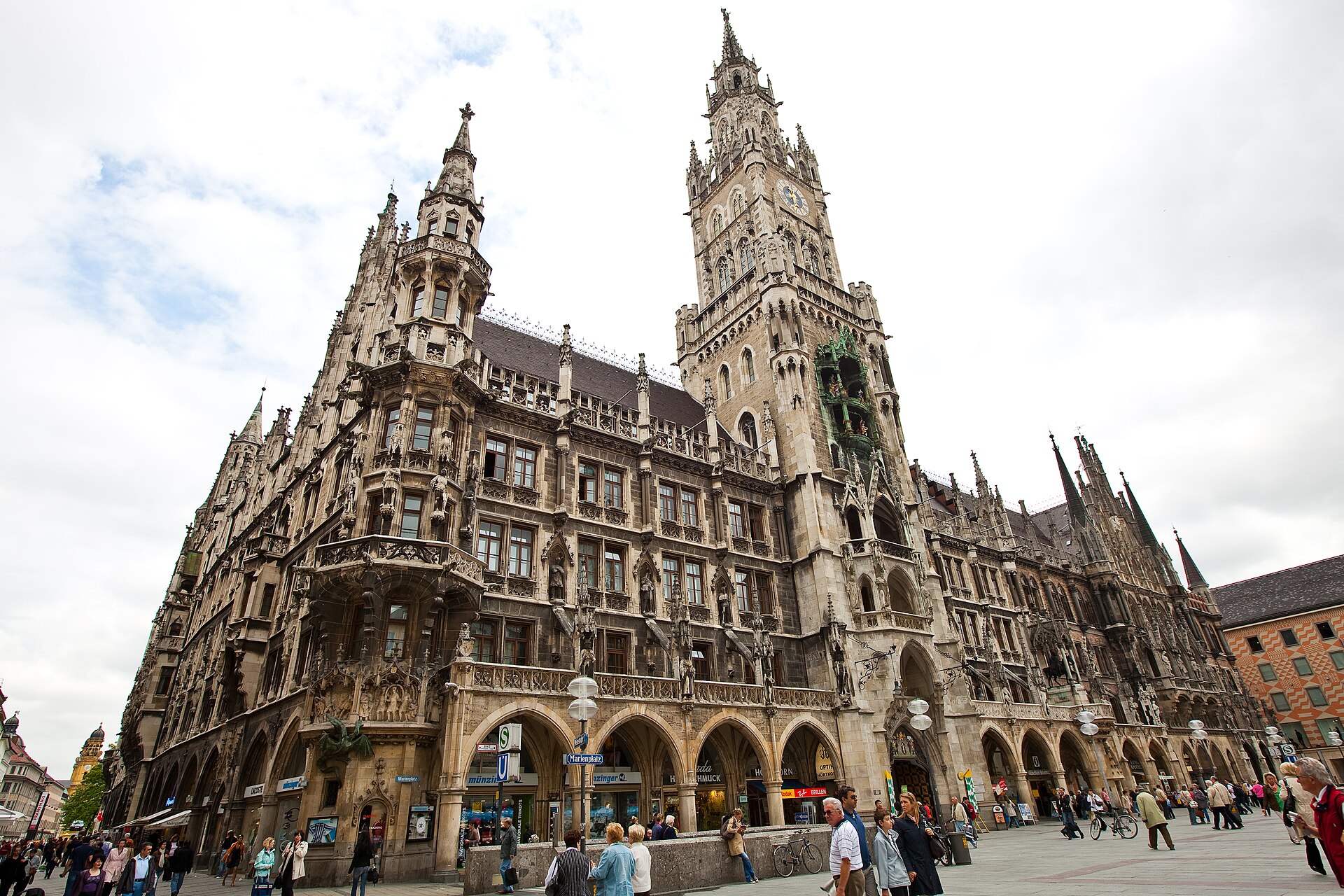
1. Neues Rathaus
Neues Rathaus is one of the existing Munich deep-guide stops. Read its profile before placing it in a day.
The Neues Rathaus fills the whole north side of Marienplatz and is a working building rather than a monument: the mayor, the city council and part of Munich's administration sit here, and the city counts more than 600 staff across roughly 400 rooms. Its neo-Gothic front reads as medieval and is not. Georg von Hauberrisser, twenty-five years old when he won the competition, built it in three phases across nearly forty years, 1867 to 1874, 1889 to 1892 and 1898 to 1905, taking his model from the town halls of Flanders. The keystone went onto the tower in December 1905 and the last offices were occupied by the end of 1906. The complex is an irregular quadrilateral of 9,159 square metres with frontages of 98.5 metres on Marienplatz, 85 on Dienerstrasse, 111 on Landschaftstrasse and 86 on Weinstrasse.
Checked 2026-08-26 · Official site · www.munich.travel
2. Schloss Nymphenburg


Schloss Nymphenburg is one of the existing Munich deep-guide stops. Read its profile before placing it in a day.
Nymphenburg is the summer palace of the Bavarian electors and later kings, in the west of the city, out beyond the Residenz, and still run by the Bavarian Palace Administration. It was begun as a thank-offering: Elector Ferdinand Maria and Henriette Adelaide of Savoy waited about ten years for an heir, and when Max Emanuel was born in 1662 a site on the edge of the court lands was chosen for a new building. Construction started in 1664 to plans by the north Italian architect Agostino Barelli, who also designed Munich's Theatine Church, and by 1679 the first version — a single cubic pavilion with a court church, outbuildings and a small walled garden — was close to finished. Everything else grew outward from that pavilion.
Checked 2026-08-26 · Official site · www.wikidata.org
3. Englischer Garten

.jpg)
Englischer Garten is one of the existing Munich deep-guide stops. Read its profile before placing it in a day.
The Englischer Garten is a public park five and a half kilometres long that runs north from the edge of Munich's old city into open countryside, and it is administered by the Bavarian Palace Administration rather than by the city. Elector Karl Theodor ordered it laid out in 1789 with the instruction that it was 'not to be just for one section of society but for the whole population', which is unusual phrasing for 1789 and is the reason the park has never had a gate or a ticket. The idea came from the American-born Sir Benjamin Thompson, later Count Rumford, who directed the work; the Schwetzingen court gardener Friedrich Ludwig von Sckell was summoned to Munich in August 1789 to help, and after moving to the city in 1804 as Bavarian court garden superintendent he gave the park the form it still has.
Checked 2026-08-26 · Official site · www.wikidata.org
4. Residenz


Residenz is one of the existing Munich deep-guide stops. Read its profile before placing it in a day.
The Munich Residence was the seat of government and the home of Bavaria's dukes, electors and kings from 1508 until the monarchy ended in 1918. It did not begin as a palace. In 1385 a castle called the Neuveste went up in what was then the north-eastern corner of the walled city, and every later ruler pushed the complex further out into the town until it became a chain of wings grouped around courtyards. The building history is legible room by room: the Antiquarium was raised between 1568 and 1571 for Duke Albrecht V's collection of ancient sculpture, the Imperial Courtyard wing between 1612 and 1616, the Ancestral Gallery between 1726 and 1730, and the Royal Palace with Ludwig I's apartments by Leo von Klenze between 1826 and 1835. After 1918 the Residence lost its purpose and opened as a museum of interior design in 1920.
Checked 2026-08-26 · Official site · www.wikidata.org
5. Deutsches Museum


Deutsches Museum is one of the existing Munich deep-guide stops. Read its profile before placing it in a day.
The Deutsches Museum stands on an island in the Isar in central Munich, at Museumsinsel 1, and is a museum of science and technology rather than of art or of city history. It is also a building site, and that is the first thing a visitor needs to know. A rebuilding of the whole exhibition block began on 18 October 2015: half the exhibitions were emptied, construction started in autumn 2016, and that first half reopened in July 2022 with twenty renewed permanent exhibitions across roughly 20,000 square metres. Work then moved into the second half of the building, and the museum states it will be completely reopened in 2028, the 125th anniversary of its founding. More than half the exhibition space stays open through both phases, so what is shut is a large fraction of the collection rather than the visit itself.
Checked 2026-08-26 · Official site · www.wikidata.org
6. BMW Welt
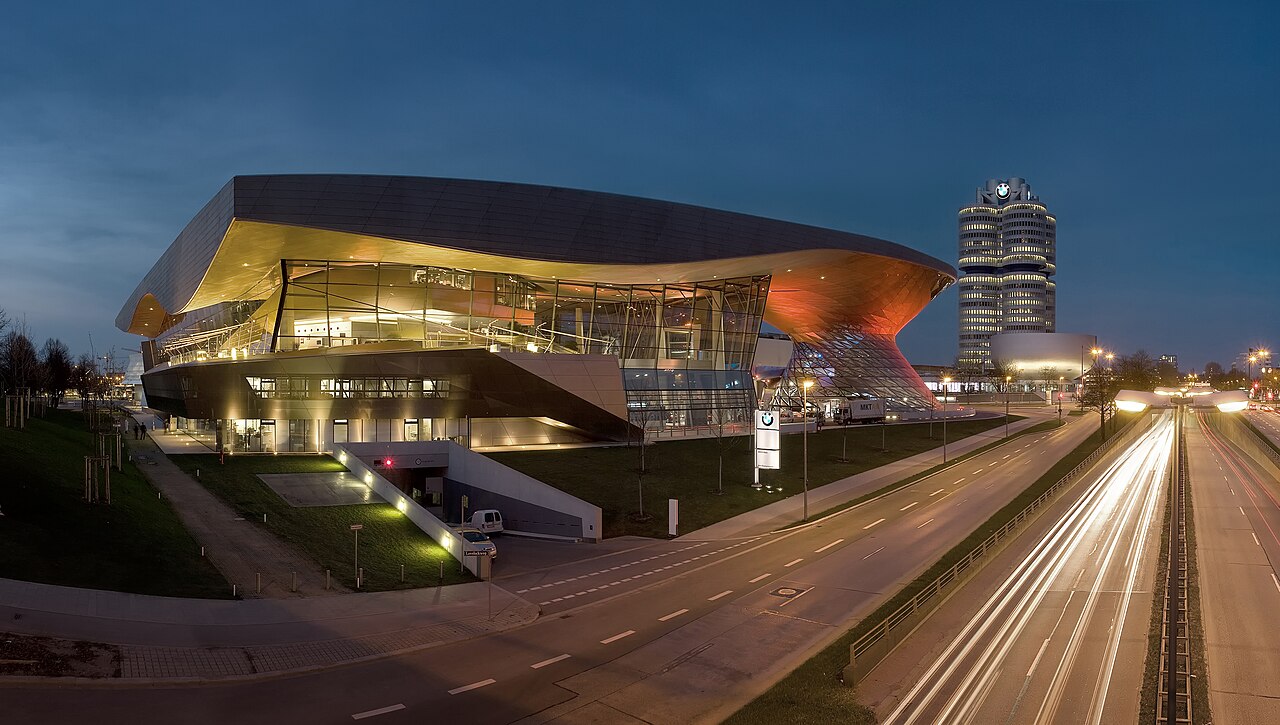

BMW Welt is one of the existing Munich deep-guide stops. Read its profile before placing it in a day.
BMW Welt is a major visitor destination in Munich associated with the Bavarian automaker. The facility serves as a delivery center, exhibition space, and brand experience venue. It stands near BMW's corporate headquarters and the BMW Museum. The structure is architecturally distinctive and widely recognized as a landmark in the city's northern area. Visitors encounter vehicle displays, configuration options, and corporate hospitality functions. The site represents a significant element of Munich's industrial heritage and contemporary identity. A flexible visit lets travellers connect BMW Welt with the rest of the day without treating one room, viewpoint or photograph as the whole experience. The useful pace depends on personal interest and conditions on arrival. The interior contains multiple vehicle exhibition areas showcasing current BMW, MINI, and Rolls-Royce models. Visitors can observe the automobile delivery process for customers collecting new vehicles. There are configuration studios where prospective buyers may customize vehicles. Dining facilities and event spaces occupy portions of the building.
Checked 2026-08-26 · Official site · www.wikidata.org
7. Olympiapark


Olympiapark is one of the existing Munich deep-guide stops. Read its profile before placing it in a day.
Olympiapark is a large sports and leisure complex in northern Munich, constructed for the 1972 Summer Olympic Games. The site encompasses approximately 850,000 square metres on the Oberwiesenfeld, combining sporting facilities, parkland, and architectural landmarks. Its most distinctive feature is the sweeping tensile roof canopy designed by Frei Otto and Günther Behnisch, which covers the main stadium, Olympic Hall, and swimming hall. The complex represents a significant period in post-war German architecture and remains a functional venue for events, recreation, and tourism. Olympiapark also earns time in a munich itinerary because A primary visitor landmark supported by all three required source families and matched exactly to the production city pool. Its value becomes clearer when the stop is compared with the surrounding streets and the other ranked places nearby. The park contains several major structures including the Olympic Stadium, Olympic Hall, Olympic Swim Hall, and Olympic Tower. The Olympic Tower rises 291 metres and includes an observation deck.
Checked 2026-08-26 · Official site · www.wikidata.org
8. Frauenkirche
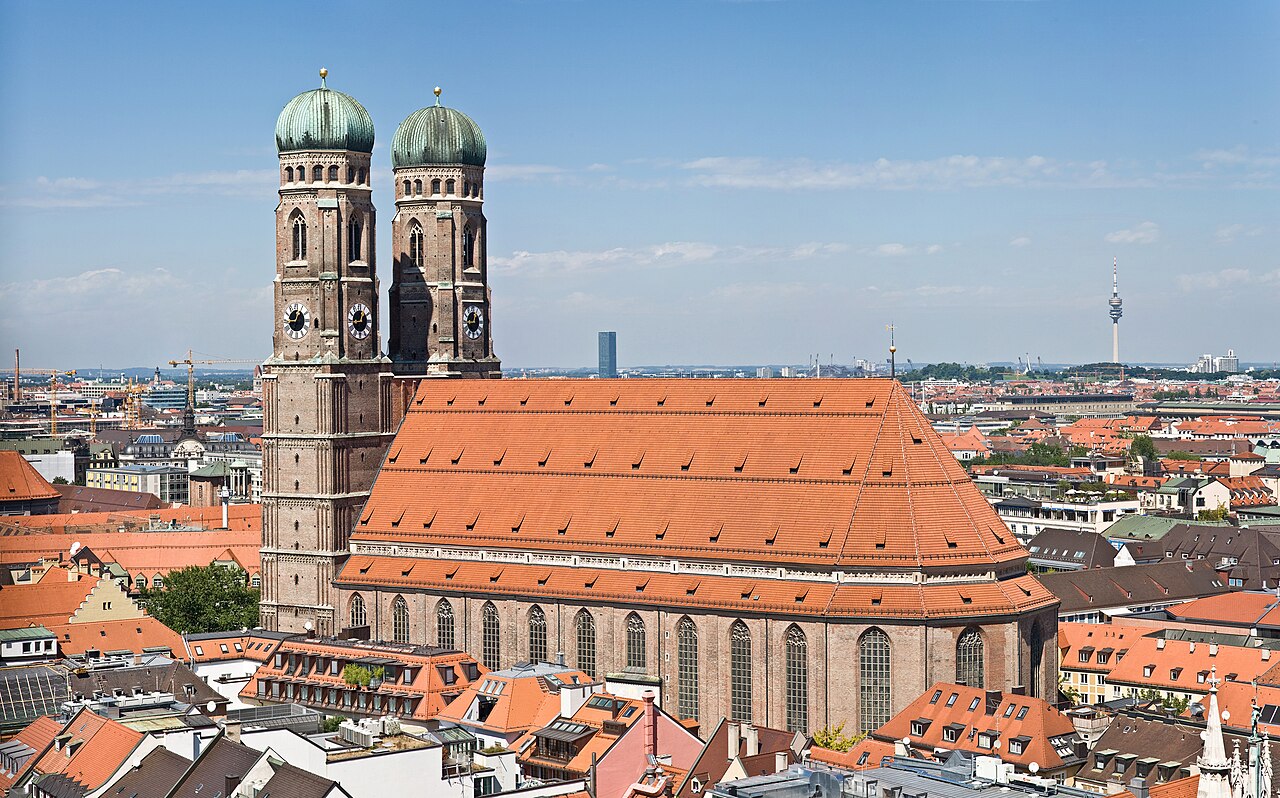

Frauenkirche is one of the existing Munich deep-guide stops. Read its profile before placing it in a day.
The Frauenkirche, or Church of Our Lady, stands as Munich's cathedral and one of its most recognizable landmarks. Its distinctive twin domes, visible across the city skyline, have become symbolic of Munich itself. Construction began in the fifteenth century, and the building has endured centuries of Bavarian history. The church serves as the seat of the Archbishop of Munich and Freising. Its location in the city center makes it a natural focal point for visitors exploring the historic core. The structure represents a significant example of late Gothic architecture in southern Germany, though it has undergone various modifications over its long existence. The interior of the Frauenkirche contains notable artistic and architectural elements that reward attentive visitors. The high altar and various chapels hold historical religious artworks. Visitors particularly seek out the Devil's Footstep, a dark mark in the floor surrounded by legend. The church's spacious nave accommodates large congregations and creates an atmosphere of solemn grandeur.
Checked 2026-08-26 · Official site · www.wikidata.org
9. Viktualienmarkt

Viktualienmarkt is one of the existing Munich deep-guide stops. Read its profile before placing it in a day.
Viktualienmarkt is a daily food market and square in central Munich. It occupies a site that has served as the city's main marketplace since 1807, when farmers' markets moved from Marienplatz to this expanded location. The market covers approximately 22,000 square meters and contains around 140 stalls and shops. A distinctive maypole stands at its center, painted in Bavarian blue and white and decorated with figures representing local trades. The market operates as both a commercial venue for fresh produce and a social gathering place for residents and visitors. The market offers substantial variety across its stalls and permanent structures. Vendors sell fresh fruits, vegetables, herbs, cheeses, meats, fish, breads, and flowers. Specialty items include Bavarian sausages, regional honeys, and imported goods. Several beer gardens operate within the market boundaries, serving local brews alongside traditional food. The surrounding streets contain additional shops and restaurants extending the commercial area.
Checked 2026-08-26 · Official site · www.wikidata.org
10. Alte Pinakothek
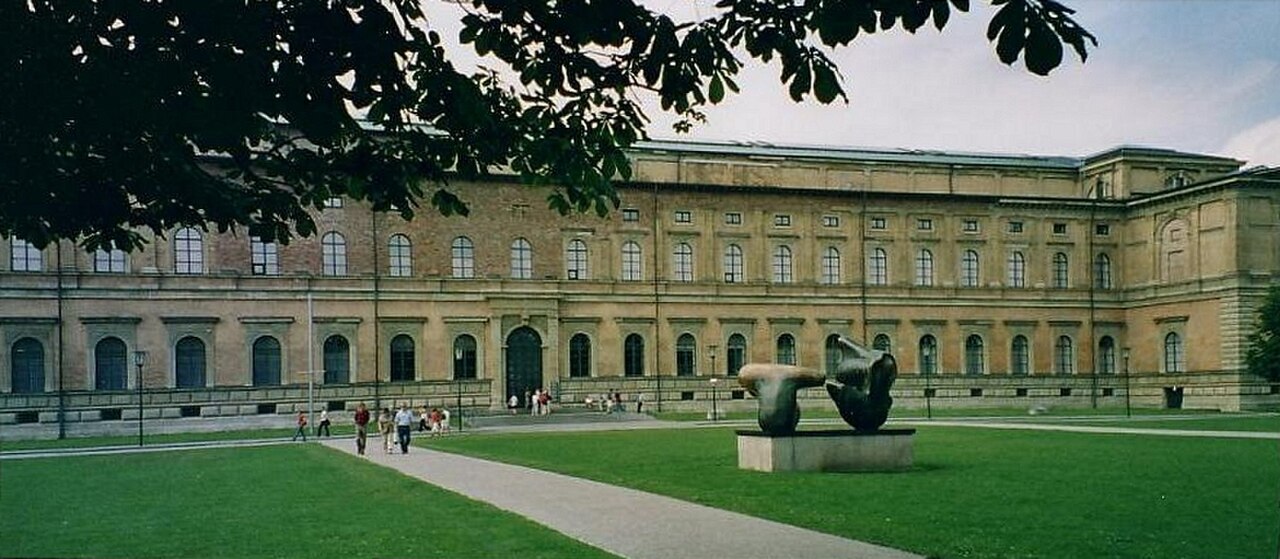

Alte Pinakothek is one of the existing Munich deep-guide stops. Read its profile before placing it in a day.
The Alte Pinakothek is Munich's gallery of Old Master painting, covering the fourteenth to the eighteenth century, and it is one of the oldest purpose-built picture galleries anywhere. The collection began as the Wittelsbach family's pictures; King Ludwig I ordered Leo von Klenze to build a gallery for them, and construction ran from 1826 to 1836. What Klenze produced was a long, plain, free-standing block, 150 metres by 50, lit through skylights rather than windows, and it was copied across Europe afterwards. The building is entered at ground level and the collection proper is upstairs. The upper gallery is where the reputation sits: a run of top-lit halls, the walls hung in red and green silk, arranged by school rather than by date, so a visitor walks from German painting into Netherlandish, Flemish, Italian, Spanish and French rooms in turn.
Checked 2026-08-26 · Wikipedia · en.wikipedia.org
Checked 2026-08-26 · Official site · www.pinakothek.de
11. BMW Museum


BMW Museum is one of the existing Munich deep-guide stops. Read its profile before placing it in a day.
The BMW Museum is a corporate museum dedicated to the history and heritage of Bayerische Motoren Werke AG, the Munich-based automobile and motorcycle manufacturer. Located near the BMW headquarters and the Olympiapark in the northern part of Munich, it presents the company's evolution from aircraft engine production to its current status as a global luxury vehicle brand. The museum building itself is architecturally distinctive, featuring a silver bowl-shaped structure that has become a recognizable landmark in the city's skyline. The museum houses exhibitions spanning BMW's entire product history, including automobiles, motorcycles, and engines. Displays trace technological development and design evolution across decades of manufacturing. The collection includes historical vehicles, concept cars, and racing machines that demonstrate the company's motorsport involvement. Interactive elements and multimedia presentations supplement the physical exhibits. The museum also addresses broader themes of mobility and innovation. Specific details about current temporary exhibitions or recent acquisitions are not recorded pending review.
Checked 2026-08-26 · Official site · www.wikidata.org
12. St. Peter
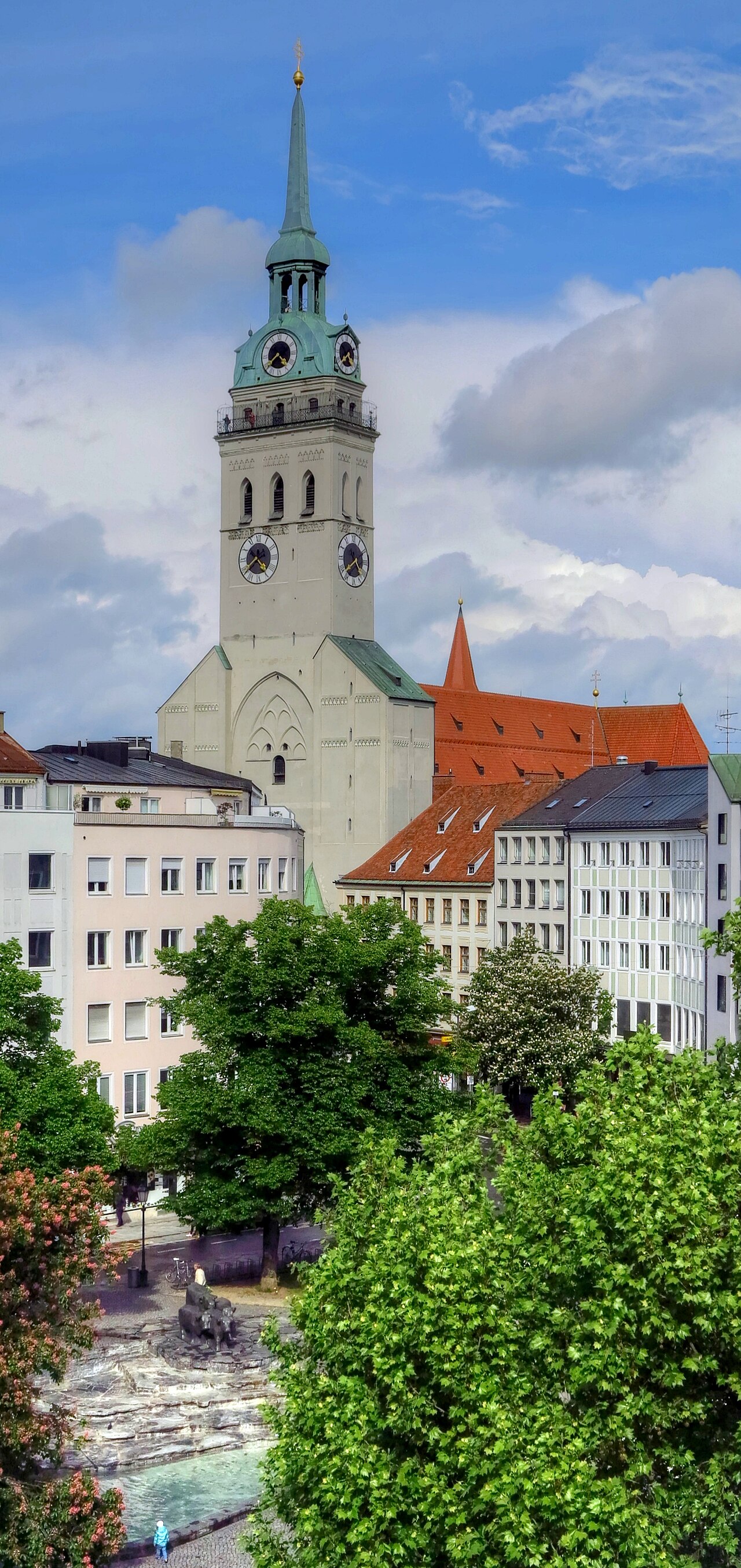

St. Peter is one of the existing Munich deep-guide stops. Read its profile before placing it in a day.
St. Peter’s Church, known locally as St. Peter, is a historic church in Munich’s city centre. The building is one of the city’s notable religious landmarks and forms part of the architectural character of Munich’s historic core. Its urban setting makes it a natural stop while exploring the central district and nearby Marienplatz. The church remains an active place of worship, so a visit combines heritage interest with an operating religious setting. Peter's Church, known locally as St. Peter, is a historic church in Munich. It stands as one of the notable religious buildings in the city center, contributing to Munich's architectural heritage. The church represents an important element of the urban landscape and serves as a landmark for visitors exploring the area. Its position within Munich's historic core makes it a point of interest for those studying the city's development and ecclesiastical history. The building reflects styles and construction periods relevant to Munich's past.
Checked 2026-08-26 · OpenStreetMap · www.openstreetmap.org
Turn this list into a plan
Set your days, your pace and the hours you actually want to be out. The planner works around closing days and travel time, and leaves room to eat.