

_de_la_R%C3%A9sidence_de_Munich.jpg)
_du_Palais_r%C3%A9sidentiel_des_Habsbourg.jpg)
_de_la_R%C3%A9sidence_de_Munich.jpg)
_de_la_R%C3%A9sidence_de_Munich.jpg)
1 min walk
Cuvilliés Theatre
- Must see · Heritage site
- Historic monument
Language · 1 published
Historic monument · Munich
Residenz
| Monday | 09:00 – 18:00 |
|---|---|
| Tuesday | 09:00 – 18:00 |
| Wednesday | 09:00 – 18:00 |
| Thursday | 09:00 – 18:00 |
| Friday | 09:00 – 18:00 |
| Saturday | 09:00 – 18:00 |
| Sunday | 09:00 – 18:00 |
Also recorded: 10:00 – 17:00
Checked 2026-08-26 · Source
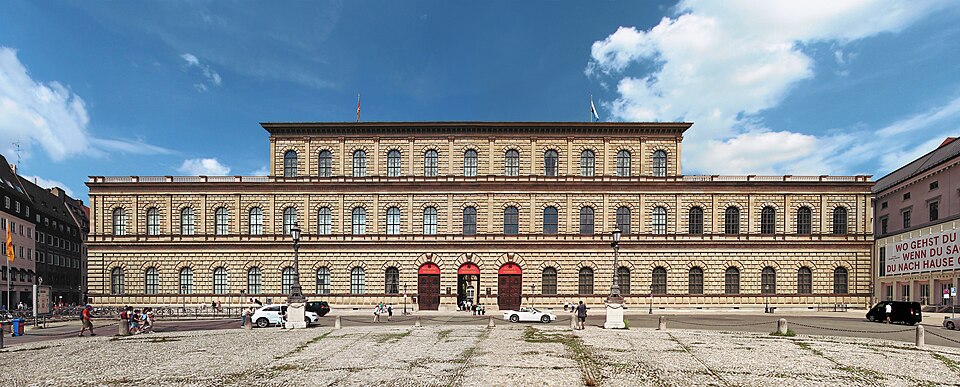
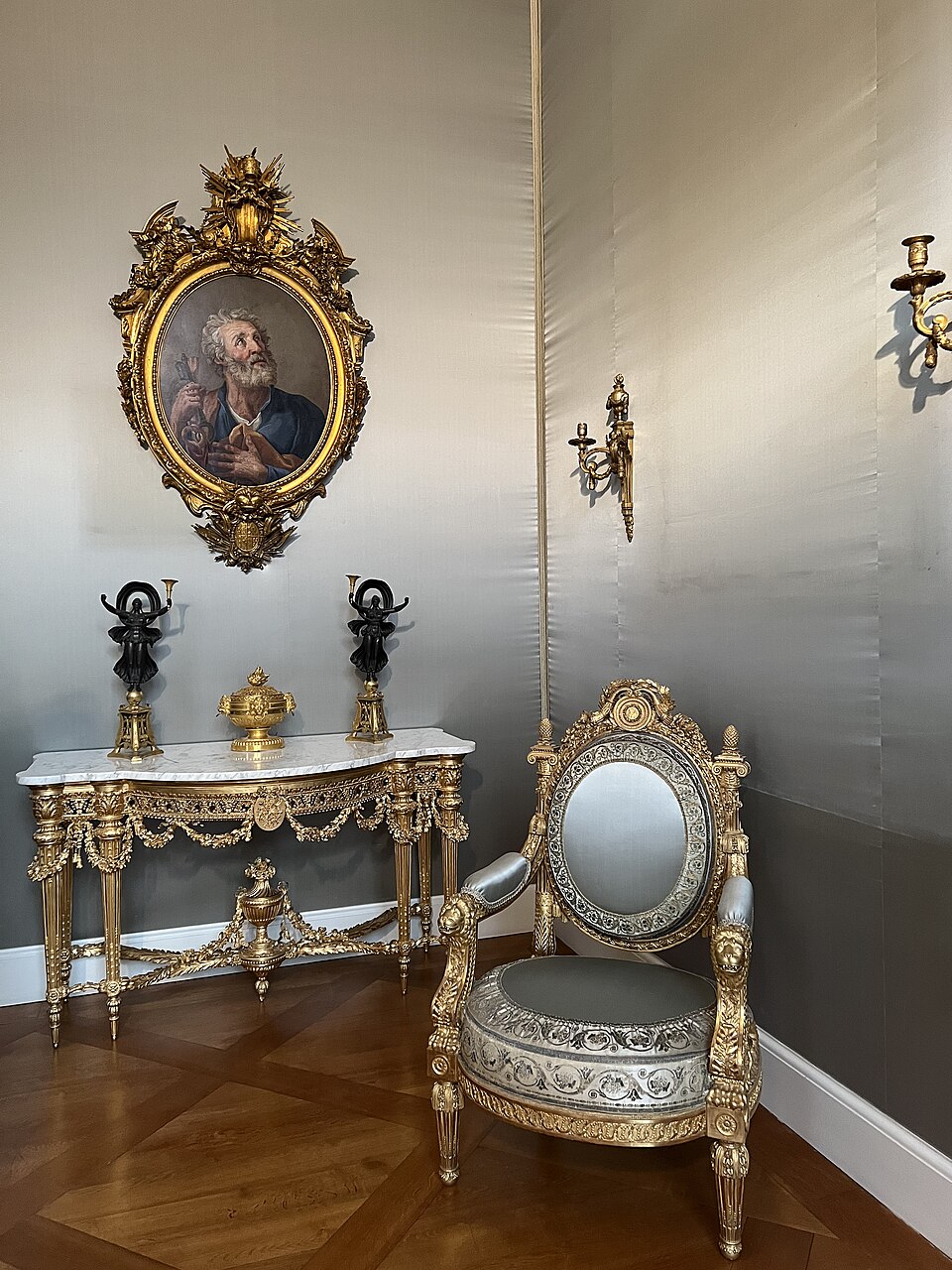
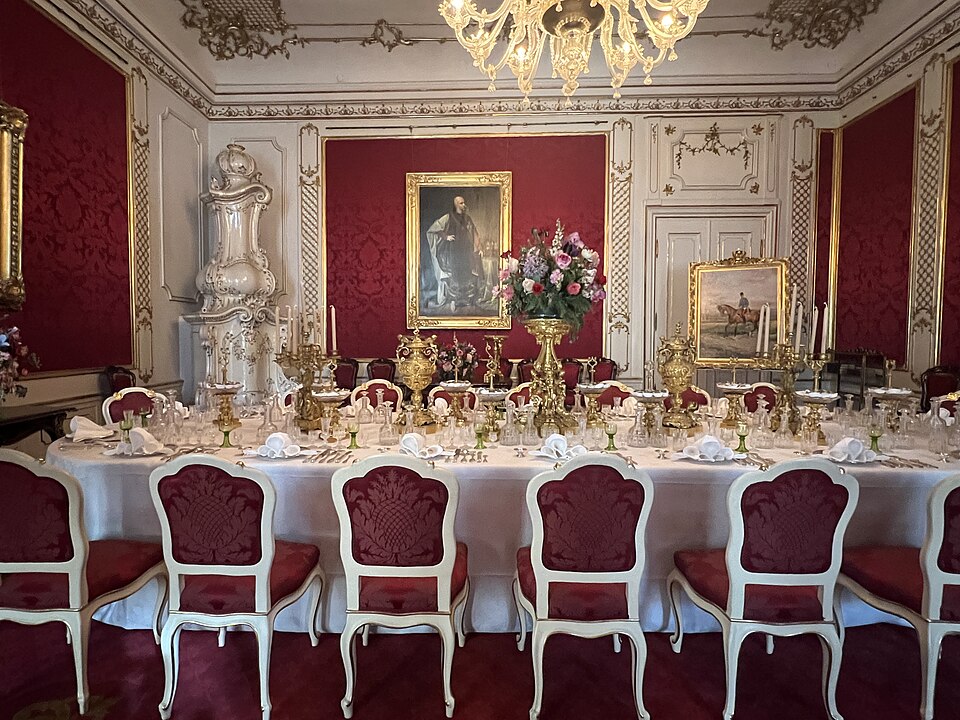
The Munich Residence was the seat of government and the home of Bavaria's dukes, electors and kings from 1508 until the monarchy ended in 1918. It did not begin as a palace. In 1385 a castle called the Neuveste went up in what was then the north-eastern corner of the walled city, and every later ruler pushed the complex further out into the town until it became a chain of wings grouped around courtyards. The building history is legible room by room: the Antiquarium was raised between 1568 and 1571 for Duke Albrecht V's collection of ancient sculpture, the Imperial Courtyard wing between 1612 and 1616, the Ancestral Gallery between 1726 and 1730, and the Royal Palace with Ludwig I's apartments by Leo von Klenze between 1826 and 1835. After 1918 the Residence lost its purpose and opened as a museum of interior design in 1920. In March and April 1944 much of the upper storey and many vaulted ground-floor rooms were gutted, though most of the movable furnishings had already been taken out and stored elsewhere. Reconstruction then ran for decades: the Cuvilliés Theatre and the first section of the museum in 1958, the King's Building apartments in 1980, the Court Church of All Saints in 2003. What a visitor walks through today is that rebuilt fabric holding original furnishings, largely in the rooms they were made for.
Checked 2026-08-26 · Source
Three separately ticketed museums sit inside one complex, and knowing which is which saves confusion at the cash desk. The Residence Museum is the large one, a run of state rooms and apartments in Renaissance, Baroque, Rococo, Neoclassical and Historicist dress. Its set pieces are the Antiquarium, a barrel-vaulted hall of antique sculpture; the Ancestral Gallery with its ranked Wittelsbach portraits and the Porcelain Cabinet beside it; the Ornate Rooms by François Cuvilliés the Elder; the Imperial Staircase, Imperial Hall and Hall of the Four White Horses; the Court Chapel and the Ornate Chapel; the royal apartments and the Nibelungen Halls in Klenze's Royal Palace; and the smaller collections, among them the East Asian Collection, the Stone Rooms, the Treves Rooms and the reliquary collection. The Treasury is ten rooms on the ground floor of the King's Building holding jewels, goldsmiths' work, enamel, rock crystal and ivory, a hoard Duke Albrecht V made unsaleable by his will of 1565 and every later Wittelsbach added to, ending with the royal insignia of the Kingdom of Bavaria. The Cuvilliés Theatre is the surviving carved and painted tier decoration of the court opera house of 1751 to 1755, where Mozart's Idomeneo was first performed in 1781; the building around it was destroyed in 1944 and the fittings, moved to safety in 1943, were reassembled near the Apothecary Courtyard.
Checked 2026-08-26 · Source
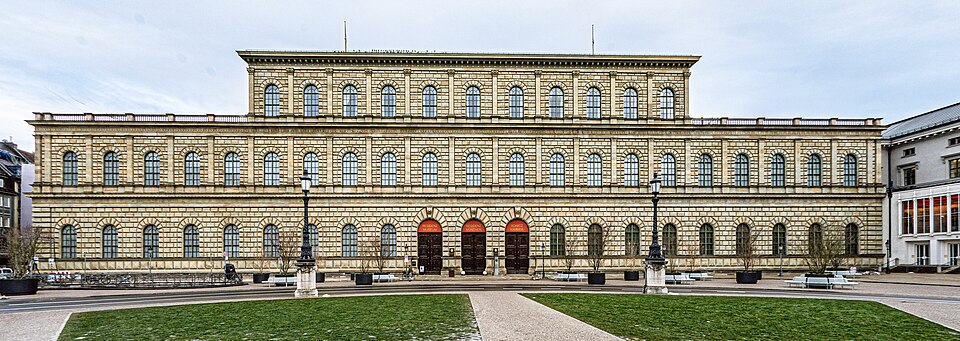
Allow between two and three hours for the Residence Museum. That is the palace administration's own figure, published in its visitor information, and it matches the shape of the route: the museum is a one-way walk through linked rooms rather than a hall you can cut across, so the length of a visit is set by how many rooms are open that day and how closely you read. Last admission is one hour before closing, which the operator states explicitly. Arriving at 17.00 in summer or 16.00 in winter leaves an hour, not three. The Treasury is a separate ten-room circuit and adds roughly forty-five minutes to an hour for anyone who stops at the cases; it is small in floor area and slow in reading. The Cuvilliés Theatre takes fifteen to twenty minutes, because it is one auditorium and once you have looked up at the tiers there is nothing further to walk to. A visitor doing all three on the combination ticket should budget four hours and start in the morning. Half a day here is not an exaggeration. The figures for the Treasury and the theatre are this guide's judgement; only the two-to-three-hour figure for the Residence Museum comes from the operator.
Checked 2026-08-26 · Source
The Residence keeps two sets of hours and the changeover dates are published. From 28 March to 19 October the Residence Museum and the Treasury open daily 9.00 to 18.00, with last entry at 17.00. From 20 October to 27 March they open daily 10.00 to 17.00, last entry 16.00. There is no weekly closing day; the only closures in the year are 1 January, Shrove Tuesday and 24, 25 and 31 December. The Cuvilliés Theatre runs on its own clock and mostly opens later. From 28 March to 31 July and again from 15 September to 19 October it opens Monday to Saturday at 14.00, with 9.00 openings on Sundays and public holidays. From 1 August to 14 September it opens daily at 9.00. In winter it is 14.00 to 17.00 on weekdays and 10.00 to 17.00 on Sundays and holidays. Anyone wanting the theatre on a weekday morning outside August will find it shut. The fountain machinery in the Court Garden runs in the summer season only, April to October, daily 10.00 to 14.00. The Bavarian Palace Administration publishes no visitor numbers, so this guide cannot say which month or which hour is busiest. Opening at 9.00 in summer buys the state rooms before the coach groups arrive, and that is judgement rather than a counted figure.
Checked 2026-08-26 · Source
The 2026 prices published by the palace administration are charged per person. The Residence Museum is 10 euros full and 9 euros reduced. The Treasury is the same, 10 and 9 euros. A combination ticket for both is 15 euros full and 13 euros reduced, which is the ticket most visitors want. The Cuvilliés Theatre alone is 5 euros full and 4 euros reduced, and the combination covering all three is 20 euros full and 16 euros reduced. The Court Garden and the fountain machinery are free and need no ticket at all. Children under 18 are admitted free, and students over 18 at general, vocational, special and hospital schools go free on production of a student card; students at evening schools, colleges and language schools do not. Original proof of eligibility must be shown on site, and the administration is explicit that a reduction cannot be granted afterwards and that tickets are neither returnable nor exchangeable. Tickets for the Residence Museum and the Treasury are sold at the museum cash desk or online through the operator's ticket shop. Tickets for the Cuvilliés Theatre and for the three-part combination are sold only at the cash desk in the Cuvilliés Theatre. Both desks take cash and cards. An online ticket lets a visitor go straight to the entrance instead of queueing. Groups need no reservation and are capped at 25 people.
Checked 2026-08-26 · Source
No car is needed and one is a nuisance. The Residence stands in the middle of Munich on Max-Joseph-Platz, a short walk from the stops the operator names: the S-Bahn and U-Bahn at Marienplatz, the U-Bahn at Odeonsplatz, the bus at Odeonsplatz and the tram at Nationaltheater. From Marienplatz the walk runs a few minutes north along Residenzstraße; from Odeonsplatz a visitor arrives at the Court Garden end and enters the complex from the north. The Residence has no visitor car park of its own. The nearest paid parking is the underground car park of the Nationaltheater on Max-Joseph-Platz, immediately beside the entrance, and that is the operator's own suggestion. Four disabled parking spaces are in Maximilianstraße opposite number 2. Cyclists are pointed at the city's cycling information. Accessibility is partial and worth planning: the ticket office and museum shop are reachable only up several steps, so a wheelchair user should register at the ticket office with a companion, or go straight to the entrance with an online ticket, and staff will bring them to the upper floor by lift. The Ancestral Gallery, the Antiquarium seen from the princes' estrade, the Electoral Apartments, the Imperial Hall, the Stone Rooms, the Ornate Rooms and the Papal Rooms are among the accessible spaces. The Treasury and the Nibelungen Halls are not barrier-free. The Cuvilliés Theatre is.
Checked 2026-08-26 · Source
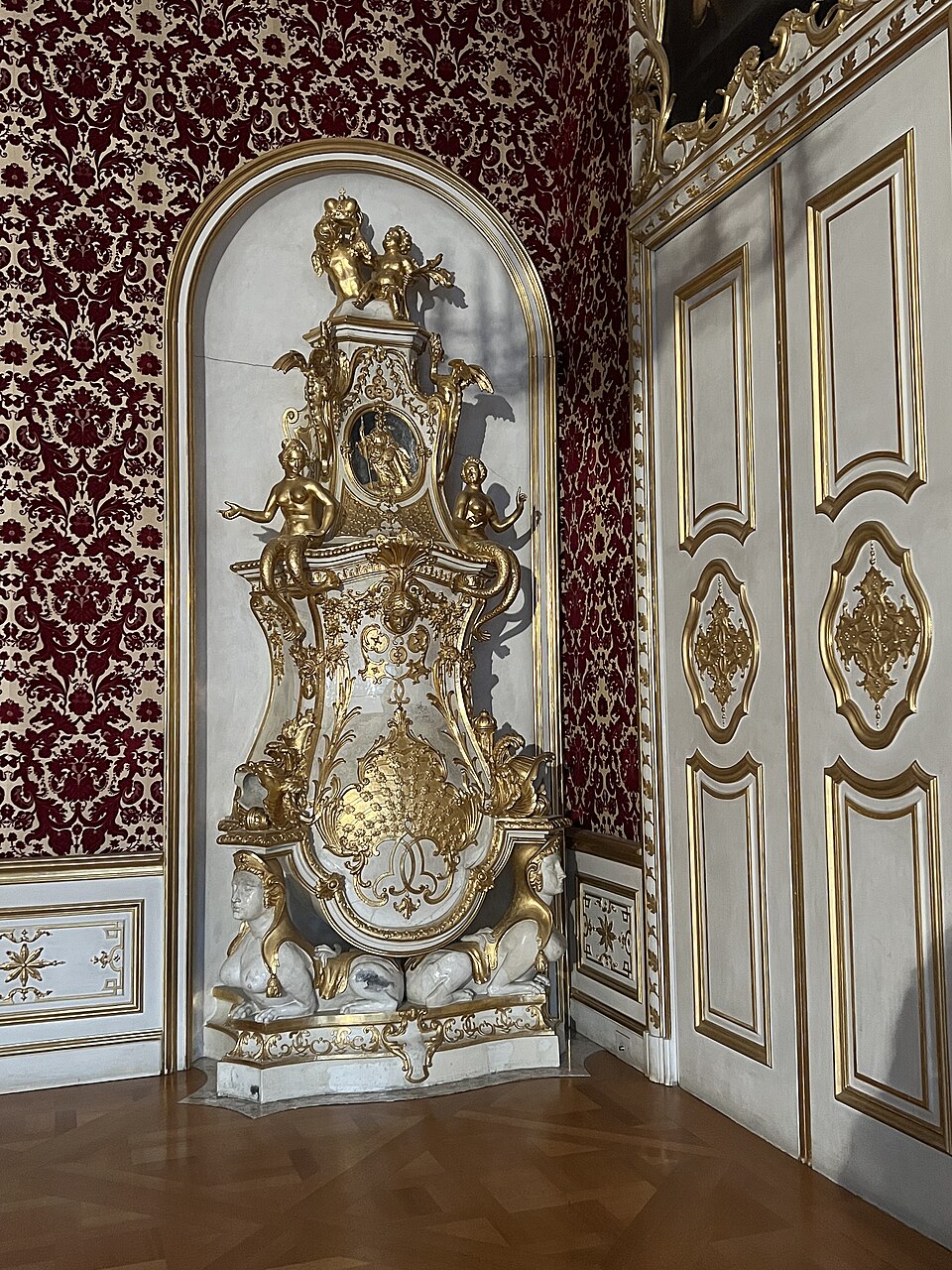
Several house rules catch people out. Large bags, meaning anything from 35 by 30 by 12 centimetres upwards, along with rucksacks and bulky objects, may not be carried into the Residence; they go into a free supervised cloakroom, which costs a few minutes on arrival. No food or drink is allowed in the museum area apart from water in plastic bottles of up to half a litre. There is no café anywhere in the Residence complex, so a visit long enough to need a break means leaving the building, and the surrounding streets have plenty. Prams and buggies may not enter the exhibition rooms for conservation reasons; the museum lends buggies free for the duration of a visit, so a parent should expect to transfer a child at the entrance. Dogs and other animals are not admitted at all, and in the Court Garden they must be on a lead. Children under 14 may only enter accompanied by an adult, and supervising adults are liable for their behaviour. There is at present no barrier-free toilet in the Residence Museum because of building work, and staff will open the one in the neighbouring part of the building in an emergency; the Cuvilliés Theatre has two. There is no guidance system for visually impaired visitors and no induction loop, though a bronze tactile model of the complex stands in front of the Max-Joseph-Platz entrance.
Checked 2026-08-26 · Source
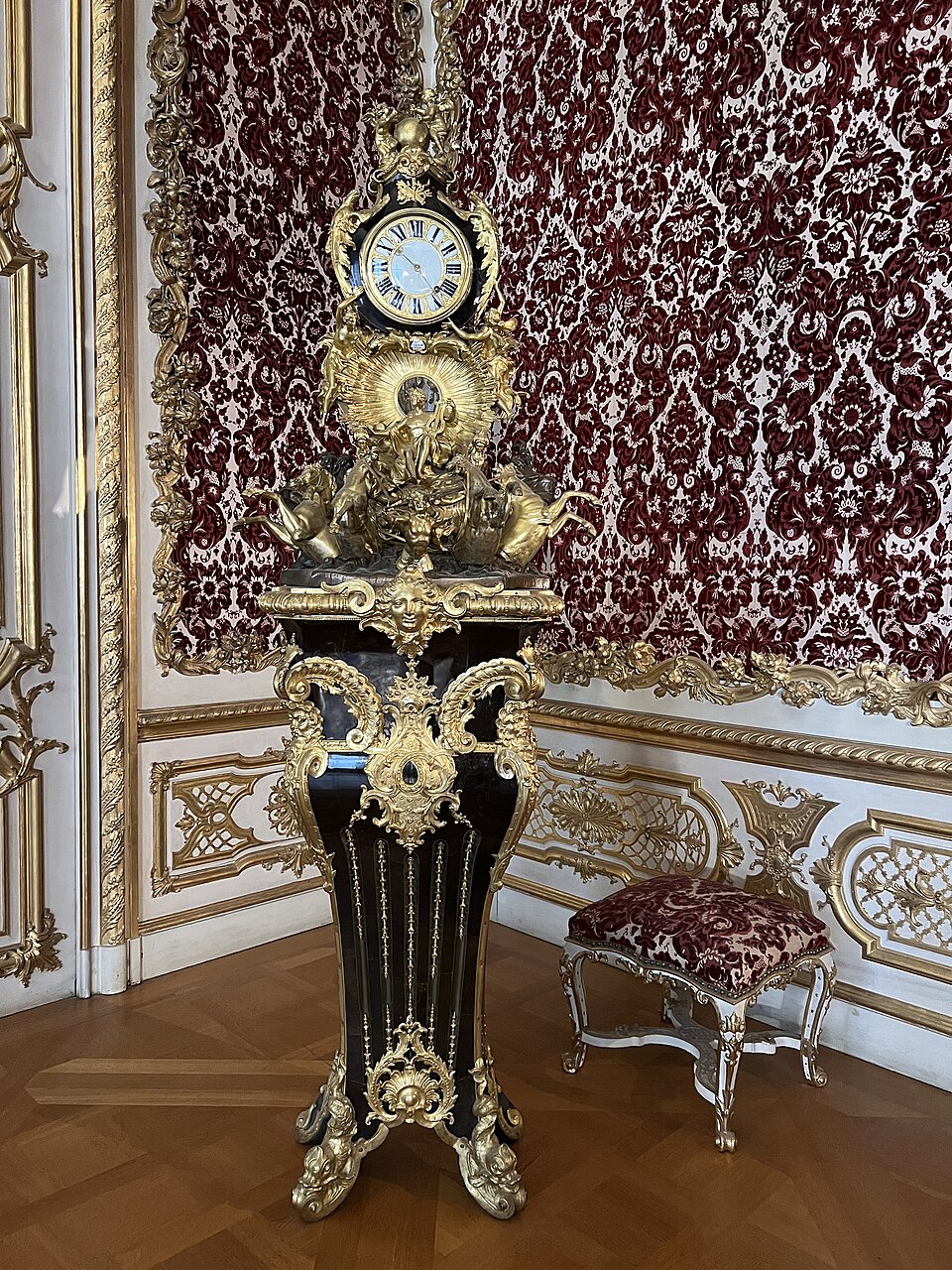
Photography and video for personal use are permitted inside the Munich Residence, but without flash and without a tripod, and that rule shapes what is possible. The state rooms are lit low and warm for conservation, so hand-held work means a fast lens, a high ISO and bracing against a doorframe rather than setting anything on the floor. Wedding shoots inside the buildings are not possible; the administration says so plainly. Anything beyond personal use, including commercial photography, film work and flying a drone or multicopter, needs permission in advance and may carry a charge. The palace administration also publishes downloadable image material that may be used free of charge on a website under stated conditions, which is the route for anyone who needs a picture of a room they cannot photograph well themselves. As for the pictures that do work: the Antiquarium's barrel vault rewards a wide lens from the end of the hall, the Grotto Courtyard and the Imperial Courtyard are outdoors and untouched by the flash rule, and the Court Garden with its pavilion and arcades is free to enter and in open air. In summer the 9.00 opening gives a first hour with fewer people in frame, and the courtyards take late-afternoon light better than morning light. Those framing suggestions are this guide's own, not the operator's.
Checked 2026-08-26 · Source
Admission is charged per person. The Residence Museum is 10 euros full and 9 euros reduced, and the Treasury the same. A combination ticket for both is 15 euros full and 13 euros reduced. The Cuvilliés Theatre alone is 5 euros full and 4 euros reduced, and a combination covering all three is 20 euros full and 16 euros reduced. Children under 18 enter free. The Court Garden and the fountain machinery are free.
The Residence Museum and the Treasury open daily 9.00 to 18.00 from 28 March to 19 October, with last entry at 17.00, and daily 10.00 to 17.00 from 20 October to 27 March, with last entry at 16.00. The Cuvilliés Theatre keeps different hours and opens at 14.00 on weekdays for much of the year, all day from 1 August to 14 September.
No. The operator states that the Munich Residence is open daily, so there is no weekly closing day. It closes on only five dates in the year: 1 January, Shrove Tuesday, 24 December, 25 December and 31 December. The Cuvilliés Theatre is open every day too, but for a shorter window on weekdays outside the 1 August to 14 September period.
The palace administration asks visitors to allow two to three hours for the Residence Museum, and last admission is one hour before closing. The Treasury is a separate circuit that adds roughly forty-five minutes to an hour, and the Cuvilliés Theatre fifteen to twenty minutes; those two figures are this guide's judgement rather than published ones. Someone doing all three should plan on about four hours.
No. The Residence is in the centre of Munich and the operator names the stops beside it: S-Bahn and U-Bahn at Marienplatz, U-Bahn at Odeonsplatz, bus at Odeonsplatz and tram at Nationaltheater. There is no visitor car park at the Residence itself; drivers are directed to the paid underground car park of the Nationaltheater on Max-Joseph-Platz. Four disabled parking spaces are in Maximilianstraße opposite number 2.
Yes, for personal use, but without flash and without a tripod. Wedding shoots inside the buildings are not allowed. Commercial photography, film work and drone or multicopter flights require permission in advance and may carry a charge. The administration also offers downloadable image material that can be used free of charge on a website under stated conditions.
Loading the interactive map…
The interactive map could not be loaded.
Last updated:
Source: OpenStreetMap contributors, Wikidata ·