.jpg)
.jpg)
.jpg)
.jpg)


17 min walk
Castle Suresnes
- Notable · Heritage site
- Historic monument
Language · 1 published
Nature site · Munich

| Monday | 00:00 – 24:00 |
|---|---|
| Tuesday | 00:00 – 24:00 |
| Wednesday | 00:00 – 24:00 |
| Thursday | 00:00 – 24:00 |
| Friday | 00:00 – 24:00 |
| Saturday | 00:00 – 24:00 |
| Sunday | 00:00 – 24:00 |
Checked 2026-08-26 · Source
The Englischer Garten is a public park five and a half kilometres long that runs north from the edge of Munich's old city into open countryside, and it is administered by the Bavarian Palace Administration rather than by the city. Elector Karl Theodor ordered it laid out in 1789 with the instruction that it was 'not to be just for one section of society but for the whole population', which is unusual phrasing for 1789 and is the reason the park has never had a gate or a ticket. The idea came from the American-born Sir Benjamin Thompson, later Count Rumford, who directed the work; the Schwetzingen court gardener Friedrich Ludwig von Sckell was summoned to Munich in August 1789 to help, and after moving to the city in 1804 as Bavarian court garden superintendent he gave the park the form it still has. The ground was Isar flood plain grown over with willow and sea buckthorn, and a dam had to be built before anything could be planted. Sckell's own line about the work — 'Nature only creates a picture by accident, art does it intentionally' — is the useful warning for a visitor: everything that looks accidental here was drawn. The Monopteros, the round temple on its hill that most people photograph, came later, designed by Leo von Klenze in 1837 and set on ground modelled by Carl August Sckell.
Checked 2026-08-26 · Source
The operator gives the park as 376 hectares, or 411 including the Maximilian Park and the Court and Finance Gardens, and states that this makes it larger than either Central Park in New York or Hyde Park in London. Of the 376, roughly 170 hectares are woodland, 187 are meadow and 16 are water. The path network runs to 78 kilometres, about 12 of which are bridle paths, and there are over a hundred bridges and footbridges across some 15 kilometres of streams. The Kleinhesseloher See in the middle covers around 8 hectares. The set pieces are the Chinese Tower and Rumford Hall, both put up in 1790, and Klenze's Monopteros of 1837. Four restaurants serve the park — Aumeister, Chinesischer Turm, Hirschau and Seehaus — along with four kiosks; the beer garden at the Chinese Tower has 7,000 seats and is one of the largest in Bavaria. The Japanese teahouse on Königinstraße holds a tea ceremony from April to October, every second weekend of the month, on Saturday and Sunday at 2, 3, 4 and 5pm. A historic children's merry-go-round stands near the Chinese Tower. In the northern half the Deutsche Wildtier Stiftung has laid out a circular wild-bee trail of about three kilometres with eight information stations. Fifty to sixty bird species breed here, and hedgehogs, squirrels, rabbits, hares, foxes and beaver live in the park.
Checked 2026-08-26 · Source
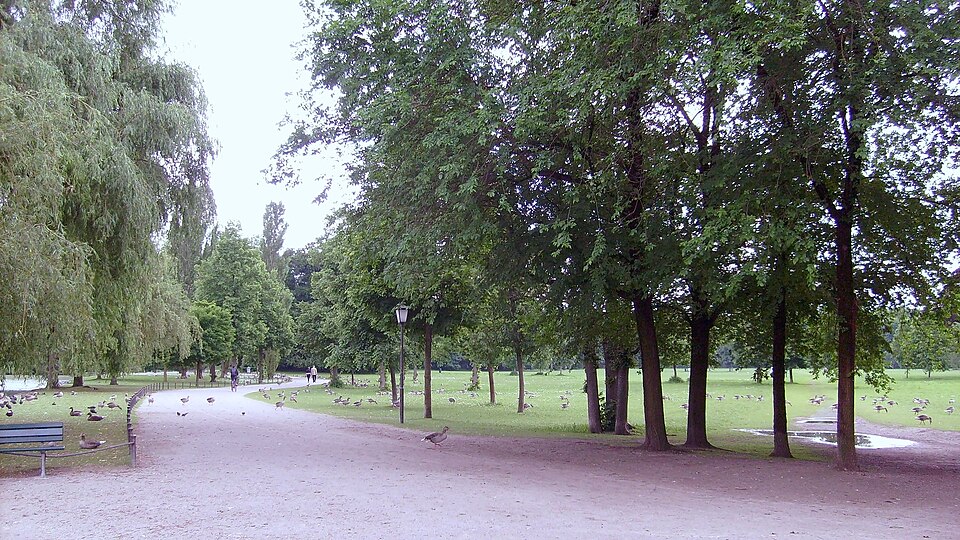
The operator publishes no suggested visiting time, so the two hours recorded here are judgement rather than a sourced figure. Two hours is what the southern half asks for: in from Odeonsplatz or the Haus der Kunst end, up to the Monopteros, across to the Chinese Tower, and on to the Kleinhesseloher See, with time to sit down somewhere along the way. That is the stretch that holds almost everything a first visit wants, and it ends at a lake with a beer garden, which is a better place to stop than a gate. Half an hour buys one thing only — the Eisbach wave at the southern tip, or the temple on its hill, or a coffee by the water. The full length is a different proposition: five and a half kilometres one way to the Aumeister at the northern end, through the Hirschau, is a half day on foot and worth doing on a bicycle instead. With 78 kilometres of paths the park cannot be finished, and treating it as a sight to be completed is the one approach that does not work. Most people who live in Munich use it for an hour at a time, several times a week, and a visitor is best served by copying that.
Checked 2026-08-26
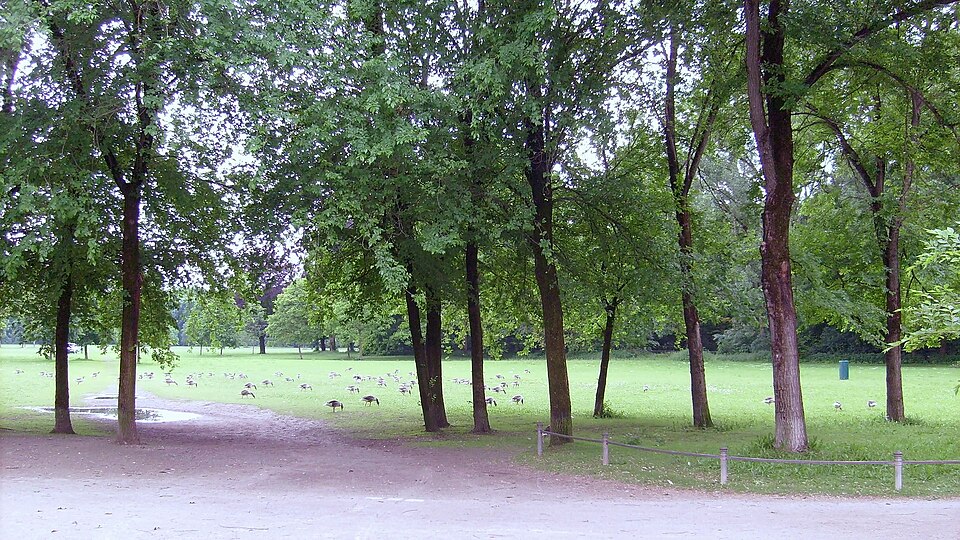
The operator states simply that the park is open all year round. There is no closed day, no seasonal shutdown and no midday break, and no gate opening or closing time is published — which is what a visitor should expect from a park with no fence around most of it. That makes the choice of hour a matter of crowds rather than of access. The operator records more than five million visits a year and names the resulting damage plainly, including some 120 tonnes of rubbish collected annually, most of it left on the grass by weekend visitors. Weekend afternoons from May to September are therefore the park at its most crowded, particularly the meadows in the southern half and the beer garden at the Chinese Tower. Early morning is the opposite experience: the meadows are empty, the streams are loud and the bridle paths carry horses rather than pushchairs. Autumn is the park's best season for colour and its quietest daylight, and winter empties it almost entirely. If the Japanese tea ceremony is the reason for going, the window is narrow — April to October, the second weekend of each month, Saturday and Sunday afternoons — and it is worth planning the visit around it rather than hoping.
Checked 2026-08-26 · Source
Admission is free. The operator's page for the park prints 'Admission free' against the admission line and 'Open all year round' against the hours, and there is no ticket, no timed entry and nothing to book. Free wifi is available in the park. What costs money is everything run as a concession inside it. The four restaurants and beer gardens — Aumeister, Chinesischer Turm, Hirschau and Seehaus — and the four kiosks are separate businesses with their own prices, and those prices were not read from an operator page for this entry and are not recorded here. The same applies to the historic children's merry-go-round by the Chinese Tower, whose opening hours the operator does not publish at all, pointing instead at the carousel's own site. Horse-drawn carriage trips through the park are run by a separate company and charged by it. Photography for private use is free and needs no permission; commercial photography and filming do require written permission in advance and carry a fee. Rooms inside the park can be hired for events through the Bavarian Palace Administration. None of that affects a visitor who simply walks in, which is the normal way to use the place.
Checked 2026-08-26 · Source
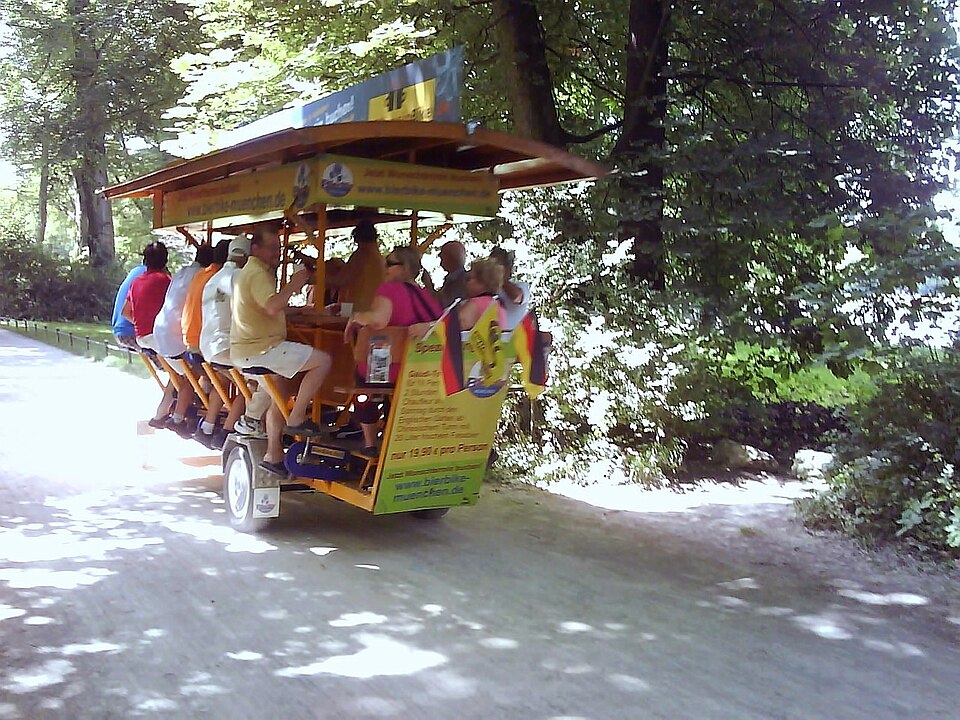
No car is needed and a car is a poor idea. The operator names Marienplatz as the S-Bahn station for the park, a bus to the 'Chinesischer Turm' stop and a tram to 'Tivolistraße'; for the northern half, the operator's German page starts its wild-bee trail from the Studentenstadt underground station or the Aumeister beer garden, which are the two practical northern entrances. On foot the natural way in is from Odeonsplatz through the Court and Finance Gardens, which the operator counts as part of the park's 411 hectares — the walk from the city centre to the Monopteros takes about twenty minutes and is a far better introduction than arriving at a side path. Drivers are directed to the underground car parks at Max-Joseph-Platz and Marstallplatz, both beside the Residenz at the southern end and both a walk from anything in the park; coach parking is available at Marstallplatz. The terrain is mostly flat with paved paths and a good deal of seating, but the path up to the Monopteros is not barrier-free, with an incline of over six per cent. Barrier-free toilets are at the Seehaus, Hirschau, Chinesischer Turm and Aumeister restaurants and at the Tivoli pavilion kiosk.
Checked 2026-08-26 · Source
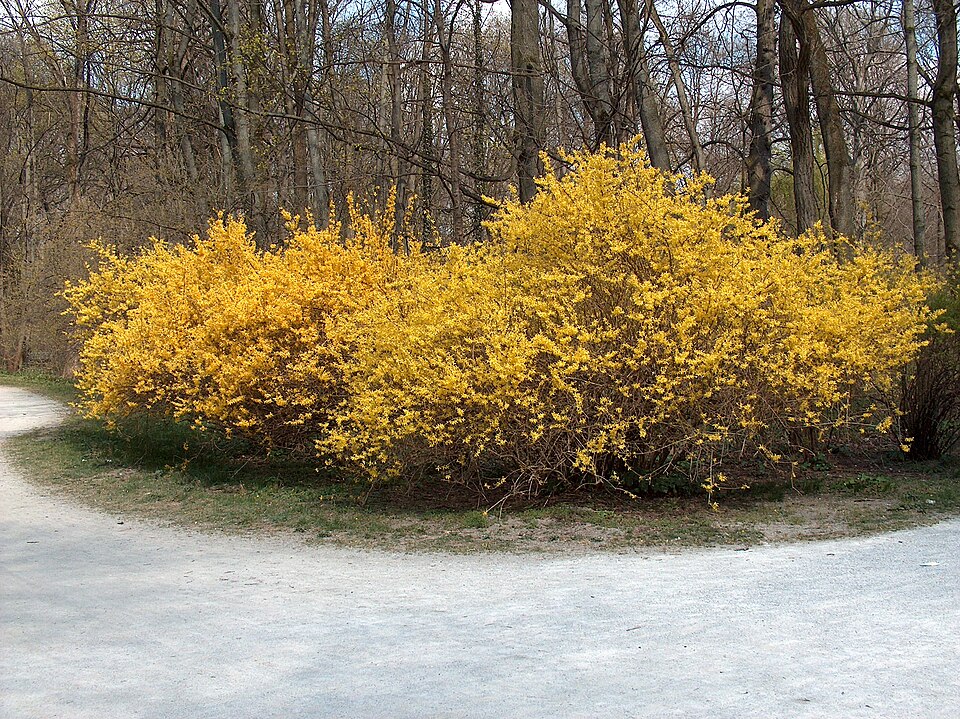
Two things surprise visitors here, and both are normal. The first is the standing wave on the Eisbach at the southern tip, where a stream forms a stationary hydraulic jump and surfers queue along the bank to take turns, dropping out after a minute so the next in line can go. The signage there states that surfing should only be done by expert or skilled surfers; this is fast, cold, shallow water over a concrete bed and it is a place to watch from the bridge, not to try. The second is the Schönfeldwiese, the meadow between the Monopteros and the Japanese teahouse, where nude sunbathing has been permitted since the 1960s and is still practised. A visitor walking south from the temple should know that before walking into it. Beyond those, the hazards are ordinary. Roughly twelve kilometres of the path network are bridle paths shared with horses. The Isarring, part of Munich's central ring road, was driven through the park in 1963 just north of the Kleinhesseloher See and splits it in two, so a walk to the northern half means crossing it rather than strolling on. And a park this large has no staffed gate to ask directions at, so carrying a map is worth the trouble.
Checked 2026-08-26 · Source
The rule matters here more than the light, because the Bavarian Palace Administration governs photography in every garden it runs. Photographs for private use with an ordinary hand-held camera need no permit. The moment a tripod, additional lighting or a selfie stick appears, the shot is no longer 'private use' by the operator's definition, and photography for any commercial purpose requires written permission applied for at least ten working days in advance, granted with a stated fee. Wedding shoots are allowed in the gardens and parks for private use only, and publishing those images is prohibited, though the couple may share them on social media. Drone use has its own published rules. Within that, the subjects are three. The Monopteros on its hill gives the classic frame back across the meadow towards the towers of the old city, and the Ludwigskirche closes the view from the northern Schönfeldwiese. The Eisbach wave rewards a fast shutter from the bridge parapet and nothing else; a slow exposure turns it into white mush. The Kleinhesseloher See in still early air gives the reflections, with the three islands breaking the water. Autumn under the beeches, and low winter light through bare trees on the Hirschau paths, are the two seasons that photograph better than summer.
Checked 2026-08-26 · Source
No. The Bavarian Palace Administration prints 'Admission free' on its page for the park, and there is no ticket, no timed entry and nothing to book. Free wifi is available. Money is only spent inside the park at the concessions — the four restaurants and beer gardens, the four kiosks, the children's merry-go-round and the carriage trips — which are separate businesses setting their own prices.
The operator states that the park is open all year round. There is no closed day, no seasonal closure and no midday break. No gate opening or closing time is published for the park at all, which is consistent with a large open park rather than an evasion — but it does mean that no one should quote a closing hour for it. The concessions inside the park keep their own hours, which the operator does not publish.
Allow two hours. The operator publishes no suggested duration, so that figure is editorial judgement: two hours covers the southern half — the Eisbach wave, the Monopteros, the Chinese Tower and the Kleinhesseloher See — at walking pace with a stop. Half an hour is enough for one of those alone. Walking the full five and a half kilometres north to the Aumeister and back is a half day, and is better done by bicycle.
The operator names Marienplatz as the S-Bahn station, a bus to the 'Chinesischer Turm' stop and a tram to 'Tivolistraße'. For the northern half, the Studentenstadt underground station and the Aumeister beer garden are the entrances the operator's own German page uses as trail starts. Walking in from Odeonsplatz through the Court and Finance Gardens takes about twenty minutes to the Monopteros. Drivers are pointed at the underground car parks at Max-Joseph-Platz and Marstallplatz, which are both at the southern end.
The operator says so. It gives the park as 376 hectares, or 411 hectares counting the Maximilian Park and the Court and Finance Gardens, and states directly that this makes it larger than Central Park in New York or Hyde Park in London. Of the 376 hectares, about 170 are woodland, 187 meadow and 16 water, with 78 kilometres of paths through them and over a hundred bridges.
One of the artificial streams in the park, the Eisbach, forms a standing wave near the southern tip, and surfers queue along the bank and take turns riding it, dropping out after about a minute for the next person. The signage states that surfing should only be done by expert or skilled surfers. It is cold, fast, shallow water over a hard bed, and the sensible way to experience it is from the bridge above.
Loading the interactive map…
The interactive map could not be loaded.
Last updated:
Source: OpenStreetMap contributors, Wikidata ·