.jpg)
.jpg)
.jpg)
3 min walk · เขตพระนคร
Wat Phra Kaew
- Must see
- Historic monument
Language · 1 published
Place of worship · เขตพระนคร, Bangkok
ศาลหลักเมืองกรุงเทพมหานคร
| Monday | 06:30 – 18:00 |
|---|---|
| Tuesday | 06:30 – 18:00 |
| Wednesday | 06:30 – 18:00 |
| Thursday | 06:30 – 18:00 |
| Friday | 06:30 – 18:00 |
| Saturday | 06:30 – 18:00 |
| Sunday | 06:30 – 18:00 |
Checked 2026-08-25 · Source
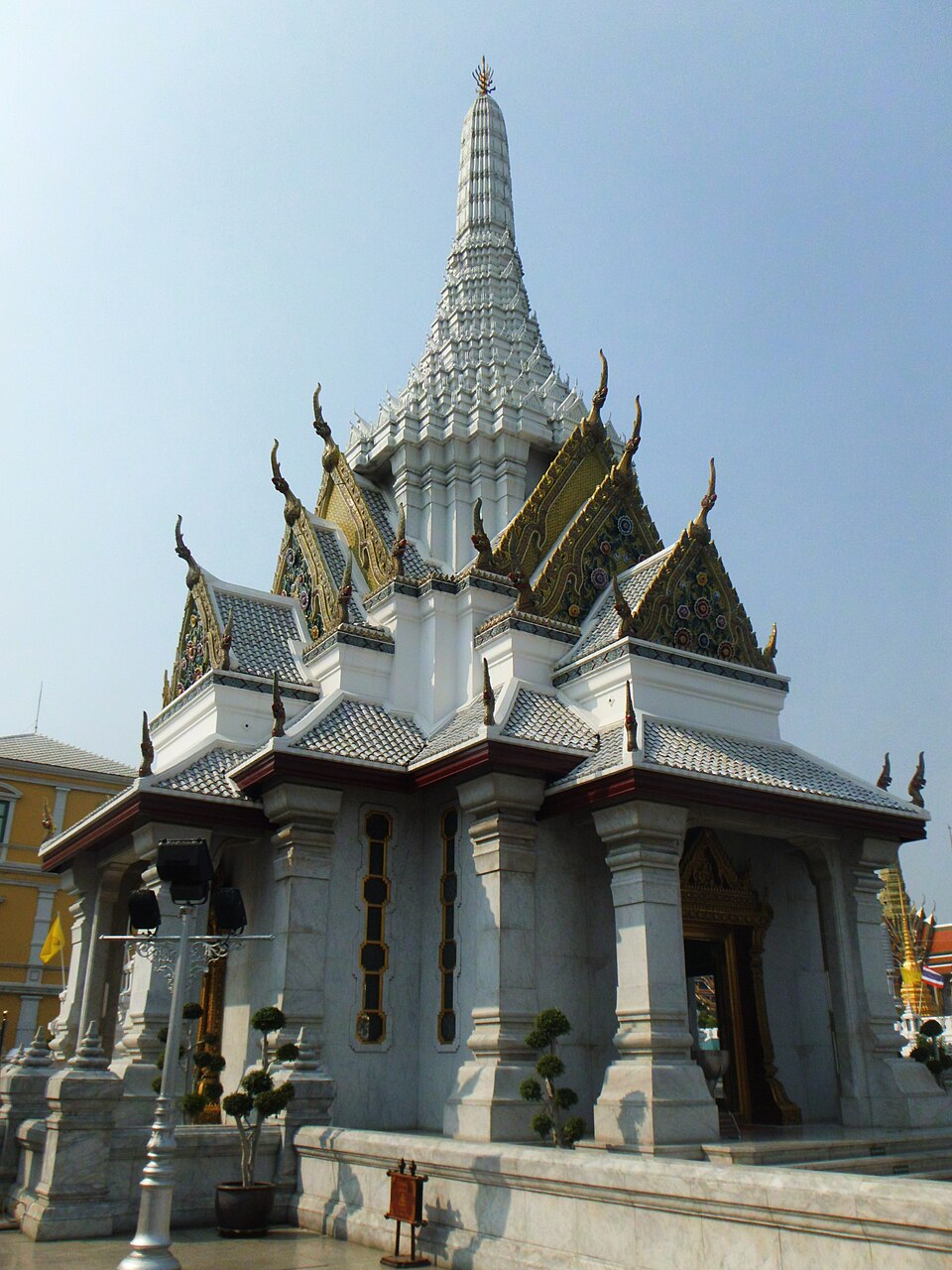
The Bangkok City Pillar Shrine is the oldest thing in Bangkok, and it is older than the city in the strict sense: the acacia pillar at its centre was raised on 21 April 1782, before the walls, before the ministries and before the Grand Palace that now stands across the road from it. The pillar is not a monument to the founding of the capital. It is the founding of the capital — a Brahmanical rite in which a horoscope cast for the new city was sealed inside the wood and the pillar set in the ground to fix the place where Bangkok would stand. Everything else in Rattanakosin was built outward from that point. Visitors walk past the shrine daily without registering it, because it is low, white and quiet on a corner where the Grand Palace wall dominates the eye, and because the encyclopaedic record of it is thin: the English Wikipedia article is short and exists in only six languages. That thinness is exactly what makes the shrine worth thirty minutes. It is one of the few places in the old city where the Brahmanical layer of Thai kingship — older than the Buddhist architecture piled on top of it, and still officiated today — is legible in a single room rather than inferred from a museum caption.
Checked 2026-08-25 · Source
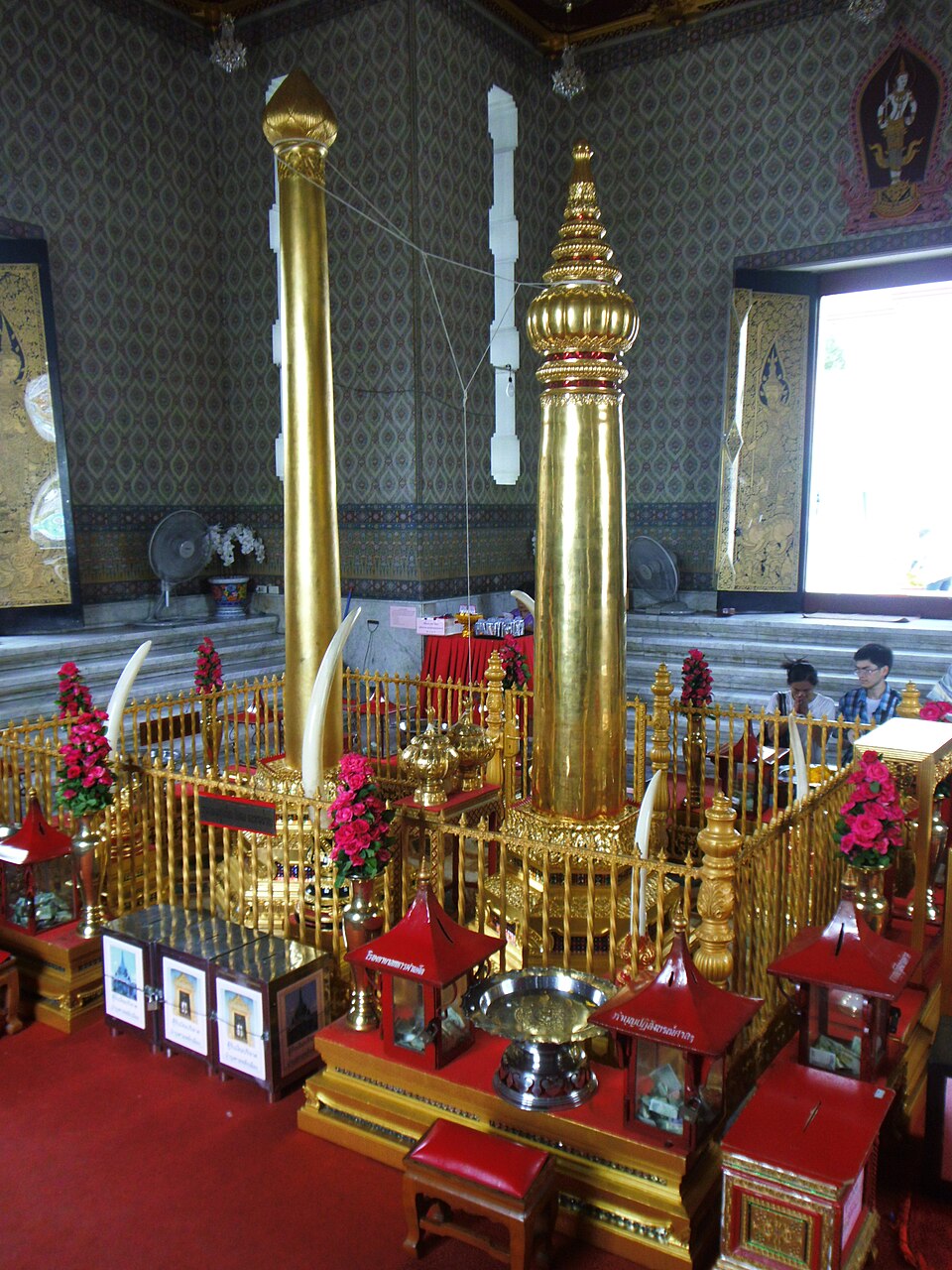
The shrine's own worship instructions set out a route rather than a floor plan, and following it is the clearest way to read the site. It begins at the Buddha hall, moves to the pillar hall, and ends at the five Devaraksa deities — the guardian figures the shrine keeps alongside the pillar itself. The pillar hall is the reason to come: two pillars stand there, the original 1782 acacia shaft and a later replacement, housed under a prang-topped roof that is a great deal more ornate than the shrine's modest street frontage suggests. Offerings are the currency of the place. Garlands, incense, candles, gold leaf, boiled eggs and small painted lakhon chatri dance performances are bought at the shrine and given at the halls, so the interior is rarely still. One caveat applies at the time of writing: the Devaraksa shrine building has been under roof and wall repair since 10 January 2025, and the five deities are viewable only from outside that building while the work continues. The pillar hall and the Buddha hall are unaffected, so the core of the visit is intact even mid-repair.
Checked 2026-08-25 · Source
Allow thirty minutes. That is judgement rather than an operator figure, and it comes from the length of the shrine's own worship sequence — the Buddha hall, then the pillar hall, then the five Devaraksa deities — walked at an unhurried pace with time to stand still in the pillar hall. Nobody publishes a suggested duration for this site. Thirty minutes is enough to see everything, read the pillar and watch a family make an offering; it is not enough if the plan is to buy an offering set and make the circuit properly, which adds another twenty minutes of queueing and arranging. The shrine sits directly opposite the Grand Palace, so in practice it is almost always a thirty-minute wedge inside a longer Rattanakosin morning rather than a destination in its own right. Go before the palace rather than after: the palace takes three hours and empties the attention span the shrine needs.
Checked 2026-08-25
The shrine opens daily at 06:30. Its closing time is the one fact its own website cannot keep straight: the site header states opening hours of 06:30 to 18:00 every day, while the history paragraph on the same site says the shrine has been open to the public daily from 06:30 to 18:30. Both readings are the operator's, they disagree by half an hour, and neither is discarded here — the header time, 18:00, is the one recorded as the working value, so plan around an 18:00 close and treat any later half-hour as a bonus rather than a guarantee. The best hour is around 07:00, shortly after opening, which is judgement and not an operator statement: merit-making crowds build steadily through the morning and the open courtyards are uncomfortably hot by midday. For months, November to February is the cool dry season and much of this visit happens outdoors. The shrine's own announcements make New Year and Chinese New Year nights its busiest of the year, which is either the reason to come or the reason to stay away depending on whether the point is the ritual or the quiet.
Checked 2026-08-25 · Source
No admission fee is recorded for the Bangkok City Pillar Shrine, because the operator publishes none. Both the shrine's own site and its contact page were checked and neither names an entry price anywhere on them. What the site does publish is a donation page and a list of paid worship items — offering tables, banana-leaf bai sri arrangements and amulets — which are purchases made inside, not a condition of entry. The distinction matters and is the reason nothing is recorded here rather than the word "free": an operator that has simply never stated a price is not the same as an operator that has stated the site is free, and this guide does not convert one into the other. In practice a visitor should expect to pay nothing at the gate and to be offered a great deal at the offering counters. Carry small notes if the intention is to make an offering, and treat the donation box as what it is — voluntary.
Checked 2026-08-25 · Source
The shrine stands at the northeast corner of the Grand Palace grounds in Phra Nakhon, on the Sanam Luang side, which makes it one of the easiest places in the old city to reach on foot. MRT Sanam Chai is roughly a 700 metre walk. No car is needed and a car is the worse option, but the shrine's own site does accommodate drivers by pointing them at the Sanam Luang parking, which it gives as 07:00 to 18:00 on weekdays and 06:00 to 18:00 at weekends and public holidays — note that the weekday opening is half an hour after the shrine's own, so an early arrival by car cannot use it. Anyone already walking the Rattanakosin circuit will pass the shrine without detouring: it faces the palace directly, and the crossing is a single road. River arrivals work too, via the Chao Phraya piers that serve the palace, though the walk from the water is longer than the walk from the metro.
Checked 2026-08-25 · Source

Three practical things. First, a dated closure: the shrine has announced that it will be shut on Monday 21 April 2026 from 06:30 to 09:30, reopening for the rest of that day — the pillar's anniversary falls in that week, and an early arrival on that morning will find the gate closed. Second, the Devaraksa shrine repair has been running since 10 January 2025, so the five deities are behind a working building rather than open to approach; nothing published says when it ends, so check on arrival rather than planning around a completion date. Third, the shrine sits on the single most heavily worked stretch of pavement for tourist scams in Bangkok. Anyone who intercepts a visitor outside to explain that the Grand Palace opposite is closed today for a ceremony, and who has a tuk-tuk ready to go somewhere better, should be walked past without a reply; both the shrine and the palace publish their own hours and neither needs a stranger's interpretation. On conduct, the Rattanakosin dress standard applies here as it does at the neighbouring royal sites — shoulders and knees covered, shoes off at the hall thresholds, and feet never pointed at the pillar or the Buddha image when sitting.
Checked 2026-08-25
The shrine photographs badly at midday and well early. The compound is white, the roofs are gilded and the courtyards are open, so between roughly eleven and three the whole scene blows out and the gold reads as a flat glare. At 07:00 the low light rakes across the prang roof of the pillar hall and separates the tiers, which is the shot worth having. The interior of the pillar hall is dim and crowded with incense smoke, so a fast lens or a steady hand matters more than reach; smoke that looks like haze to the eye renders as visible shafts in a backlit frame, which is a gift rather than a problem. Photograph the halls and the architecture freely, but treat people mid-offering as people rather than subjects — ask, or shoot wide enough that nobody is the point of the frame. The Commons images used on this page are by กสิณธร ราชโอรส under CC BY-SA 4.0 and show the compound in flat daylight, which is a fair warning about what midday looks like here.
Checked 2026-08-25
The shrine opens daily at 06:30. Its own site gives two different closing times: the header says 18:00 and the history paragraph on the same site says 18:30. Plan around 18:00, which is the value recorded here, since it is the one the operator publishes as its working hours.
No fee is recorded, because the operator publishes none — neither its main site nor its contact page names an entry price. The shrine does run a donation page and sells worship items such as offering tables, bai sri arrangements and amulets, but those are purchases made inside rather than an admission charge.
Thirty minutes covers it: the Buddha hall, the pillar hall and the five Devaraksa deities, which is the route the shrine itself sets out. Add about twenty minutes if the plan is to buy an offering set and make the circuit properly. No operator publishes a suggested duration; thirty minutes is this guide's judgement.
Two pillars stand in the main hall under a prang-topped roof — the original acacia shaft raised on 21 April 1782 with Bangkok's founding horoscope sealed inside it, and a later replacement. Alongside them are a Buddha hall and the five Devaraksa guardian deities. The Devaraksa building has been under repair since 10 January 2025 and the deities are viewable only from outside it.
Walk. The shrine faces the Grand Palace across the road at the Sanam Luang corner of Phra Nakhon, and MRT Sanam Chai is about 700 metres away. Drivers are pointed by the shrine's own site at the Sanam Luang parking, open 07:00 to 18:00 on weekdays and 06:00 to 18:00 at weekends and public holidays.
Yes, and it belongs before the palace rather than after. It is thirty minutes, it is directly opposite, and it is the older thing: the pillar was raised in April 1782, ahead of the palace, and the Brahmanical foundation rite that established Bangkok is legible in one room here rather than through a museum caption.
Loading the interactive map…
The interactive map could not be loaded.
Last updated:
Source: OpenStreetMap contributors ·