.jpg)
_%E0%B8%9E%E0%B8%A3%E0%B8%B0%E0%B8%A3%E0%B8%B2%E0%B8%8A%E0%B8%A7%E0%B8%B1%E0%B8%87%E0%B8%AA%E0%B8%A3%E0%B8%B2%E0%B8%8D%E0%B8%A3%E0%B8%A1%E0%B8%A2%E0%B9%8C_%E0%B9%80%E0%B8%82%E0%B8%95%E0%B8%9E%E0%B8%A3%E0%B8%B0%E0%B8%99%E0%B8%84%E0%B8%A3_%E0%B8%81%E0%B8%A3%E0%B8%B8%E0%B8%87%E0%B9%80%E0%B8%97%E0%B8%9E%E0%B8%A1%E0%B8%AB%E0%B8%B2%E0%B8%99%E0%B8%84%E0%B8%A3_(1).jpg)
_%E0%B8%9E%E0%B8%A3%E0%B8%B0%E0%B8%A3%E0%B8%B2%E0%B8%8A%E0%B8%A7%E0%B8%B1%E0%B8%87%E0%B8%AA%E0%B8%A3%E0%B8%B2%E0%B8%8D%E0%B8%A3%E0%B8%A1%E0%B8%A2%E0%B9%8C_%E0%B9%80%E0%B8%82%E0%B8%95%E0%B8%9E%E0%B8%A3%E0%B8%B0%E0%B8%99%E0%B8%84%E0%B8%A3_%E0%B8%81%E0%B8%A3%E0%B8%B8%E0%B8%87%E0%B9%80%E0%B8%97%E0%B8%9E%E0%B8%A1%E0%B8%AB%E0%B8%B2%E0%B8%99%E0%B8%84%E0%B8%A3_(2).jpg)
_%E0%B8%9E%E0%B8%A3%E0%B8%B0%E0%B8%A3%E0%B8%B2%E0%B8%8A%E0%B8%A7%E0%B8%B1%E0%B8%87%E0%B8%AA%E0%B8%A3%E0%B8%B2%E0%B8%8D%E0%B8%A3%E0%B8%A1%E0%B8%A2%E0%B9%8C_%E0%B9%80%E0%B8%82%E0%B8%95%E0%B8%9E%E0%B8%A3%E0%B8%B0%E0%B8%99%E0%B8%84%E0%B8%A3_%E0%B8%81%E0%B8%A3%E0%B8%B8%E0%B8%87%E0%B9%80%E0%B8%97%E0%B8%9E%E0%B8%A1%E0%B8%AB%E0%B8%B2%E0%B8%99%E0%B8%84%E0%B8%A3_(3).jpg)
_%E0%B8%9E%E0%B8%A3%E0%B8%B0%E0%B8%A3%E0%B8%B2%E0%B8%8A%E0%B8%A7%E0%B8%B1%E0%B8%87%E0%B8%AA%E0%B8%A3%E0%B8%B2%E0%B8%8D%E0%B8%A3%E0%B8%A1%E0%B8%A2%E0%B9%8C_%E0%B9%80%E0%B8%82%E0%B8%95%E0%B8%9E%E0%B8%A3%E0%B8%B0%E0%B8%99%E0%B8%84%E0%B8%A3_%E0%B8%81%E0%B8%A3%E0%B8%B8%E0%B8%87%E0%B9%80%E0%B8%97%E0%B8%9E%E0%B8%A1%E0%B8%AB%E0%B8%B2%E0%B8%99%E0%B8%84%E0%B8%A3_(4).jpg)

2 min walk · เขตพระนคร
Wat Ratchapradit
- Must see · Heritage site
- Historic monument
Language · 1 published
Historic monument · เขตพระนคร, Bangkok
พระราชวังสราญรมย์

Saranrom Palace is a two-storey brick palace on Sanam Chai Road, immediately east of the Grand Palace and facing the Temple of the Emerald Buddha, designed by the Englishman Henry Alabaster and begun in 1866. King Mongkut, Rama IV, intended it as the house he would retire to, advising from next door after handing the throne to Prince Chulalongkorn; he died in 1868 before it was finished, and the retirement never happened. What followed instead is the reason the building matters: princes' quarters, then Bangkok's guest house for visiting royalty from 1884, then from 1926 the headquarters of the Ministry of Foreign Affairs, which it still is. The ASEAN Declaration was signed inside it on 8 August 1967. The palace is therefore not a museum with a queue but a working ministry with an exceptional interior, standing beside the public Saranrom Park that shares its name.
Checked 2026-08-25 · Source
The Ministry of Foreign Affairs describes the interior it occupies. The central gable of the façade carries the insignia of King Rama IV. Inside, a spacious inner courtyard is set with sculpted fountains, and the Bua Kaew portal, an ornate passage whose frieze is carved in gilded wood, links the older part of the palace to the newer one and leads through to the Main Hall. The Devawongse Conference and Dining Room has a ceiling inlaid with wood and gold trim, and its walls carry Italian still-life oil paintings that King Rama V brought back from his travels in Europe; a marble bust of Krom Phraya Devawongse Varopakarn, called the father of Thai diplomacy, stands in the same room. The Traidhos Room was originally the Undersecretary's office and now serves for small receptions and conferences. The Main Hall works in a gold-yellow motif, and its carved ceiling panels and ventilation grills are the detail the ministry itself singles out.
Checked 2026-08-25 · Source
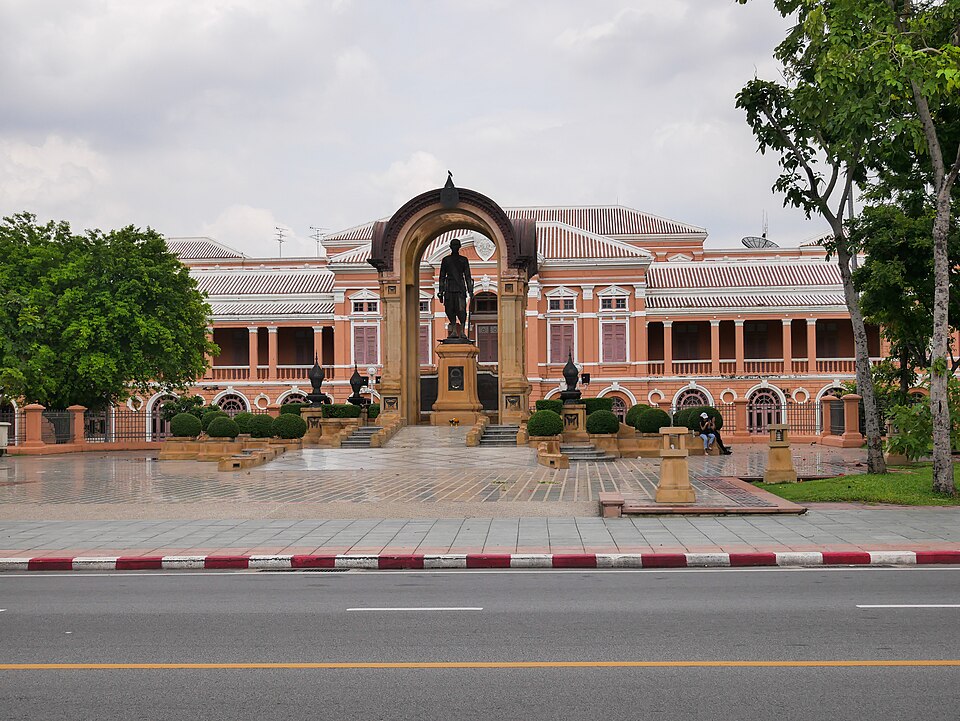
Allow forty-five minutes. For almost every visitor Saranrom Palace is an exterior: the façade and its Rama IV gable seen from Sanam Chai Road, the length of the compound wall, and then the adjoining Saranrom Park, which is a genuine garden rather than a forecourt and absorbs most of the three quarters of an hour comfortably. Anyone who has arranged access to the interior should plan for considerably longer and should let the arrangement, not this page, set the timing. Because the palace sits directly across from the Grand Palace complex, the realistic way to spend the time is as the quiet end of a morning that started with the crowds on the other side of the road.
Checked 2026-08-25
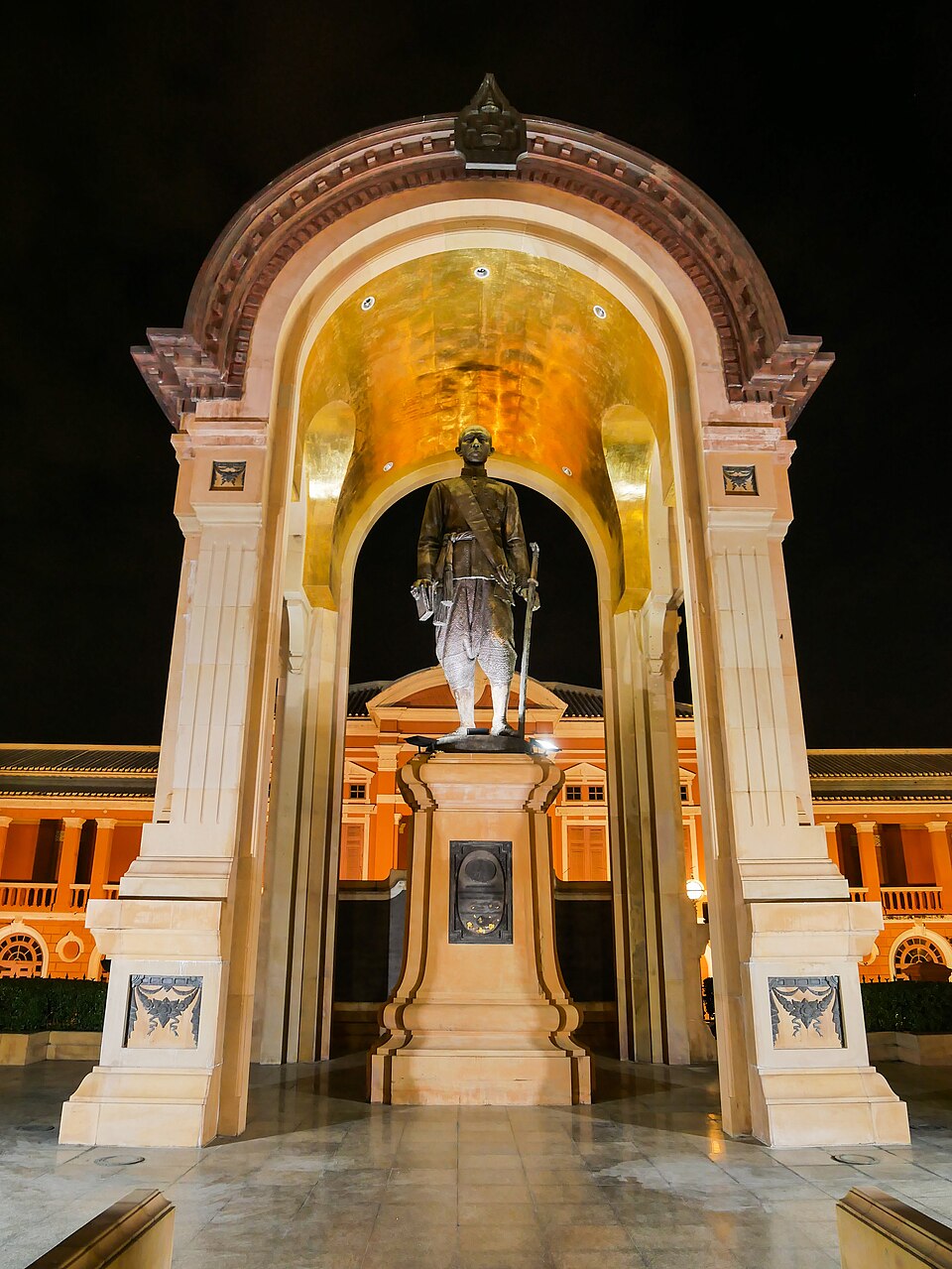
Come in the morning, and come as part of a Rattanakosin walk rather than as a destination in itself. The Grand Palace opposite fills with tour groups from the moment it opens, and Saranrom's frontage and the park beside it are the obvious place to escape that pressure without leaving the historic quarter. Light on the Sanam Chai façade is kinder later in the day than at noon, when the sun sits overhead and flattens the plasterwork. The palace is a working ministry, so its rhythm is a working week: expect officials, security and government vehicles at the gates on weekday mornings, and a much quieter street at the weekend. Bangkok's hot season makes the exposed pavement along Sanam Chai punishing between late morning and mid-afternoon, and the park's shade is the practical reason to time the stop early.
Checked 2026-08-25
No admission and no opening hours are recorded for Saranrom Palace. The Ministry of Foreign Affairs publishes two pages about the building, a history and an architectural tour, and both were read on 25 August 2026: neither states visiting hours, a ticket price, a tour booking route or any public-access arrangement at all. Because the palace is the ministry's own headquarters, the sensible assumption is that the interior is not open on a walk-up basis and that any access is arranged rather than bought. Nothing is charged for standing on Sanam Chai Road to look at the façade, and the adjoining Saranrom Park is a separate public garden. Anyone wanting to get inside should approach the Ministry of Foreign Affairs directly rather than a ticket seller.
Checked 2026-08-25
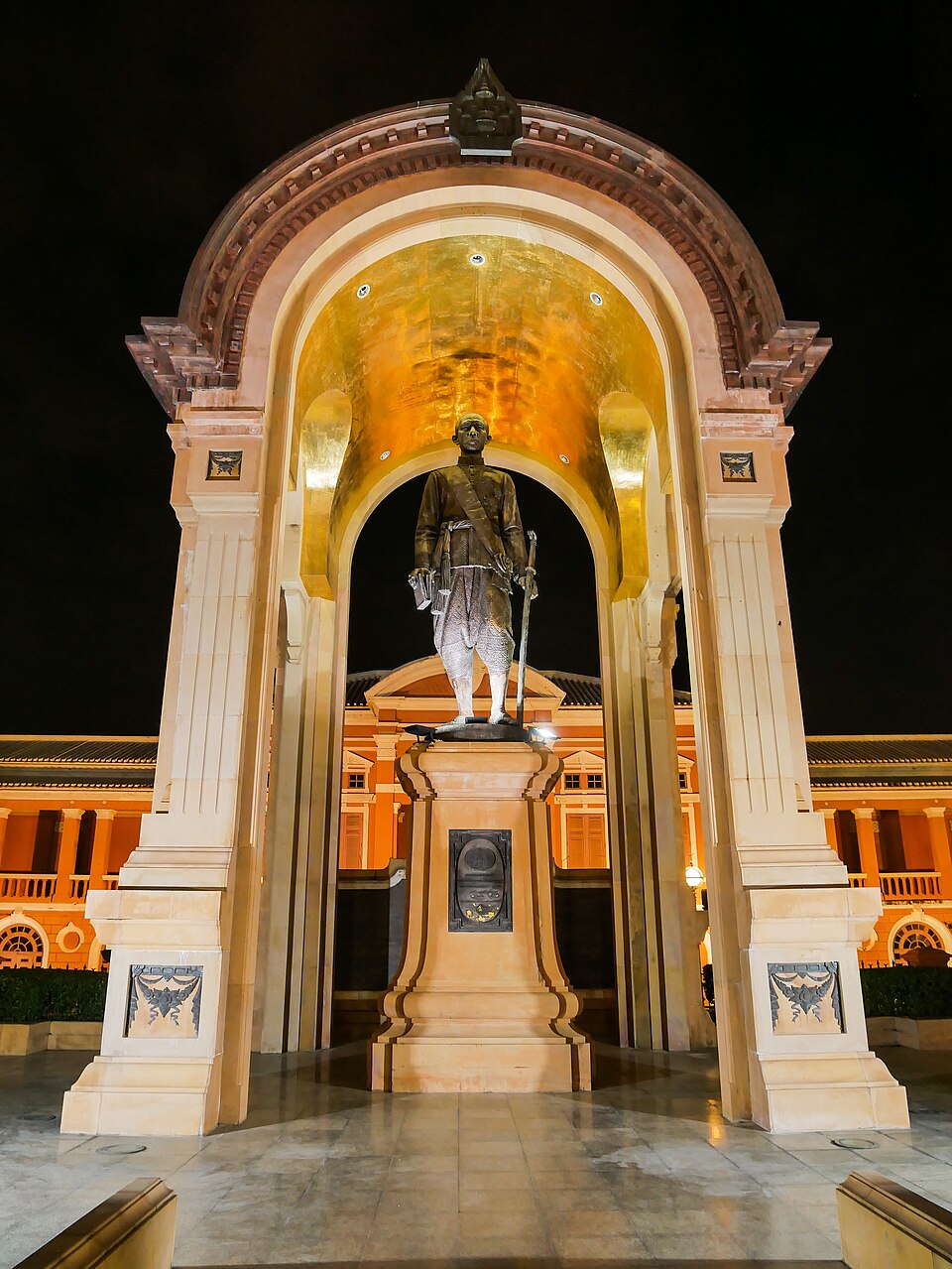
Saranrom Palace stands on Sanam Chai Road in Phra Nakhon, across the road from the Grand Palace and the Temple of the Emerald Buddha, which makes it one of the easiest addresses in the old city to find: walk out of the Grand Palace's eastern side and it is in front of you. The MRT Blue Line's Sanam Chai station is the nearest rail, a short walk south along the same road, and it is by some distance the least painful way into Rattanakosin, where traffic on the approach roads is heavy for most of the day. Chao Phraya express boats land at Tha Tien and Tha Chang, both within a walk of ten to fifteen minutes to the west. Buses run along Sanam Chai and Charoen Krung.
Checked 2026-08-25
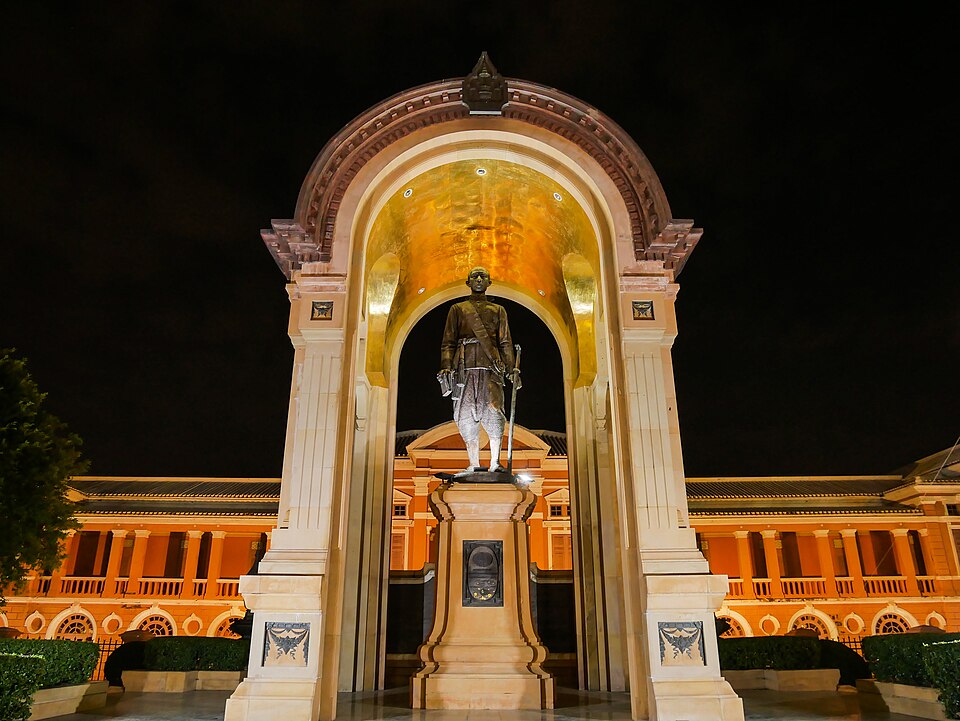
The trap here is not the palace, it is the pavement outside it. This corner of Rattanakosin is the home ground of the oldest scam in Bangkok: a friendly stranger, often well dressed and sometimes claiming to be an official or a teacher, tells a visitor that the Grand Palace or a nearby temple is closed today for a ceremony and offers a cheap tuk-tuk tour instead, which ends at a gem shop or a tailor. The Grand Palace is not closed. Walk to the gate and check for yourself. Second, Saranrom Palace is a functioning ministry: the gates are guarded, entry is not casual, and photographing security posts or officials is unwelcome. Third, the dress standards of the Grand Palace opposite apply to the whole outing if the two are combined; shoulders and knees covered avoids a wasted walk. Finally, do not confuse the palace with Saranrom Park next door, which is the part that is genuinely open.
Checked 2026-08-25
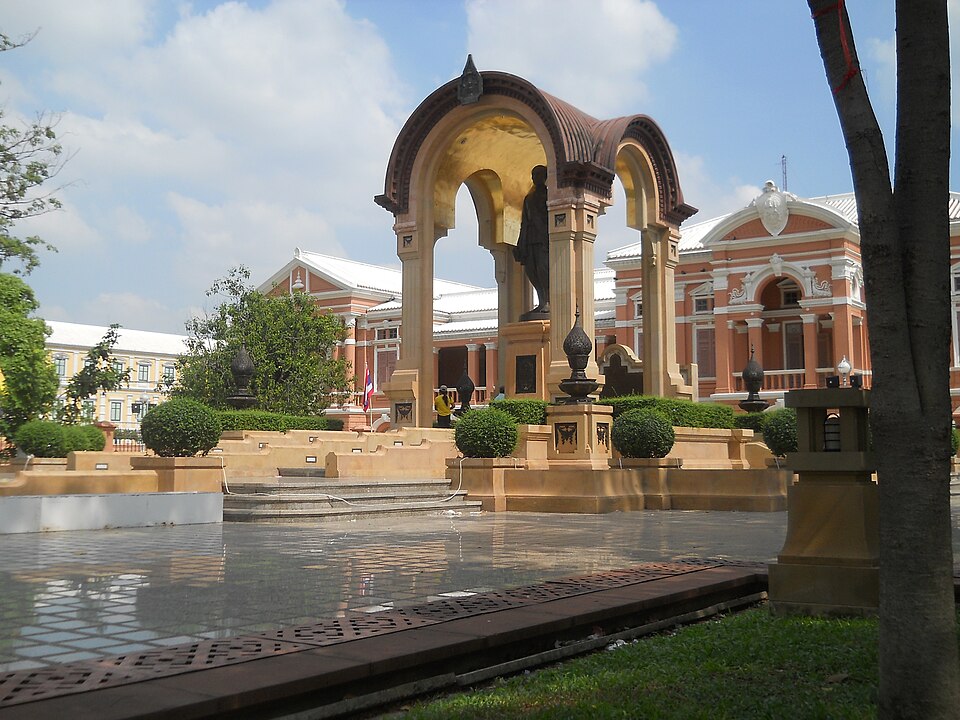
The photograph to take is the Sanam Chai façade with the Rama IV insignia on the central gable, and the trick is distance: the building sits behind its wall, so the frame usually needs the far pavement and a moderate telephoto rather than a wide lens up against the railings. Late afternoon light comes onto the front and warms the plaster; midday flattens it and blows out the pale walls against a bright sky. Saranrom Park next door gives the softer frames, with old trees and garden structures making foregrounds that are more interesting than a straight elevation. Keep the camera off the gates, the guards and the ministry vehicles, which is both a courtesy and a practical way to avoid being asked to leave. The Grand Palace's walls and spires rise directly opposite, so a single position on Sanam Chai often holds both subjects.
Checked 2026-08-25
Saranrom Palace is a two-storey brick palace on Sanam Chai Road in Phra Nakhon, beside the Grand Palace, designed by Henry Alabaster and begun in 1866 as the house King Mongkut intended to retire to. He died in 1868 before it was finished. Since 1926 it has been the headquarters of the Ministry of Foreign Affairs.
Yes. The founding members of ASEAN signed the ASEAN Declaration at Saranrom Palace on 8 August 1967, while the building served as the Ministry of Foreign Affairs headquarters.
No public-access arrangement is recorded. The Ministry of Foreign Affairs publishes a history page and an architectural tour page for the palace, and neither states opening hours, a ticket price or a booking route. The building is the ministry's working headquarters, so any access is arranged rather than bought at a gate.
The ministry describes an inner courtyard set with sculpted fountains, the Bua Kaew portal with its frieze carved in gilded wood, the Devawongse Conference and Dining Room with a wood and gold inlaid ceiling and Italian still-life paintings brought back by King Rama V, the Traidhos Room, and a Main Hall in a gold-yellow motif with carved ceiling panels and ventilation grills.
King Rama V gave the palace to princes including Prince Chaturonrasmi and Prince Bhanurangsi Savangwongse after they left the Grand Palace, and from 1884 it lodged foreign royal guests, beginning with Prince Oscar Bernadotte of Sweden and later including the future Tsar Nicholas II, Prince George of Greece and Denmark and Prince Fushimi Hiroyasu.
It is on Sanam Chai Road directly across from the Grand Palace and the Temple of the Emerald Buddha. MRT Blue Line Sanam Chai station is a short walk south along the same road, and Chao Phraya express boats land at Tha Tien and Tha Chang, both ten to fifteen minutes' walk to the west.
Loading the interactive map…
The interactive map could not be loaded.
Last updated:
Source: OpenStreetMap contributors, Wikidata ·