
_%E0%B8%9E%E0%B8%A3%E0%B8%B0%E0%B8%9A%E0%B8%A3%E0%B8%A1%E0%B8%A1%E0%B8%AB%E0%B8%B2%E0%B8%A3%E0%B8%B2%E0%B8%8A%E0%B8%A7%E0%B8%B1%E0%B8%87_%E0%B9%81%E0%B8%A5%E0%B8%B0%E0%B8%A7%E0%B8%B1%E0%B8%94%E0%B8%9E%E0%B8%A3%E0%B8%B0%E0%B8%A8%E0%B8%A3%E0%B8%B5%E0%B8%A3%E0%B8%B1%E0%B8%95%E0%B8%99%E0%B8%A8%E0%B8%B2%E0%B8%AA%E0%B8%94%E0%B8%B2%E0%B8%A3%E0%B8%B2%E0%B8%A1_0.jpg)
_%E0%B8%9E%E0%B8%A3%E0%B8%B0%E0%B8%9A%E0%B8%A3%E0%B8%A1%E0%B8%A1%E0%B8%AB%E0%B8%B2%E0%B8%A3%E0%B8%B2%E0%B8%8A%E0%B8%A7%E0%B8%B1%E0%B8%87_%E0%B9%81%E0%B8%A5%E0%B8%B0%E0%B8%A7%E0%B8%B1%E0%B8%94%E0%B8%9E%E0%B8%A3%E0%B8%B0%E0%B8%A8%E0%B8%A3%E0%B8%B5%E0%B8%A3%E0%B8%B1%E0%B8%95%E0%B8%99%E0%B8%A8%E0%B8%B2%E0%B8%AA%E0%B8%94%E0%B8%B2%E0%B8%A3%E0%B8%B2%E0%B8%A1_1.jpg)
_%E0%B8%9E%E0%B8%A3%E0%B8%B0%E0%B8%9A%E0%B8%A3%E0%B8%A1%E0%B8%A1%E0%B8%AB%E0%B8%B2%E0%B8%A3%E0%B8%B2%E0%B8%8A%E0%B8%A7%E0%B8%B1%E0%B8%87_%E0%B9%81%E0%B8%A5%E0%B8%B0%E0%B8%A7%E0%B8%B1%E0%B8%94%E0%B8%9E%E0%B8%A3%E0%B8%B0%E0%B8%A8%E0%B8%A3%E0%B8%B5%E0%B8%A3%E0%B8%B1%E0%B8%95%E0%B8%99%E0%B8%A8%E0%B8%B2%E0%B8%AA%E0%B8%94%E0%B8%B2%E0%B8%A3%E0%B8%B2%E0%B8%A1_2.jpg)
_%E0%B8%9E%E0%B8%A3%E0%B8%B0%E0%B8%9A%E0%B8%A3%E0%B8%A1%E0%B8%A1%E0%B8%AB%E0%B8%B2%E0%B8%A3%E0%B8%B2%E0%B8%8A%E0%B8%A7%E0%B8%B1%E0%B8%87_%E0%B9%81%E0%B8%A5%E0%B8%B0%E0%B8%A7%E0%B8%B1%E0%B8%94%E0%B8%9E%E0%B8%A3%E0%B8%B0%E0%B8%A8%E0%B8%A3%E0%B8%B5%E0%B8%A3%E0%B8%B1%E0%B8%95%E0%B8%99%E0%B8%A8%E0%B8%B2%E0%B8%AA%E0%B8%94%E0%B8%B2%E0%B8%A3%E0%B8%B2%E0%B8%A1_3.jpg)
_%E0%B8%9E%E0%B8%A3%E0%B8%B0%E0%B8%9A%E0%B8%A3%E0%B8%A1%E0%B8%A1%E0%B8%AB%E0%B8%B2%E0%B8%A3%E0%B8%B2%E0%B8%8A%E0%B8%A7%E0%B8%B1%E0%B8%87_%E0%B9%81%E0%B8%A5%E0%B8%B0%E0%B8%A7%E0%B8%B1%E0%B8%94%E0%B8%9E%E0%B8%A3%E0%B8%B0%E0%B8%A8%E0%B8%A3%E0%B8%B5%E0%B8%A3%E0%B8%B1%E0%B8%95%E0%B8%99%E0%B8%A8%E0%B8%B2%E0%B8%AA%E0%B8%94%E0%B8%B2%E0%B8%A3%E0%B8%B2%E0%B8%A1_4.jpg)
1 min walk · เขตพระนคร
Chakri Maha Prasat Throne Hall
- High
- Historic monument
Language · 1 published
Historic monument · เขตพระนคร, Bangkok
พระบรมมหาราชวัง
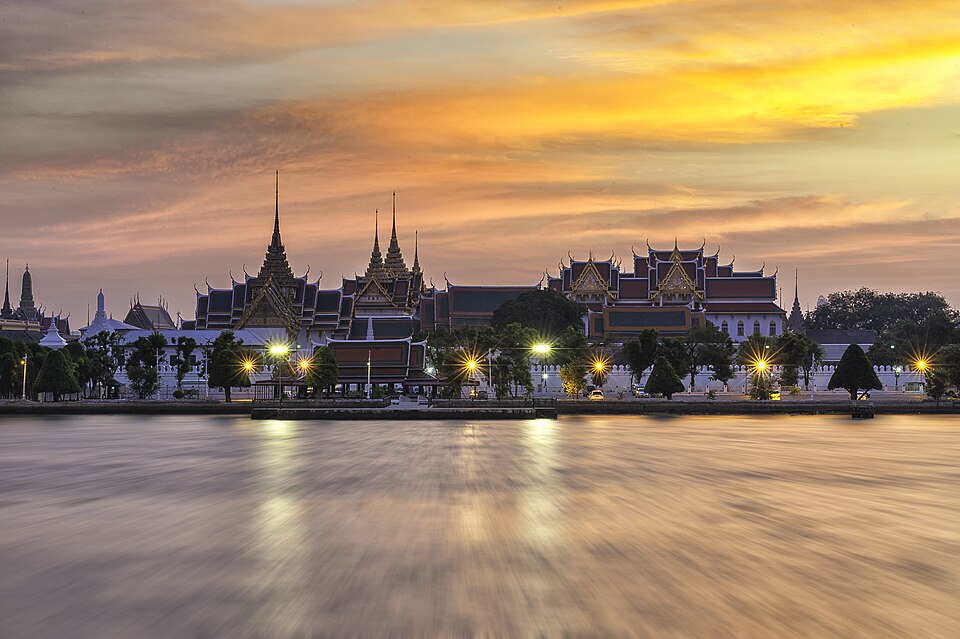
| Monday | 08:30 – 16:30 |
|---|---|
| Tuesday | 08:30 – 16:30 |
| Wednesday | 08:30 – 16:30 |
| Thursday | 08:30 – 16:30 |
| Friday | 08:30 – 16:30 |
| Saturday | 08:30 – 16:30 |
| Sunday | 08:30 – 16:30 |
Checked 2026-08-25 · Source
Read from the OpenStreetMap access tags; anything not listed has no tag recorded.
Set the group type to family in the planner and the day window contracts to about three quarters of a solo day.
The Grand Palace is the walled royal compound on the east bank of the Chao Phraya that Rama I began on 6 May 1782, an act that also founded Bangkok. The Bureau of the Royal Household, which still administers the site, describes it as the official residence of the Kings of Siam from that year, and the compound remains the ceremonial centre of the Thai monarchy rather than a ruin kept for visitors. Inside a single wall stand three things that anywhere else would be separate destinations: the ceremonial throne halls of the Outer and Middle Courts, the Queen Sirikit Museum of Textiles, and Wat Phra Kaew, the royal chapel holding the Emerald Buddha. The Grand Palace is the most visited place in Bangkok, taking roughly eight million people a year, and the only one of the city's monuments where the state itself, rather than a temple committee or a ministry, sets the terms of entry. Its documentary footprint is the widest of any site in the city: the palace has articles in 46 language editions of Wikipedia, and the chapel inside it 43.
Checked 2026-08-25 · Source
The compound reads as a sequence of courts. The Outer Court, entered through the Wiset Chaisi gate, once held the government offices of the kingdom and is the open ground a visitor crosses first. The Middle Court holds the throne halls, and the building that stops people is the Chakri Maha Prasat: a European-plan palace finished with Thai multi-tiered spired roofs, which the encyclopaedic reading treats as architectural evidence of Siamese resistance to Western imperialism rather than as decorative eclecticism. The plan concedes; the roofline does not. Beside it the Dusit Maha Prasat is purely Siamese, cruciform beneath a tiered spire. The Queen Sirikit Museum of Textiles occupies a former treasury building near the entrance and is covered by the same ticket, which makes it the easiest thing in Bangkok to walk past after paying for it. Wat Phra Kaew stands inside the same wall and has its own guide on this site: the palace buildings and the royal chapel are two visits sold as one ticket, not one visit.
Checked 2026-08-25 · Source
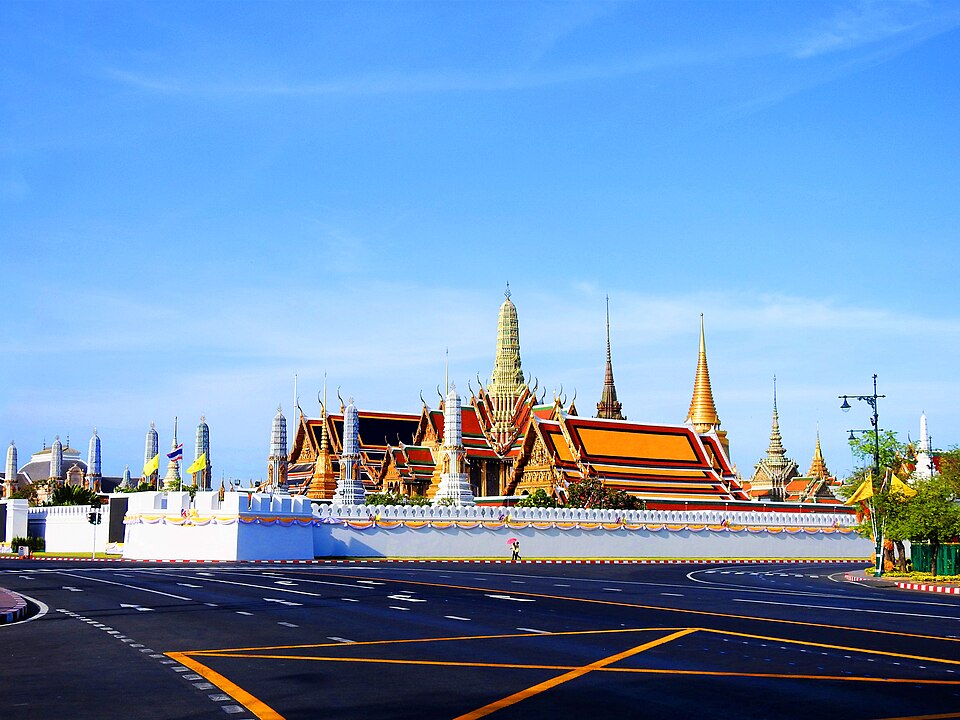
Allow 90 minutes for the palace buildings: the Outer Court, the frontages of the Chakri Maha Prasat and the Dusit Maha Prasat, and the Queen Sirikit Museum of Textiles. That figure deliberately excludes Wat Phra Kaew, which stands inside the same wall on the same ticket and is treated here as a separate visit with its own hour. Counting the two together is how visitors end up allowing half the time they need. The Bureau of the Royal Household publishes no suggested visit length on any of its pages, so the 90 minutes is judgement rather than an operator figure. Two things stretch it. The throne halls are viewed from outside rather than walked through, which shortens the route but concentrates everybody into the same few courtyards. And the textile museum is indoors and air-conditioned, which keeps people longer than they intended once they are out of the heat. For palace and chapel together, budget close to three hours, and add the ticket queue on top of that.
Checked 2026-08-25
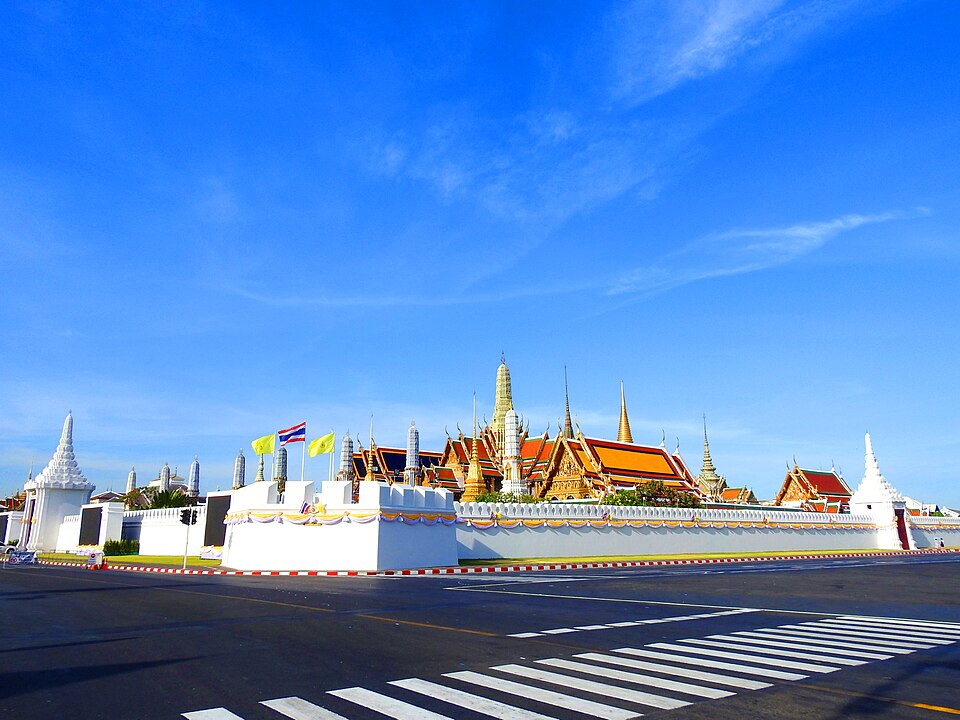
The Grand Palace opens daily from 08:30 to 16:30, with no closed day, and the operator's practical-information page states the same figures in Thai and in English. The number that catches people out is a different one: ticket sales stop at 15:30, so 15:30 is the effective last entry and the final hour belongs to those already inside. Arrive at 08:30. Coach groups build from mid-morning and the ticket queue lengthens through the day, which matters more here than at most sites because the queue itself stands in the open with no shade over it. For months, November to February, Bangkok's cool dry season. The compound is walked entirely outdoors on stone and gravel, with almost no shade and nowhere to sit down; in April, or in the monsoon, that is the difference between a good visit and an endured one. The operator publishes nothing about crowding or seasonality, so the timing advice in this paragraph is judgement.
Checked 2026-08-25 · Source
Admission is 500 THB for foreign visitors, taken from the operator's own practical-information page and checked on 25 August 2026. The Thai-language version of that page carries a second statement the English one omits: Thai nationals are not charged to enter the Grand Palace. The English page prints only the foreigner figure. Both are the operator's own wording and both are recorded here rather than blended into one sentence. What matters most about this ticket is its scope. The operator states that it is inclusive of access to Wat Phra Kaew and the Queen Sirikit Museum of Textiles, both inside the compound wall: one payment, three things. Anyone offering a separate charge for the royal chapel is selling something the Bureau of the Royal Household does not. Tickets are bought at the booth inside the Wiset Chaisi gate, and the sales window closes a full hour before the compound itself does.
Checked 2026-08-25 · Source
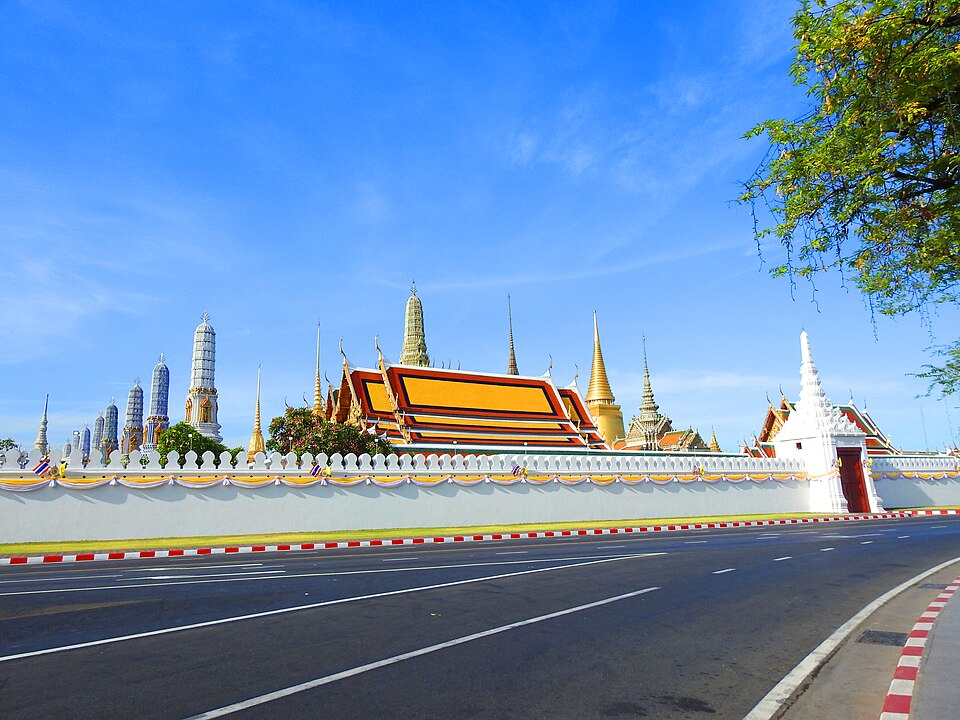
No car. MRT Sanam Chai lies roughly a ten-minute walk from the Wiset Chaisi gate, the visitor entrance on the compound's north side, and the walk is flat and signposted. From the water, the Chao Phraya express boat calls at Tha Chang, which lands at the compound's north-west corner and is the shorter of the two approaches. Traffic on the roads around Sanam Luang is heavy and one-way in ways that defeat a taxi meter, so a car dropped near the palace generally means a walk of the same length as the one from the station, taken later and in worse temper. Wat Pho is a few minutes south along Maha Rat Road, which is why the two are almost always done on the same morning. One practical note: the gate a visitor is sent to is not always the one nearest their approach, so follow the wall round to the marked visitor entrance rather than arguing at a service gate.
Checked 2026-08-25
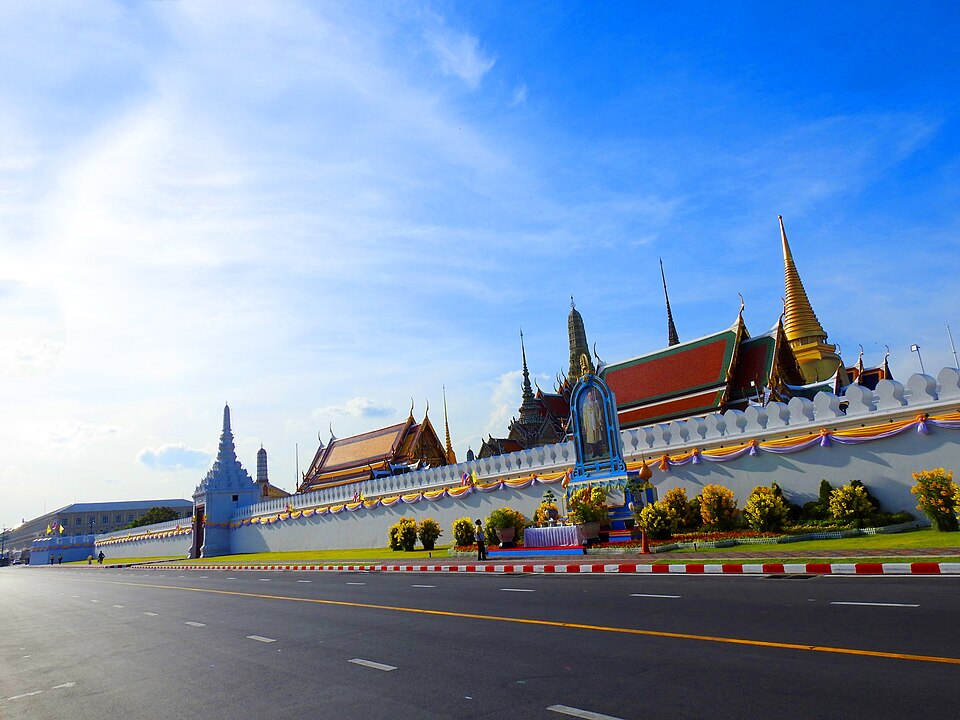
Dress is enforced here, at the gate, and this is the strictest of Bangkok's major sites; the other temple guides on this site point back to this paragraph. Shoulders covered, no vests. Legs covered to the ankle: no shorts, no cropped trousers, no torn jeans, and a short or transparent skirt will be turned back. Wear closed shoes that come off easily, because footwear is removed at the chapel doors. Cover-ups can be hired near the entrance, at the cost of standing in a second queue. Second, the oldest trick in the city works here more than anywhere: a stranger near the wall, polite and well dressed and sometimes in something resembling a uniform, will say the palace is closed today for a ceremony and offer a tuk-tuk to another temple instead. It is not closed; the compound opens every day, and the driver is paid by the shops he will stop at. Walk to the gate and look. Third, the 15:30 ticket cutoff ends more visits than the 16:30 closing time does. Fourth, with roughly eight million visitors a year the courtyards funnel: the compound is vast and the routes through it are narrow.
Checked 2026-08-25
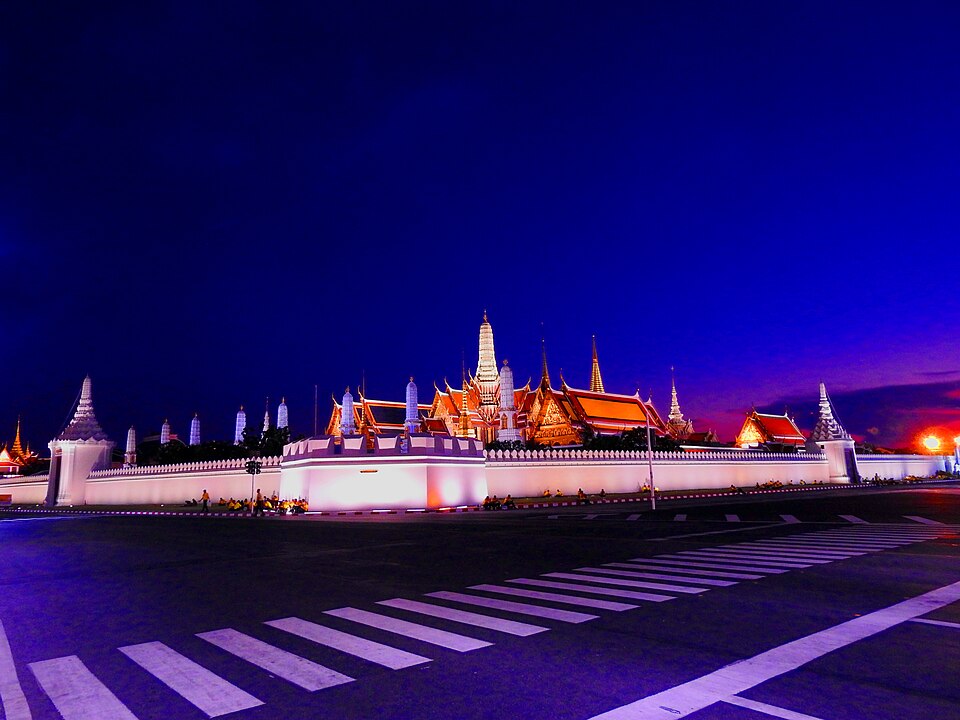
Gold leaf and mirror-glass tile are the problem here, not the buildings. Both surfaces are designed to throw light back, so anything shot from the middle of a courtyard in the middle of the day comes out as white glare with a silhouette in front of it. The 08:30 opening solves this twice over: the light is still low and angled, and the courtyards are briefly empty enough to photograph a building without a crowd across its base. The Chakri Maha Prasat takes a straight frontal frame from the Middle Court because its facade is symmetrical and European in plan, while the Dusit Maha Prasat wants a three-quarter angle so its tiered roof stacks up rather than flattens. Inside the buildings, photography stops where the staff say it stops, and they say so at the doors rather than on signs; take the instruction the first time. The standard shot of the throne halls is a phone held above a crowd, and it is a poor one. Step back to the far side of the court and use the whole roofline instead.
Checked 2026-08-25
500 THB for foreign visitors, on the Bureau of the Royal Household's own practical-information page, checked on 25 August 2026. The Thai-language version of that page also states that Thai nationals are not charged. The ticket is inclusive of Wat Phra Kaew and the Queen Sirikit Museum of Textiles, both inside the compound wall.
Daily, 08:30 to 16:30, with no closed day. Ticket sales stop at 15:30, so 15:30 is the effective last entry rather than 16:30.
No. The operator's wording is that the Grand Palace ticket is inclusive of access to Wat Phra Kaew and the Queen Sirikit Museum of Textiles. A visitor doing all three on one day pays once.
Shoulders covered and legs covered to the ankle: no vests, no shorts, no cropped trousers, no torn jeans, and no short or transparent skirts. Shoes must come off at the chapel doors, so wear something that removes easily. Cover-ups can be hired near the entrance, which costs time in a second queue. This is the strictest dress enforcement of Bangkok's major sites.
Ninety minutes for the palace buildings alone, and close to three hours if Wat Phra Kaew is included on the same ticket, plus the ticket queue. The operator publishes no suggested visit length, so these are judgement figures.
Almost certainly not. The operator states the compound opens daily, and the closed-today claim made by strangers outside the wall is a long-running tuk-tuk scam. Genuine closures for royal ceremonies are announced on the Bureau of the Royal Household's schedules page, which is the place to check before setting out.
Loading the interactive map…
The interactive map could not be loaded.
Last updated:
Source: OpenStreetMap contributors, Wikidata ·