
_%E0%B8%A7%E0%B8%B1%E0%B8%94%E0%B8%AA%E0%B8%B8%E0%B8%97%E0%B8%B1%E0%B8%A8%E0%B8%99%E0%B9%80%E0%B8%97%E0%B8%9E%E0%B8%A7%E0%B8%A3%E0%B8%B2%E0%B8%A3%E0%B8%B2%E0%B8%A1%E0%B8%A3%E0%B8%B2%E0%B8%8A%E0%B8%A7%E0%B8%A3%E0%B8%A1%E0%B8%AB%E0%B8%B2%E0%B8%A7%E0%B8%B4%E0%B8%AB%E0%B8%B2%E0%B8%A3_8_DSCN0893.jpg)
_%E0%B8%A7%E0%B8%B1%E0%B8%94%E0%B8%AA%E0%B8%B8%E0%B8%97%E0%B8%B1%E0%B8%A8%E0%B8%99%E0%B9%80%E0%B8%97%E0%B8%9E%E0%B8%A7%E0%B8%A3%E0%B8%B2%E0%B8%A3%E0%B8%B2%E0%B8%A1%E0%B8%A3%E0%B8%B2%E0%B8%8A%E0%B8%A7%E0%B8%A3%E0%B8%A1%E0%B8%AB%E0%B8%B2%E0%B8%A7%E0%B8%B4%E0%B8%AB%E0%B8%B2%E0%B8%A3_%E0%B9%80%E0%B8%82%E0%B8%95%E0%B8%9E%E0%B8%A3%E0%B8%B0%E0%B8%99%E0%B8%84%E0%B8%A3_%E0%B8%81%E0%B8%A3%E0%B8%B8%E0%B8%87%E0%B9%80%E0%B8%97%E0%B8%9E%E0%B8%A1%E0%B8%AB%E0%B8%B2%E0%B8%99%E0%B8%84%E0%B8%A3_(2).jpg)
_%E0%B8%A7%E0%B8%B1%E0%B8%94%E0%B8%AA%E0%B8%B8%E0%B8%97%E0%B8%B1%E0%B8%A8%E0%B8%99%E0%B9%80%E0%B8%97%E0%B8%9E%E0%B8%A7%E0%B8%A3%E0%B8%B2%E0%B8%A3%E0%B8%B2%E0%B8%A1%E0%B8%A3%E0%B8%B2%E0%B8%8A%E0%B8%A7%E0%B8%A3%E0%B8%A1%E0%B8%AB%E0%B8%B2%E0%B8%A7%E0%B8%B4%E0%B8%AB%E0%B8%B2%E0%B8%A3_%E0%B9%80%E0%B8%82%E0%B8%95%E0%B8%9E%E0%B8%A3%E0%B8%B0%E0%B8%99%E0%B8%84%E0%B8%A3_%E0%B8%81%E0%B8%A3%E0%B8%B8%E0%B8%87%E0%B9%80%E0%B8%97%E0%B8%9E%E0%B8%A1%E0%B8%AB%E0%B8%B2%E0%B8%99%E0%B8%84%E0%B8%A3_(10).jpg)
_%E0%B8%A7%E0%B8%B1%E0%B8%94%E0%B8%AA%E0%B8%B8%E0%B8%97%E0%B8%B1%E0%B8%A8%E0%B8%99%E0%B9%80%E0%B8%97%E0%B8%9E%E0%B8%A7%E0%B8%A3%E0%B8%B2%E0%B8%A3%E0%B8%B2%E0%B8%A1%E0%B8%A3%E0%B8%B2%E0%B8%8A%E0%B8%A7%E0%B8%A3%E0%B8%A1%E0%B8%AB%E0%B8%B2%E0%B8%A7%E0%B8%B4%E0%B8%AB%E0%B8%B2%E0%B8%A3_%E0%B9%80%E0%B8%82%E0%B8%95%E0%B8%9E%E0%B8%A3%E0%B8%B0%E0%B8%99%E0%B8%84%E0%B8%A3_%E0%B8%81%E0%B8%A3%E0%B8%B8%E0%B8%87%E0%B9%80%E0%B8%97%E0%B8%9E%E0%B8%A1%E0%B8%AB%E0%B8%B2%E0%B8%99%E0%B8%84%E0%B8%A3_(2).jpg)
_%E0%B8%A7%E0%B8%B1%E0%B8%94%E0%B8%AA%E0%B8%B8%E0%B8%97%E0%B8%B1%E0%B8%A8%E0%B8%99%E0%B9%80%E0%B8%97%E0%B8%9E%E0%B8%A7%E0%B8%A3%E0%B8%B2%E0%B8%A3%E0%B8%B2%E0%B8%A1%E0%B8%A3%E0%B8%B2%E0%B8%8A%E0%B8%A7%E0%B8%A3%E0%B8%A1%E0%B8%AB%E0%B8%B2%E0%B8%A7%E0%B8%B4%E0%B8%AB%E0%B8%B2%E0%B8%A3_%E0%B9%80%E0%B8%82%E0%B8%95%E0%B8%9E%E0%B8%A3%E0%B8%B0%E0%B8%99%E0%B8%84%E0%B8%A3_%E0%B8%81%E0%B8%A3%E0%B8%B8%E0%B8%87%E0%B9%80%E0%B8%97%E0%B8%9E%E0%B8%A1%E0%B8%AB%E0%B8%B2%E0%B8%99%E0%B8%84%E0%B8%A3_(3).jpg)
3 min walk · เขตพระนคร
Sao Chingcha
- Must see · Heritage site
- Historic monument
Language · 1 published
Historic monument · เขตพระนคร, Bangkok
วัดสุทัศนเทพวรารามราชวรมหาวิหาร
| Monday | 08:30 – 21:00 |
|---|---|
| Tuesday | 08:30 – 21:00 |
| Wednesday | 08:30 – 21:00 |
| Thursday | 08:30 – 21:00 |
| Friday | 08:30 – 21:00 |
| Saturday | 08:30 – 21:00 |
| Sunday | 08:30 – 21:00 |
Parsed from OpenStreetMap opening hours on 2026-08-25.
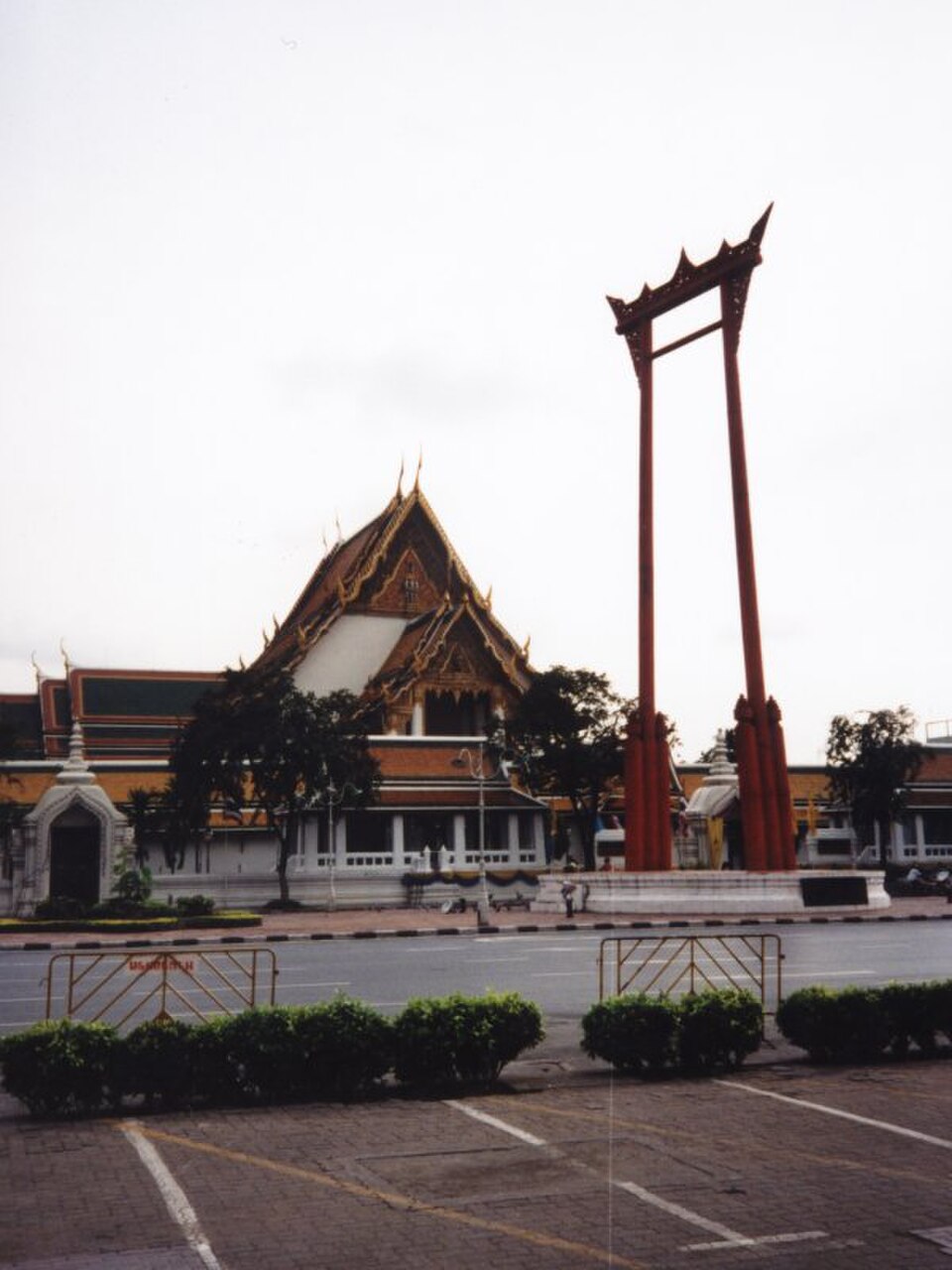
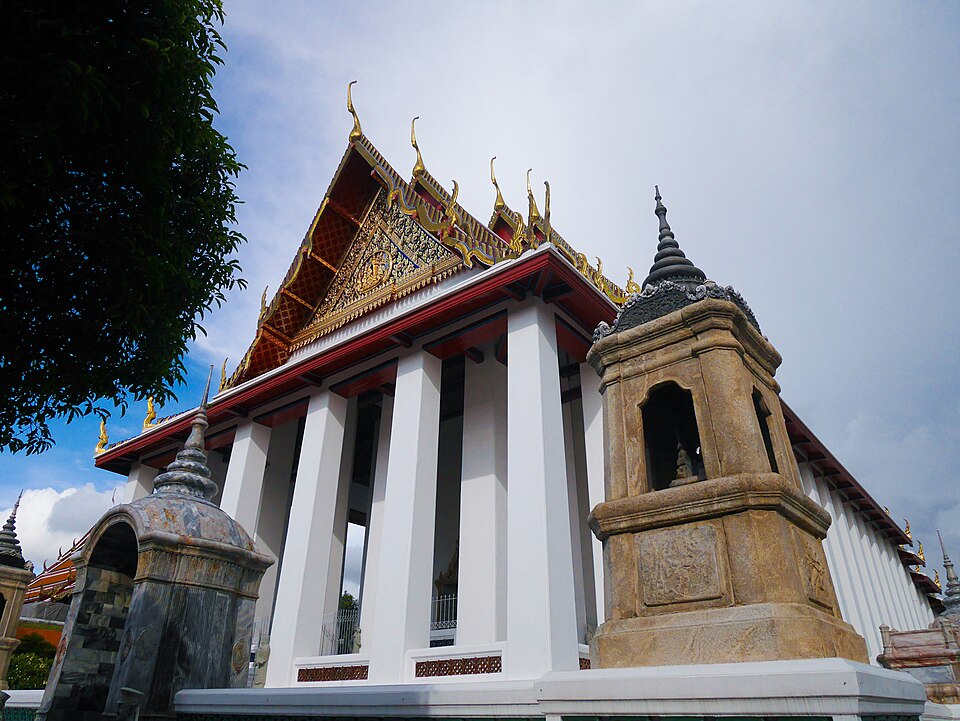
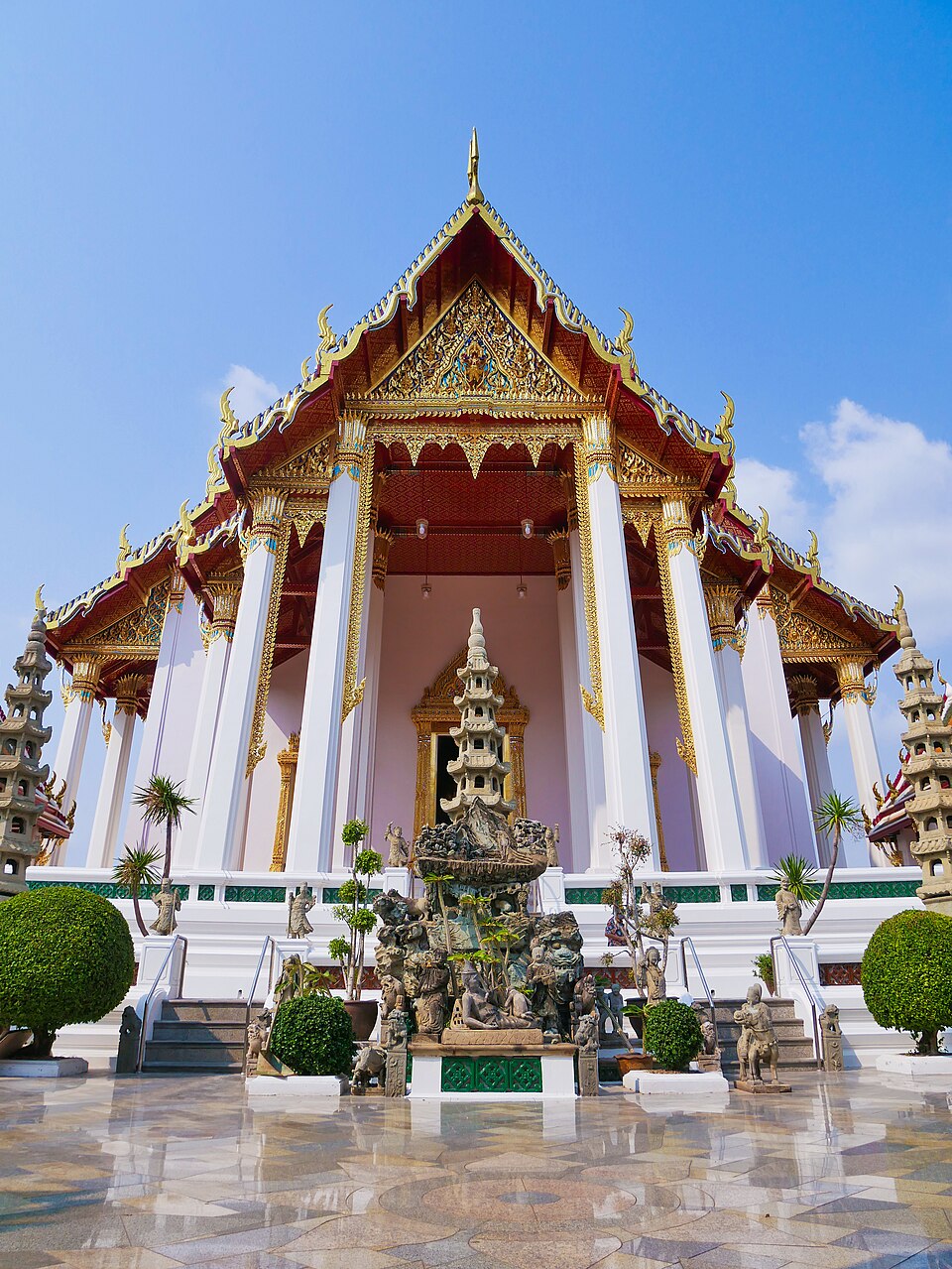
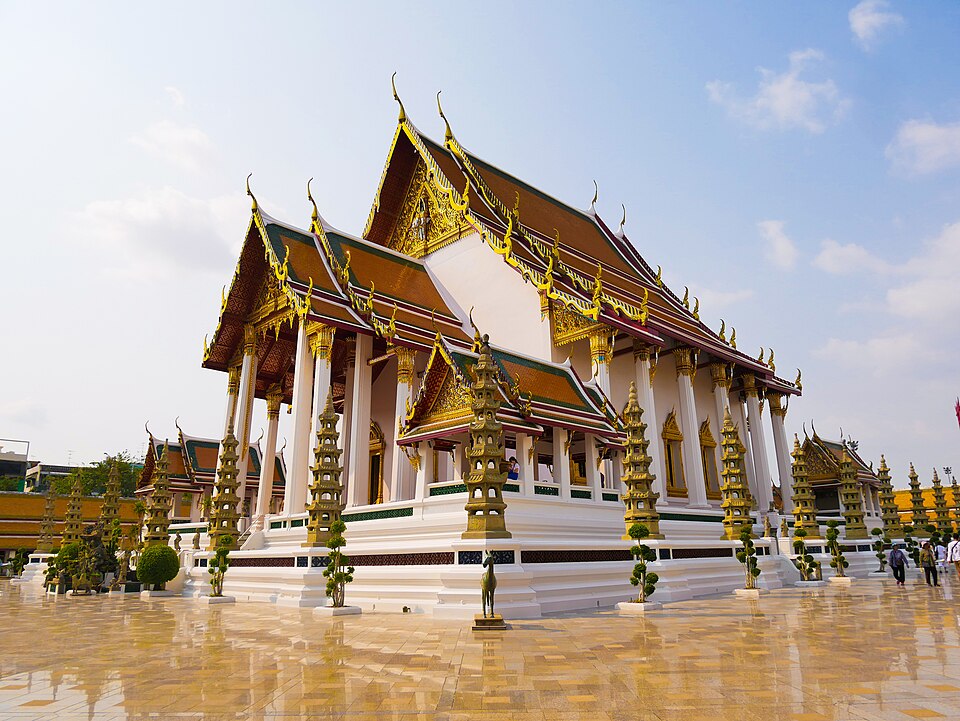
Wat Suthat Thepwararam is one of only ten first-class royal temples in Bangkok, and the one written into the city's original plan rather than added beside it. Rama I began the temple in 1807 to house Phra Si Sakyamuni, a Sukhothai-period bronze Buddha brought down by river from the great vihara of Wat Mahathat in Sukhothai; the work outlasted him and was finished under Rama III. Wat Suthat holds the longest ordination hall in Thailand, and its wihan and ubosot carry court murals painted for the early Chakri kings. Outside the gate stands the Giant Swing, the red teak frame where Brahmin priests once performed a royal rite that bound the Hindu court ritual of the state to a Buddhist capital. The combination is what makes Wat Suthat unlike the temples nearer the river: a Sukhothai image, a Bangkok plan, a Brahmin ceremony, and a working neighbourhood of monk-supply shops still trading around all three.
Checked 2026-08-25 · Source
The wihan is the reason to come. It is a tall, dim hall on a raised terrace, ringed by a gallery of seated Buddha images, and Phra Si Sakyamuni sits at the end of it above a base in which the ashes of Rama VIII were placed. The murals run the full height of the walls in registers, and because the hall is deep and lit mostly from the doors, they read slowly — give the eyes a minute before deciding there is nothing there. The ubosot behind it is the long one, and its own principal image and murals are worth the walk even after the wihan. Between the two buildings the courtyard is paved and largely bare, punctuated by Chinese stone figures brought as ballast in trading junks and left standing here as guardians. Outside the wall, the Giant Swing occupies its own traffic island opposite the temple gate, and Bamrung Mueang Road either side of it is lined with shops casting, gilding and selling Buddha images, monks' robes and altar goods — a trade that exists because the temple does.
Checked 2026-08-25 · Source
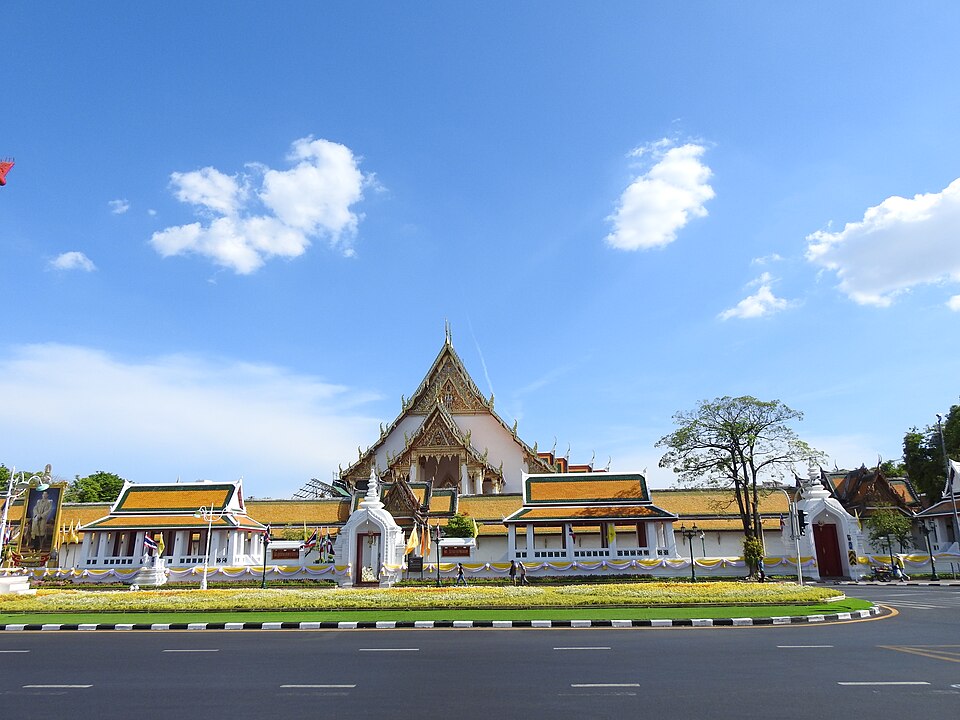
Allow 45 minutes. That covers the wihan at an unhurried pace, the ordination hall behind it, a circuit of the gallery of Buddha images and a few minutes at the Giant Swing across the road. The figure is this page's judgement, not an operator statement: Wat Suthat publishes no suggested visit length anywhere. Add a further half hour if the shops on Bamrung Mueang are of interest, because the walk between the temple gate and the swing runs straight through them and is a sight in its own right. Visitors who read murals closely can spend the full 45 minutes inside the wihan alone.
Checked 2026-08-25
November to February is the season to plan around: Bangkok's cool dry months, which matter here because the wihan is unairconditioned and the courtyard between the halls is open to the sun with almost no shade. Arrive at 08:30, close to the recorded opening time. Wat Suthat sits on the Giant Swing circuit that most Rattanakosin itineraries reach in late morning after the Grand Palace, so the first hour is the quiet one and the middle of the day is not. Both the month and the hour are judgement — the temple publishes no guidance on either. The hours recorded for this page are 08:30 to 21:00 daily; see the ticket section for what that figure rests on and what it does not.
Checked 2026-08-25
No admission figure is recorded for Wat Suthat, because nothing the temple publishes could be found. The temple runs no website: watsuthat.com is a parked domain that redirects to a domain broker, watsuthat.org and its bare-domain variant do not resolve at all, and the temple's own Facebook pages return only their page name when fetched rather than any content. The widely repeated figure of 100 THB for foreign visitors and free entry for Thai nationals appears only on aggregator listings and travel blogs, never on anything Wat Suthat publishes, so it is not recorded here. Carry small notes and expect that a fee may be collected at the wihan. The same absence applies to the opening hours: every figure in circulation — 08:30 to 20:00, 08:00 to 20:00, 08:30 to 16:00 and 08:30 to 21:00 — comes from an aggregator or a blog, and they disagree with each other. The hours this page records are 08:30 to 21:00 daily, and they should be treated as the recorded value rather than as a figure the temple has confirmed.
Checked 2026-08-25
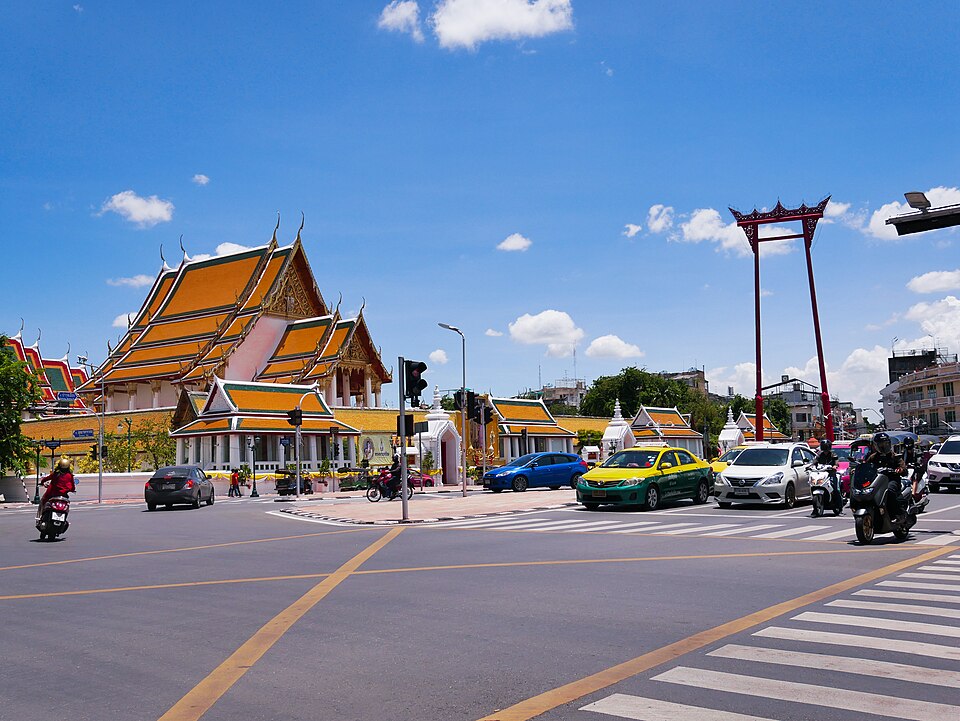
No car is needed. MRT Sam Yot is roughly a ten-minute walk, and the last stretch runs along Bamrung Mueang Road, which is the interesting way in — the temple appears at the end of the shops rather than out of a car park. The Giant Swing is the landmark to steer by: it is visible from several streets away and the temple gate faces it. From the river, the Chao Phraya boat piers at Tha Tien and Tha Chang leave a walk of a kilometre and a half through Rattanakosin, which is pleasant in the morning and punishing at two in the afternoon. Taxis and tuk-tuks reach the swing directly; ask for Sao Ching Cha rather than the temple name, which is the local reference point.
Checked 2026-08-25
Dress as for any active Thai temple: shoulders and knees covered, shoes off before entering the wihan and the ubosot, no pointing the soles of the feet towards a Buddha image, and no walking in front of someone who is praying. Wat Suthat is a working first-class royal temple with resident monks, not a monument, and monks are not to be touched or photographed at close range by women. The trap specific to this corner of Rattanakosin is the tuk-tuk approach: a helpful stranger near the swing explains that the temple is closed for a ceremony today and offers a cheap tour of somewhere else, usually ending at a gem or tailor shop. Wat Suthat has no such closures to announce, and the only reliable way to know whether a hall is open is to walk to its door. The courtyard stone is fierce underfoot in the afternoon, so socks are worth having when the shoes come off. Fees and hours are unpublished by the temple, so treat any figure quoted at the gate as the one that applies that day.
Checked 2026-08-25
The wihan is the difficult and rewarding shot. It is dim, the murals are high, and flash is both intrusive and useless at that distance, so the workable approach is a wide lens braced against a door frame or a pillar and a raised ISO. Morning light enters the eastern doors and falls across the floor of the hall in a way that lasts about an hour after opening, and that is the window worth arriving for. Outside, the Giant Swing photographs best from the temple side of the road, where the red frame stands clear of traffic against the wihan's roof line rather than against buildings. The courtyard's Chinese stone figures reward close work in the flat light of an overcast day. Inside the halls, keep the camera below the level of the principal image, do not photograph over the shoulders of people praying, and stop if a monk indicates so — no formal restriction is published, and the working rule is the one given on the spot.
Checked 2026-08-25
No admission figure is recorded, because the temple publishes none. Its website domains are parked or dead and its Facebook pages return no readable content, so the commonly quoted 100 THB for foreigners could not be traced to Wat Suthat itself and is not recorded here. Bring small notes in case a fee is collected at the wihan.
The hours recorded for this page are 08:30 to 21:00 every day. The temple publishes nothing of its own, and the figures circulating on aggregators — 08:00 to 20:00, 08:30 to 16:00, 08:30 to 20:00 — contradict each other, so the recorded value is the one shown and not a temple confirmation.
Allow 45 minutes for the wihan, the ordination hall behind it, the gallery of Buddha images and the Giant Swing across the road. Add half an hour if the Buddha-image shops along Bamrung Mueang Road are of interest.
The Giant Swing, Sao Ching Cha, is the red teak frame on the traffic island facing the temple gate. It marks the site of a royal Brahmin ceremony that tied the Hindu court ritual of the Thai state to a Buddhist capital; the rite is no longer performed, and the frame stands as a monument.
Yes, and for a different reason. Wat Suthat is quieter, holds the longest ordination hall in Thailand and a Sukhothai-period bronze brought from Wat Mahathat in Sukhothai, and sits in a working neighbourhood of monk-supply shops rather than in a palace precinct.
MRT Sam Yot is about a ten-minute walk along Bamrung Mueang Road. From the Chao Phraya piers at Tha Tien or Tha Chang it is roughly a kilometre and a half on foot. Taxi drivers know the temple as Sao Ching Cha, the Giant Swing.
Loading the interactive map…
The interactive map could not be loaded.
Last updated:
Source: OpenStreetMap contributors, Wikidata ·