
_%E0%B8%9E%E0%B8%A3%E0%B8%B0%E0%B8%9A%E0%B8%A3%E0%B8%A1%E0%B8%A1%E0%B8%AB%E0%B8%B2%E0%B8%A3%E0%B8%B2%E0%B8%8A%E0%B8%A7%E0%B8%B1%E0%B8%87%E0%B9%81%E0%B8%A5%E0%B8%B0%E0%B8%A7%E0%B8%B1%E0%B8%94%E0%B8%9E%E0%B8%A3%E0%B8%B0%E0%B8%A8%E0%B8%A3%E0%B8%B5%E0%B8%A3%E0%B8%B1%E0%B8%95%E0%B8%99%E0%B8%A8%E0%B8%B2%E0%B8%AA%E0%B8%94%E0%B8%B2%E0%B8%A3%E0%B8%B2%E0%B8%A1_%E0%B9%80%E0%B8%82%E0%B8%95%E0%B8%9E%E0%B8%A3%E0%B8%B0%E0%B8%99%E0%B8%84%E0%B8%A3_%E0%B8%81%E0%B8%A3%E0%B8%B8%E0%B8%87%E0%B9%80%E0%B8%97%E0%B8%9E%E0%B8%A1%E0%B8%AB%E0%B8%B2%E0%B8%99%E0%B8%84%E0%B8%A3_(1).jpg)
_%E0%B8%9E%E0%B8%A3%E0%B8%B0%E0%B8%9A%E0%B8%A3%E0%B8%A1%E0%B8%A1%E0%B8%AB%E0%B8%B2%E0%B8%A3%E0%B8%B2%E0%B8%8A%E0%B8%A7%E0%B8%B1%E0%B8%87%E0%B9%81%E0%B8%A5%E0%B8%B0%E0%B8%A7%E0%B8%B1%E0%B8%94%E0%B8%9E%E0%B8%A3%E0%B8%B0%E0%B8%A8%E0%B8%A3%E0%B8%B5%E0%B8%A3%E0%B8%B1%E0%B8%95%E0%B8%99%E0%B8%A8%E0%B8%B2%E0%B8%AA%E0%B8%94%E0%B8%B2%E0%B8%A3%E0%B8%B2%E0%B8%A1_%E0%B9%80%E0%B8%82%E0%B8%95%E0%B8%9E%E0%B8%A3%E0%B8%B0%E0%B8%99%E0%B8%84%E0%B8%A3_%E0%B8%81%E0%B8%A3%E0%B8%B8%E0%B8%87%E0%B9%80%E0%B8%97%E0%B8%9E%E0%B8%A1%E0%B8%AB%E0%B8%B2%E0%B8%99%E0%B8%84%E0%B8%A3_(10).jpg)
_%E0%B8%9E%E0%B8%A3%E0%B8%B0%E0%B8%9A%E0%B8%A3%E0%B8%A1%E0%B8%A1%E0%B8%AB%E0%B8%B2%E0%B8%A3%E0%B8%B2%E0%B8%8A%E0%B8%A7%E0%B8%B1%E0%B8%87%E0%B9%81%E0%B8%A5%E0%B8%B0%E0%B8%A7%E0%B8%B1%E0%B8%94%E0%B8%9E%E0%B8%A3%E0%B8%B0%E0%B8%A8%E0%B8%A3%E0%B8%B5%E0%B8%A3%E0%B8%B1%E0%B8%95%E0%B8%99%E0%B8%A8%E0%B8%B2%E0%B8%AA%E0%B8%94%E0%B8%B2%E0%B8%A3%E0%B8%B2%E0%B8%A1_%E0%B9%80%E0%B8%82%E0%B8%95%E0%B8%9E%E0%B8%A3%E0%B8%B0%E0%B8%99%E0%B8%84%E0%B8%A3_%E0%B8%81%E0%B8%A3%E0%B8%B8%E0%B8%87%E0%B9%80%E0%B8%97%E0%B8%9E%E0%B8%A1%E0%B8%AB%E0%B8%B2%E0%B8%99%E0%B8%84%E0%B8%A3_(11).jpg)
_%E0%B8%9E%E0%B8%A3%E0%B8%B0%E0%B8%9A%E0%B8%A3%E0%B8%A1%E0%B8%A1%E0%B8%AB%E0%B8%B2%E0%B8%A3%E0%B8%B2%E0%B8%8A%E0%B8%A7%E0%B8%B1%E0%B8%87%E0%B9%81%E0%B8%A5%E0%B8%B0%E0%B8%A7%E0%B8%B1%E0%B8%94%E0%B8%9E%E0%B8%A3%E0%B8%B0%E0%B8%A8%E0%B8%A3%E0%B8%B5%E0%B8%A3%E0%B8%B1%E0%B8%95%E0%B8%99%E0%B8%A8%E0%B8%B2%E0%B8%AA%E0%B8%94%E0%B8%B2%E0%B8%A3%E0%B8%B2%E0%B8%A1_%E0%B9%80%E0%B8%82%E0%B8%95%E0%B8%9E%E0%B8%A3%E0%B8%B0%E0%B8%99%E0%B8%84%E0%B8%A3_%E0%B8%81%E0%B8%A3%E0%B8%B8%E0%B8%87%E0%B9%80%E0%B8%97%E0%B8%9E%E0%B8%A1%E0%B8%AB%E0%B8%B2%E0%B8%99%E0%B8%84%E0%B8%A3_(12).jpg)
_%E0%B8%9E%E0%B8%A3%E0%B8%B0%E0%B8%9A%E0%B8%A3%E0%B8%A1%E0%B8%A1%E0%B8%AB%E0%B8%B2%E0%B8%A3%E0%B8%B2%E0%B8%8A%E0%B8%A7%E0%B8%B1%E0%B8%87%E0%B9%81%E0%B8%A5%E0%B8%B0%E0%B8%A7%E0%B8%B1%E0%B8%94%E0%B8%9E%E0%B8%A3%E0%B8%B0%E0%B8%A8%E0%B8%A3%E0%B8%B5%E0%B8%A3%E0%B8%B1%E0%B8%95%E0%B8%99%E0%B8%A8%E0%B8%B2%E0%B8%AA%E0%B8%94%E0%B8%B2%E0%B8%A3%E0%B8%B2%E0%B8%A1_%E0%B9%80%E0%B8%82%E0%B8%95%E0%B8%9E%E0%B8%A3%E0%B8%B0%E0%B8%99%E0%B8%84%E0%B8%A3_%E0%B8%81%E0%B8%A3%E0%B8%B8%E0%B8%87%E0%B9%80%E0%B8%97%E0%B8%9E%E0%B8%A1%E0%B8%AB%E0%B8%B2%E0%B8%99%E0%B8%84%E0%B8%A3_(13).jpg)
3 min walk · เขตพระนคร
Bangkok City Pillar Shrine
- Must see
- Place of worship
Language · 1 published
Historic monument · เขตพระนคร, Bangkok
วัดพระศรีรัตนศาสดาราม
| Monday | 08:30 – 16:30 |
|---|---|
| Tuesday | 08:30 – 16:30 |
| Wednesday | 08:30 – 16:30 |
| Thursday | 08:30 – 16:30 |
| Friday | 08:30 – 16:30 |
| Saturday | 08:30 – 16:30 |
| Sunday | 08:30 – 16:30 |
Checked 2026-08-25 · Source
Read from the OpenStreetMap access tags; anything not listed has no tag recorded.
Set the group type to family in the planner and the day window contracts to about three quarters of a solo day.
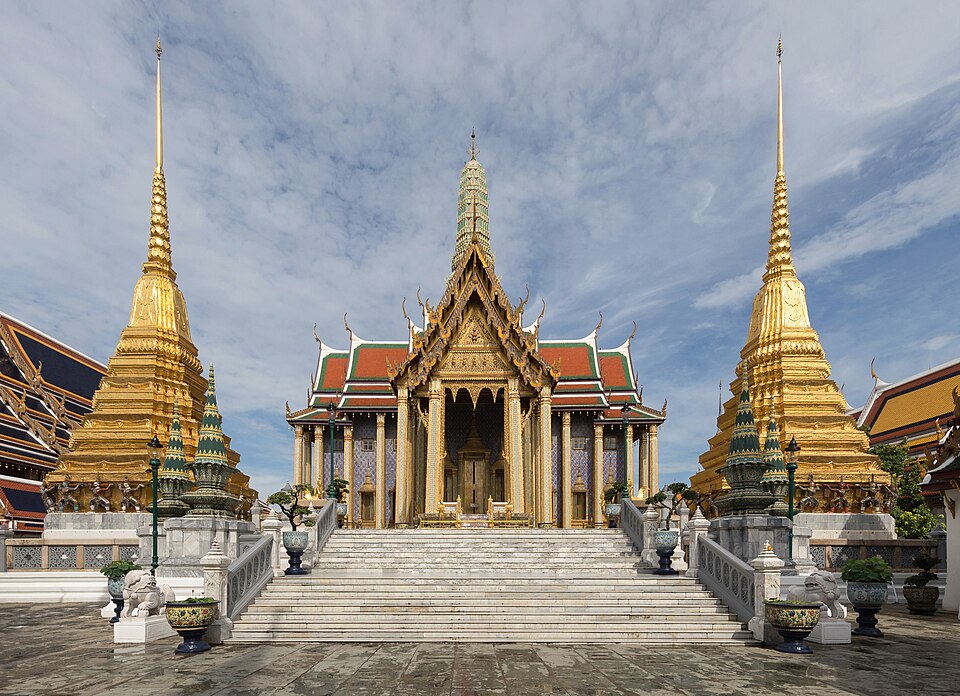
Wat Phra Kaew is the royal chapel standing inside the Grand Palace wall, and it is the most sacred Buddhist temple in Thailand, by function rather than by consensus of guidebooks. It holds the Emerald Buddha, a small seated image of green stone installed here in 1785 and revered as the palladium of the nation: the image is a symbol of the Thai state, and the hall around it is where coronations and the investiture of Supreme Patriarchs take place. Unlike every other temple in Bangkok, Wat Phra Kaew has no resident monks. It was built as a chapel royal, part of the same 1782 foundation that made the palace and the city, and it has never served a monastic community. Visitors arrive expecting a great gilded Buddha and find a modest figure high on a tiered altar, dressed in one of three costumes that the King changes at the turn of each season. That ceremony, rather than the architecture, is why the chapel matters to the people kneeling in it.
Checked 2026-08-25 · Source
The precinct is a walled courtyard of gilded structures packed more tightly than any other temple compound in the city, and the sense of too much at once on arrival is deliberate. The building that counts is the ubosot, the ordination hall, which is small in plan for a site of this rank. The Emerald Buddha sits high above the floor on a tiered gilded altar, so the image is seen from a distance and from below and never at close range. Around the ubosot, a terrace carries a dense arrangement of gilded chedis, and a cloistered wall runs the perimeter with guardian figures at the gates. Scale is the trap here: the courtyard photographs as enormous and walks as small, and because the ubosot is the one interior every visitor must enter, the whole visit compresses into a single doorway. Wat Phra Kaew occupies the north-eastern part of the Grand Palace compound; the throne halls and the textile museum covered by the same ticket have their own guide on this site.
Checked 2026-08-25 · Source
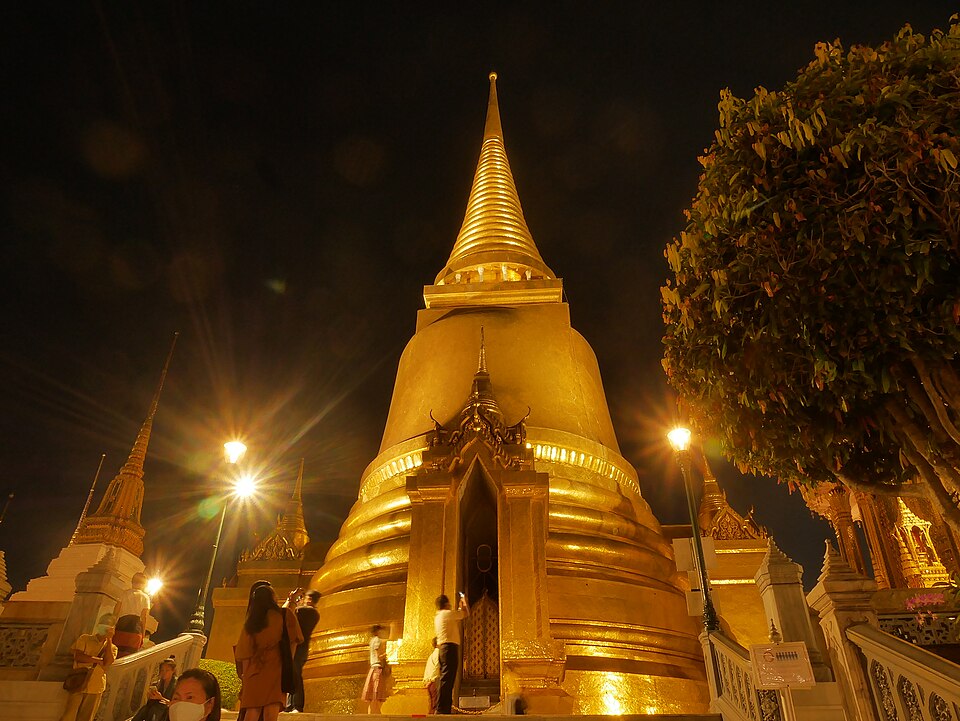
Allow 60 minutes for the chapel precinct alone. The Bureau of the Royal Household publishes no suggested visit length for it, and its pages treat temple and palace as a single visit while giving a duration for neither, so this hour is judgement. It divides roughly into twenty minutes on the terrace among the chedis, twenty in and around the ubosot, and twenty absorbed by removing shoes, queueing at the door and waiting for the group in front to move. That last third is not padding: the ubosot is the bottleneck of the entire compound and behaves like one. A visitor seeing the Grand Palace on the same ticket should add this hour to the 90 minutes allowed for the palace buildings rather than assuming that one figure covers both. And if the day is a ceremonial one and the chapel is closed, the hour disappears altogether, which is an argument for checking before building a morning around it.
Checked 2026-08-25
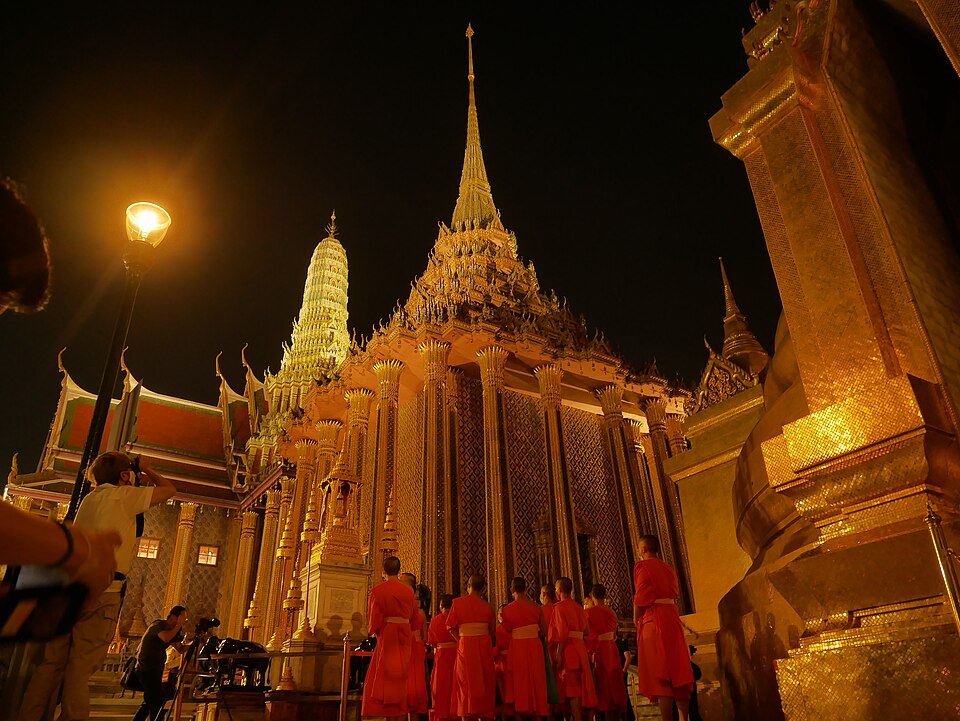
Wat Phra Kaew keeps the Grand Palace's hours because it stands inside the same wall: daily, 08:30 to 16:30, with ticket sales ending at 15:30. The operator's schedules page is the one to read before setting out, and it is the reason this section is more than a copy of the palace's. That page is where the Bureau of the Royal Household announces a royal ceremony closing the chapel for a day while the rest of the compound stays open, and on 25 August 2026 it listed the Temple of the Emerald Buddha as open all day. Go at 08:30. The ubosot is small, its doorway works as one-in-one-out in practice, and it congests badly once the mid-morning groups arrive, so an hour's difference in arrival changes this visit more than it changes any other in Rattanakosin. November to February for the season: the courtyard is unshaded stone that reflects heat upwards as well as taking it from above.
Checked 2026-08-25 · Source
There is no separate ticket for Wat Phra Kaew. The 500 THB admission recorded against this page is the Grand Palace compound ticket, whose operator wording is that it is inclusive of access to Wat Phra Kaew and the Queen Sirikit Museum of Textiles. It appears here because it is what a visitor pays in order to stand in front of the Emerald Buddha, not because the chapel charges a second time. Somebody visiting both on one day pays 500 THB once. The figure comes from the operator's practical-information page, checked on 25 August 2026, and the Thai-language version of that page states that Thai nationals are not charged. Tickets are sold at the compound's booth rather than at the chapel, and the chapel is reached from inside the compound, so there is no way to see it without the compound ticket and no second payment to make on arriving at its door.
Checked 2026-08-25 · Source

Entry is through the Grand Palace's visitor gate; the chapel has no independent approach. MRT Sanam Chai and the Tha Chang express-boat pier are both a short walk away and the palace guide on this site carries that detail in full. What is worth knowing separately is the internal route: the standard path from the ticket booth reaches the chapel before the throne halls, so most visitors see Wat Phra Kaew at its most crowded and then reach the emptier palace courtyards afterwards. Reversing that, by walking through to the Outer and Middle Courts first and coming back to the chapel later in the morning, is entirely possible and rarely done. No car is needed or wanted. The roads around Sanam Luang are congested, and the walk from either the station or the pier is shorter than the ride that replaces it.
Checked 2026-08-25
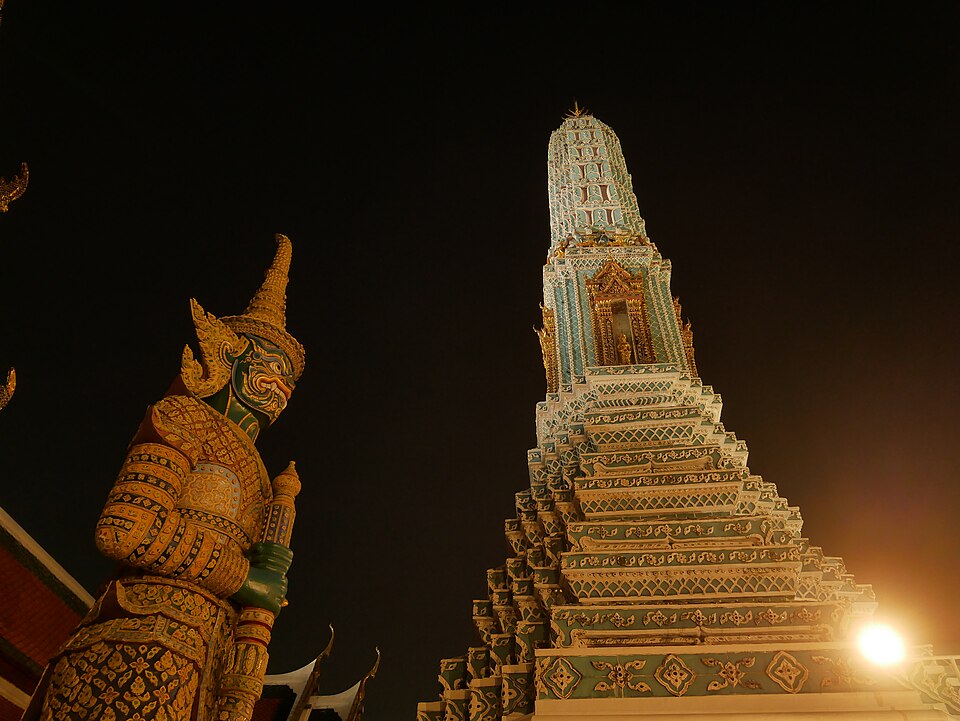
This is a working royal chapel and its conduct rules are enforced by staff standing in the room. Shoes come off before entering the ubosot and are left on the racks by the door. Inside, sit rather than stand where others are kneeling, and never sit with the soles of the feet pointing towards the image, which is the one thing that will get a visitor spoken to. Hats off, voices down. The dress code is the Grand Palace's, enforced at the compound gate long before anyone reaches the chapel, and it is set out in full in that guide. Photography inside the ubosot is restricted, the staff at the door make clear where it stops, and the instruction is not negotiable. The practical trap differs from the palace's: a royal ceremony can close the chapel at short notice, so the compound ticket can buy entry to a courtyard whose central building is shut for the day. The schedules page is where that is announced.
Checked 2026-08-25
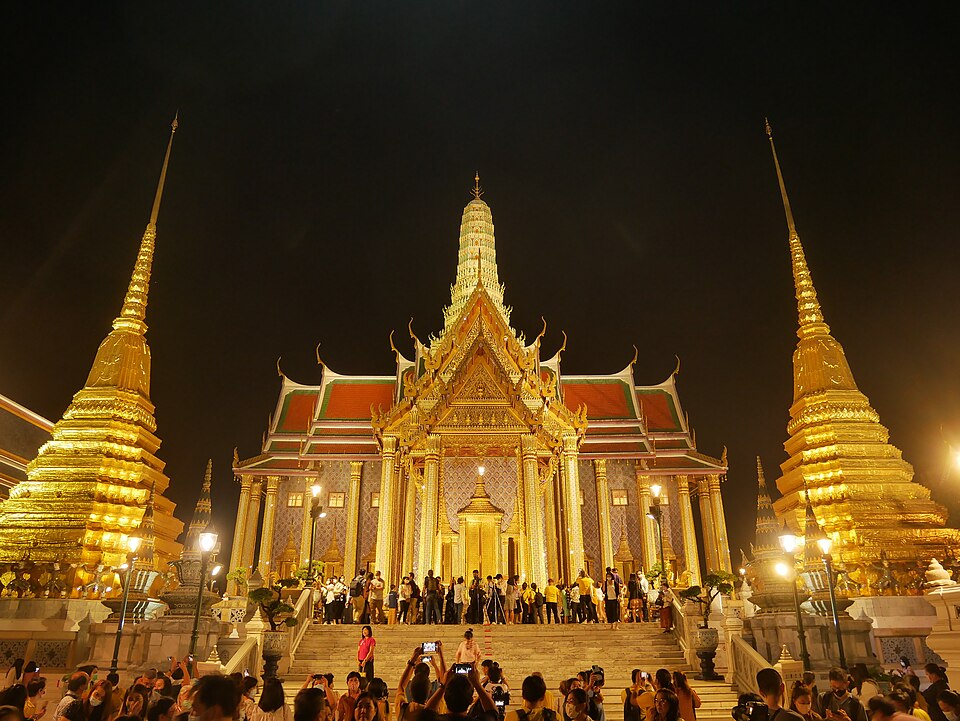
Everything here is gilded or mirrored and the courtyard underfoot is pale stone, which makes this the highest-contrast site in the old city and the middle of the day unusable. At 08:30 the light comes in low across the terrace and the chedis take it on one flank, which is the only time their shape reads rather than flares. Photograph the chedis and the cloister early and leave the ubosot exterior until the sun has come round, because its main face sits in its own shadow first thing. Wide lenses do this compound a disservice: density is the subject, and a wide frame converts a packed terrace into empty sky. Frame tight instead, on a single spire against the mass behind it. Inside the ubosot, do not plan on a photograph at all. The restriction is real, the image is small and far above eye level, and the picture everyone takes from the doorway is mostly the backs of other visitors' heads.
Checked 2026-08-25
Yes. The operator states that the 500 THB Grand Palace ticket is inclusive of access to Wat Phra Kaew and the Queen Sirikit Museum of Textiles. There is no separate charge at the chapel.
No. The image sits high on a tiered altar in the ubosot and is viewed from the floor at a distance. It is dressed in one of three costumes that the King changes at the turn of each season.
The chapel keeps the Grand Palace compound's hours: daily, 08:30 to 16:30, with ticket sales ending at 15:30. A royal ceremony can close the chapel for a day, and the Bureau of the Royal Household's schedules page is where that is announced.
About an hour for the chapel precinct alone, roughly a third of which is spent on shoes, the door queue and waiting for the group ahead. The operator publishes no visit length, so this is judgement.
No. It was built as a chapel royal within the palace wall and has never housed a monastic community, which makes it unusual among Thai temples.
Remove shoes and hats at the door, keep your voice down, sit rather than stand where others are kneeling, and do not point the soles of your feet towards the image. Photography inside is restricted and staff at the door will say where it stops.
Loading the interactive map…
The interactive map could not be loaded.
Last updated:
Source: OpenStreetMap contributors, Wikidata ·