_2019_03.jpg)

_(27712215913).jpg)
_(27711848814).jpg)


8 min walk · เขตบางรัก
MAHANAKHON SKYWALK
- Must see
- Viewpoint
Language · 1 published
Place of worship · เขตบางรัก, Bangkok
วัดพระศรีมหาอุมาเทวี

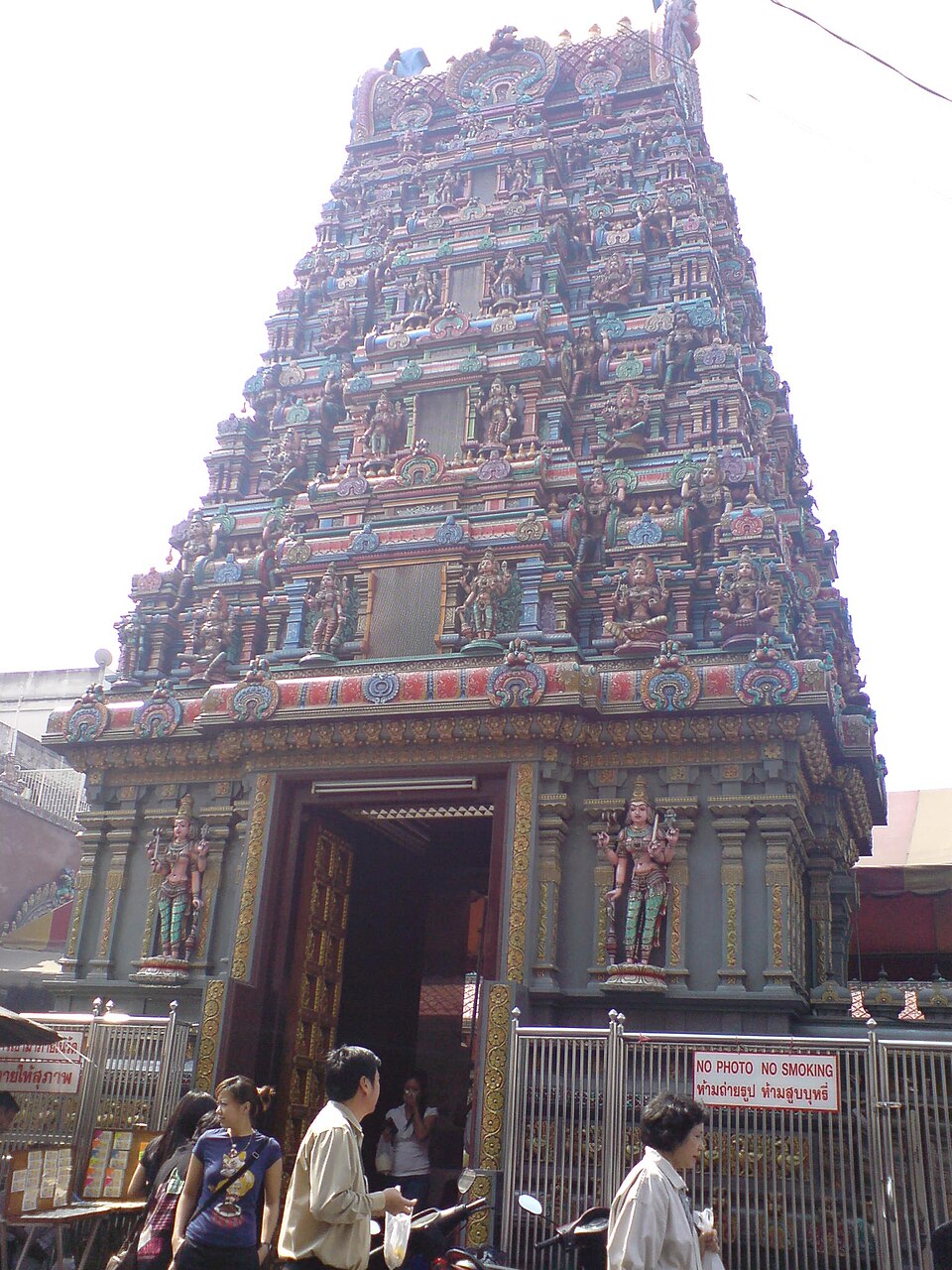
Sri Maha Mariamman Temple, known to Bangkok as Wat Khaek and formally as Wat Phra Si Maha Uma Thewi, is the principal Tamil Hindu temple in Thailand, standing at the corner of Si Lom Road and Pan Road in Bang Rak. It was built in 1879 by Vaithi Padayatchi, a Tamil Hindu immigrant, about a decade after Tamil traders and cattle ranchers began arriving in Siam from British India; the lane beside it, Soi Vaiti, carries the founder's name. What makes the temple remarkable is not only that a full South Indian Dravidian temple sits in the middle of Bangkok's banking district, but who uses it: an estimated 85 per cent of its Thai visitors are Buddhists, who treat the Hindu deities as part of the same religious landscape rather than a separate one, and Chinese devotees come to ask for success in business and for children. It is a busy working temple, not a monument.
Checked 2026-08-25 · Source
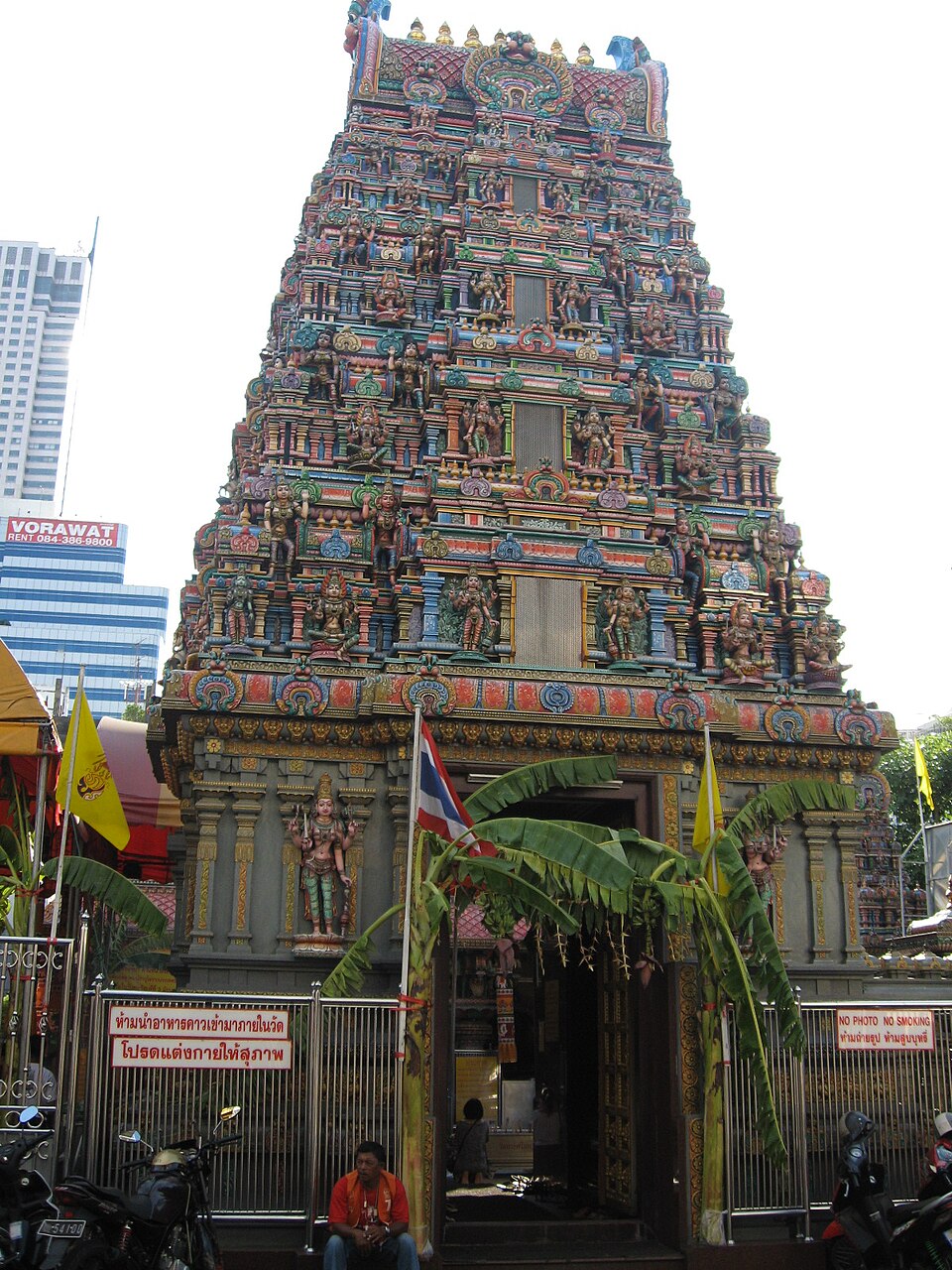
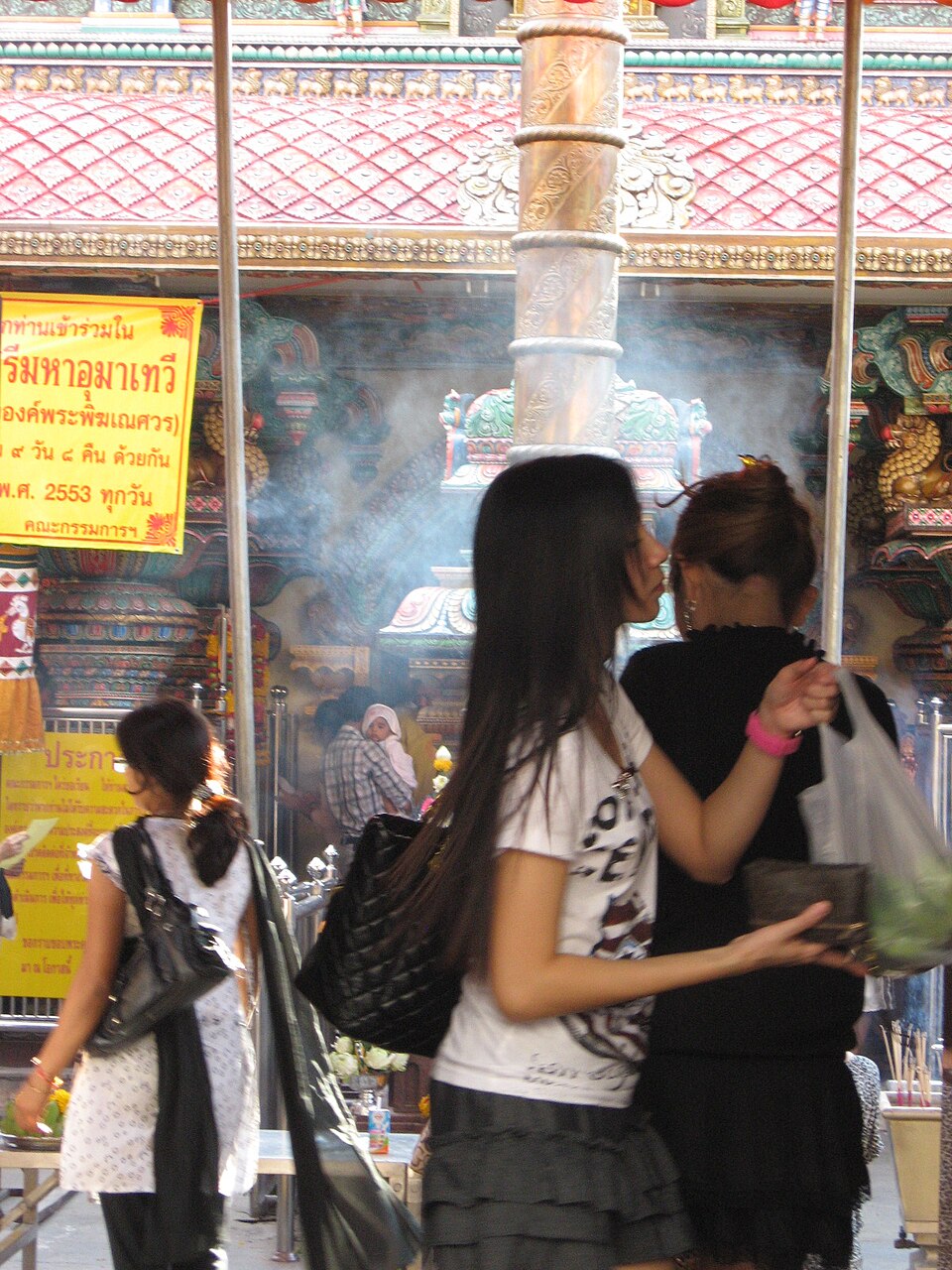
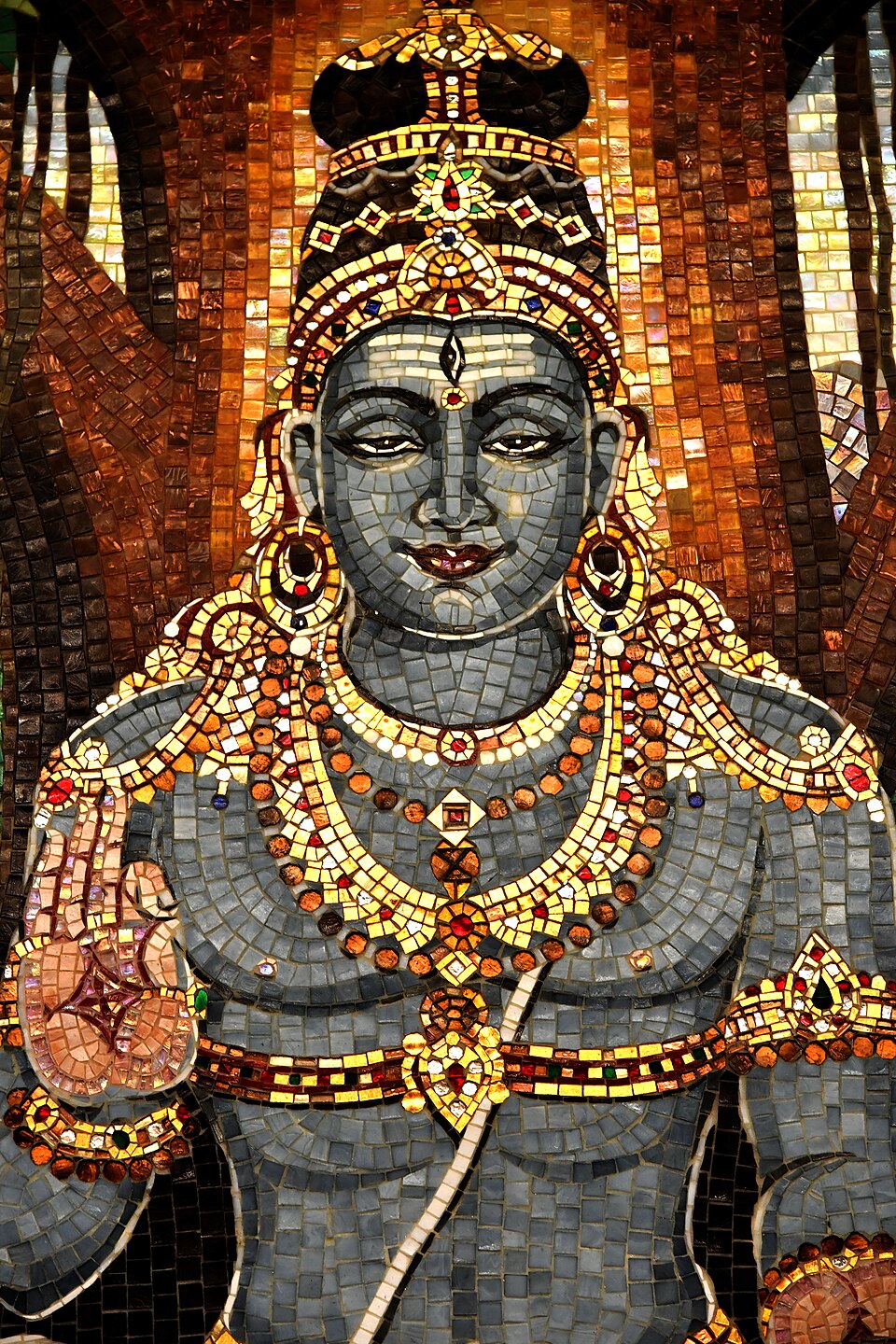
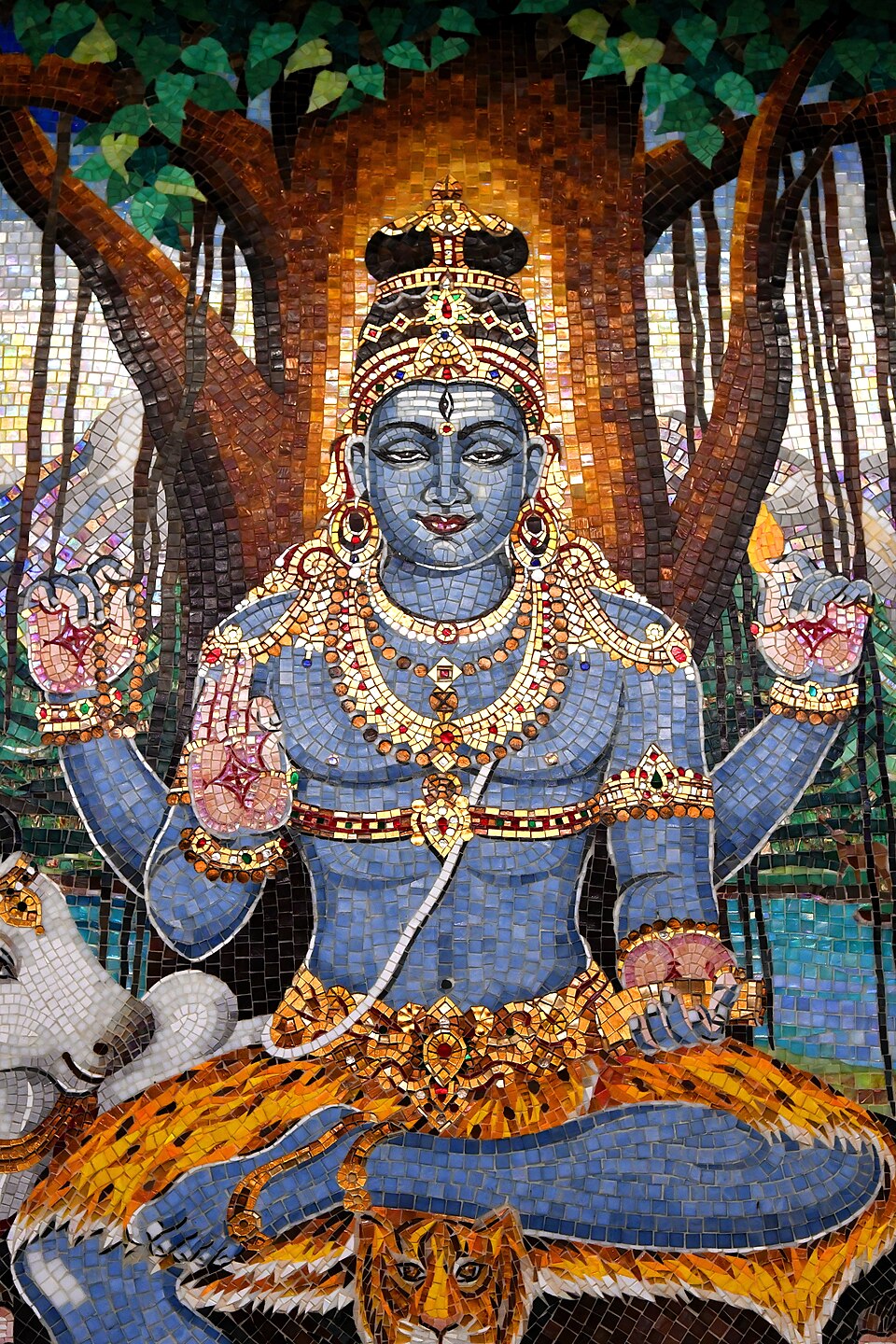
The entrance is a gopuram about six metres tall, crowded with carved and brightly painted deities, and the main shrine behind it is topped by a dome 3.45 metres high plated in gilded copper. Three principal shrines stand within the complex, dedicated to Ganesh, to Kartik, who is Murugan, and to Sri Maha Mariamman herself, the goddess to whom the temple is dedicated and who occupies the main shrine. The main hall holds bronze images of Shiva, Krishna, Vishnu, Lakshmi, Kali, Saraswati, Nataraja and Hanuman, and further shrines around the compound honour the Shiva Lingam, Brahma and the Navagraha, the nine planetary deities. Oil-lamp rituals are performed most middays and on Fridays, after which prasad, blessed food, is distributed to those present. Outside the gate, kiosks sell the saffron and marigold garlands that worshippers carry in, and the smell of them and of camphor is the first thing a visitor notices from the pavement.
Checked 2026-08-25 · Source
Allow thirty minutes. The compound is small, a single walled block on a street corner rather than a campus, and the sequence is short: shoes off, a circuit of the shrines, time at the main shrine, and a pause to watch whatever ritual is under way. Thirty minutes is enough to see the temple properly without hurrying past the side shrines, and it leaves room to stand at the gate and look up at the gopuram, which repays more attention than most visitors give it. Arrive during a midday lamp ritual, or during a Friday, and the visit stretches naturally: the point becomes watching rather than walking, and an hour is easy to spend. During Navaratri, allow far longer or do not plan the day around a schedule at all.
Checked 2026-08-25
The temple's own calendar decides this. Navaratri falls in September or October by the Tamil calendar and runs for ten days, and it is when the temple is at its fullest; on the final day the street outside is dressed with yellow garlands and candles and the image of Sri Mariamman is carried in procession through the surrounding roads, with traffic partially closed off. Deepavali is the other night the temple is transformed, lit up throughout. Fridays and middays are the regular high points, when the oil-lamp rituals draw a crowd and prasad is handed out. For a quiet visit, come on a weekday morning outside those hours. For the temple at full strength, come during Navaratri and accept the crush, the queue and the heat as part of it.
Checked 2026-08-25 · Source
No admission charge and no opening hours are recorded for Sri Maha Mariamman Temple, and none are stated here, because no operator-published page could be found. The temple has no website of its own that could be read on 25 August 2026; its public presence is a social media page rather than a site publishing hours, and every set of opening times found in searching came from travel listings and blogs rather than from the temple committee, so none of them is recorded here. What visitors do spend money on is the garlands, incense, coconuts and camphor sold at the kiosks outside the gate, bought in cash and in small amounts, and the donation boxes inside. Bring small baht notes and coins. Confirm hours with the temple itself if the visit depends on a particular time of day.
Checked 2026-08-25
The temple stands at the corner of Si Lom Road and Pan Road in Bang Rak, roughly halfway along Silom between the river and Rama IV Road, which puts it inside one of the best-connected districts in the city. BTS Chong Nonsi on the Silom line is the nearest station, a few hundred metres east along Silom; Surasak, the next station west, is a slightly longer walk. Both approaches are along Silom itself, so the temple appears on the corner without any navigation. Buses run the length of Silom, and Chao Phraya express boats land at Sathorn pier, from which the Silom line covers the rest. Traffic on Silom is dense and the pavements are narrow and crowded with vendors at lunchtime and in the evening, so the walk from either station takes longer than the distance suggests.
Checked 2026-08-25
Sri Maha Mariamman is an active place of worship in constant use, and the conduct expected is a temple's, not a museum's. Remove shoes before entering, cover shoulders and knees, and keep to the edges when a ritual is in progress rather than crossing in front of worshippers at a shrine. Do not touch the images or the offerings, and do not step into a queue for prasad unless taking part. Photography inside is the point on which visitors most often get it wrong: assume the interior and the shrines are not to be photographed, ask before raising a camera, and never photograph a worshipper at prayer without permission. During Navaratri, the crowd fills the compound and spills into the street, pickpocketing risk rises as it does in any dense crowd, and the procession closes roads around Silom at short notice. Garland sellers at the gate work the tourist trade hard; agree what is being bought before handing over money.
Checked 2026-08-25
The photograph here is the gopuram, and it is best taken from the far side of the corner of Silom and Pan roads, where enough distance exists to fit the whole six-metre tower into a frame without pointing the lens steeply upward. The carving is so densely coloured that a tight crop of a single tier of figures often reads better than the full elevation, and early morning gives the softest light before the Silom traffic haze thickens and before the tower is thrown into hard contrast. Details worth the frame include the gilded copper dome over the main shrine, the garlands massed at the kiosks outside, and the crowd carrying them in. Inside, treat photography as closed unless someone in authority says otherwise, and use no flash anywhere near the shrines or the lamps. During the Navaratri procession the street itself is the subject; shoot from the pavement and stay out of the path of the image being carried.
Checked 2026-08-25
It is Thailand's principal Tamil Hindu temple, at the corner of Si Lom Road and Pan Road in Bang Rak, Bangkok. It was built in 1879 by the Tamil immigrant Vaithi Padayatchi and is known locally as Wat Khaek and formally as Wat Phra Si Maha Uma Thewi.
Nothing is recorded on either point. The temple publishes no website of its own that could be read on 25 August 2026, and every set of opening times found came from travel listings rather than from the temple, so no hours and no admission are recorded here. Money is spent at the garland kiosks outside and in the donation boxes, so carry small baht notes.
A gopuram about six metres high stands at the entrance, and the main shrine carries a gilded copper dome 3.45 metres high. There are three principal shrines, to Ganesh, to Kartik, and to Sri Maha Mariamman, with bronzes of Shiva, Krishna, Vishnu, Lakshmi, Kali, Saraswati, Nataraja and Hanuman in the main hall, plus shrines to the Shiva Lingam, Brahma and the Navagraha.
Navaratri falls in September or October according to the Tamil calendar and lasts ten days. On the final day the street outside is decorated with yellow garlands and candles and the image of Sri Mariamman is carried in procession through the surrounding streets, with traffic partially closed.
Remove shoes before entering, cover shoulders and knees, and keep to the edges during rituals rather than crossing in front of worshippers. Do not touch images or offerings. Assume photography inside is not permitted and ask before raising a camera, and never photograph someone at prayer without permission.
BTS Chong Nonsi on the Silom line is the nearest station, a few hundred metres east along Silom Road; Surasak to the west is a slightly longer walk. Buses run the length of Silom and Chao Phraya express boats land at Sathorn pier, from which the Silom line covers the rest.
Loading the interactive map…
The interactive map could not be loaded.
Last updated:
Source: OpenStreetMap contributors, Wikidata ·