
_%E0%B8%A7%E0%B8%B1%E0%B8%94%E0%B8%9E%E0%B8%A3%E0%B8%B0%E0%B9%80%E0%B8%8A%E0%B8%95%E0%B8%B8%E0%B8%9E%E0%B8%99%E0%B8%A7%E0%B8%B4%E0%B8%A1%E0%B8%A5%E0%B8%A1%E0%B8%B1%E0%B8%87%E0%B8%84%E0%B8%A5%E0%B8%B2%E0%B8%A3%E0%B8%B2%E0%B8%A1%E0%B8%A3%E0%B8%B2%E0%B8%8A%E0%B8%A7%E0%B8%A3%E0%B8%A1%E0%B8%AB%E0%B8%B2%E0%B8%A7%E0%B8%B4%E0%B8%AB%E0%B8%B2%E0%B8%A3_%E0%B9%80%E0%B8%82%E0%B8%95%E0%B8%9E%E0%B8%A3%E0%B8%B0%E0%B8%99%E0%B8%84%E0%B8%A3_%E0%B8%81%E0%B8%A3%E0%B8%B8%E0%B8%87%E0%B9%80%E0%B8%97%E0%B8%9E%E0%B8%A1%E0%B8%AB%E0%B8%B2%E0%B8%99%E0%B8%84%E0%B8%A3_(10).jpg)
_%E0%B8%A7%E0%B8%B1%E0%B8%94%E0%B8%9E%E0%B8%A3%E0%B8%B0%E0%B9%80%E0%B8%8A%E0%B8%95%E0%B8%B8%E0%B8%9E%E0%B8%99%E0%B8%A7%E0%B8%B4%E0%B8%A1%E0%B8%A5%E0%B8%A1%E0%B8%B1%E0%B8%87%E0%B8%84%E0%B8%A5%E0%B8%B2%E0%B8%A3%E0%B8%B2%E0%B8%A1%E0%B8%A3%E0%B8%B2%E0%B8%8A%E0%B8%A7%E0%B8%A3%E0%B8%A1%E0%B8%AB%E0%B8%B2%E0%B8%A7%E0%B8%B4%E0%B8%AB%E0%B8%B2%E0%B8%A3_%E0%B9%80%E0%B8%82%E0%B8%95%E0%B8%9E%E0%B8%A3%E0%B8%B0%E0%B8%99%E0%B8%84%E0%B8%A3_%E0%B8%81%E0%B8%A3%E0%B8%B8%E0%B8%87%E0%B9%80%E0%B8%97%E0%B8%9E%E0%B8%A1%E0%B8%AB%E0%B8%B2%E0%B8%99%E0%B8%84%E0%B8%A3_(11).jpg)
_%E0%B8%A7%E0%B8%B1%E0%B8%94%E0%B8%9E%E0%B8%A3%E0%B8%B0%E0%B9%80%E0%B8%8A%E0%B8%95%E0%B8%B8%E0%B8%9E%E0%B8%99%E0%B8%A7%E0%B8%B4%E0%B8%A1%E0%B8%A5%E0%B8%A1%E0%B8%B1%E0%B8%87%E0%B8%84%E0%B8%A5%E0%B8%B2%E0%B8%A3%E0%B8%B2%E0%B8%A1%E0%B8%A3%E0%B8%B2%E0%B8%8A%E0%B8%A7%E0%B8%A3%E0%B8%A1%E0%B8%AB%E0%B8%B2%E0%B8%A7%E0%B8%B4%E0%B8%AB%E0%B8%B2%E0%B8%A3_%E0%B9%80%E0%B8%82%E0%B8%95%E0%B8%9E%E0%B8%A3%E0%B8%B0%E0%B8%99%E0%B8%84%E0%B8%A3_%E0%B8%81%E0%B8%A3%E0%B8%B8%E0%B8%87%E0%B9%80%E0%B8%97%E0%B8%9E%E0%B8%A1%E0%B8%AB%E0%B8%B2%E0%B8%99%E0%B8%84%E0%B8%A3_(12).jpg)
_%E0%B8%A7%E0%B8%B1%E0%B8%94%E0%B8%9E%E0%B8%A3%E0%B8%B0%E0%B9%80%E0%B8%8A%E0%B8%95%E0%B8%B8%E0%B8%9E%E0%B8%99%E0%B8%A7%E0%B8%B4%E0%B8%A1%E0%B8%A5%E0%B8%A1%E0%B8%B1%E0%B8%87%E0%B8%84%E0%B8%A5%E0%B8%B2%E0%B8%A3%E0%B8%B2%E0%B8%A1%E0%B8%A3%E0%B8%B2%E0%B8%8A%E0%B8%A7%E0%B8%A3%E0%B8%A1%E0%B8%AB%E0%B8%B2%E0%B8%A7%E0%B8%B4%E0%B8%AB%E0%B8%B2%E0%B8%A3_%E0%B9%80%E0%B8%82%E0%B8%95%E0%B8%9E%E0%B8%A3%E0%B8%B0%E0%B8%99%E0%B8%84%E0%B8%A3_%E0%B8%81%E0%B8%A3%E0%B8%B8%E0%B8%87%E0%B9%80%E0%B8%97%E0%B8%9E%E0%B8%A1%E0%B8%AB%E0%B8%B2%E0%B8%99%E0%B8%84%E0%B8%A3_(2).jpg)
_%E0%B8%A7%E0%B8%B1%E0%B8%94%E0%B8%9E%E0%B8%A3%E0%B8%B0%E0%B9%80%E0%B8%8A%E0%B8%95%E0%B8%B8%E0%B8%9E%E0%B8%99%E0%B8%A7%E0%B8%B4%E0%B8%A1%E0%B8%A5%E0%B8%A1%E0%B8%B1%E0%B8%87%E0%B8%84%E0%B8%A5%E0%B8%B2%E0%B8%A3%E0%B8%B2%E0%B8%A1%E0%B8%A3%E0%B8%B2%E0%B8%8A%E0%B8%A7%E0%B8%A3%E0%B8%A1%E0%B8%AB%E0%B8%B2%E0%B8%A7%E0%B8%B4%E0%B8%AB%E0%B8%B2%E0%B8%A3_%E0%B9%80%E0%B8%82%E0%B8%95%E0%B8%9E%E0%B8%A3%E0%B8%B0%E0%B8%99%E0%B8%84%E0%B8%A3_%E0%B8%81%E0%B8%A3%E0%B8%B8%E0%B8%87%E0%B9%80%E0%B8%97%E0%B8%9E%E0%B8%A1%E0%B8%AB%E0%B8%B2%E0%B8%99%E0%B8%84%E0%B8%A3_(3).jpg)
3 min walk · เขตพระนคร
The Museum of Siam
- Must see
- Museum
Language · 1 published
Historic monument · เขตพระนคร, Bangkok
วัดพระเชตุพนวิมลมังคลารามราชวรมหาวิหาร
| Monday | 08:00 – 19:30 |
|---|---|
| Tuesday | 08:00 – 19:30 |
| Wednesday | 08:00 – 19:30 |
| Thursday | 08:00 – 19:30 |
| Friday | 08:00 – 19:30 |
| Saturday | 08:00 – 19:30 |
| Sunday | 08:00 – 19:30 |
Checked 2026-08-25 · Source
Read from the OpenStreetMap access tags; anything not listed has no tag recorded.
Set the group type to family in the planner and the day window contracts to about three quarters of a solo day.
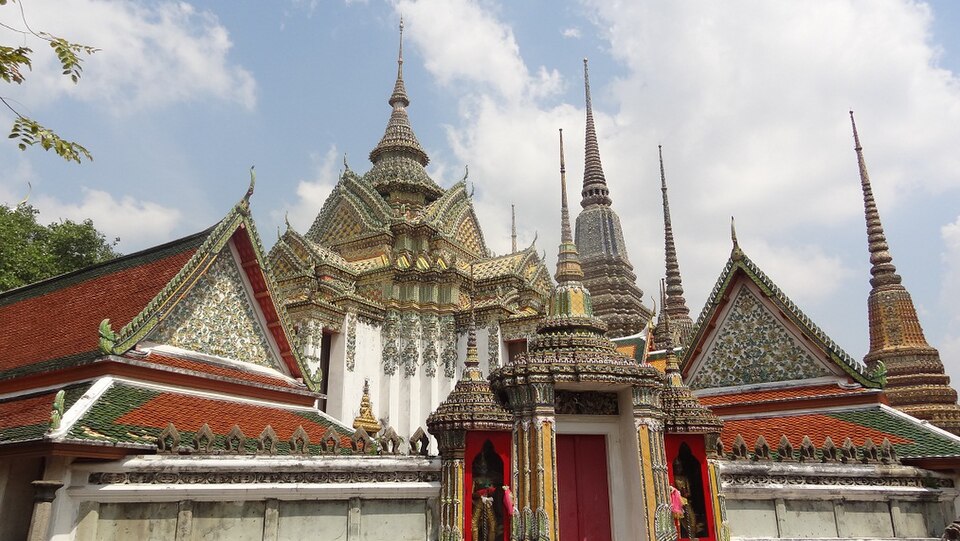
Wat Pho, in full Wat Phra Chetuphon, is the temple immediately south of the Grand Palace, and it is the only monument in Bangkok carrying an international documentary-heritage inscription. UNESCO placed its 1,431 stone inscriptions on the Memory of the World register in 2008: a body of text on history, medicine, literature and lexicography compiled between 1831 and 1841 by some fifty court scholars under Prince Paramanuchitchinorot, cut into the walls, pillars and pavilions of the temple so that anyone at all could read it. That is why the temple and the Thai government alike describe Wat Pho as the country's first public university rather than as a place of worship with a museum attached. It is also where traditional Thai massage was codified and where it is still taught, and where a 46-metre gold-leafed Reclining Buddha fills a hall built so tightly around it that the figure can never be seen whole. Wat Pho stays open until 19:30, later than anything else in the old city.
Checked 2026-08-25 · Source
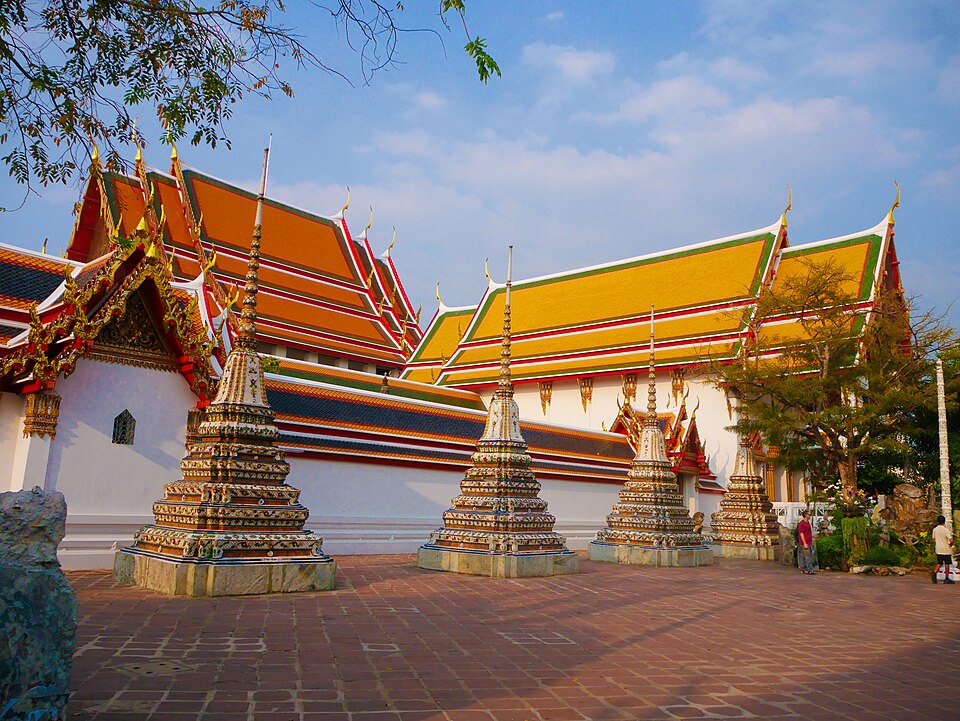
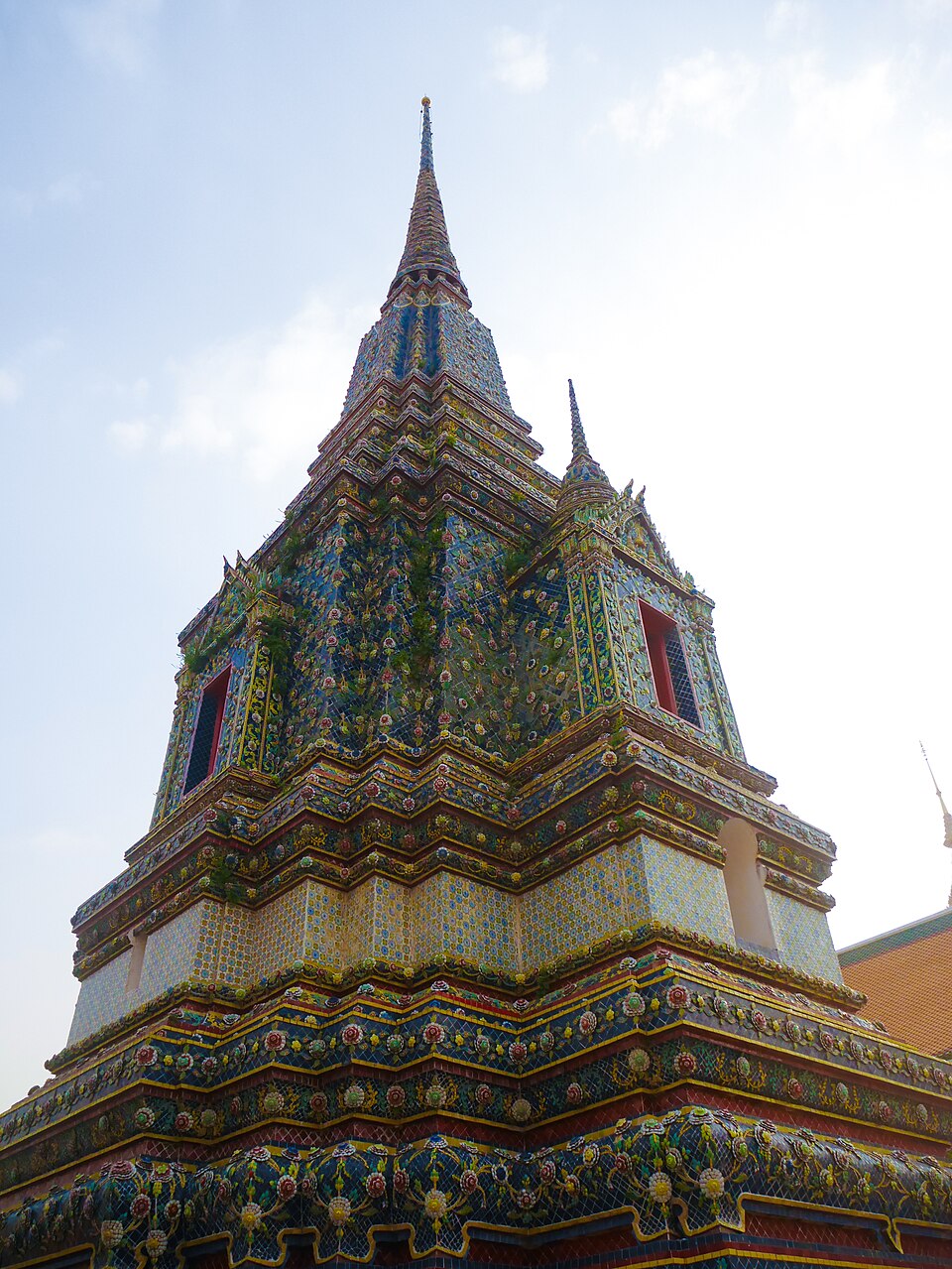
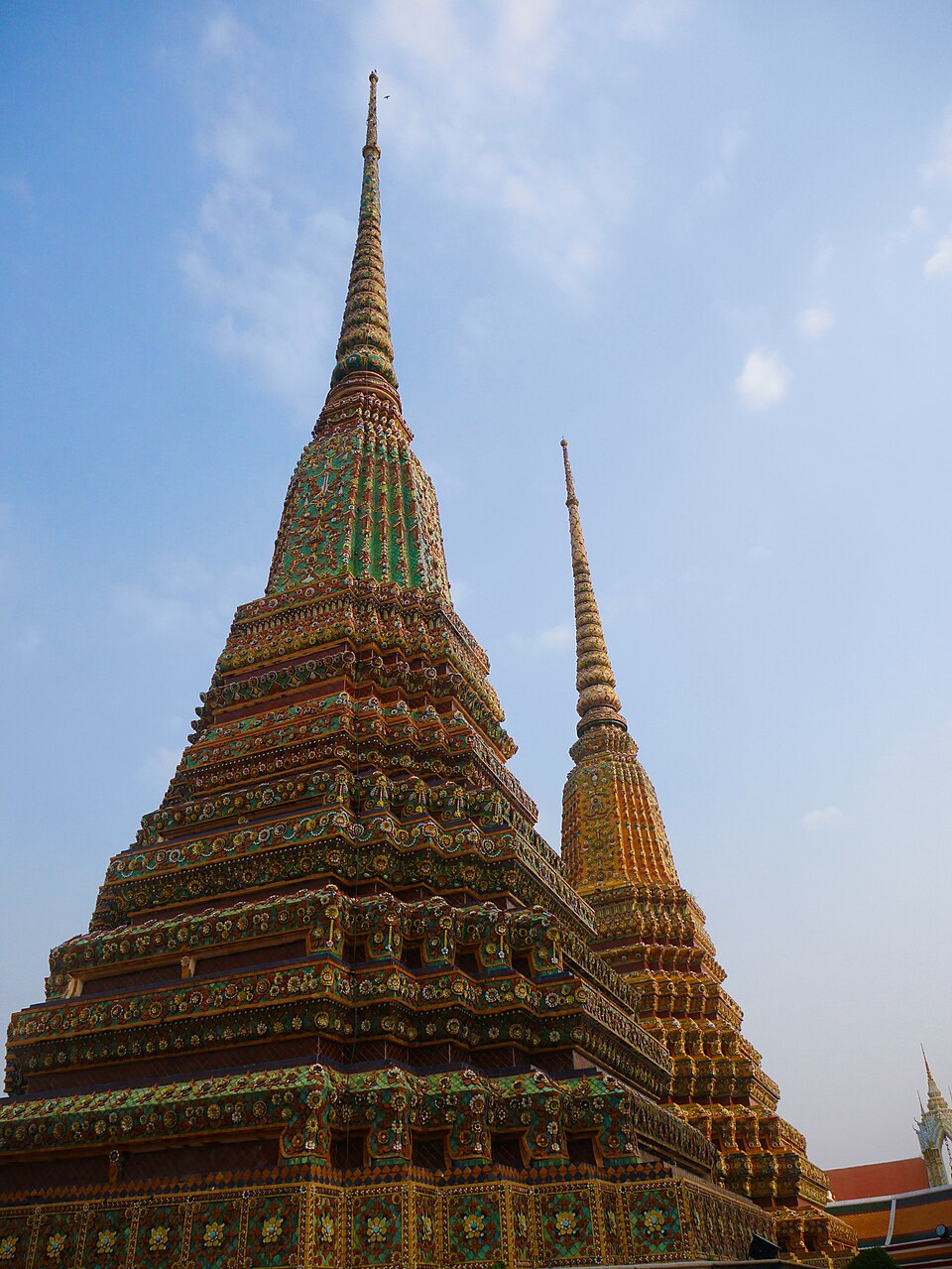
Three things, and they are not in the same place. The Reclining Buddha has its own hall in the northern half of the compound: 46 metres of gold-leafed figure with barely a walkway around it, entered at the head and left at the feet. The inscriptions are everywhere else, cut into pillars, wall panels and the pavilions of the courtyards, and it takes a deliberate change of pace to stop reading the temple as scenery and notice that its surfaces are text. Between the two lie the chedi courtyards, rows of memorial stupas rising in tiled colour around the great royal chedis at the centre of the compound, and it is here rather than at the Reclining Buddha that Wat Pho is at its best, because hardly anyone walks this far in. The massage school operates inside the grounds as a working institution with its own appointments and its own charge, not as a demonstration laid on for visitors.
Checked 2026-08-25 · Source
Allow 75 minutes: the Reclining Buddha hall, the chedi courtyards, and enough of the inscription pavilions to see what they are. The temple publishes no suggested visit length on any of its own pages, so the figure is judgement. The split is uneven. The Reclining Buddha takes about fifteen minutes, because the walkway around it moves in one direction and does not permit lingering, and the remaining hour is the compound itself, which is large, quiet, and repeatedly mistaken for the way out. A massage appointment at the school is neither in the 75 minutes nor in the admission fee; it needs its own time and its own booking. Visitors walking over from the Grand Palace, ten minutes to the north, routinely arrive with twenty minutes to spare before they are due somewhere else and see only the Reclining Buddha, which is the single part of Wat Pho that a photograph had already shown them.
Checked 2026-08-25
Wat Pho is open daily from 08:00 to 19:30, in the temple's own wording on its visitor-planning page. That is later than most printed sources give and later than the OpenStreetMap tag, which stops at 18:30. The operator's page is the reading recorded here and is the one to trust, but a visitor arriving at 19:00 should know the guidance is contested and that halls may be closing around them. The long evening is the reason to come at 17:00 or later. The Grand Palace shuts at 16:30 and pushes its crowd southwards into Wat Pho for the hour that follows, so the genuinely quiet window is the last stretch before 19:30, after sunset, with the chedi courtyards close to empty. The alternative is 08:00 at opening, before the palace releases anybody. November to February is the season here as everywhere in Bangkok, and the compound offers more shade than the palace does.
Checked 2026-08-25 · Source
Admission is 300 THB, from the temple's own visitor-planning page, checked on 25 August 2026, and that is the only figure the operator publishes. It publishes no separate Thai-national rate. A domestic rate is widely reported elsewhere, but the temple states none, so none is recorded here. The same page carries an exemption for children by height; the threshold itself is not recorded on this page and should be read from the operator before being relied on. The Thai massage school inside the grounds charges separately and its fees are no part of the 300 THB. The temple's online booking page exists but currently returns a notice that the service is not yet open, so there is no advance price to compare against and no way to buy ahead and skip the gate. Bring the fare in cash.
Checked 2026-08-25 · Source
MRT Sanam Chai exit 1 comes up a few minutes' walk from the Chetuphon Road gate, the southern entrance and the one that avoids the coach drop-off. This is the easiest of the three Rattanakosin temples to reach underground. From the water, Tha Tien pier sits immediately west of the compound and is also the landing for the cross-river ferry to Wat Arun, which is why the standard morning runs Grand Palace, Wat Pho, ferry, Wat Arun without a vehicle at any point in it. The walk down from the Grand Palace takes about ten minutes along Maha Rat Road. No car is needed: the streets between the two are congested and often one-way, and a taxi covers the distance more slowly than a walk does. The compound has gates on more than one side, and in practice the Chetuphon Road entrance moves faster in the morning than the river-side one.
Checked 2026-08-25
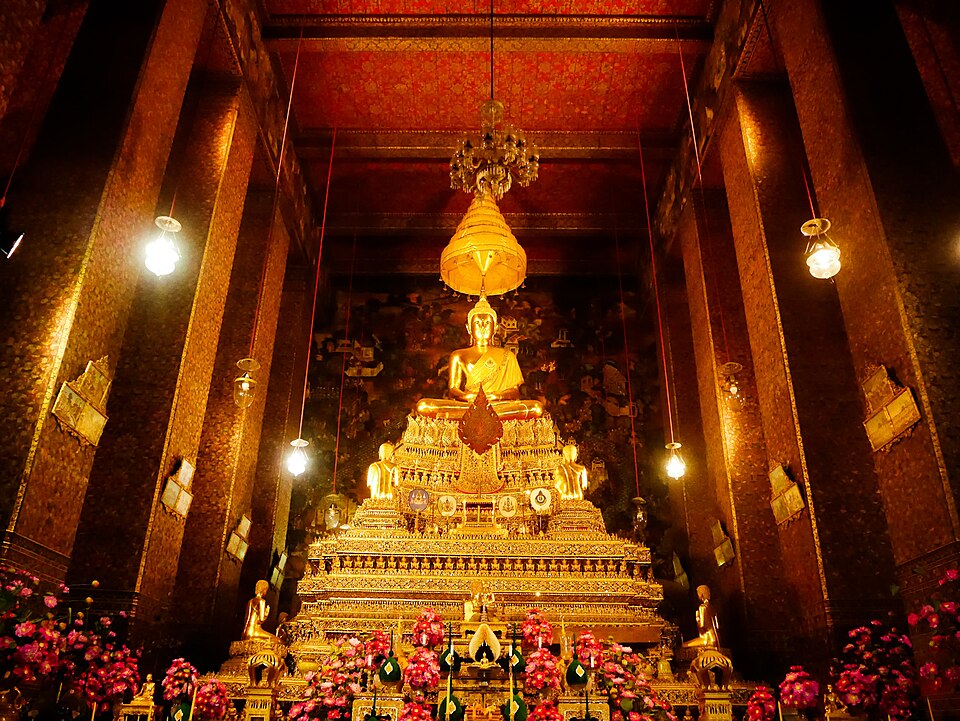
The dress rules are those of the Grand Palace, set out in full in that guide, and Wat Pho enforces them at the gate: shoulders and legs covered, shoes off before entering the Reclining Buddha hall. The trap specific to this temple is the massage. Touts outside the walls sell a Wat Pho massage at premises with no connection to the school, while the school itself is inside the grounds and charges its own fee entirely separately from admission. Second, the Reclining Buddha hall is a one-way loop with a tiled floor that is slippery in socks, the pace is set by whoever is in front, and there is no room to stop and step aside. Third, the compound is far larger than the crowd at its northern end suggests, and visitors regularly pay 300 THB and leave by the nearest gate having seen one building. Fourth, the temple's published 19:30 close is later than most third-party listings print, so do not assume anybody else's schedule matches the operator's.
Checked 2026-08-25
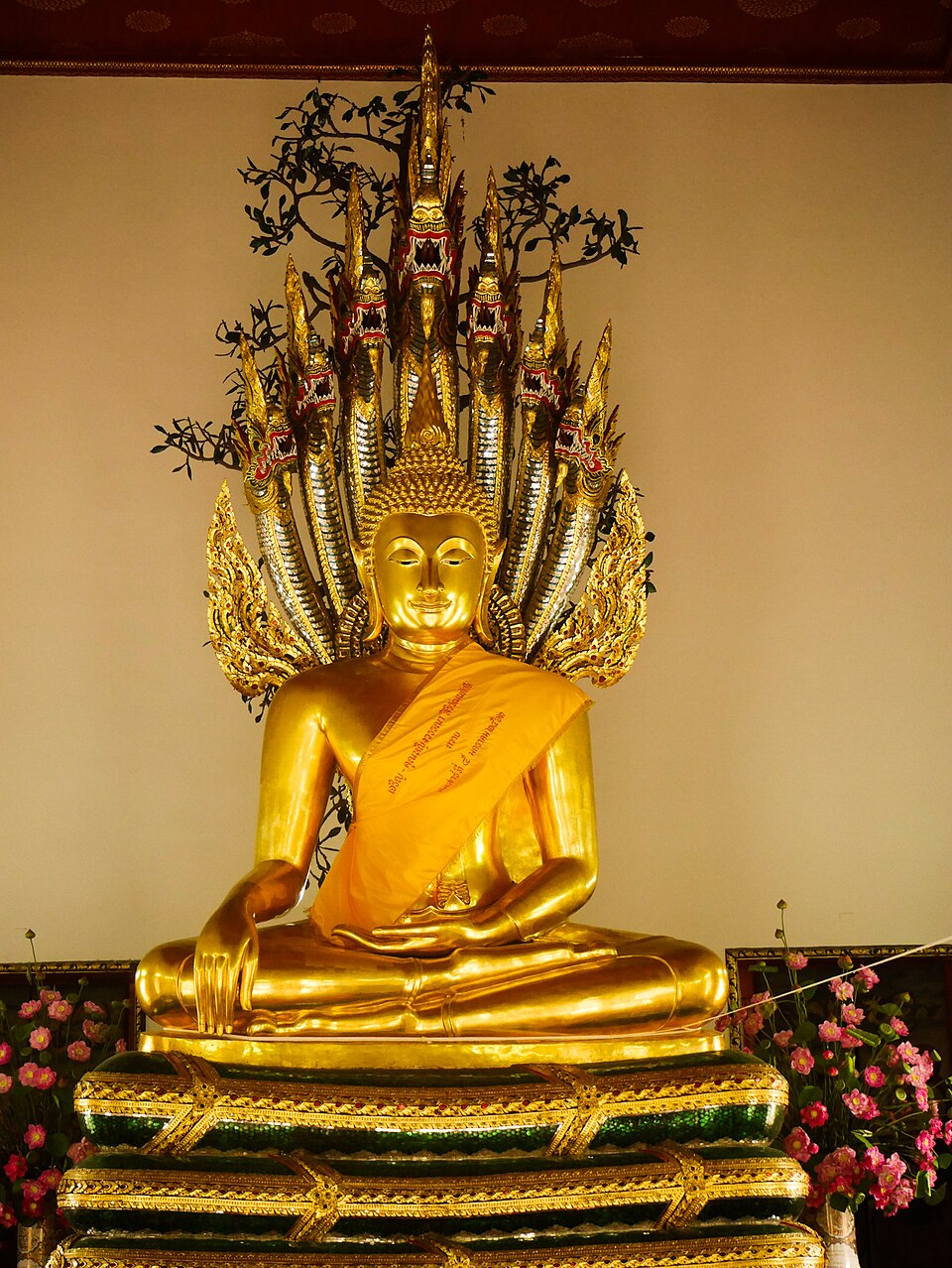
The Reclining Buddha cannot be photographed whole and a visit spent trying is a wasted one. The hall was built around the figure with a few metres to spare, so a wide lens from the head end yields a foreshortened gold tunnel and little else. Photograph parts instead: the face from the near corner at the head, the stacked curve of the shoulder, the inlaid soles of the feet from the far end where the hall opens out slightly. Outside, the chedi courtyards are the strongest frames in the compound and they hold up in the late afternoon, when a low sun catches the ceramic tile on one flank of each spire and leaves the other in shadow. The evening opening is a real advantage over the Grand Palace: the last hour before 19:30 delivers warm light and empty courtyards together, which the morning never does. Inside the halls, keep the flash off, since the surfaces are gold leaf over lacquer and flash only flattens them.
Checked 2026-08-25
300 THB, on the temple's own visitor-planning page, checked on 25 August 2026. That is the only figure the operator publishes; it states no separate Thai-national rate. The Thai massage school inside the grounds charges separately and is not covered by it.
The temple's own page gives 08:00 to 19:30, daily. That is later than most third-party listings and later than the OpenStreetMap tag of 18:30, and the operator's figure is the one recorded here.
Yes. The massage school operates inside the temple grounds as a working institution, with its own appointments and its own charge, separate from the 300 THB admission. Premises outside the walls advertising a Wat Pho massage are not connected to it.
Because of its inscriptions. UNESCO added the temple's 1,431 stone inscriptions to the Memory of the World register in 2008: texts on history, medicine, literature and lexicography compiled between 1831 and 1841 by some fifty court scholars under Prince Paramanuchitchinorot and cut into the fabric of the temple for public reading.
Seventy-five minutes covers the Reclining Buddha hall, the chedi courtyards and a look at the inscription pavilions. A massage appointment is extra. The temple publishes no visit length, so this is judgement.
Not at present. The temple's booking page exists but returns a notice that the service is not yet open, so tickets are bought at the gate and no advance price is published.
Loading the interactive map…
The interactive map could not be loaded.
Last updated:
Source: OpenStreetMap contributors, Wikidata ·