
_%E0%B8%A7%E0%B8%B1%E0%B8%94%E0%B9%84%E0%B8%95%E0%B8%A3%E0%B8%A1%E0%B8%B4%E0%B8%95%E0%B8%A3%E0%B8%A7%E0%B8%B4%E0%B8%97%E0%B8%A2%E0%B8%B2%E0%B8%A3%E0%B8%B2%E0%B8%A1%E0%B8%A7%E0%B8%A3%E0%B8%A7%E0%B8%B4%E0%B8%AB%E0%B8%B2%E0%B8%A3_%E0%B9%80%E0%B8%82%E0%B8%95%E0%B8%AA%E0%B8%B1%E0%B8%A1%E0%B8%9E%E0%B8%B1%E0%B8%99%E0%B8%98%E0%B8%A7%E0%B8%87%E0%B8%A8%E0%B9%8C_%E0%B8%81%E0%B8%A3%E0%B8%B8%E0%B8%87%E0%B9%80%E0%B8%97%E0%B8%9E%E0%B8%A1%E0%B8%AB%E0%B8%B2%E0%B8%99%E0%B8%84%E0%B8%A3_(1).jpg)
_%E0%B8%A7%E0%B8%B1%E0%B8%94%E0%B9%84%E0%B8%95%E0%B8%A3%E0%B8%A1%E0%B8%B4%E0%B8%95%E0%B8%A3%E0%B8%A7%E0%B8%B4%E0%B8%97%E0%B8%A2%E0%B8%B2%E0%B8%A3%E0%B8%B2%E0%B8%A1%E0%B8%A7%E0%B8%A3%E0%B8%A7%E0%B8%B4%E0%B8%AB%E0%B8%B2%E0%B8%A3_%E0%B9%80%E0%B8%82%E0%B8%95%E0%B8%AA%E0%B8%B1%E0%B8%A1%E0%B8%9E%E0%B8%B1%E0%B8%99%E0%B8%98%E0%B8%A7%E0%B8%87%E0%B8%A8%E0%B9%8C_%E0%B8%81%E0%B8%A3%E0%B8%B8%E0%B8%87%E0%B9%80%E0%B8%97%E0%B8%9E%E0%B8%A1%E0%B8%AB%E0%B8%B2%E0%B8%99%E0%B8%84%E0%B8%A3_(10).jpg)
_%E0%B8%A7%E0%B8%B1%E0%B8%94%E0%B9%84%E0%B8%95%E0%B8%A3%E0%B8%A1%E0%B8%B4%E0%B8%95%E0%B8%A3%E0%B8%A7%E0%B8%B4%E0%B8%97%E0%B8%A2%E0%B8%B2%E0%B8%A3%E0%B8%B2%E0%B8%A1%E0%B8%A7%E0%B8%A3%E0%B8%A7%E0%B8%B4%E0%B8%AB%E0%B8%B2%E0%B8%A3_%E0%B9%80%E0%B8%82%E0%B8%95%E0%B8%AA%E0%B8%B1%E0%B8%A1%E0%B8%9E%E0%B8%B1%E0%B8%99%E0%B8%98%E0%B8%A7%E0%B8%87%E0%B8%A8%E0%B9%8C_%E0%B8%81%E0%B8%A3%E0%B8%B8%E0%B8%87%E0%B9%80%E0%B8%97%E0%B8%9E%E0%B8%A1%E0%B8%AB%E0%B8%B2%E0%B8%99%E0%B8%84%E0%B8%A3_(11).jpg)
_%E0%B8%A7%E0%B8%B1%E0%B8%94%E0%B9%84%E0%B8%95%E0%B8%A3%E0%B8%A1%E0%B8%B4%E0%B8%95%E0%B8%A3%E0%B8%A7%E0%B8%B4%E0%B8%97%E0%B8%A2%E0%B8%B2%E0%B8%A3%E0%B8%B2%E0%B8%A1%E0%B8%A7%E0%B8%A3%E0%B8%A7%E0%B8%B4%E0%B8%AB%E0%B8%B2%E0%B8%A3_%E0%B9%80%E0%B8%82%E0%B8%95%E0%B8%AA%E0%B8%B1%E0%B8%A1%E0%B8%9E%E0%B8%B1%E0%B8%99%E0%B8%98%E0%B8%A7%E0%B8%87%E0%B8%A8%E0%B9%8C_%E0%B8%81%E0%B8%A3%E0%B8%B8%E0%B8%87%E0%B9%80%E0%B8%97%E0%B8%9E%E0%B8%A1%E0%B8%AB%E0%B8%B2%E0%B8%99%E0%B8%84%E0%B8%A3_(12).jpg)
_%E0%B8%A7%E0%B8%B1%E0%B8%94%E0%B9%84%E0%B8%95%E0%B8%A3%E0%B8%A1%E0%B8%B4%E0%B8%95%E0%B8%A3%E0%B8%A7%E0%B8%B4%E0%B8%97%E0%B8%A2%E0%B8%B2%E0%B8%A3%E0%B8%B2%E0%B8%A1%E0%B8%A7%E0%B8%A3%E0%B8%A7%E0%B8%B4%E0%B8%AB%E0%B8%B2%E0%B8%A3_%E0%B9%80%E0%B8%82%E0%B8%95%E0%B8%AA%E0%B8%B1%E0%B8%A1%E0%B8%9E%E0%B8%B1%E0%B8%99%E0%B8%98%E0%B8%A7%E0%B8%87%E0%B8%A8%E0%B9%8C_%E0%B8%81%E0%B8%A3%E0%B8%B8%E0%B8%87%E0%B9%80%E0%B8%97%E0%B8%9E%E0%B8%A1%E0%B8%AB%E0%B8%B2%E0%B8%99%E0%B8%84%E0%B8%A3_(13).jpg)
3 min walk · เขตสัมพันธวงศ์
Yaowarat Road
- Must see
- Historic monument
Language · 1 published
Place of worship · เขตสัมพันธวงศ์, Bangkok
วัดไตรมิตรวิทยารามวรวิหาร
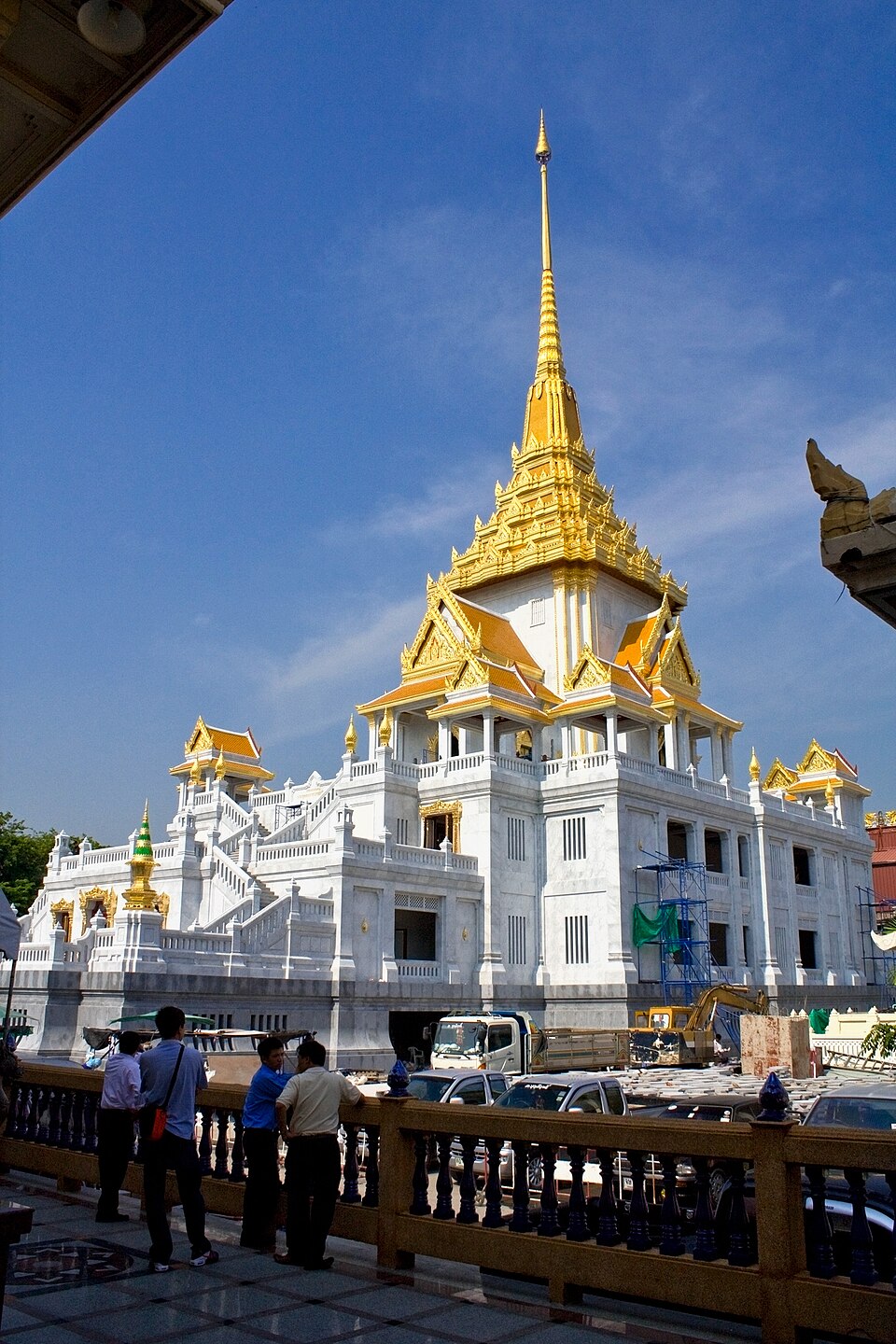
Wat Traimit stands at the western gate of Yaowarat, where Chinatown meets the road in from Hua Lamphong, and it exists in the guidebooks for one object: a Sukhothai-style Buddha image of solid gold. The image spent an unknown number of years under a plain plaster casing, was moved to this temple from the abandoned Wat Phraya Krai in 1935, and was still assumed to be an ordinary stucco Buddha until it was dropped during a ceremony in 1955, cracking the casing and revealing the gold underneath. Since 1992 it has carried the formal name Phra Phuttha Maha Suwanna Patimakon. The temple around it was called Wat Sam Chin, the temple of the three Chinese, founded by three Chinese friends according to its own oral history, and took its present name on 3 February 1940. The image now sits at the top of the Phra Maha Mondop, a four-storey marble-clad pavilion in applied Thai style designed by Arvuth Ngoenchuklin, completed in 2007 and inaugurated on 14 February 2010. That building is why a visit here is not the ten-minute stop it once was: the storeys beneath the image hold two exhibitions rather than empty space.
Checked 2026-08-25 · Source
Three things, stacked. At the top of the mondop is the Golden Buddha itself, in a hall that is smaller and plainer than the building's exterior suggests, and the image is the only thing in it that matters — visitors sit on the floor in front of it rather than filing past. Below that is the exhibition on the image: the Sukhothai-style casting, the centuries under stucco, and the 1955 rediscovery, which is the room that turns the statue from a photograph into a story worth having climbed for. Below that again is the Yaowarat Chinatown Heritage Center, on the social and economic history of Bangkok's Chinatown — the migration, the trades, the shophouse street outside the door — and it is the part of Wat Traimit that visitors skip and then regret skipping, because it explains the neighbourhood they are about to walk into. The temple compound at ground level is small and functional. The mondop is the visit.
Checked 2026-08-25 · Source
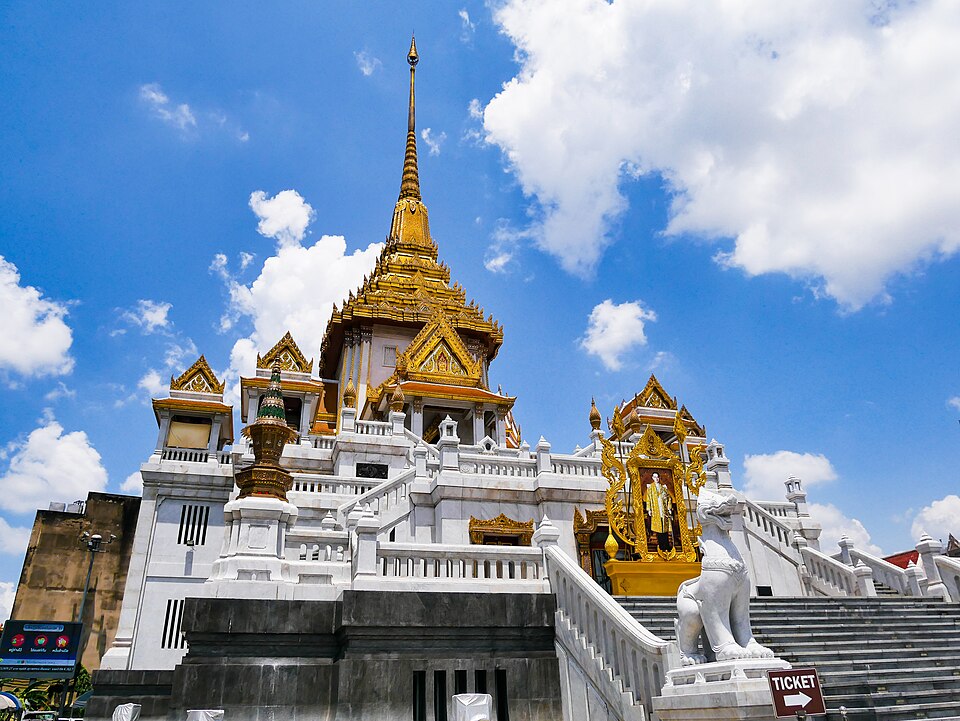
Allow forty-five minutes. That is roughly ten minutes with the Golden Buddha, fifteen in the exhibition about it, fifteen in the Chinatown Heritage Center and the rest on the stairs and shoes. No operator source states a visit length — the temple publishes no website of its own — so the forty-five minutes is editorial judgement covering the image hall plus the two exhibition floors beneath it. A visitor who intends only to see the statue and leave can be in and out in fifteen, and that is a defensible choice; a visitor who is starting a Chinatown walk here should take the full forty-five, because the heritage floor is the briefing for everything east of the temple gate.
Checked 2026-08-25
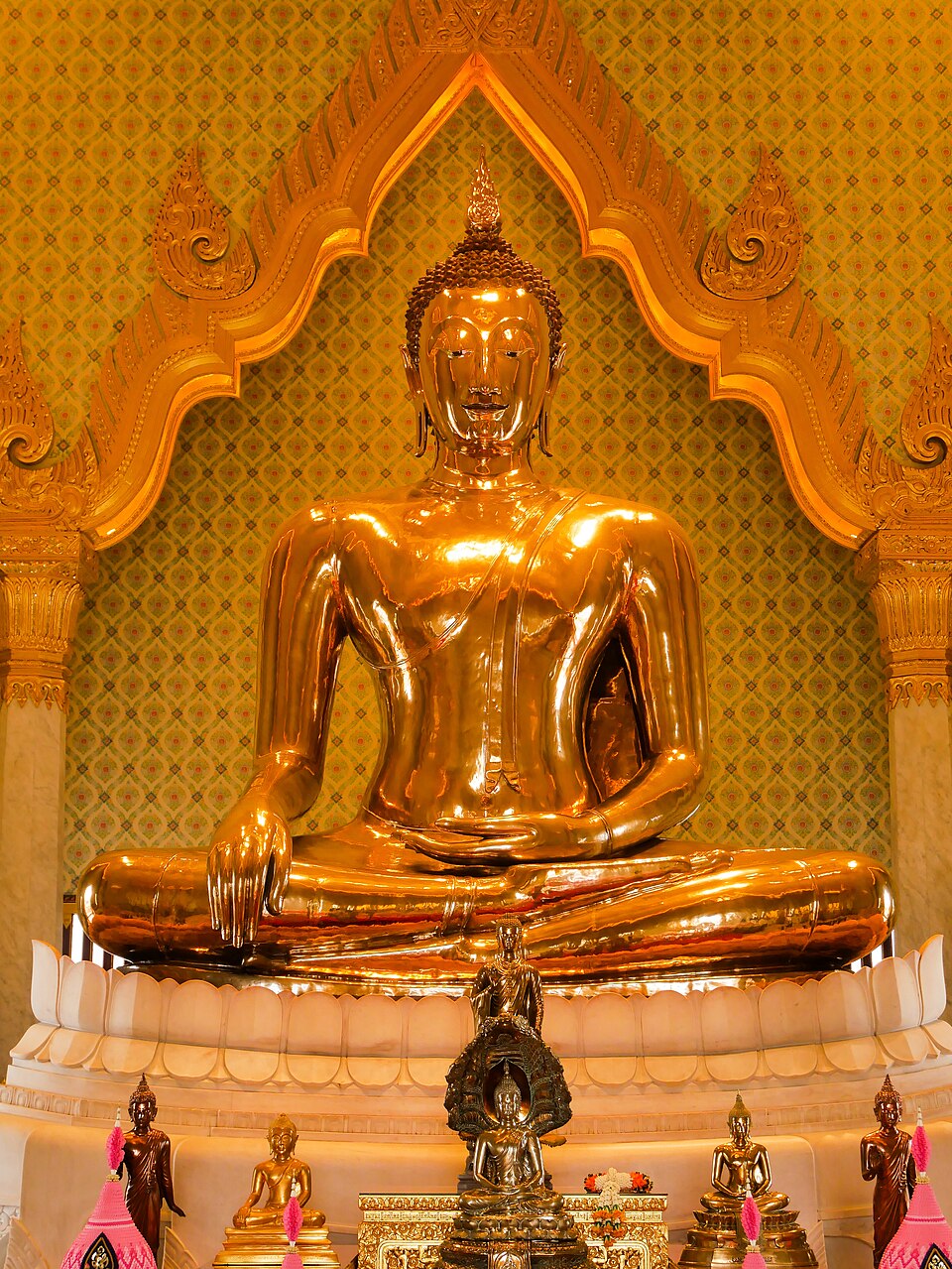
Come early, between eight and nine, and treat Wat Traimit as the first stop of a Chinatown morning rather than a detour from one. Coach groups start arriving mid-morning and the image hall is a small room; Yaowarat itself is at its quietest before the food streets wake, so the same hour serves both halves of the day. November to February is the comfortable season, as it is everywhere in Bangkok. The exception to plan around is Chinese New Year, when Yaowarat fills completely and the temple with it — a spectacular time to be in the neighbourhood and a poor one to be trying to look at a statue. Note also the opening-hours problem set out below: without an operator-published time, an early arrival is safer than a late one in either direction.
Checked 2026-08-25
No admission figure is recorded for Wat Traimit, and the reason is that no operator source exists to record one from. The temple publishes no website: its Wikidata entry carries no official-website claim, and the domain that a search for the temple surfaces is a squatted template carrying gambling links rather than anything the temple runs. Every price in circulation therefore comes from aggregators, and they disagree — some quote forty baht for the Golden Buddha hall plus one hundred baht for the Yaowarat Chinatown Heritage Centre as separate tickets, others quote a flat one hundred and forty baht for foreigners. Both readings are printed here and neither is recorded as this page's price. What that means in practice: expect the image hall and the exhibition floors to be ticketed separately at the door, carry a few hundred baht in small notes, and do not assume the ticket bought downstairs covers the floor above it.
Checked 2026-08-25

Wat Traimit is a walk from MRT Hua Lamphong, roughly three hundred metres, and that is the way to arrive; the temple sits on the traffic circle where Charoen Krung, Yaowarat and Mittraphan Road meet, so the gate is visible from the crossing. From the river, the Chao Phraya express boat to Ratchawong pier puts a visitor at the far end of Yaowarat, which makes the temple the end of a Chinatown walk rather than its start — a good order if lunch is the point. Driving here is a mistake worth stating plainly: this junction is one of the densest in Bangkok, the surrounding lanes are shophouse-narrow, and a car saves nothing over the metro. The temple is also a natural pairing with Hua Lamphong station itself, which is a two-minute walk and worth ten of anyone's time.
Checked 2026-08-25
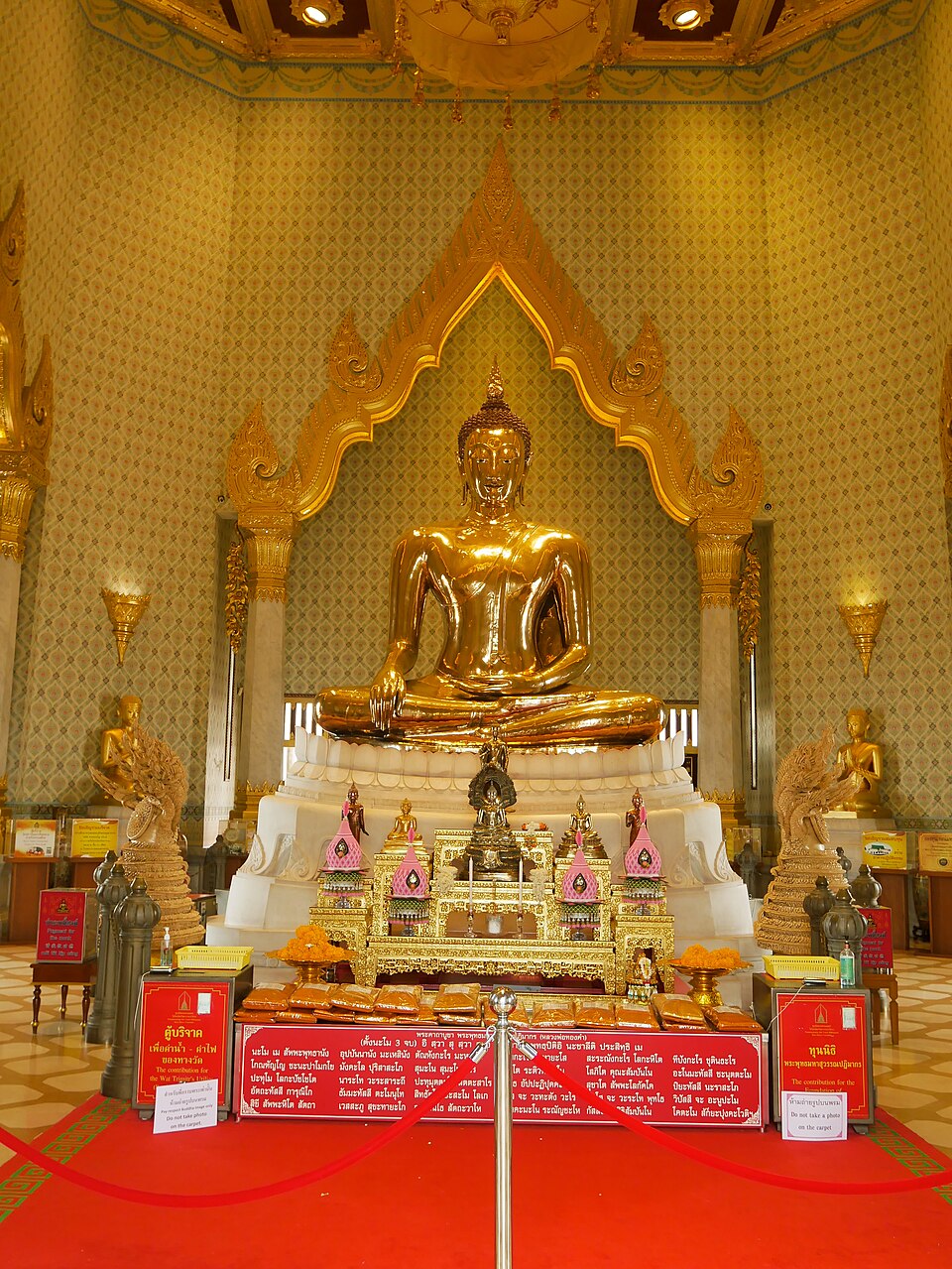
The trap at Wat Traimit is the opening hours, and it is a real one. The temple publishes no hours anywhere — there is no operator site to publish them on — so this page records none. Two different figures circulate on third-party pages: daily 08:00 to 17:00 in some, and Tuesday to Sunday 08:30 to 16:30 with the mondop's museum floors closed on Monday in others. They contradict each other, both are aggregator-sourced, and a visitor who plans a Monday afternoon around either is taking a risk this page cannot remove. Arrive in the morning, and on a Monday be prepared for the exhibition floors to be shut even if the image hall is open. Dress is standard Thai temple dress and the full rule is carried on the Wat Saket page — shoulders and knees covered, shoes off before the halls; here that means shoes off and carried up several flights, so slip-ons beat laces. The floors are ticketed separately, which surprises people at the second desk. Inside the image hall, sit rather than stand in front of the Buddha, and never turn your back to it for a photograph with someone else holding the camera.
Checked 2026-08-25
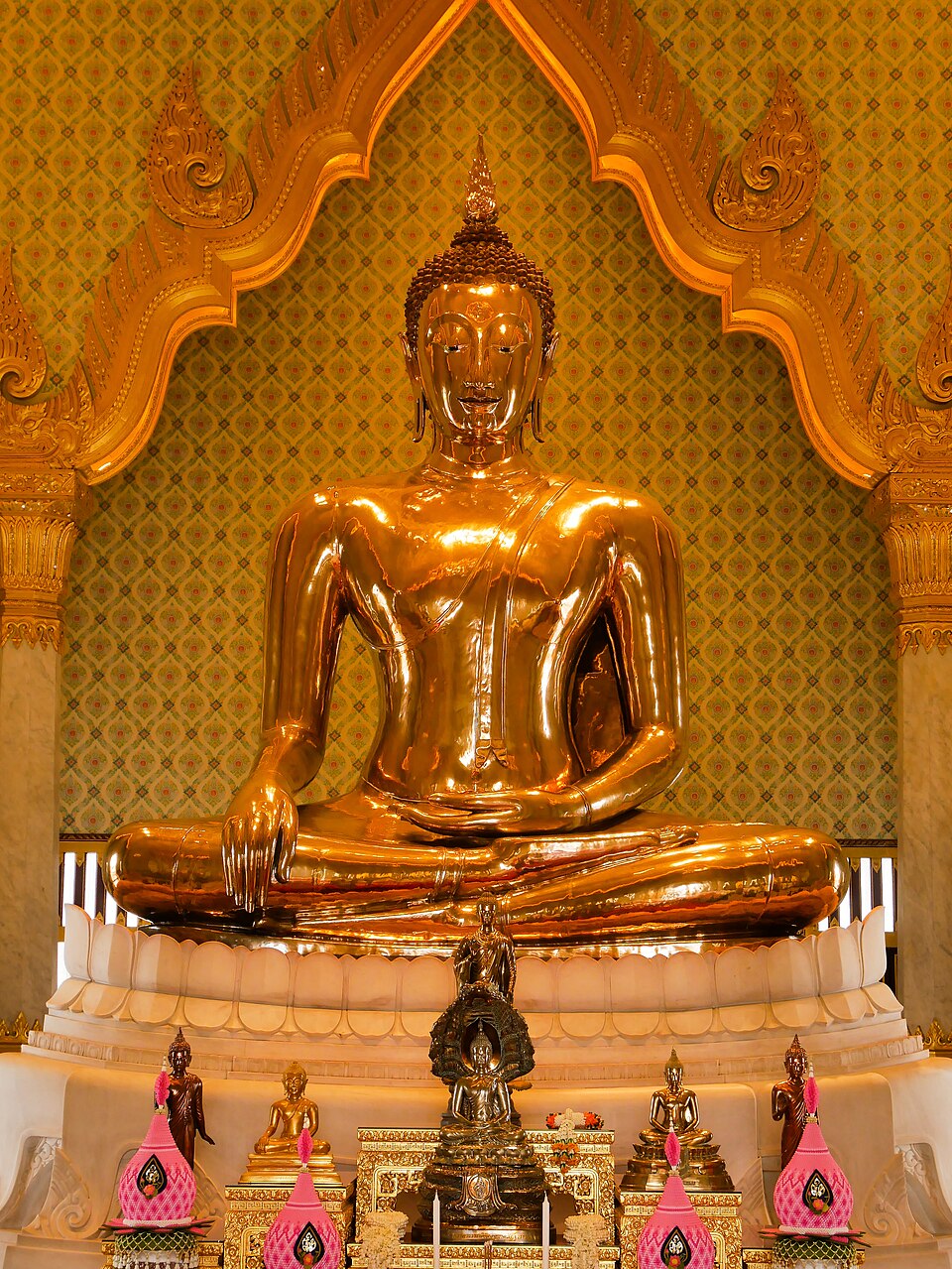
The Golden Buddha is a hard subject and most visitors leave with an orange smear. The hall is dim, the image is behind a rail and lit from below and in front, and gold under artificial light throws a colour cast that automatic white balance reads as tungsten and over-corrects. Turn the flash off — it flattens the modelling of the face entirely and is discourteous in a room where people are praying — brace the phone or the camera against the rail, and expose for the face rather than the body, or the highlights on the chest and the lap will clip to white while the features stay dark. A slightly warm white balance, kept warm on purpose, looks more like the room than a neutral one does. Outside, the mondop's white marble against the Yaowarat traffic is the better architectural frame in the early morning, before the light goes hard and the building loses its edges. In the two exhibition floors, expect low light and glass cases; a lens hood pressed to the glass solves more reflections than any setting will.
Checked 2026-08-25
This page records none, because the temple publishes none: it has no website of its own, its Wikidata entry carries no official-website claim, and the domain search returns for it is a squatted template rather than the temple. Third-party pages give daily 08:00 to 17:00 and, separately, Tuesday to Sunday 08:30 to 16:30 with the museum floors closed on Monday. They contradict each other and neither is recorded here. Arrive in the morning.
No figure is recorded, because there is no operator source. Aggregators quote forty baht for the Golden Buddha hall plus one hundred for the Chinatown Heritage Center as two tickets, and others quote a flat one hundred and forty baht for foreigners. Carry small notes and expect the floors to be ticketed separately at the door.
Yes — it is a solid-gold image in the Sukhothai style, and it was concealed under a plaster casing until the casing cracked when the image was dropped during a ceremony in 1955. It had been moved to Wat Traimit from the abandoned Wat Phraya Krai in 1935, before anyone knew what it was.
Forty-five minutes covers the image hall and both exhibition floors beneath it. Fifteen minutes is enough if the intention is only to see the statue. No operator states a duration, so these are editorial estimates.
Two exhibitions inside the Phra Maha Mondop: one on the image itself — its Sukhothai casting, its centuries under stucco and its 1955 rediscovery — and the Yaowarat Chinatown Heritage Center, on the social and economic history of Bangkok's Chinatown. The building was completed in 2007 and inaugurated on 14 February 2010.
It is the natural start of one. The temple stands at the western gate of Yaowarat, three hundred metres from MRT Hua Lamphong, and the Chinatown Heritage Center inside it is a briefing for the streets that begin at its door. Walking east through Yaowarat and leaving by Ratchawong pier is the order that ends at lunch.
Loading the interactive map…
The interactive map could not be loaded.
Last updated:
Source: OpenStreetMap contributors, Wikidata ·