


2 min walk
Station Church
- Notable
- Place of worship
Language · 1 published
Museum · Zurich
Landesmuseum
| Monday | Closed |
|---|---|
| Tuesday | 10:00 – 17:00 |
| Wednesday | 10:00 – 17:00 |
| Thursday | 10:00 – 17:00 |
| Friday | 10:00 – 17:00 |
| Saturday | 10:00 – 17:00 |
| Sunday | 10:00 – 17:00 |
Checked 2026-08-26 · Source
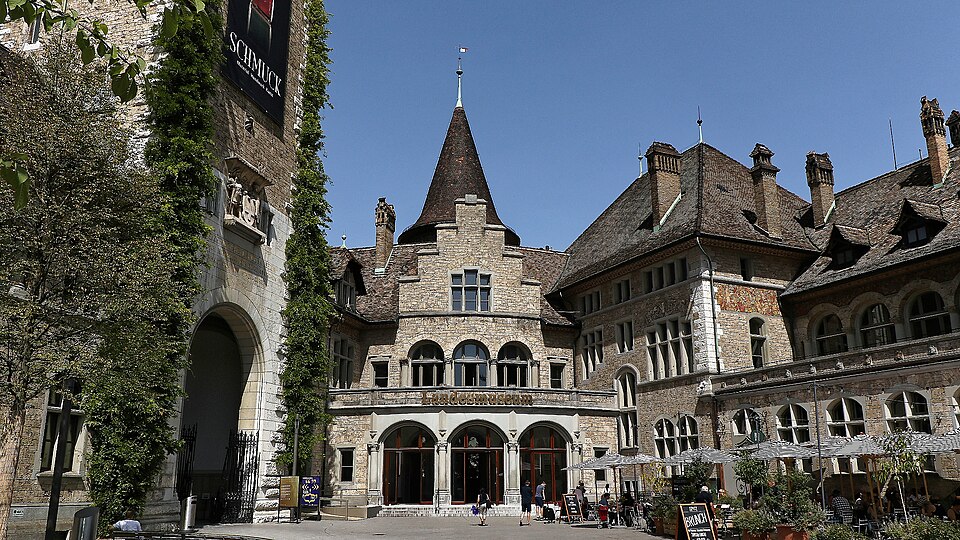
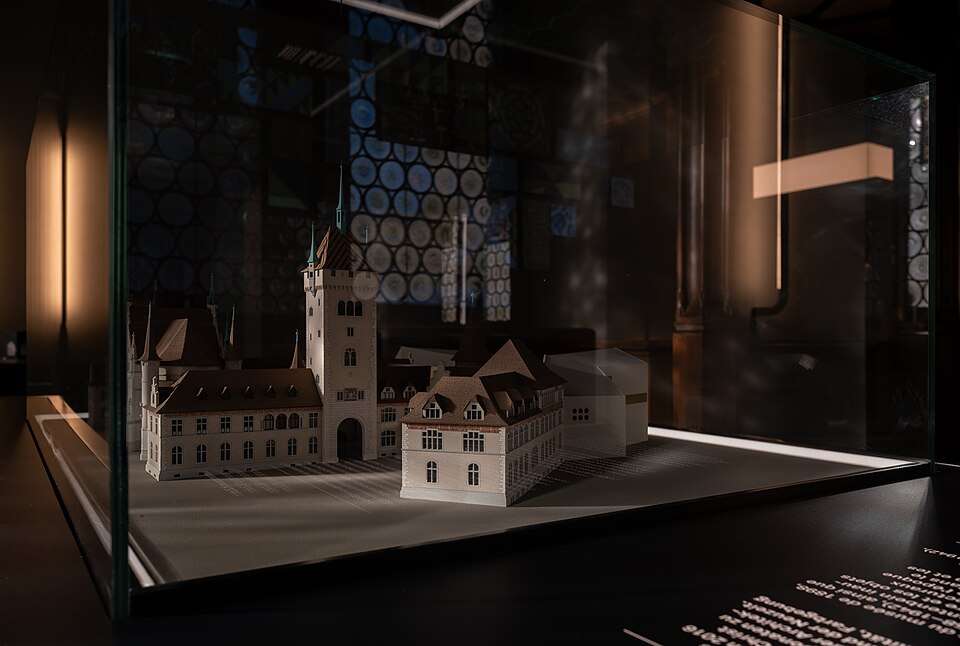
The Swiss National Museum — Landesmuseum Zurich on its own signage, National Museum Zurich in its English pages — is the federal museum of Swiss cultural history, and it stands immediately behind Zurich's main railway station at Museumstrasse 2. The decision to build it in Zurich rather than Lucerne, Basel or Bern was taken in 1891 after a long parliamentary argument, construction began in 1892 on what was then the city's largest building site, and the Federal Council opened the building on 24 June 1898. The architect was Gustav Gull, who assembled late-medieval and early-modern forms into a single historicising whole; the museum today describes the result as an architectural monument of national importance rather than as a copy of any one castle. A second building by the Basel practice Christ & Gantenbein opened in 2016 and holds the large flexible halls, the library and the auditorium, so a visit moves between a nineteenth-century pastiche of towers and courtyards and a folded concrete extension without leaving the site. The museum is one of several run by the Swiss National Museum group, alongside Château de Prangins on Lake Geneva and the Forum of Swiss History in Schwyz.
Checked 2026-08-26 · Source
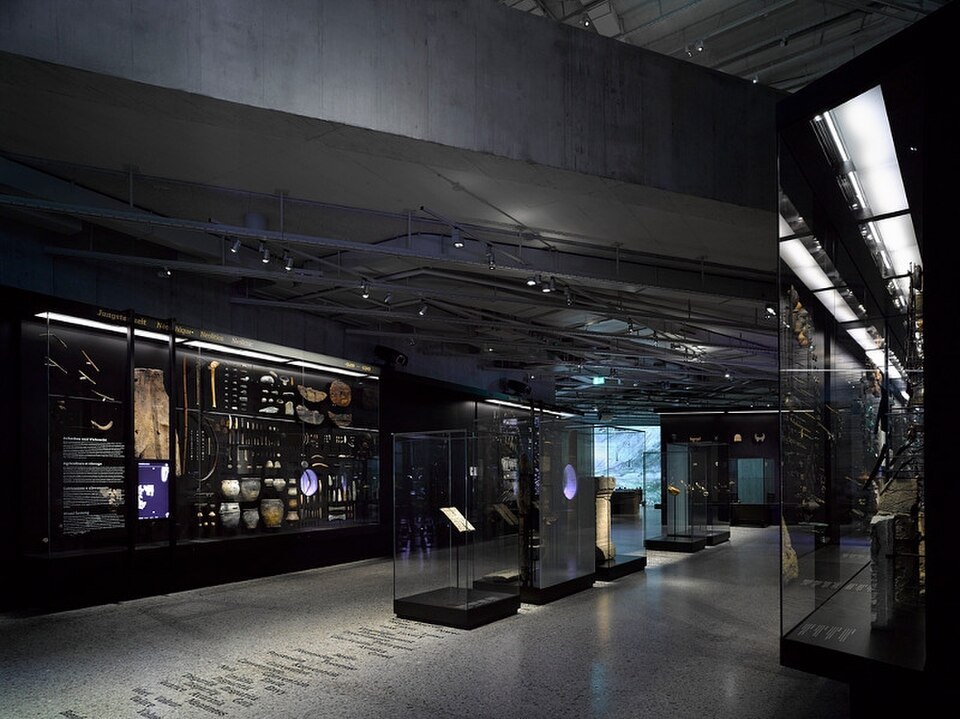
Two permanent exhibitions carry the building. History of Switzerland occupies 1,000 square metres and covers 550 years, running from the late Middle Ages to the present and treating the move from a confederation of states to a federal state as an unfinished argument about identity; the museum notes that it deliberately crosses into contemporary history, which many history museums avoid. Its own introductory guided tour is scheduled at sixty minutes, which is a useful measure of how much is in the room. A Magic Carpet Ride Through History is the family exhibition, open since 2019 and spread over three built sets — an Arabian palace, the deck of a sailing ship and a vintage railway carriage — with hands-on stations and original objects placed among them; the sword from the 2024 children's book Globi im Museum sits there on permanent loan. Around these, four temporary exhibitions were running when this guide was checked: Wars and Us, Switzerland the Land of Banks, Graphics, and an installation on sex work. That roster turns over on its own schedule, so check the exhibitions page for what is open on the day rather than planning a visit around a title read here.
Checked 2026-08-26 · Source
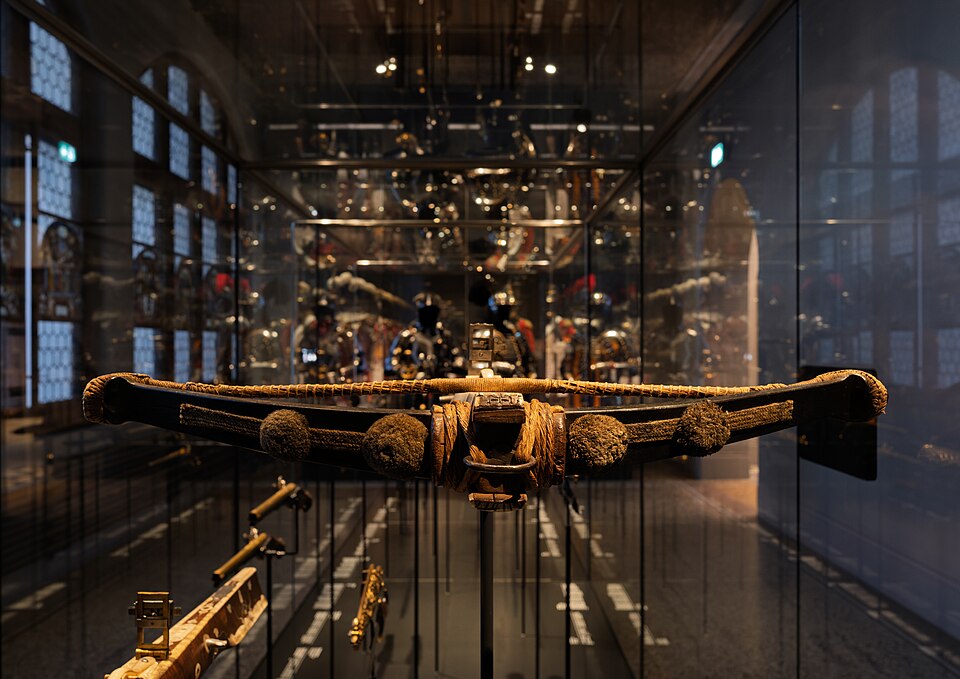
Allow two hours. The museum publishes no suggested visit length of its own, so this figure is this guide's judgement rather than a number read off the museum's site, and it is built from figures the museum does publish. History of Switzerland runs to 1,000 square metres and the museum's own introductory tour of it is scheduled at sixty minutes; the family exhibition occupies three built rooms; and there were four temporary exhibitions open at the time of checking. Sixty minutes for the Swiss history galleries at a pace that lets a visitor read labels, plus forty-five for one or two temporary shows, plus the walk between Gull's wing and the 2016 extension, lands close to two hours. Ninety minutes covers History of Switzerland and nothing else. Three hours is realistic for anyone who intends to read the contemporary-history section properly or who is visiting with children, since the Magic Carpet rooms are designed to be played in rather than walked through. No last-admission time is published, so a late arrival is not formally cut off, but arriving after 16:00 on a 17:00 day leaves too little for the permanent galleries.
Checked 2026-08-26
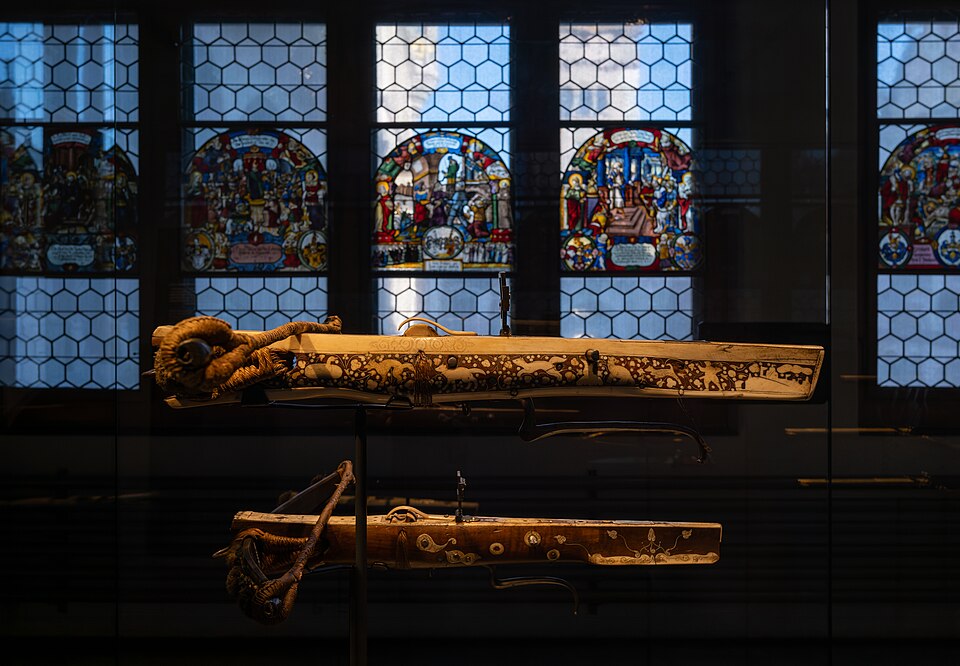
The museum is closed on Mondays, every week, and that is the single most important thing to know about its calendar. On the other six days it opens at 10:00. Until 30 September 2026 Thursday was the late day, running to 19:00; the museum has announced that from 1 October 2026 the museum, shop and bistro close at 17:00 on Thursdays as well, so every open day now ends at 17:00. There is no midday break. The library keeps its own hours and its own closed days, Tuesday to Wednesday and Friday 10:00 to 18:00 and Thursday to 19:00, shut from Saturday through Monday, so a reader's day and a visitor's day are not the same day. The museum states that it is closed on public holidays, but its own list of special opening times contradicts that in both directions: it shows the museum open on 25 and 26 December 2026, open 10:00 to 14:00 on Christmas Eve, and closed on Monday 14 September 2026 for Knabenschiessen. Read the special-times list for the exact date rather than reasoning from the general rule. Within the day, the first hour after opening is the quietest.
Checked 2026-08-26 · Source
Adult admission is 13 Swiss francs. The concession rate is 10 francs and covers AHV and IV recipients, RAV registrants, pupils and students. Children up to sixteen enter free, and the ticket page also lists the Simply Zurich exhibition as free admission. An annual pass costs 35 francs and covers unlimited entry to every museum of the Swiss National Museum group, which pays for itself on a third visit and is worth a moment's thought for anyone also heading to Prangins or Schwyz. A long list of passes admits their holders free on presentation: the Swiss Museum Pass, the ZürichCARD, Raiffeisen MemberPlus, ICOM, ICOMOS and VMS cards, Swiss school classes by prior arrangement, holders of N, S or F permits, military personnel in uniform, official press cards, and members of the museum's Friends association. Tickets can be bought online or at the desk; the museum does not require a timed slot for general admission. Arriving by public transport with an SBB RailAway combined ticket gives ten per cent off the entry fee. Group visits are priced separately: a private guided tour is 180 francs plus 10 francs admission per head.
Checked 2026-08-26 · Source
No car is needed, and taking one is the worse choice. The museum sits directly beside Zurich Hauptbahnhof — the museum's own directions amount to leaving the station and walking — so any train into Zurich delivers a visitor to the door, and the Platzspitz park behind the building makes the approach obvious once outside. By tram or bus the museum names three stops: Central, Bahnhofstrasse/HB and Sihlquai/HB. The nearer Bahnhofquai/HB stop is out of service for renovation work from 14 December 2025 until the end of 2026, and the museum flags this on its visitor page, so a route planner suggesting it needs overriding with one of the other three. Drivers are directed towards Zurich City and then the Hauptbahnhof, with two public car parks named: Hauptbahnhof at Sihlquai 41 and Urania at Uraniastrasse 3. Both are commercial city-centre garages rather than museum parking. The practical consequence for an itinerary is that this museum slots into a day built around the station without any transfer cost at all, which is unusual for a national museum and worth exploiting on an arrival or departure day.
Checked 2026-08-26 · Source
The bag rules are stricter than most museums and are enforced at the entrance. Sports bags, shopping bags, briefcases, suitcases, rucksacks, musical instruments, rain garments, umbrellas and heavy coats all go into the cloakroom lockers, for which a token is collected from the Welcome Desk. Only small bags up to A3 size, 29.7 by 42 centimetres, come into the galleries. Anything larger than cabin luggage — over 55 by 40 by 23 centimetres — will not fit the lockers and cannot be left at the museum at all, which matters because the station is next door and travellers routinely arrive mid-journey; the museum points those visitors at the left luggage lockers in Zurich Hauptbahnhof instead. Cloakroom space is limited and lockers must be emptied on the way out rather than held for the day. Access with a private stroller is restricted for space and safety reasons and depends on the exhibition and how busy the day is; buggies and baby carriers are lent at the Welcome Desk when a stroller cannot go in. Individual exhibition assistance for visitors with disabilities is included in the admission price and is arranged through the reservations desk.
Checked 2026-08-26 · Source

Photography for private use is welcome. The museum says plainly that it is glad to have visitors take pictures as a souvenir or to share, and asks only that nothing marked with a no-photo sign is photographed — a restriction that applies to particular loaned objects and to some temporary exhibitions, for legal rather than conservation reasons. Read the signs at each gallery entrance rather than assuming the permission carries across the whole building, because the temporary halls in the 2016 extension are where loans concentrate. Commercial photography and filming need authorisation and are handled through a separate service page. For the building itself, the courtyard side of Gull's 1898 wing gives the towers and stepped gables without station infrastructure in the frame, and it holds light through the afternoon; the junction where the Christ & Gantenbein concrete meets the old masonry is the shot that explains the site, and it reads best under flat cloud rather than hard sun, which blows out the pale render. Galleries are lit low for conservation, so a fast lens or a steady hand does more good than a flash, which is the usual museum courtesy in any case.
Checked 2026-08-26 · Source
The museum, boutique and bistro open at 10:00 and close at 17:00, Tuesday to Sunday, with no midday break. Thursday ran until 19:00 until 30 September 2026; the museum has announced that from 1 October 2026 it closes at 17:00 on Thursdays too. The library keeps separate hours: Tuesday, Wednesday and Friday 10:00 to 18:00, Thursday to 19:00, closed Saturday to Monday. No last-admission time is published.
Monday. The museum is closed every Monday, and the library is closed from Saturday through Monday. Public holidays are less predictable than the general rule suggests: the museum states it is closed on public holidays, yet its own special-opening-times list shows it open on 25 and 26 December 2026, open 10:00 to 14:00 on 24 December, and closed on Monday 14 September 2026 for Knabenschiessen. Check that list for the specific date.
Adults pay 13 Swiss francs and the concession rate is 10 francs, covering AHV and IV recipients, RAV registrants, pupils and students. Children up to sixteen are free. An annual pass valid at every Swiss National Museum site is 35 francs. Free entry is given to holders of the Swiss Museum Pass, the ZürichCARD, Raiffeisen MemberPlus, ICOM, ICOMOS and VMS cards, N, S and F permits, press cards and museum Friends membership.
Allow two hours. The museum publishes no suggested visit length, so this is this guide's editorial judgement, reasoned from what the museum does publish: History of Switzerland covers 1,000 square metres and its own introductory tour is scheduled at sixty minutes, and there are a family permanent exhibition and several temporary shows besides. Ninety minutes covers the Swiss history galleries alone. Three hours suits anyone visiting with children or reading the contemporary-history section closely.
No. The museum stands next to Zurich Hauptbahnhof, so arriving by train means walking out of the station to the door. By tram or bus, use the Central, Bahnhofstrasse/HB or Sihlquai/HB stops; the Bahnhofquai/HB stop is closed for renovation from 14 December 2025 until the end of 2026. Drivers are pointed to the Hauptbahnhof car park at Sihlquai 41 or Urania at Uraniastrasse 3, both public city-centre garages rather than museum parking.
Yes, for private use. The museum welcomes visitor photography and asks only that objects and exhibitions marked with a no-photo sign are not photographed, a restriction it attributes to legal reasons rather than conservation. Those signs appear mainly where loaned objects are shown, so check the notice at each gallery entrance. Commercial photography and filming require prior authorisation, handled through the museum's photography and filming service.
Loading the interactive map…
The interactive map could not be loaded.
Last updated:
Source: OpenStreetMap contributors, Wikidata ·