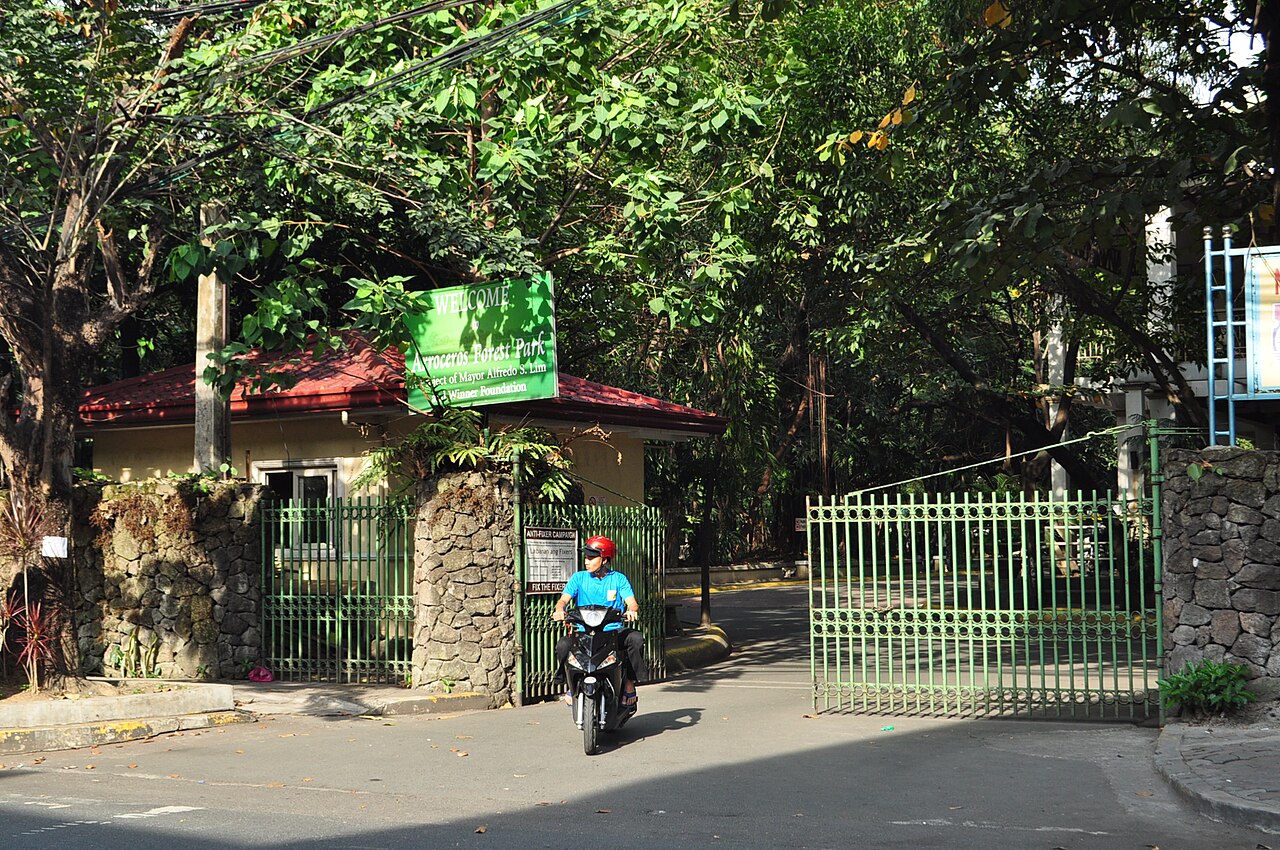
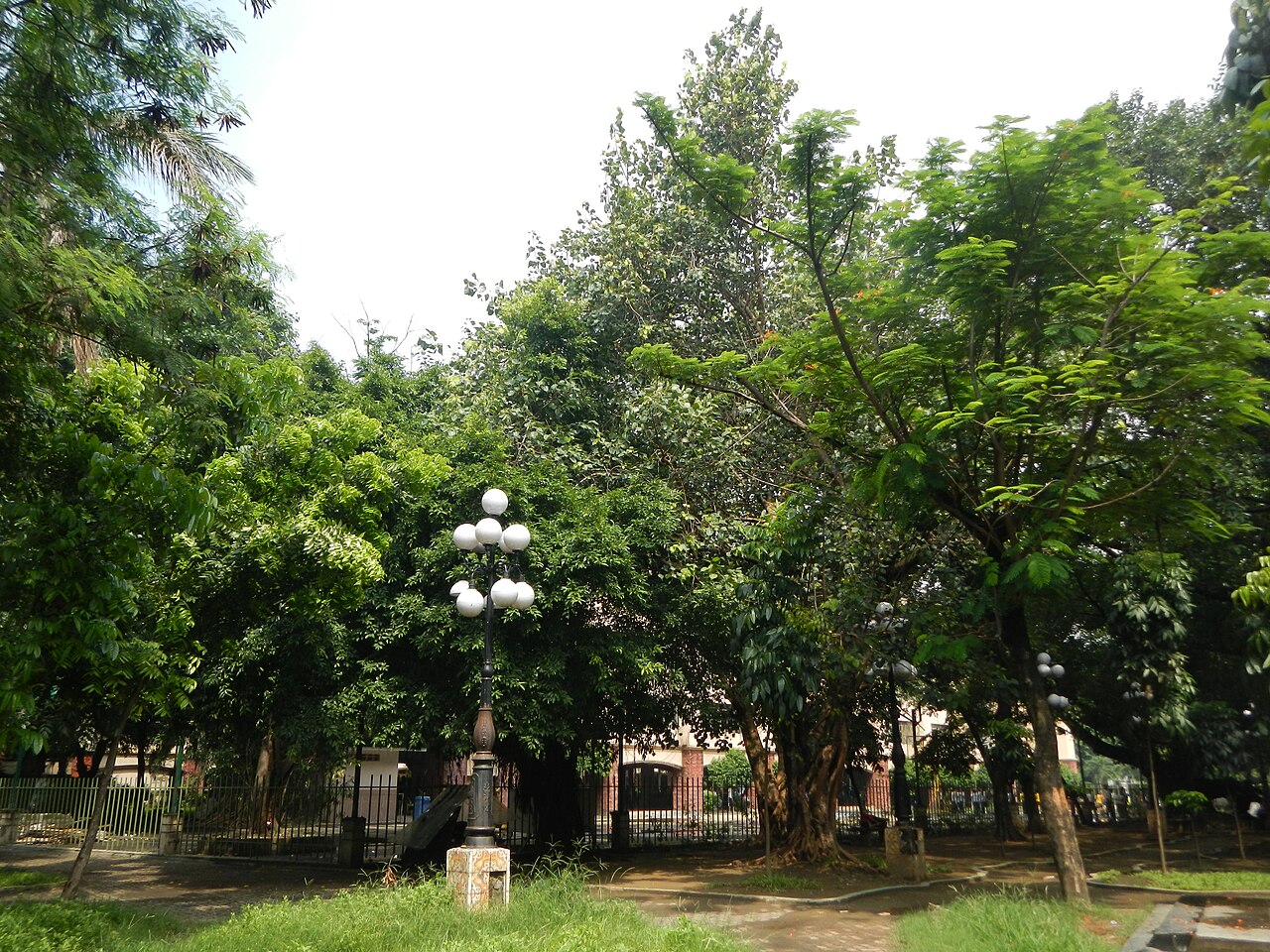
Arroceros Forest Park is a urban forest park situated in Manila, the capital of the Philippines. It occupies a portion of the city near the Pasig River and represents one of the few remaining green spaces within the densely built central district. The park serves as an ecological refuge amid metropolitan development. Its name derives from historical associations with rice trading in the area. The site functions as a public park managed for environmental conservation and recreational use. Visitors encounter mature tree cover uncommon in this part of Metro Manila. The park's existence reflects ongoing efforts to preserve natural heritage within a major Southeast Asian capital.
The park contains established tree cover forming a woodland environment within urban Manila. Walking paths traverse the grounds for pedestrian access. The vegetation provides habitat for bird species and contributes to local biodiversity. Benches and simple seating may be present for visitor rest. The Pasig River borders or lies near the park area, contributing to waterside character. No commercial attractions or developed entertainment facilities are documented within this green space. The interior emphasizes natural landscape over constructed amenities. Shade from mature canopy offers relief from tropical sun. The relative quiet distinguishes this location from surrounding busy streets. Native and introduced tree species comprise the vegetative composition.
A complete visit to Arroceros Forest Park typically requires between thirty minutes and two hours depending on individual pace and interest in natural surroundings. Brief walks through the main paths may occupy half an hour for transit visitors. Those seeking contemplative rest or bird observation might extend their stay toward the longer estimate. The compact urban location limits extensive trail networks. Combining this park with nearby Manila attractions allows efficient itinerary planning. Visitors should assess personal preferences for green space engagement. The park suits quick refreshment stops during broader city exploration. No guided tour duration is documented. Self-directed pacing represents the standard visit format.
Manila experiences tropical climate conditions year-round with distinct wet and dry seasons. The dry season from approximately November through April generally offers more favorable conditions for outdoor park visitation with reduced rainfall probability. Morning and late afternoon hours typically provide more comfortable temperatures than midday peak heat. Visitors should independently verify current accessibility before travel planning. Weather patterns including typhoon occurrences may affect suitability. The shaded canopy provides partial mitigation during sunny periods. Seasonal variations in vegetation appearance occur naturally. Personal tolerance for humidity and precipitation should inform timing decisions. No special events calendar is documented. Check the operator's own site for the travel date before relying on a schedule or fare.
Arroceros Forest Park operates as a public green space in Manila. No admission cost structure is verified through available sources. Public parks in Philippine cities frequently operate without entrance fees, though this cannot be assumed definitively for this specific location. Visitors should carry modest cash for potential contingencies. No advance booking system is documented. Group visit arrangements are not described in available materials. Any donation mechanisms or special access fees remain unconfirmed. Budget planning should treat costs as uncertain pending direct inquiry with managing authorities. Commercial activity within the park is not documented. Verification with local tourism offices is advisable. Check the operator's own site for the travel date before relying on a schedule or fare.
Arroceros Forest Park occupies a central Manila location accessible through the city's transportation network. Jeepneys, the distinctive Philippine public utility vehicles, serve routes through surrounding areas. Buses and modern rail transit including LRT lines operate within reasonable proximity. Taxis and ride-hail services provide direct access options. Walking from nearby landmarks or accommodations in the central district may be feasible depending on origin point. The park's position near the Pasig River offers potential waterway context for orientation. Specific nearest station exits or transfer points are not precisely documented. Visitors should consult current local mapping applications for routing. Traffic congestion characteristic of Manila affects journey times unpredictably.
Urban park environments require standard personal security awareness. Valuables should be secured and visible electronics minimized. The shaded, vegetated areas may harbor mosquitoes requiring appropriate precautions. Path conditions may vary with weather and maintenance status. Limited lighting would affect evening safety if the park remains accessible after dusk. Nearby traffic and river proximity present standard urban hazards. Drinking water availability is not confirmed; visitors should carry supplies. Emergency service access may be slower than in fully developed commercial zones. Solo visitors, particularly after dark, should exercise enhanced caution. No specific incident history is documented, yet general metropolitan vigilance applies. Weather alerts merit attention during tropical conditions.
The tree canopy and filtered light create atmospheric conditions for nature photography within metropolitan context. Dense foliage offers textural and color subjects against urban backdrop. Bird photography opportunities exist for patient observers with appropriate equipment. The juxtaposition of natural and built environments provides documentary interest. No photography restrictions are documented, though respectful practice toward other visitors applies. Tripod use may attract security attention in public spaces. Morning light penetrating canopy gaps potentially offers optimal illumination. The park's modest scale limits extensive photographic exploration. River views may supplement interior compositions. Equipment security demands awareness in this public access setting. No designated viewpoints or photography infrastructure is described.
Checked 2026-08-26
Common questions
Is Arroceros Forest Park suitable for children for Arroceros Forest Park in Manila?
The park offers natural environment exposure valuable for children, though playground facilities are not documented. Parents should supervise closely given standard urban park conditions and proximity to water.
Are guided tours available at Arroceros Forest Park for Arroceros Forest Park in Manila?
No guided tour services are documented. Visitors explore independently following available paths. Group arrangements would require independent coordination.
Can food be consumed inside the park for Arroceros Forest Park in Manila?
No specific regulations are recorded. Standard public park practice suggests discreet consumption may be acceptable, though dedicated picnic infrastructure is not documented.
Is the park accessible for wheelchair users for Arroceros Forest Park in Manila?
Path surfaces and gradients suitable for wheeled mobility are not verified. Natural terrain and established but unpaved routes may present challenges. Direct inquiry advisable.
Are restrooms available at Arroceros Forest Park for Arroceros Forest Park in Manila?
Public restroom facilities are not confirmed through available sources. Visitors should plan accordingly before arrival.
What wildlife might be observed for Arroceros Forest Park in Manila?
Bird species inhabit the tree canopy. Specific species lists are not documented. Insects including mosquitoes are present. No dangerous wildlife is reported.
Nothing non-essential is set before you choose, in regions where consent is required. If you decline, ads still appear but they are non-personalised, and analytics is switched off entirely.