
1 min walk
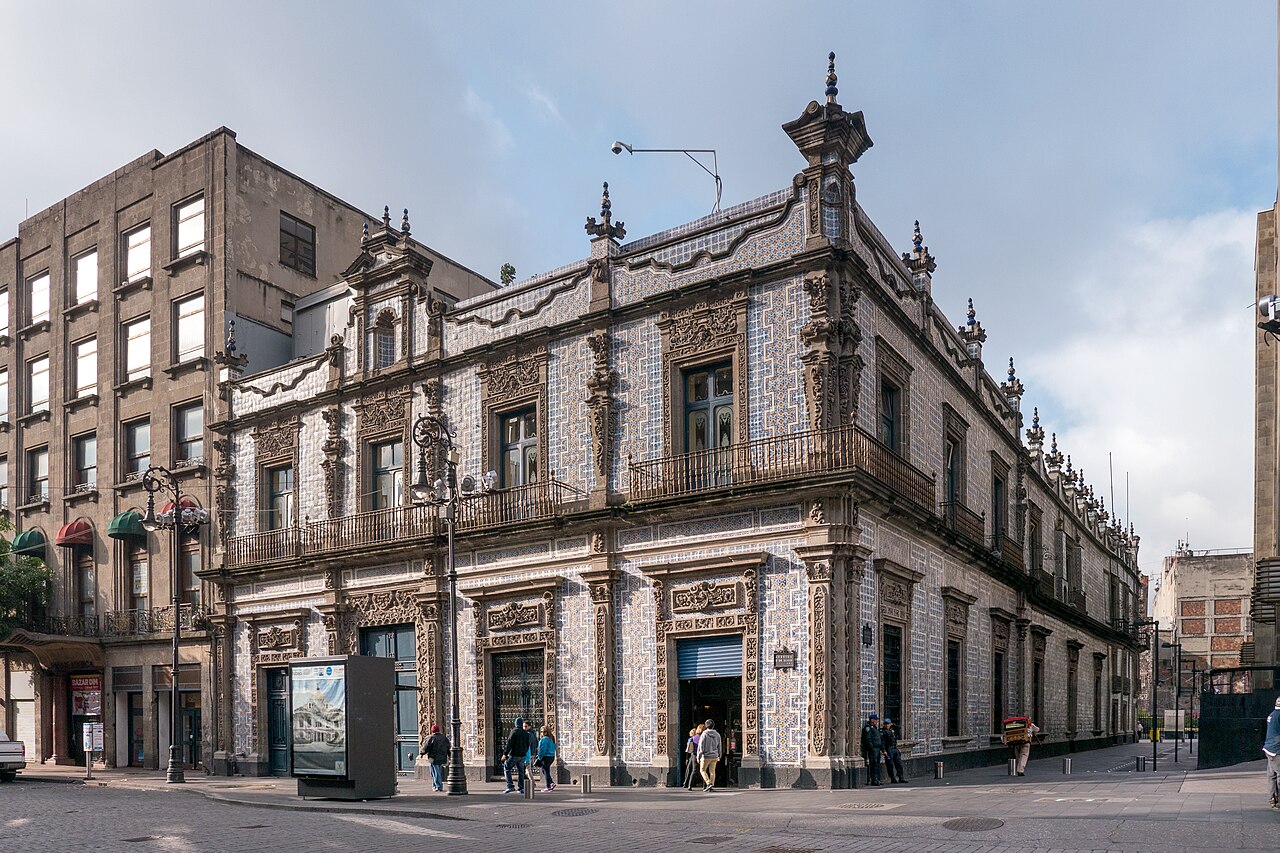
Casa de los Azulejos
- High
- Historic monument
Language · 11 published
Historic monument · Mexico City

| Monday | 09:00 – 22:00 |
|---|---|
| Tuesday | 09:00 – 22:00 |
| Wednesday | 09:00 – 22:00 |
| Thursday | 09:00 – 22:00 |
| Friday | 09:00 – 22:00 |
| Saturday | 09:00 – 22:00 |
| Sunday | 09:00 – 22:00 |
Checked 2026-08-31 · Source
Read from the OpenStreetMap access tags; anything not listed has no tag recorded.
Set the group type to family in the planner and the day window contracts to about three quarters of a solo day.
Torre Latinoamericana is a landmark skyscraper in Mexico City's Centro Histórico, completed in 1956. Its steel structure and seismic engineering made it an important achievement in high-rise construction, especially in an earthquake-prone city. The tower is also one of the best-known viewpoints in the historic centre. From its observation decks, you can look across the Zócalo, Metropolitan Cathedral, Alameda Central, dense central streets, and distant mountains when the air is clear. The Torre Latinoamericana is a historic skyscraper in the heart of Mexico City's Centro Histórico. Completed in 1956, it gained international recognition for its innovative seismic engineering, having withstood major earthquakes including the devastating 1985 tremor. The tower stands as one of the earliest prominent examples of earthquake-resistant design in a high-rise building. Its observation decks offer panoramic views across the sprawling metropolitan area, including the Zócalo, the Metropolitan Cathedral, and the surrounding volcanic mountain ranges on clear days. No. The tower was once among the city's tallest structures, but numerous subsequent developments have surpassed its height. It remains notable for its historic significance and observation function rather than contemporary height ranking.
Checked 2026-08-26 · Source
The main visitor experience is the observation area on the tower's upper floors. The view places the historic centre below you, with colonial buildings, major avenues, public squares, and the surrounding urban basin spread across the horizon. Commercial spaces occupy other parts of the building, including shops and dining businesses. The architecture reflects mid-twentieth-century commercial modernism, while the observation decks connect the tower directly with Mexico City's history of seismic design. The building contains observation decks on its upper floors, providing visitors with elevated vantage points over the historic centre and beyond. There are also commercial spaces within the tower, including restaurants and shops.
Checked 2026-08-26 · Source
Allow about one to two hours for the observation decks and the building's principal visitor areas. A shorter visit works if you want only a quick historic-centre panorama, while photographers may stay longer to wait for clearer light and better visibility. Include extra time for elevator travel and queues, particularly when the centre is busy. The tower fits naturally into a walking route linking Alameda Central, Palacio de Bellas Artes, and the Zócalo.
Checked 2026-08-26 · Source
Clear conditions make the greatest difference to the experience, especially if you want to see the volcanic mountains beyond the central districts. Earlier in the day can bring cleaner visibility, although haze and clouds vary. Weekends and public holidays bring heavier pedestrian traffic to Centro Histórico. A weekday visit can feel easier to combine with nearby museums and landmarks. Plan the tower as part of the centre's active street life rather than as an isolated viewpoint.
Checked 2026-08-26 · Source
The observation decks are the part of Torre Latinoamericana that visitors normally pay to experience. Treat the visit as a separate attraction from simply walking past the building or entering its commercial areas. Ticket prices, payment arrangements, discounts, and combined offers can change, so build the stop around the observation experience rather than a fixed fare. The tower's central position makes it practical to visit even when you are already exploring surrounding historic-centre sights.
Checked 2026-08-26 · Source
The tower stands beside Alameda Central on Eje Central, in one of the most walkable parts of Centro Histórico. It is within walking distance of Palacio de Bellas Artes, the Zócalo, the Metropolitan Cathedral, and other central landmarks. Mexico City's Metro and other public transport serve the historic centre, while traffic can make private-car journeys slow. Once in the district, walking is a useful way to connect the tower with nearby plazas and museums.
Checked 2026-08-26 · Source
Centro Histórico can be crowded, particularly around transport stops, landmark entrances, and busy pedestrian routes. Keep belongings secure in queues and elevators, and leave room for other visitors on the observation decks. Mexico City's altitude may make exertion feel different for some travellers, although the tower visit itself relies mainly on elevators. The building is famous for surviving major earthquakes, including the 1985 earthquake, but that history is part of its engineering significance rather than a visitor activity.
Checked 2026-08-26 · Source
The observation decks give you elevated views of the historic centre's rooftops, avenues, domes, and public spaces. Glass and structural elements can affect reflections and framing, so move around the deck to find a cleaner angle. Clear weather matters more than dramatic composition for distant mountains. Morning light can reveal the city's layered architecture, while later light changes the colour of the streets below. Keep equipment compact in crowded viewing areas and respect posted rules.
Checked 2026-08-26 · Source
It is famous for its central observation decks and for the seismic engineering of its 1956 high-rise structure.
Yes. The tower withstood the major 1985 Mexico City earthquake, reinforcing its reputation as an important example of earthquake-resistant high-rise design.
The observation decks overlook the historic centre, including the Zócalo, Metropolitan Cathedral, Alameda Central, surrounding streets, and distant mountains in clear conditions.
Plan roughly one to two hours, with additional flexibility for queues, elevator travel, dining, or photography.
It is on Eje Central beside Alameda Central in Mexico City's Centro Histórico, near Palacio de Bellas Artes and the Zócalo.
Yes. The decks provide wide views of historic-centre architecture and the wider city, with the clearest distant views on less hazy days.
Loading the interactive map…
The interactive map could not be loaded.

Last updated:
Source: OpenStreetMap contributors, Wikidata ·