

2 min walk
Historic center of Mexico City
- Must see
- Historic monument
Language · 11 published
Historic monument · Mexico City
Catedral Metropolitana de la Ciudad de México
| Monday | 08:00 – 18:00 |
|---|---|
| Tuesday | 08:00 – 18:00 |
| Wednesday | 08:00 – 18:00 |
| Thursday | 08:00 – 18:00 |
| Friday | 08:00 – 18:00 |
| Saturday | 08:00 – 18:00 |
| Sunday | 08:00 – 18:00 |
Checked 2026-08-31 · Source
Read from the OpenStreetMap access tags; anything not listed has no tag recorded.
Set the group type to family in the planner and the day window contracts to about three quarters of a solo day.
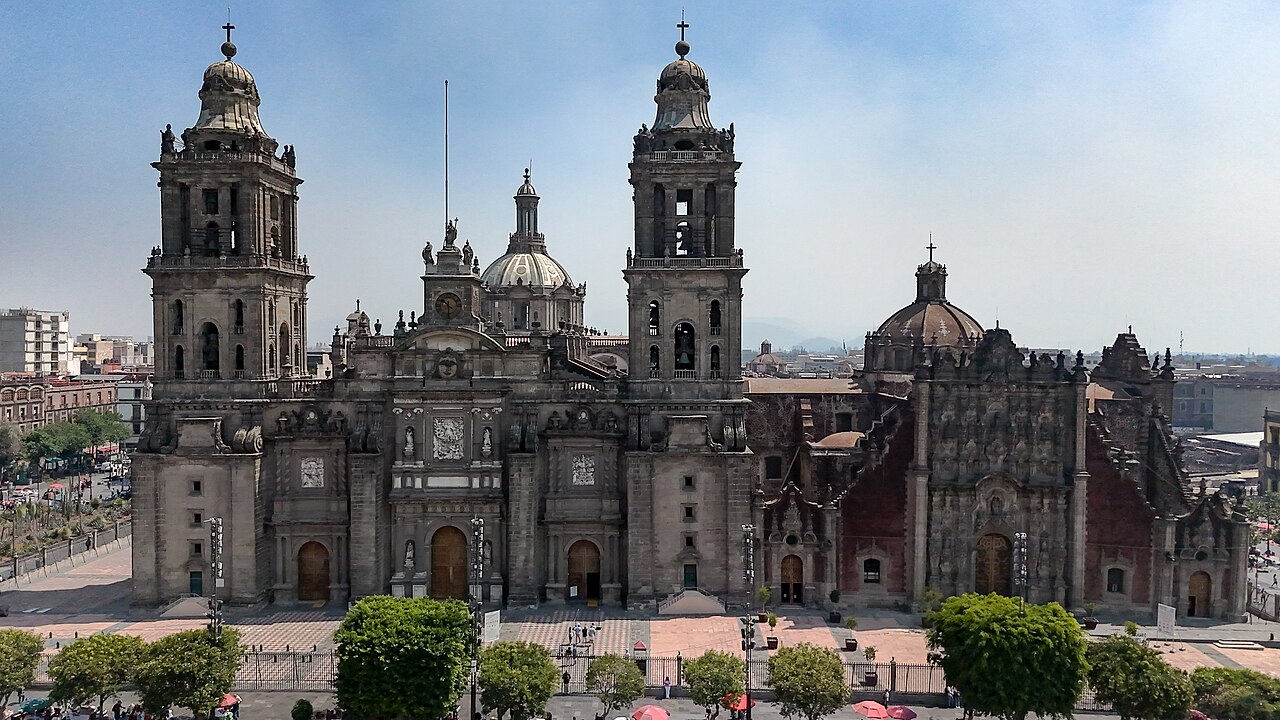
Mexico City Metropolitan Cathedral is the principal colonial cathedral of the city’s historic centre. It faces the Zócalo, the capital’s main public square, and serves as the seat of the Roman Catholic Archdiocese of Mexico. Its long construction history and monumental scale make it a defining landmark of the historic centre and a useful starting point for exploring the surrounding colonial city. The Mexico City Metropolitan Cathedral, known locally as Catedral Metropolitana de la Ciudad de México, stands as the principal colonial religious monument in the historic centre of Mexico City. It occupies a prominent position beside the Zócalo, the city's main public square. The cathedral serves as the seat of the Roman Catholic Archdiocese of Mexico. Its construction spans the colonial era, reflecting the religious and architectural ambitions of Spanish colonial authorities. The building represents one of the most significant examples of colonial religious architecture in the Americas and anchors the historic centre's cultural landscape.
Checked 2026-08-26 · Source
Inside, visitors find a large Latin-cross layout with a central nave, transepts, side chapels, altars, religious artworks, memorials, and furnishings accumulated through centuries of worship. The cathedral also contains a sacristy and crypts associated with archbishops. Architectural detail rewards a slow look: layered decoration, devotional spaces, and the relationship between the main volume and smaller chapels reveal how the building serves both ceremony and daily faith. The cathedral interior contains multiple altars, chapels, and religious artworks accumulated across centuries of ecclesiastical use. Visitors encounter ornate decorative programmes typical of major colonial religious foundations. The building houses tombs and memorials of religious and historical significance. Its architectural fabric incorporates materials and techniques from the colonial construction period. The sacristy and various side chapels contain furnishings and objects of devotional purpose. The underground crypts hold the remains of archbishops and other notable figures. The overall spatial organisation follows the traditional Latin cross plan with a central nave and transept arrangement common to major European and colonial cathedrals.
Checked 2026-08-26 · Source
Allow at least thirty minutes to see the principal interior, and more time if you want to study the chapels, altarpieces, crypts, and architectural details. A visit can be shorter when the cathedral is included in a Zócalo walk, or longer when religious art and history are central interests. The surrounding historic centre makes it easy to continue to nearby plazas, museums, and colonial buildings.
Checked 2026-08-26 · Source
The cathedral remains an active place of worship, so services and major Catholic observances shape the visitor experience. Holy Week, Christmas, and other feast periods can bring a stronger religious focus and busier surroundings. Morning or late-afternoon light gives the Zócalo a different character, while Mexico City’s rainy season, broadly June through October, can affect outdoor walking. Build flexibility into a historic-centre day.
Checked 2026-08-26 · Source
The cathedral is a functioning religious institution rather than a conventional museum attraction. Visitors should approach entry as access to a place of worship, with donations or separate arrangements possible for particular activities or areas. Small-denomination Mexican pesos are useful for ordinary offerings and expenses. Cathedral visits also fit into paid historic-centre walking tours, whose charges belong to the tour rather than the building itself.
Checked 2026-08-26 · Source
The cathedral stands on the northern side of the Zócalo in Mexico City’s historic centre. Metro Line 2 serves the Zócalo station, and buses connect the central area with other parts of the city. Walking is practical from nearby hotels and attractions, while congestion and scarce parking make driving less convenient. The cathedral’s large façade is an obvious reference point once you reach the square.
Checked 2026-08-26 · Source
This is an active church, so modest clothing, quiet behavior, and care around services are essential. Crowds around the Zócalo call for secure handling of phones, wallets, and cameras. Historic flooring and steps can be uneven, while the city’s elevation of about 2,240 meters may affect visitors during their first days. Demonstrations and public events sometimes occupy the square, changing pedestrian movement and the surrounding atmosphere.
Checked 2026-08-26 · Source
The cathedral’s exterior and its position beside the Zócalo provide strong architectural compositions, especially when the full façade is framed with the public square. Indoors, work with the available light and keep the atmosphere of worship in mind. Avoid interrupting services or photographing worshippers intrusively. Tripods and commercial equipment are unsuitable for a brief devotional visit unless specifically arranged, while the surrounding plaza offers more freedom for general city photography.
Checked 2026-08-26 · Source
It stands on the northern edge of the Zócalo in Mexico City’s historic centre, beside the capital’s principal public square.
The interior includes chapels, altars, religious artworks, memorials, a sacristy, and crypts associated with archbishops, arranged within a Latin-cross plan.
The cathedral is an active place of worship. Visitors may attend religious services while observing quiet behavior, respectful dress, and the needs of worshippers.
Allow at least thirty minutes for the principal spaces, with more time for the chapels, altarpieces, crypts, and architectural details.
Metro Line 2 serves Zócalo station, and buses serve the historic centre. The cathedral is also walkable from nearby hotels and attractions.
Wear respectful clothing, keep voices low, protect belongings in busy surroundings, and give priority to services and worshippers over sightseeing or photography.
Loading the interactive map…
The interactive map could not be loaded.


Last updated:
Source: OpenStreetMap contributors, Wikidata ·