

7 min walk
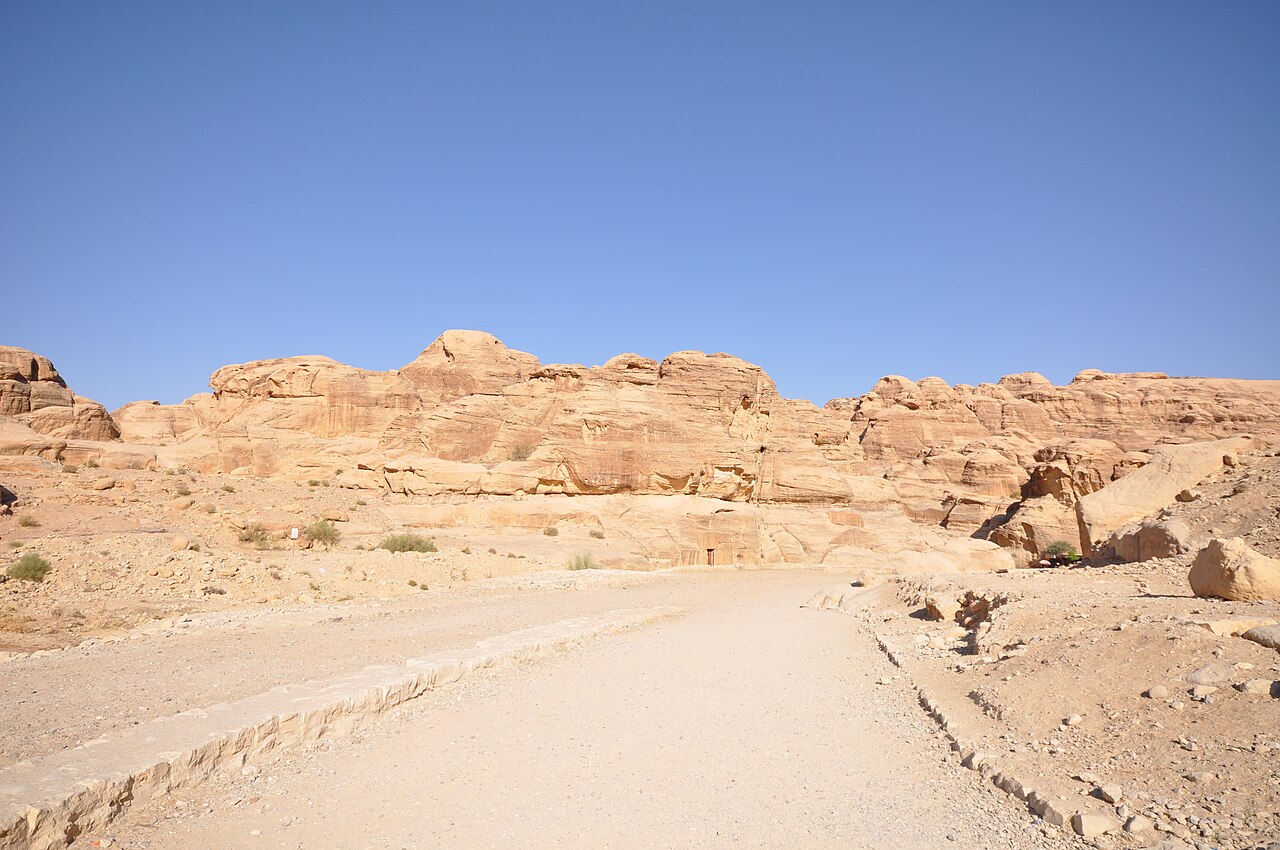
Djinn Blocks
- Must see
- Historic monument
Language · 11 published
Museum · Wadi Musa

| Monday | 08:30 – 20:30 |
|---|---|
| Tuesday | 08:30 – 20:30 |
| Wednesday | 08:30 – 20:30 |
| Thursday | 08:30 – 20:30 |
| Friday | 08:30 – 20:30 |
| Saturday | 08:30 – 20:30 |
| Sunday | 08:30 – 20:30 |
Checked 2026-08-31 · Source
Read from the OpenStreetMap access tags; anything not listed has no tag recorded.
Set the group type to family in the planner and the day window contracts to about three quarters of a solo day.
Petra Museum is a cultural stop within the Petra archaeological park in southern Jordan. It helps place the surrounding ruins in the story of the Nabataean capital, a city shaped by trade, stone carving and sophisticated water management. Visit it as a companion to the outdoor monuments: the galleries provide archaeological context, while the park lets you see Petra’s tombs, temples and streets in their original landscape. Petra Museum is a named monument, route, or landscape feature within the Petra archaeological park. The museum serves as a cultural institution dedicated to presenting the archaeological heritage of the Nabataean capital and surrounding region. Situated within one of the world's most celebrated ancient sites, it forms part of the broader visitor experience at this UNESCO World Heritage location. The museum contributes to interpreting the remarkable history of Petra, which flourished as a major trading hub from around the fourth century BC through the Roman period. Visitors should verify with official ticketing channels whether museum access requires separate admission or is incorporated within standard Petra archaeological park entry.
Checked 2026-08-26 · Source
The museum presents the archaeological heritage of Petra and the surrounding region. Its role is to help visitors understand the Nabataeans, the later Roman presence and the daily life behind the monumental facades. Combine the visit with close observation outdoors: rock-cut tombs show architecture, channels show water engineering and the central streets show how the ancient city was organised. The museum is most useful when it turns scattered ruins into a coherent story. The presentation may incorporate explanatory materials about Petra's water management systems, rock-cut architecture, and the site's significance along ancient incense and spice routes. Precise exhibition details await verification from operator sources.
Checked 2026-08-26 · Source
Allow roughly thirty minutes to one hour for Petra Museum, depending on how closely you read the displays and how much archaeological context you want before returning outside. It works well before a longer walk because the visit gives you a framework for the monuments ahead. If you are exploring Petra over several days, use the museum at the beginning of your trip or before revisiting the main valley. The duration required for a meaningful visit to Petra Museum depends upon individual interest in archaeological interpretation and the depth of available displays. Visitors typically allocate between thirty minutes and one hour for museum exploration within broader Petra itineraries.
Checked 2026-08-26 · Source
Spring and autumn are comfortable seasons for combining the museum with long walks through Petra, while summer heat can make the outdoor part of the visit tiring. Early morning and late afternoon are especially useful for the archaeological park because temperatures and light are gentler. Winter can be cold and wet. Plan the museum as a pause within the wider Petra visit, not as a replacement for time among the sandstone monuments.
Checked 2026-08-26 · Source
Petra Museum forms part of the Petra visitor experience, so place it within your wider plan for the archaeological park rather than treating it as an isolated attraction. The main value of the stop is interpretive: it complements the monuments, tombs and landscapes reached on foot. Budget time for both the museum and the extensive outdoor site, since seeing only one side leaves the history of Petra less complete.
Checked 2026-08-26 · Source
Reach Petra Museum from Wadi Musa, the town beside the archaeological park. The wider journey to Wadi Musa can be made by road from Jordanian centres such as Amman and Aqaba. Once at Petra, expect the museum to be part of a walking day through the park. Wear supportive shoes and leave enough energy for uneven paths, changing elevations and the distance between the visitor entrance and the main monuments.
Checked 2026-08-26 · Source
Petra combines cultural sightseeing with demanding outdoor movement. Carry water, protect yourself from the sun and pace the walk between the museum and the archaeological remains. Paths can be uneven, steep or exposed, and the park covers a large area. Treat the carved stone as protected heritage: stay on established routes, avoid climbing fragile surfaces and give working animals, guides and other visitors adequate space.
Checked 2026-08-26 · Source
Use the museum to understand the details you will photograph outside, then look for changing colour across Petra’s rose-red sandstone. Morning and late afternoon light can give facades and cliffs stronger texture than the harsh middle of the day. Inside, follow the museum’s posted instructions and keep photography considerate. Outside, frame the monuments within the surrounding cliffs so the landscape remains part of the story.
Checked 2026-08-26 · Source
It gives archaeological context for the Nabataean capital and helps connect the park’s tombs, temples, streets and water systems into one historical experience.
Plan approximately thirty minutes to one hour, then continue into the wider archaeological park for the outdoor monuments and landscapes.
It is within the Petra archaeological park, near Wadi Musa in southern Jordan, and belongs in a broader walking itinerary through Petra.
Pair it with Petra’s rock-cut tombs, temples, central streets and water-management remains so the indoor interpretation and outdoor archaeology reinforce each other.
Bring water, sun protection and supportive footwear, because the museum sits within a park that involves extensive walking on uneven terrain.
Visit it before exploring the monuments, or at the start of a multi-day stay, when its archaeological context can guide what you notice outdoors.
Loading the interactive map…
The interactive map could not be loaded.

Last updated:
Source: OpenStreetMap contributors, Wikidata ·