
2 min walk
Bab al-Siq
- Must see
- Historic monument
Language · 11 published
Historic monument · Wadi Musa

| Monday | 06:30 – 17:00 |
|---|---|
| Tuesday | 06:30 – 17:00 |
| Wednesday | 06:30 – 17:00 |
| Thursday | 06:30 – 17:00 |
| Friday | 06:30 – 17:00 |
| Saturday | 06:30 – 17:00 |
| Sunday | 06:30 – 17:00 |
Checked 2026-08-31 · Source
Read from the OpenStreetMap access tags; anything not listed has no tag recorded.
Set the group type to family in the planner and the day window contracts to about three quarters of a solo day.
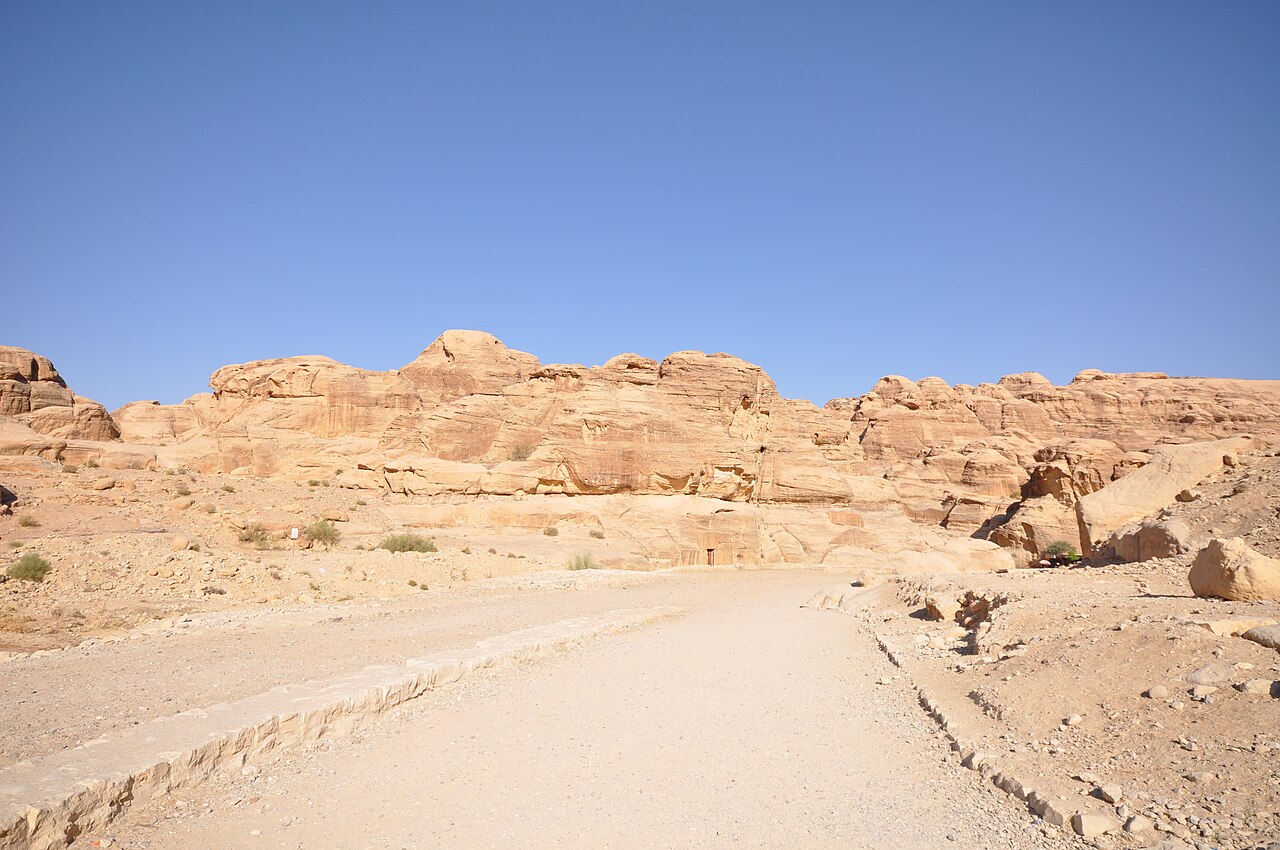
Djinn Blocks are among the oldest surviving monuments at Petra, predating the elaborate Nabataean rock-cut facades that made the city famous. These simple, cube-shaped stone structures stand near the park entrance and represent an early phase of Nabataean funerary architecture. Their name derives from local Bedouin tradition associating them with djinn, supernatural spirits believed to inhabit such ancient stones. The blocks exemplify the transition from basic freestanding structures to the sophisticated tomb architecture that characterises later Petra. They remain significant markers of the site's long architectural development and spiritual importance to successive cultures.
Checked 2026-08-26
The Djinn Blocks contain no accessible interior spaces for visitors to enter. These solid or near-solid masonry structures were designed as external monuments rather than habitable chambers. Their plain, unadorned surfaces contrast sharply with the elaborate interiors of later tombs like the Treasury or Royal Tombs. Archaeological understanding suggests they may have housed burial remains in sealed compartments, though this remains subject to ongoing research. Visitors observe them externally, appreciating their geometric simplicity and historical position within Petra's architectural timeline. The blocks serve as tangible evidence of early Nabataean construction techniques before the mastery of rock-cut engineering developed.
Checked 2026-08-26
A visit to the Djinn Blocks requires minimal dedicated time, typically five to fifteen minutes, as they stand near the main trail and serve as an introductory monument before reaching more elaborate sites. Most visitors pause briefly to observe these structures while walking toward the Siq and the central archaeological zone. Their proximity to the entrance makes them convenient to view without significant detour. travellers spending a half-day or full day at Petra naturally encounter them en route to major attractions. The blocks reward brief contemplation of their antiquity and cultural significance rather than extended examination.
Checked 2026-08-26
Visitors should consult official Petra sources for current opening schedules before planning. The Djinn Blocks stand exposed along the main approach with minimal shade, making early morning or late afternoon visits more comfortable during hot seasons. These times also offer softer lighting for observation. Spring and autumn generally provide more temperate conditions for walking the archaeological park. Summer midday heat can be intense at this exposed location. Winter visits may encounter cooler temperatures and occasional rainfall that affects trail conditions throughout the site. Check the operator's own site for the travel date before relying on a schedule or fare.
Checked 2026-08-26
Petra entry fees are typically structured as single-day or multi-day passes purchased at the official visitor centre, not at individual monuments within the park. The Djinn Blocks require no separate admission beyond general park entry. Visitors should verify current fee structures through official channels before arrival. Various pass options may accommodate different itineraries and durations of stay. International visitors should confirm accepted payment methods and whether identification documentation is required for ticket purchase. Any supplementary services such as guided interpretation would involve additional arrangements. Check the operator's own site for the travel date before relying on a schedule or fare.
Checked 2026-08-26
The Djinn Blocks stand near the main entrance approach to Petra archaeological park, accessible via the primary visitor trail leading from the ticketed entry zone toward the Siq. Visitors reach Petra by road from Wadi Musa, the adjacent town providing accommodation and services. The site lies approximately three hours by road from Jordan's capital, Amman. Public buses and organised tours serve the area, though independent travellers often arrange private transport or taxi services. Within the park, walking remains the essential mode of exploration. Horse-drawn carriages and horseback rides are available for certain trail sections with negotiated arrangements.
Checked 2026-08-26
The Djinn Blocks stand in an exposed area with limited shelter from sun and heat. Visitors should carry adequate water, sun protection, and appropriate footwear for uneven terrain throughout Petra. The archaeological park covers extensive ground with considerable walking required. These ancient structures are fragile heritage elements; climbing or touching causes deterioration and is inappropriate. No barriers separate visitors from the blocks, requiring personal responsibility. Desert conditions demand preparation for temperature variations between day and evening. Emergency services within the vast site may involve significant response times. Visitors should remain on established trails and respect all heritage protection measures.
Checked 2026-08-26
The Djinn Blocks offer photographic subjects emphasising geometric simplicity against desert landscapes and mountain backdrops. Their cubic forms create strong compositional elements suitable for varied lighting conditions. Early and late daylight produces dimensional shadows on their surfaces. The monuments' unadorned stone textures respond well to side lighting. Wide angles can contextualise them within the broader Petra approach scenery. No photography restrictions specific to this location are recorded, though drone usage would require official clarification. Tripods may attract attention in busy periods. Visitors should photograph responsibly without climbing or disturbing the structures or other visitors' experiences.
Checked 2026-08-26
No. These structures have no accessible interior spaces and are observed externally only.
No separate ticket is needed; they lie within the general Petra archaeological park.
Local Bedouin tradition associated these ancient stones with djinn, supernatural spirits.
Specific dating is Not recorded; they represent among Petra's oldest surviving monuments.
Minimal natural shade exists; visitors should prepare sun protection.
Specific guided services are Not recorded; visitors may inquire locally.
Loading the interactive map…
The interactive map could not be loaded.


Last updated:
Source: OpenStreetMap contributors ·