

11 min walk
National Theatre of Japan
- Must see
- Art and culture venue
Language · 11 published
Place of worship · Tokyo
日枝神社
| Monday | 06:00 – 17:00 |
|---|---|
| Tuesday | 06:00 – 17:00 |
| Wednesday | 06:00 – 17:00 |
| Thursday | 06:00 – 17:00 |
| Friday | 06:00 – 17:00 |
| Saturday | 06:00 – 17:00 |
| Sunday | 06:00 – 17:00 |
Parsed from OpenStreetMap opening hours on 2026-08-26.
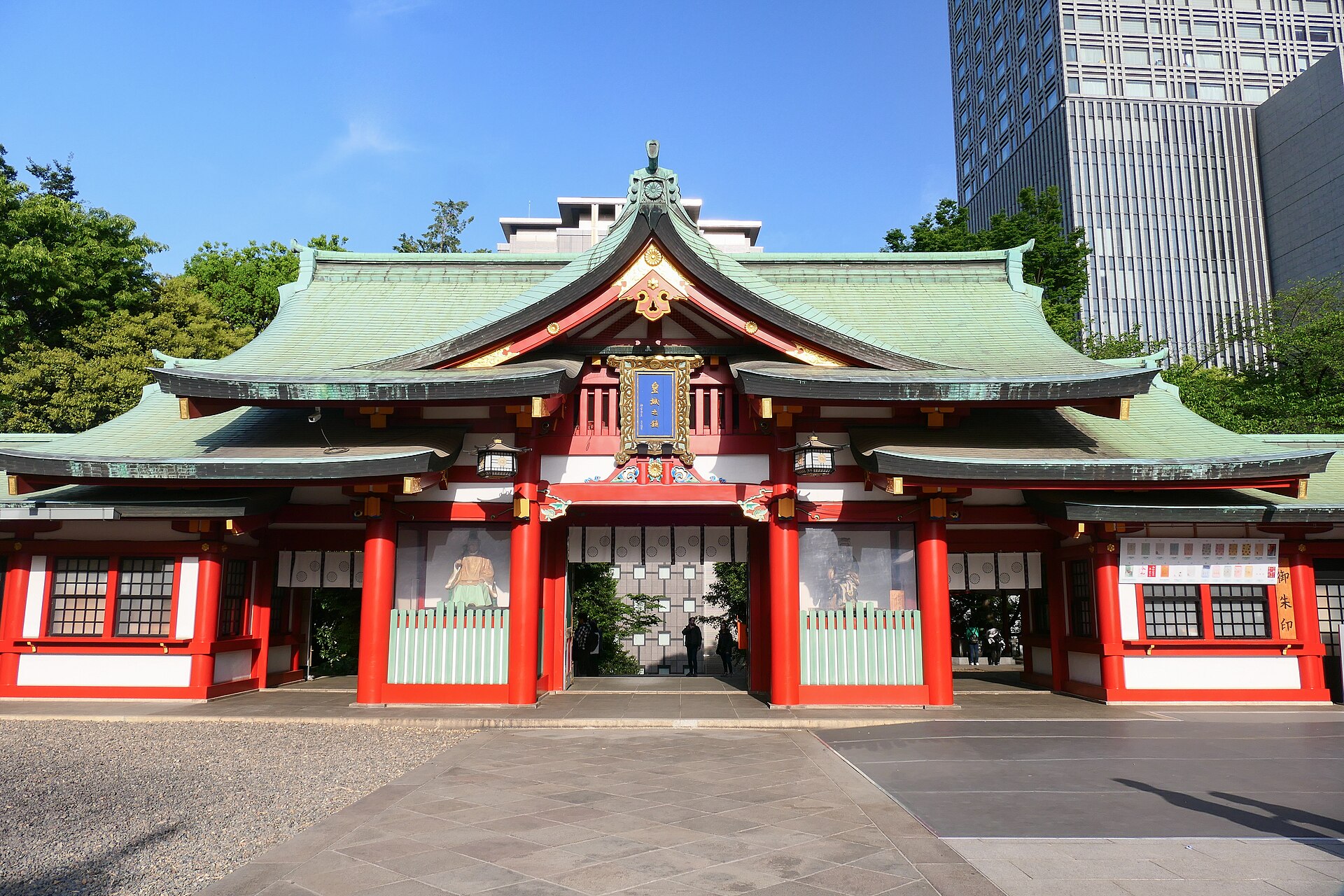
Hie Shrine is a Shinto shrine located in the Nagatacho district of central Tokyo, near the National Diet Building. The shrine is known for its striking red torii gates forming tunnel-like pathways up the hillside, reminiscent of Fushimi Inari in Kyoto on a smaller scale. It serves as a guardian shrine for the city and has historical connections to the Tokugawa shogunate. The local name is 日枝神社. The shrine occupies an elevated position amid dense urban development, offering visitors a spiritual retreat from surrounding government and commercial districts.
Checked 2026-08-26
The shrine grounds feature multiple subsidiary shrines, main worship halls, and the iconic rows of vermillion torii gates that wind through forested slopes. Stone lanterns and traditional shrine architecture are present throughout the complex. The approach paths include both stairway and escalator options for accessibility. Various smaller shrines dedicated to different kami are scattered across the hillside. The main sanctuary sits at the upper level, with auxiliary structures and purification fountains positioned along the ascent. Seasonal decorations and religious implements may be visible depending on timing of visit.
Checked 2026-08-26
A thorough visit to Hie Shrine typically requires between thirty minutes and one hour, depending on walking pace and interest in photography. The torii gate pathways invite slower progression, with multiple vantage points for observation. Visitors seeking only the main sanctuary can complete a brief circuit more quickly. Those wishing to explore subsidiary shrines and absorb atmosphere may extend their stay. The compact hillside layout concentrates features efficiently, preventing excessive walking distances. Combined visits with nearby government district attractions could extend total excursion duration substantially beyond shrine-specific time.
Checked 2026-08-26
Hie Shrine can be visited throughout the year, with seasonal variations in atmosphere and vegetation. Spring brings cherry blossom interest to the surrounding area, while autumn offers changing foliage on the shrine's wooded slopes. Summer festivals may occur, though specific dates are Not recorded pending review. The shrine's elevated position and tree cover provide some relief during warmer months. Winter visits offer quieter conditions with reduced crowding. Operator-confirmed hours are Not recorded pending review. Visitors should verify current accessibility before planning, as religious sites may adjust schedules for ceremonies or maintenance without advance public notification.
Checked 2026-08-26
Hie Shrine operates as a religious institution with free public access to main grounds. No admission fee is typically charged for standard shrine visitation or torii gate pathway walks. Optional offerings at donation boxes remain at visitor discretion. Special ceremonies, amulet purchases, or fortune-telling services involve separate voluntary payments. Prices for these supplementary items are Not recorded pending review. The shrine does not function as a commercial tourist attraction with standardized ticketing. Visitors carrying cash for personal religious observances or souvenir purchases demonstrate appropriate preparedness without obligation.
Checked 2026-08-26
Hie Shrine occupies central Tokyo near Nagatacho Station, served by multiple subway lines including the Tokyo Metro Hanzomon, Namboku, and Yurakucho lines. Tameikesanno Station provides additional nearby access. The shrine's hillside position requires some ascent regardless of approach route. Multiple entry points exist, including stairway paths and escalator-equipped approaches from different directions. The surrounding Chiyoda Ward contains numerous government buildings that assist with orientation. Walking from nearby Akasaka or Kasumigaseki districts is feasible for visitors already exploring central Tokyo. Signage in Japanese and some English assists navigation from station exits.
Checked 2026-08-26
The hillside terrain involves significant stair climbing for most routes, potentially challenging for visitors with mobility limitations or heavy luggage. The escalator-equipped entrance alleviates but does not eliminate elevation changes. Slippery conditions may develop during or after rainfall on stone pathways and steps. Crowding concentrates around the torii gate photogenic sections, creating congestion points. As an active religious site, visitors should observe respectful behavior near worshippers and refrain from disruptive conduct. Photography restrictions may apply in certain inner areas. Wildlife including insects inhabits the wooded sections. Appropriate footwear strongly recommended for uneven surfaces and stairways.
Checked 2026-08-26
The tunnel-like torii gate pathways constitute the primary photographic attraction, offering repeated framing opportunities with diminishing perspective. Early morning or overcast conditions may reduce harsh shadows within the gate corridors. The vermillion color contrasts effectively with green foliage during growing seasons. Upper sanctuary areas provide cityscape glimpses through tree breaks. Tripod use may attract attention or restriction in crowded passages. Respect for worshippers and ceremony participants must govern all photographic decisions. Interior sanctuary spaces likely prohibit imaging. The compact scale requires wide-angle lenses for comprehensive gate tunnel compositions. Patient timing assists in capturing sequences without obstructing pedestrian traffic flow.
Checked 2026-08-26
Yes, the main shrine grounds and torii gate pathways are open to the public without admission charge. Optional donations and paid services for religious items exist but are not required.
Hie Shrine features similar vermillion torii gate tunnels on a smaller, more compact scale. It offers a Tokyo-based alternative without requiring travel to Kyoto, though the scope is more limited.
The traditional gate pathways involve stairs and uneven terrain. An escalator-equipped entrance provides partial accessibility to upper areas, but full gate tunnel traversal may remain difficult for some mobility devices.
As an active Shinto shrine, Hie Shrine conducts standard worship, seasonal festivals, and personal religious services including prayers, amulet distribution, and fortune-telling. Specific schedules are Not recorded pending review.
Evening illumination of shrine structures may occur, but operator-confirmed hours are Not recorded pending review. Visitors should verify current accessibility before planning nighttime visits, as gates may close.
Peak congestion occurs during cherry blossom season, autumn foliage periods, and any festival dates. The compact torii gate passages create bottlenecks. Early morning and weekday visits typically offer reduced visitor density.
Loading the interactive map…
The interactive map could not be loaded.

Last updated:
Source: OpenStreetMap contributors, Wikidata ·