
5 min walk
National Museum of Nature and Science
- Must see · Heritage site
- Museum
Language · 11 published
Museum · Tokyo
東京国立博物館

| Monday | Closed |
|---|---|
| Tuesday | 09:30 – 17:00 |
| Wednesday | 09:30 – 17:00 |
| Thursday | 09:30 – 17:00 |
| Friday | 09:30 – 20:00 |
| Saturday | 09:30 – 20:00 |
| Sunday | 09:30 – 17:00 |
Checked 2026-08-31 · Source
Read from the OpenStreetMap access tags; anything not listed has no tag recorded.
Set the group type to family in the planner and the day window contracts to about three quarters of a solo day.
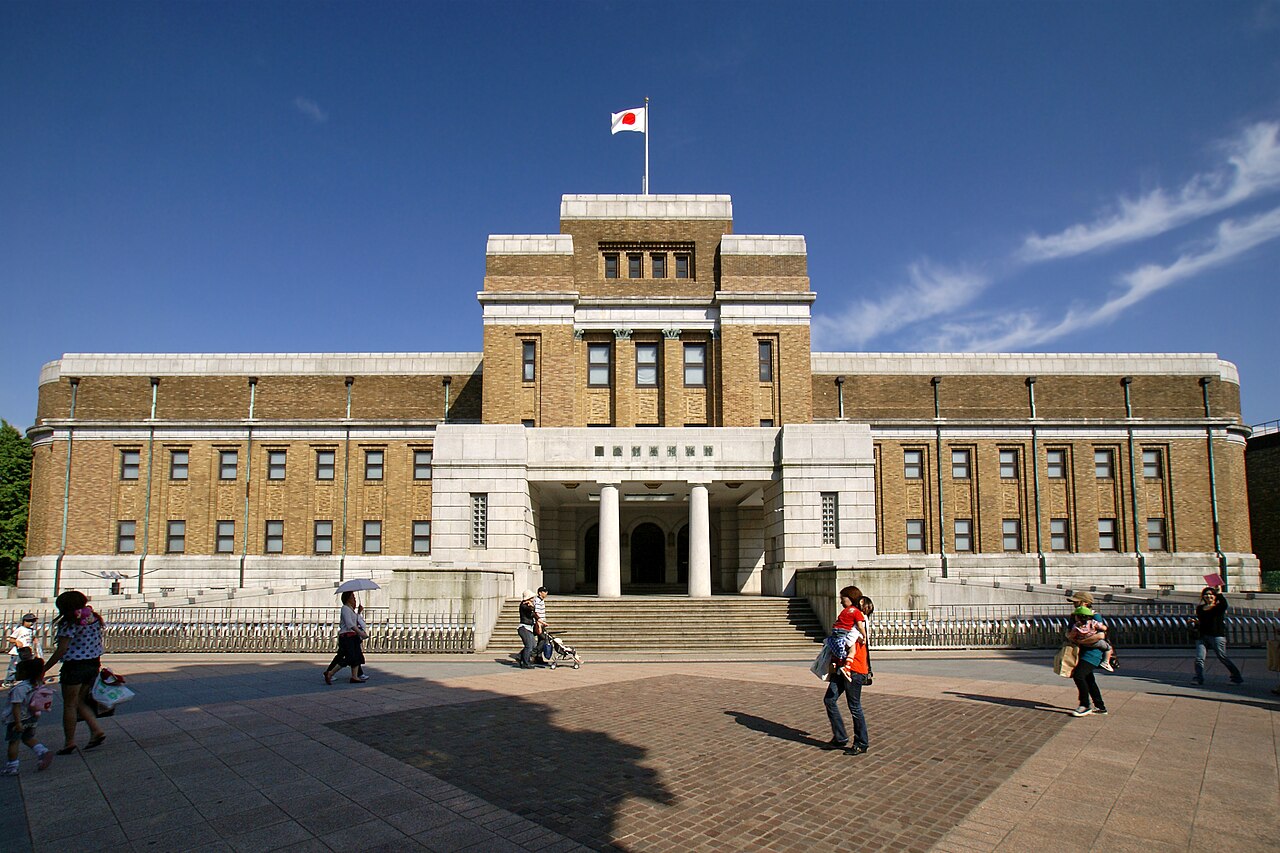
Tokyo National Museum stands as Japan's oldest and largest museum. Established in 1872, it occupies grounds within Ueno Park in the Taito ward. The institution preserves and exhibits comprehensive collections of art and archaeological artifacts from Japan and other Asian countries. Its buildings include the Honkan Japanese Gallery, Toyokan Asian Gallery, Heiseikan special exhibition space, Hyokeikan event venue, and the Gallery of Horyuji Treasures. The museum serves as a principal repository for Japanese cultural heritage, holding approximately 110,000 objects including 87 National Treasures and 634 Important Cultural Properties. Its mission encompasses research, conservation, education, and public display of materials spanning ancient to modern periods.
Checked 2026-08-31 · Source
The collections encompass Japanese painting, calligraphy, sculpture, decorative arts, swords, archaeology, and ethnology. The Honkan displays Japanese works chronologically from ancient Jomon pottery through Edo period ukiyo-e prints. The Toyokan presents art from China, Korea, Southeast Asia, Central Asia, India, and Egypt. The Gallery of Horyuji Treasures houses Buddhist objects donated from Horyuji Temple in Nara. Special exhibitions rotate through the Heiseikan building. Visitors encounter ceramics, lacquerware, metalwork, textiles, and archaeological finds. The museum library and conservation facilities support scholarly access. Audio guides and multilingual signage assist international visitors. Selected masterpieces change periodically due to preservation requirements, so repeat visits may reveal different objects.
Checked 2026-08-31 · Source
Visitors typically spend between two hours and a full day depending on depth of interest. The Honkan Japanese Gallery alone warrants ninety minutes for a deliberate pace through chronological rooms. Adding the Toyokan Asian Gallery extends visits by another hour minimum. Special exhibitions in Heiseikan require additional time, often thirty to sixty minutes. The Horyuji Treasures gallery demands twenty to thirty minutes. Museum fatigue affects concentration; strategic visitors prioritize galleries matching personal interests. First-time guests focusing on Japanese art history should allocate three to four hours. Return visitors with specific collection interests may complete targeted visits in ninety minutes. The extensive grounds permit rest between buildings.
Checked 2026-08-31 · Source
Tuesday–Thursday 09:30–17:00; Friday–Saturday 09:30–20:00; Sunday 09:30–17:00, extended to 20:00 when the following Monday is a holiday. Last admission is 30 minutes before closing. Closed on Monday, August 31, 2026. Mondays are normally closed; when Monday is a holiday, the museum opens Monday and closes the following day. The 2026 year-end closure is December 26–31. The museum also closes December 15, 2026 for inspection and maintenance. From December 22–25, only the Gallery of Horyuji Treasures and Kuroda Memorial Hall open. Hyokeikan opens only for scheduled exhibitions or events. Special exhibitions, the Research and Information Center, and Kuroda Memorial Hall may follow different hours.
Checked 2026-08-31 · Source
General admission to the TNM Collection Exhibitions is ¥1,000 per adult. Most special exhibitions require a separately priced ticket. Admission is free for visitors under 18 or over 70 with proof of age, and for visitors with disabilities plus one caregiver with disability documentation. The TNM Collection Exhibitions are free to everyone on May 19, September 21, and November 3, 2026. Admission structures typically distinguish permanent collection access from special exhibition entry. Combination tickets may offer comprehensive access. Discount categories commonly include university students, high school students, and senior citizens. Children below school age usually enter free. Group rates sometimes apply for organized parties.
Checked 2026-08-31 · Source
Enter through the Main Gate in Ueno Park. The nearest rail arrival is JR Ueno Station’s Park Exit, about 500 m from the entrance. JR Uguisudani Station’s South Entrance is about 600 m away, but that route includes narrow paths and steep descents. Tokyo Metro Ueno and Nezu stations and Keisei Ueno Station are approximately 800–1,200 m away, with inclines and stairs on the routes. The Taito City Circulation Bus “Megurin” stops at “In Front of Tokyo National Museum,” about 100 m from the entrance. The museum has no general car or bicycle parking. This is the named approach for an independent visit.
Checked 2026-08-31 · Source
Elevators and ramps provide wheelchair access to every floor and facility except the garden teahouses. The Japanese Gallery and Hyokeikan have steep entrance ramps and interior steps of approximately 1–2 cm. Wheelchair-accessible toilets are available in every exhibition building except Hyokeikan. Wheelchairs and walking canes are available from exhibition-hall information counters other than Hyokeikan; strollers are available from the Japanese Gallery information counter in limited numbers. Guide dogs, service dogs, and hearing-assistance dogs are permitted. Visitors with disabilities may reserve the museum’s limited free accessible parking by calling 03-3822-1111. Wheelchair users enter Kuroda Memorial Hall by using the entrance intercom for staff assistance.
Checked 2026-08-31 · Source
The museum enforces strict photography policies protecting sensitive cultural materials. Flash photography remains prohibited universally due to cumulative light damage on organic artifacts. Many galleries completely ban image capture including smartphones. Visitors must check specific permissions at each building entrance. Staff monitor compliance and may request deletion of unauthorized images. The museum grounds and exterior architecture generally permit photography. Special exhibition policies sometimes differ from permanent collection rules. Commercial photography requires advance institutional permission. Tripods, monopods, and selfie sticks typically face restrictions for visitor safety and flow. Respectful observation without photographic distraction often enhances appreciation of subtle artistic details. Visitors seeking visual mementos should consult museum shop publications reproducing collection highlights accurately.
Checked 2026-08-31 · Source
The museum recommends allowing at least one hour. Its short first-visit route through the chronological Japanese-art display on the Japanese Gallery’s second floor takes at least 30 minutes, while a detailed visit can occupy a full day.
Same-day re-entry is permitted for the TNM Collection Exhibitions and most special exhibitions. Before leaving, visitors must have their ticket stub date-stamped at the Main Gate and present it there when returning.
Personal photography is allowed in the TNM Collection Exhibitions unless an object displays a no-photography sign. Flash, tripods, monopods, and selfie sticks are prohibited. Photography is not allowed in special-exhibition galleries.
Suitcases are not permitted inside the museum from August 1, 2026 onward. Lockers are available in each exhibition hall, and staff at an information counter can assist with belongings that do not fit.
Free Wi-Fi is available in most areas of the museum; connection instructions are available at information counters.
Strollers may be used on the grounds, inside buildings, and in exhibition rooms, although staff may restrict them in crowded galleries. Nursing rooms are located at Main Gate Plaza and on basement level B1 of the Japanese Gallery, and diaper-changing stations are available in multiple museum buildings.
Loading the interactive map…
The interactive map could not be loaded.


Last updated:
Source: OpenStreetMap contributors, Wikidata ·