

3 min walk
El-Sayeda Zeinab Mosque
- Must see
- Place of worship
Language · 11 published
Museum · Cairo
بيت السناري
| Monday | 09:00 – 17:00 |
|---|---|
| Tuesday | 09:00 – 17:00 |
| Wednesday | 09:00 – 17:00 |
| Thursday | 09:00 – 17:00 |
| Friday | Closed |
| Saturday | Closed |
| Sunday | 09:00 – 17:00 |
Checked 2026-08-31 · Source
Read from the OpenStreetMap access tags; anything not listed has no tag recorded.
Set the group type to family in the planner and the day window contracts to about three quarters of a solo day.
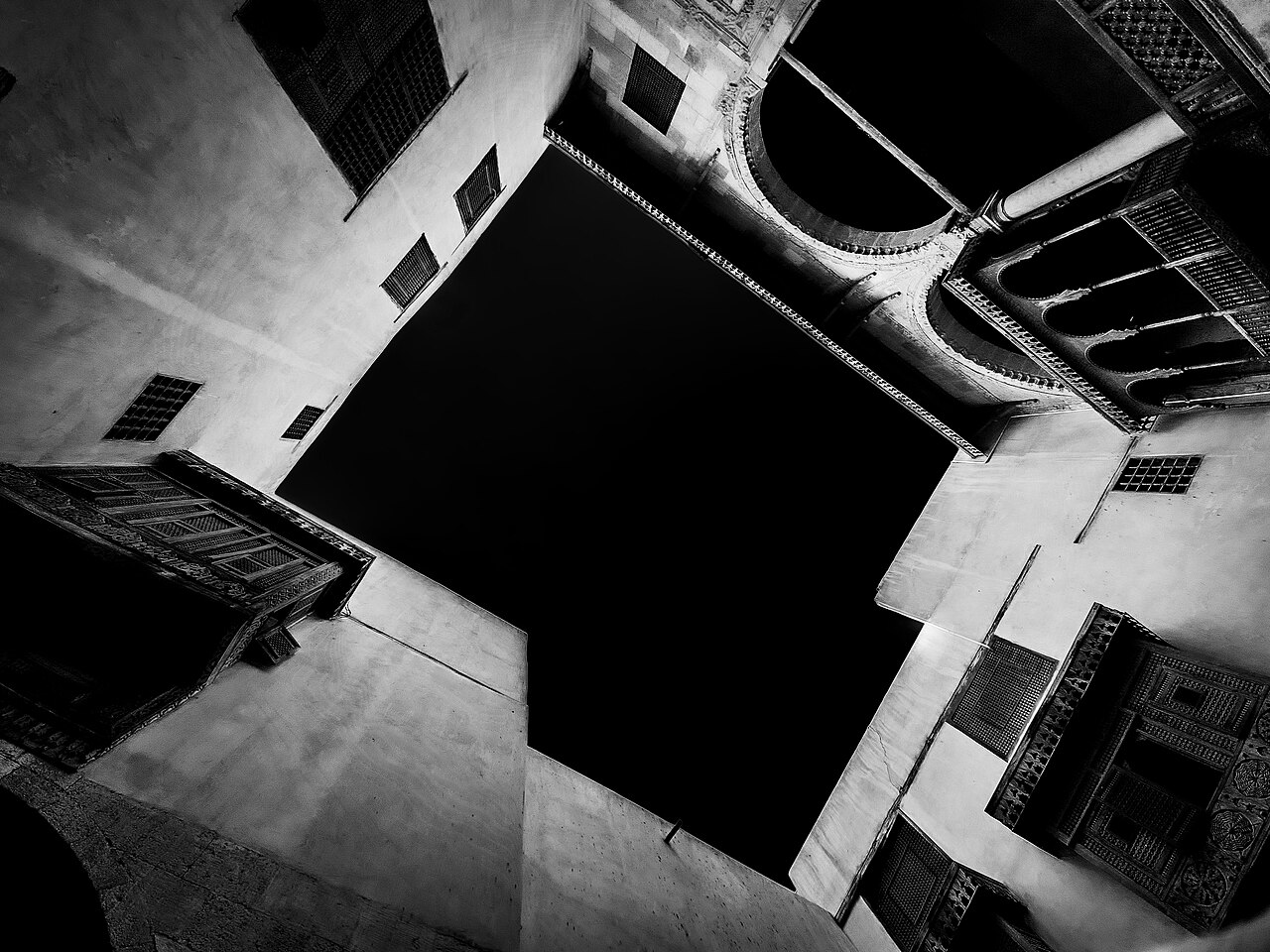
Bayt al-Sennari is a late-Ottoman period house located in the Sayyida Zaynab district of Historic Cairo. The building represents a significant survivor of domestic architecture from this era, offering visitors insight into the residential design and construction techniques of nineteenth-century Cairo. Its local name, بيت السناري, reflects its embedded position within Egyptian cultural heritage. Sunday–Thursday 09:00–17:00; closed to general visits Friday–Saturday. Bibliotheca Alexandrina states that free visits follow official working hours. Separately advertised events may take place outside this general schedule. Free general admission during official working hours; individual workshops or events may require advance registration.
Checked 2026-08-31 · Source
As a domestic-architecture survivor, Bayt al-Sennari preserves characteristic features of late-Ottoman Cairo houses, including traditional spatial arrangements and decorative elements typical of the period. The building's conversion to a cultural venue means it accommodates exhibitions, performances, or educational programming within its historic fabric. Bibliotheca Alexandrina states that free visits follow official working hours. Separately advertised events may take place outside this general schedule. Free general admission during official working hours; individual workshops or events may require advance registration. Sunday–Thursday 09:00–17:00; closed to general visits Friday–Saturday.
Checked 2026-08-31 · Source
The duration of a visit to Bayt al-Sennari depends substantially on whether a specific cultural event is occurring and on individual visitor interest in architectural detail. Casual examination of the house's exterior and principal interior spaces might require under an hour, while participation in scheduled programming or careful study of structural features could extend considerably longer. No authoritative guidance on recommended visit length exists in available sources. Free general admission during official working hours; individual workshops or events may require advance registration.
Checked 2026-08-31 · Source
Visitors should not rely on assumed schedules when planning to visit Bayt al-Sennari. The Sayyida Zaynab district experiences typical Cairo climatic conditions, with hot summers and mild winters potentially influencing comfort during travel to and from the site. Sunday–Thursday 09:00–17:00; closed to general visits Friday–Saturday. Take Cairo Metro Line 1 to El Sayeda Zeinab station. From Sayeda Zeinab Square, enter the alley beside Sabil Sultan Mustafa, continue through Hassan al-Kashef Alley and into Monge Alley; the house entrance is at the alley’s dead end. Bibliotheca Alexandrina also describes the address as Monge Alley, behind El Saneya Secondary Girls School.
Checked 2026-08-31 · Source
Some cultural venues in Historic Cairo operate with variable pricing structures depending on event type, residency status, or group arrangements, but no such details are established here. Visitors should carry appropriate payment methods and enquire directly regarding any applicable fees upon arrival or through advance contact. Free general admission during official working hours; individual workshops or events may require advance registration. The official architectural survey documents a ground floor and two upper floors with stair-based vertical circulation. Step-free circulation is therefore limited to accessible ground-floor areas rather than the complete historic house.
Checked 2026-08-31 · Source
Bayt al-Sennari occupies a position within the Sayyida Zaynab district of central Cairo, an area served by various public transportation options characteristic of the dense urban core. Take Cairo Metro Line 1 to El Sayeda Zeinab station. From Sayeda Zeinab Square, enter the alley beside Sabil Sultan Mustafa, continue through Hassan al-Kashef Alley and into Monge Alley; the house entrance is at the alley’s dead end. Bibliotheca Alexandrina also describes the address as Monge Alley, behind El Saneya Secondary Girls School. Step-free circulation is therefore limited to accessible ground-floor areas rather than the complete historic house.
Checked 2026-08-31 · Source
Visitors to Bayt al-Sennari should exercise standard precautions appropriate to historic urban environments in Cairo. The building's age and original domestic function may present accessibility limitations including stairs, uneven surfaces, or confined spaces not modified for universal access. Neighbourhood conditions in Sayyida Zaynab involve typical Cairo urban density with associated pedestrian and traffic hazards. The official architectural survey documents a ground floor and two upper floors with stair-based vertical circulation. The house was built for Ibrahim Katkhuda al-Sinnari, a Mamluk who became the katkhuda and deputy of Murad Bey.
Checked 2026-08-31 · Source
As a cultural venue operating within a historic house, restrictions may apply to protect sensitive interiors, artworks, or event participants, or conversely photography may be permitted or encouraged for documentation purposes. Visitors should observe posted signage, enquire with staff upon arrival, and refrain from assuming unrestricted photographic access. Respect for ongoing programming and other visitors should guide spontaneous image-making decisions regardless of formal policy clarity. Its surviving endowment deed is dated 8 April 1795, while Bibliotheca Alexandrina dates the house’s construction to about 1794.
Checked 2026-08-31 · Source
The house was built for Ibrahim Katkhuda al-Sinnari, a Mamluk who became the katkhuda and deputy of Murad Bey.
Its surviving endowment deed is dated 8 April 1795, while Bibliotheca Alexandrina dates the house’s construction to about 1794.
French forces requisitioned the house in 1798 to accommodate members of the Commission of Sciences and Arts; work associated with the Description de l’Égypte was carried out there.
Bibliotheca Alexandrina’s architectural survey gives a total site area of about 1,150 square metres and describes a ground floor plus two upper floors.
Following damage aggravated by the 1992 Cairo earthquake, restoration began in 1996 through Egypt’s Islamic Monuments Sector in cooperation with a French mission.
Bibliotheca Alexandrina operates it as a cultural centre hosting exhibitions, seminars, workshops, forums, concerts and theatrical performances.
Loading the interactive map…
The interactive map could not be loaded.


Last updated:
Source: OpenStreetMap contributors ·