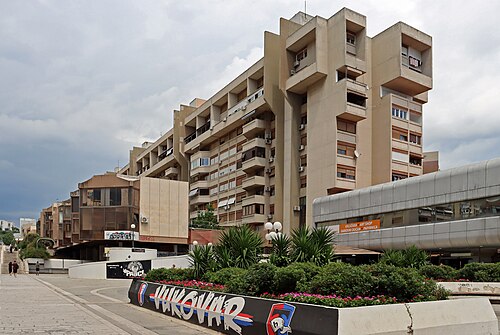
Splitska Riva
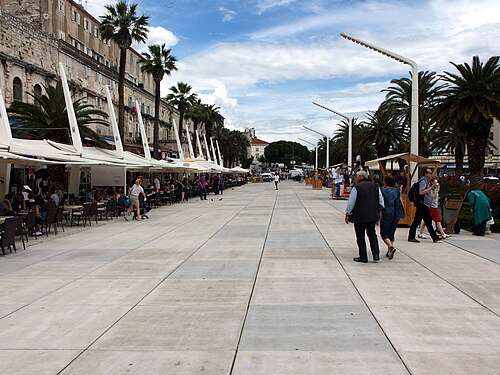
Splitska Riva is the central waterfront promenade of Split, Croatia, running along the edge of the historic core adjacent to Diocletian's Palace.
- Must see
- Activity
- Split
Language · 11 published
Country guide
Croatia meets the Adriatic in two parts that barely resemble each other: an inland north around Zagreb, the capital and the main cultural and economic centre, and a coast whose archipelago carries over 1,000 islands and islets. The whole country is 56,594 square kilometres, divided into twenty counties across four administrative regions, with a population of nearly 3.9 million as of 2026. Split, Rijeka and Osijek are the other cities of any size — the first two on the water, the last inland in the east. Slovenia, Hungary, Serbia, Bosnia and Herzegovina and Montenegro all border it by land, Italy only by sea.
Every city catalogued in this country so far, ranked by how much there is to see.
Photograph · dronepicr · CC BY 2.0
Ranked by importance — sitelinks, pageviews and heritage status, not editor preference.
100 places match
Category
Typical visit duration
Interests
Splitska Riva is the central waterfront promenade of Split, Croatia, running along the edge of the historic core adjacent to Diocletian's Palace.
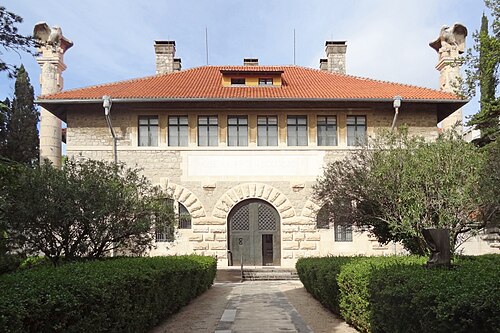
The Mestrovic Gallery is an art museum in Split dedicated to the work of Ivan Mestrovic, Croatia's most celebrated modern sculptor.
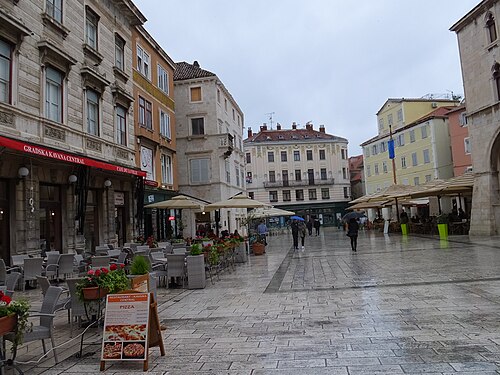
Pjaca People's Square, locally Narodni trg - Pjaca, stands as the main public square in Split's historic core. It occupies the space where the Roman camp's command area once lay, later becoming the medieval heart of civic life.
Fruit Square, known locally as Voćni trg, is a historic public square in Split, Croatia. The square takes its name from the fruit market that historically operated in this space.
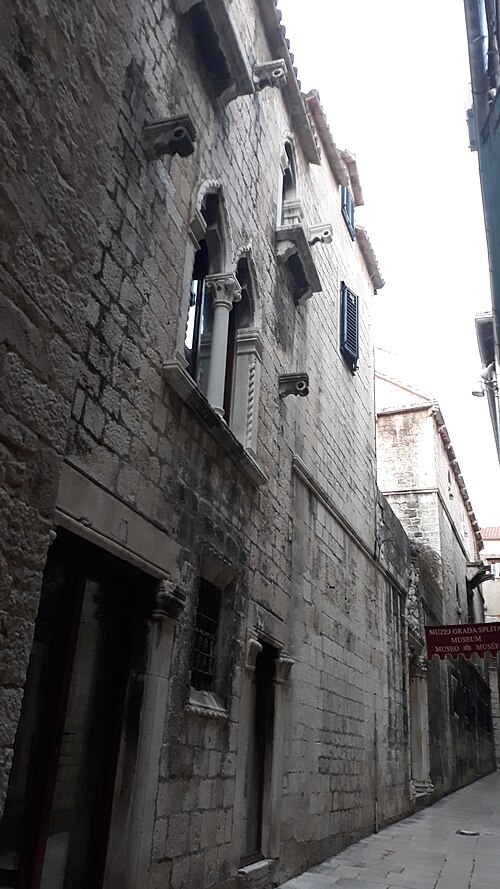
Split City Museum, locally Muzej grada Splita, is a municipal museum institution in Split, Croatia. It preserves and presents the urban history of Split from antiquity through the medieval period to modern times.
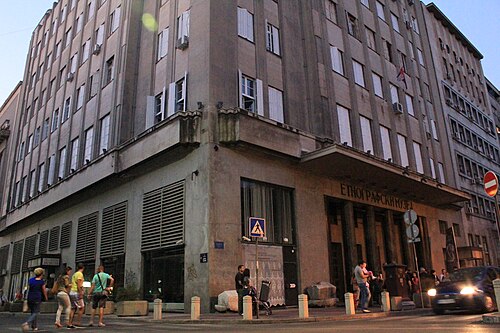
The Ethnographic Museum Split, locally named Etnografski muzej Split, is a museum in the historic core of Split, Croatia. It occupies a significant position within the ancient fabric of the city, which developed around the Palace of Roman Emperor Diocletian.
The Archaeological Museum in Split, known locally as Arheološki muzej u Splitu, stands as a significant cultural institution in Croatia's second-largest city. It preserves and presents archaeological finds from the Split region and broader Dalmatian area.
The Gallery of Fine Arts Split is an art museum in Split, Croatia. Its local name is Galerija umjetnina Split. The institution holds the Wikidata identifier Q5519009.
The Croatian Maritime Museum is a cultural institution in Split dedicated to the maritime heritage of the Adriatic coast.
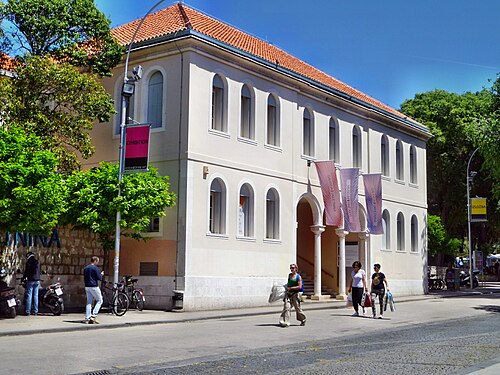
The Museum of Croatian Archaeological Monuments is a museum in Split dedicated to preserving and presenting Croatia's medieval archaeological heritage.
The West Coast Promenade, known locally as Zapadna obala, is a waterfront walkway in Split, Croatia. It runs along the western edge of the city centre, offering views of the Adriatic Sea and the port area.
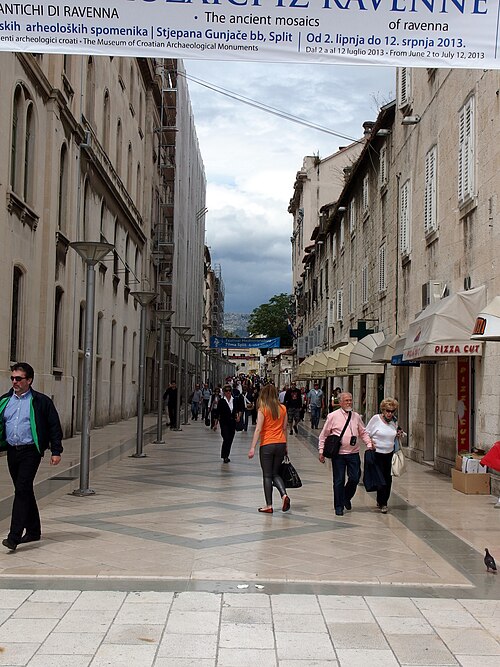
Marmont Street, known locally as Marmontova ulica, is a prominent pedestrian thoroughfare in Split, Croatia.
Varoš Quarter, locally known as Varoš, is one of the oldest residential neighbourhoods in Split, Croatia.
Radunica is a historic residential quarter in Split, Croatia, situated east of Diocletian's Palace. This working-class neighbourhood preserves traditional Dalmatian urban fabric with narrow stone streets and compact houses.
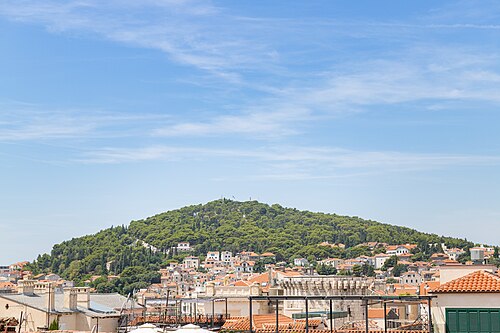
Telegrin Peak, known locally as Vrh Telegrin, is a ranked visitor destination in the Split area of Croatia. The peak forms part of the elevated terrain overlooking the city and surrounding Adriatic coastline.
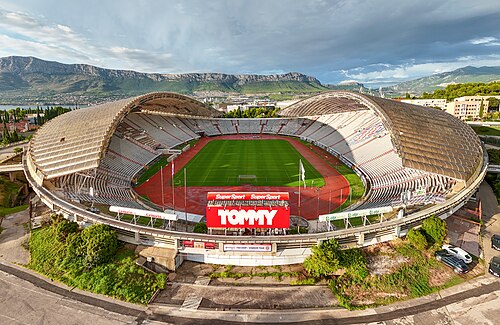
Poljud Stadium, known locally as Stadion Poljud, is a multi-purpose sports venue located in Split, Croatia. It serves as the home ground of HNK Hajduk Split, one of the country's most storied football clubs.
Spaladium Arena is a large indoor sports and entertainment venue located in Split, Croatia. The arena opened as a multi-purpose facility designed to host basketball, handball, concerts, and other major events.
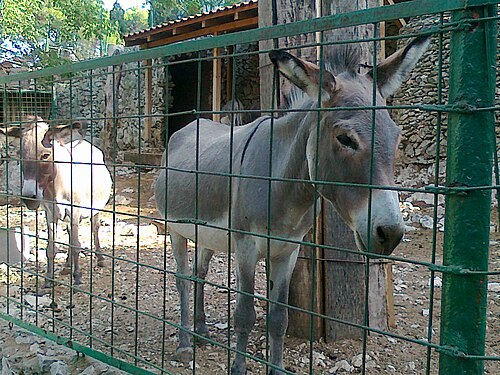
The Split Science Museum and Zoo, known locally as Prirodoslovni muzej i zoološki vrt Split, is a ranked visitor place retained from the available fact pack.
The Game of Thrones Museum Split is a visitor attraction in Split, Croatia, dedicated to the HBO television series Game of Thrones. The museum commemorates the show's extensive filming in Croatia, particularly in the Dalmatian region.
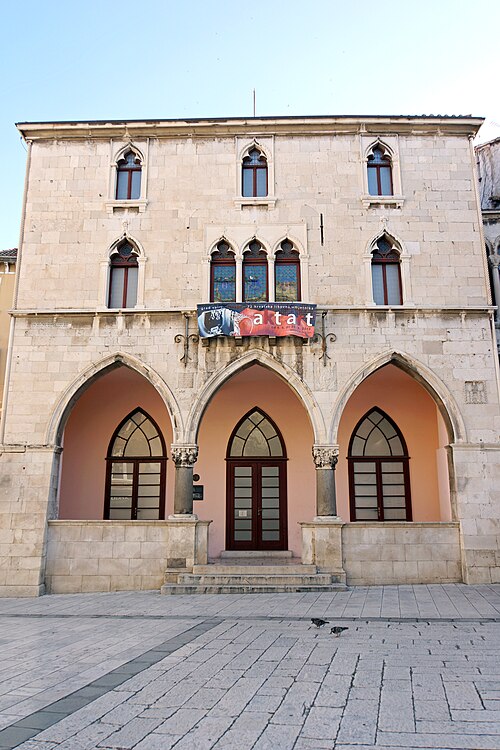
Old City Hall stands as a significant historical building in Split, Croatia, representing the civic heritage of this coastal city. The structure reflects architectural traditions that have shaped Dalmatian urban landscapes over centuries.
Split 3 is a large modernist residential district in the eastern part of Split, Croatia. Built primarily during the Yugoslav era, it represents one of the most significant examples of post-war urban planning in the region.
The Emanuel Vidović Gallery is a dedicated art gallery in Split, Croatia, bearing the local name Galerija Emanuela Vidovića. It honours the Croatian painter Emanuel Vidović, a significant figure in Croatian modern art.
Kastela Bay is a coastal inlet on the Adriatic Sea, situated between the city of Split and Trogir in central Dalmatia, Croatia.
Source: OpenStreetMap contributors, Wikidata ·
Seven to ten days can pair Zagreb with one Adriatic region or focus on Split, nearby islands and one inland park. Dubrovnik, Istria and central Dalmatia are separate bases; ferry waits make a rapid checklist of coastal towns less efficient than it looks.
Croatia belongs to the Schengen Area, while document and visa requirements still depend on nationality. Consult the Croatian foreign ministry before travel and check the passport used for every border leg, particularly when the route crosses non-Schengen neighbours.
Zagreb, Split and Dubrovnik are common gateways. Coaches and cars are central to coastal travel, trains are more useful inland, and ferries follow seasonal schedules; confirm whether the selected sailing carries vehicles and reserve constrained summer departures.
May, June and September combine warm coastal conditions with less pressure than peak summer for many routes. Island ferries and accommodation are more seasonal outside that window, while inland weather differs, so verify the exact transport dates before building an island sequence.
Croatia uses the euro. Cards are common in cities and resorts, but cash can still help at markets, small island businesses and local services; check whether a ferry, parking machine or accommodation deposit accepts the chosen payment method.
Call 112 for emergencies; Croatia uses Type C and F electricity at 230 V. Treated public tap water is recorded as safe, though local notices remain authoritative, and coastal itineraries should keep current ferry, heat and wildfire information available.