
26 min walk
Crkva sv. Jure
- High · Heritage site
- Place of worship
Language · 11 published
Activity · Split
Kaštelanski zaljev
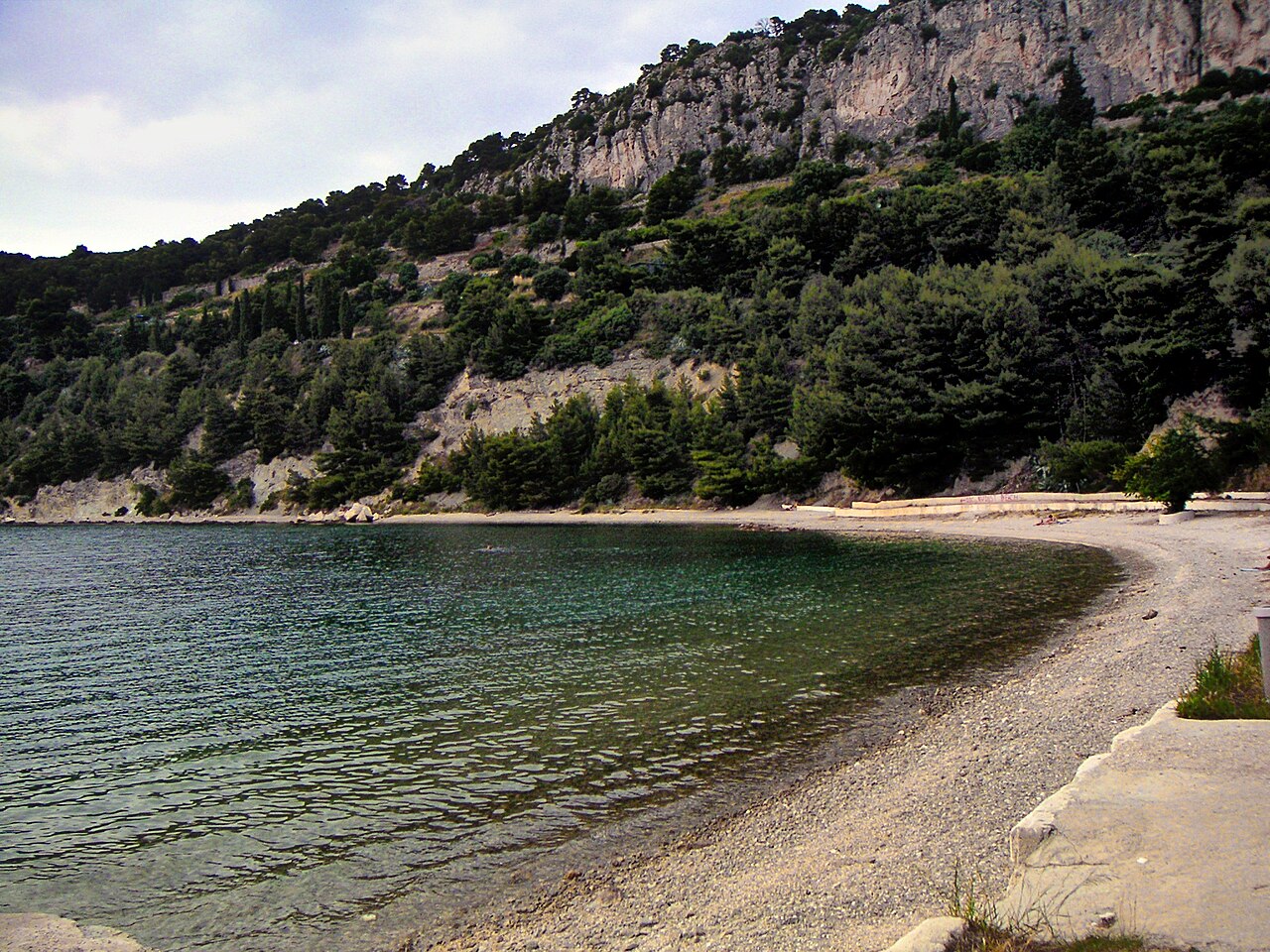
Kastela Bay is a coastal inlet on the Adriatic Sea, situated between the city of Split and Trogir in central Dalmatia, Croatia. The bay encompasses seven historical settlements known collectively as Kastela, each centred on a medieval fortress or castle built by local nobility between the fifteenth and sixteenth centuries. These fortified structures were constructed as defensive residences against Ottoman raids. The bay functions as both a working maritime area and a residential zone, with the settlements forming a continuous strip along the coastline.
Checked 2026-08-26
The seven Kastela settlements contain preserved fortifications, churches, and historic houses. Kastilac in Kastel Gomilica is a small island fortress connected by a bridge. Kastel Novi and Kastel Stari retain tower structures and waterfront promenades. Religious buildings include the Church of Saint John in Kastel Novi. The shoreline features pebble beaches, marina facilities, and local restaurants. Olive groves and agricultural plots persist inland from the developed coastal strip. The area maintains active fishing and small-scale boatbuilding traditions alongside tourism infrastructure. Kastela Bay also earns time in a split itinerary because WIKIDATA_EDITORIAL reconciliation for the ranked entry; identity and coordinates were verified without a nearby fallback. Its value becomes clearer when the stop is compared with the surrounding streets and the other ranked places nearby.
Checked 2026-08-26
Visitors typically allocate a half-day to full-day excursion for exploring the Kastela settlements along the bay. A walking route connecting multiple fortifications requires several hours at minimum. Those interested in detailed examination of individual castles, church interiors, and waterfront areas may extend their visit. Swimming and dining activities add additional time. The bay area does not function as a single consolidated attraction but rather as a distributed coastal zone requiring independent itinerary planning. Transport intervals between settlements should be factored into time estimates.
Checked 2026-08-26
The coastal climate permits visitation from spring through autumn. Summer months bring peak tourist activity and higher temperatures suitable for swimming. Spring and autumn offer reduced crowding at historical sites. Winter visitation is possible but with limited services and reduced maritime activity. Operator-confirmed hours for individual fortifications and religious buildings are Not recorded pending review. Visitors should verify access conditions for specific sites before travel. Local religious observances may affect church accessibility. Seasonal ferry and tour boat schedules vary and require advance confirmation.
Checked 2026-08-26
The Kastela Bay area operates as public coastal space without unified admission control. Individual historical sites may have separate access arrangements. Some fortifications are exterior-viewing only; interior access depends on current use and preservation status. Operator-confirmed prices for any managed sites are Not recorded pending review. No comprehensive ticket system covers all seven settlements. Visitors should anticipate incidental costs for transport, dining, and any guided services. Free public beach access is available at multiple points. Parking fees may apply in developed areas during peak periods.
Checked 2026-08-26
Kastela Bay lies approximately fifteen to twenty-five kilometres northwest of Split city centre. Local bus services connect Split to individual Kastela settlements along the coastal road. The journey duration varies by destination and traffic conditions. Private vehicle access follows the D8 coastal highway. Split Airport is located near Kastel Stari, providing proximity for air travellers. Regional ferry services do not typically serve the bay as a primary destination. Taxis and ride services operate in the area. Cycling along the coastal route is possible but requires caution due to road traffic.
Checked 2026-08-26
Coastal road traffic moves at speed through settlement areas; pedestrian vigilance is essential. Swimming conditions vary by location; local advice should guide water entry decisions. Historic fortifications may have unprotected heights and uneven surfaces. Some structures are private property or in adaptive reuse; respect boundaries. Summer heat requires adequate hydration and sun protection. Limited English signage may complicate independent navigation. Marina and working harbour areas have restricted zones. Nighttime lighting is uneven between settlements. Emergency services are less concentrated than in Split proper.
Checked 2026-08-26
The fortified structures and waterfront settings offer architectural and maritime subjects. Early and late daylight provides favourable illumination for the stone buildings. Kastilac fortress presents distinctive island-composition opportunities. Waterfront promenades allow unobstructed sea views toward Split and the offshore islands. Interior photography of churches requires discretion regarding services and visitors. Drone operation must comply with Croatian aviation regulations and respect privacy near residential properties. Working harbour areas may restrict certain viewpoints. Crowding on beaches and promenades increases photographic difficulty during July and August peak periods.
Checked 2026-08-26
Kastela Bay contains seven distinct historical settlements, each with its own fortified core. They are referred to collectively as Kastela but function as separate localities.
Access varies by structure. Some fortifications are exterior-viewing only, while others may permit entry depending on current use and preservation status. Individual verification is necessary.
Kastela Bay offers lower density, smaller-scale historical sites, and more direct maritime atmosphere compared to Split's major Roman and urban monuments. It suits visitors seeking distributed exploration.
Pebble beaches exist along the bay, and swimming occurs in season. Conditions vary by specific location, and visitors should seek local guidance on water safety and facilities.
Local buses from Split serve the settlements. The airport's proximity to Kastel Stari benefits air travellers. Walking between all seven settlements is possible but time-consuming.
Organised tour coverage is less extensive than for Split's major attractions. Independent exploration is common. Specific guided service availability should be confirmed locally.
Loading the interactive map…
The interactive map could not be loaded.
Last updated:
Source: OpenStreetMap contributors, Wikidata ·