
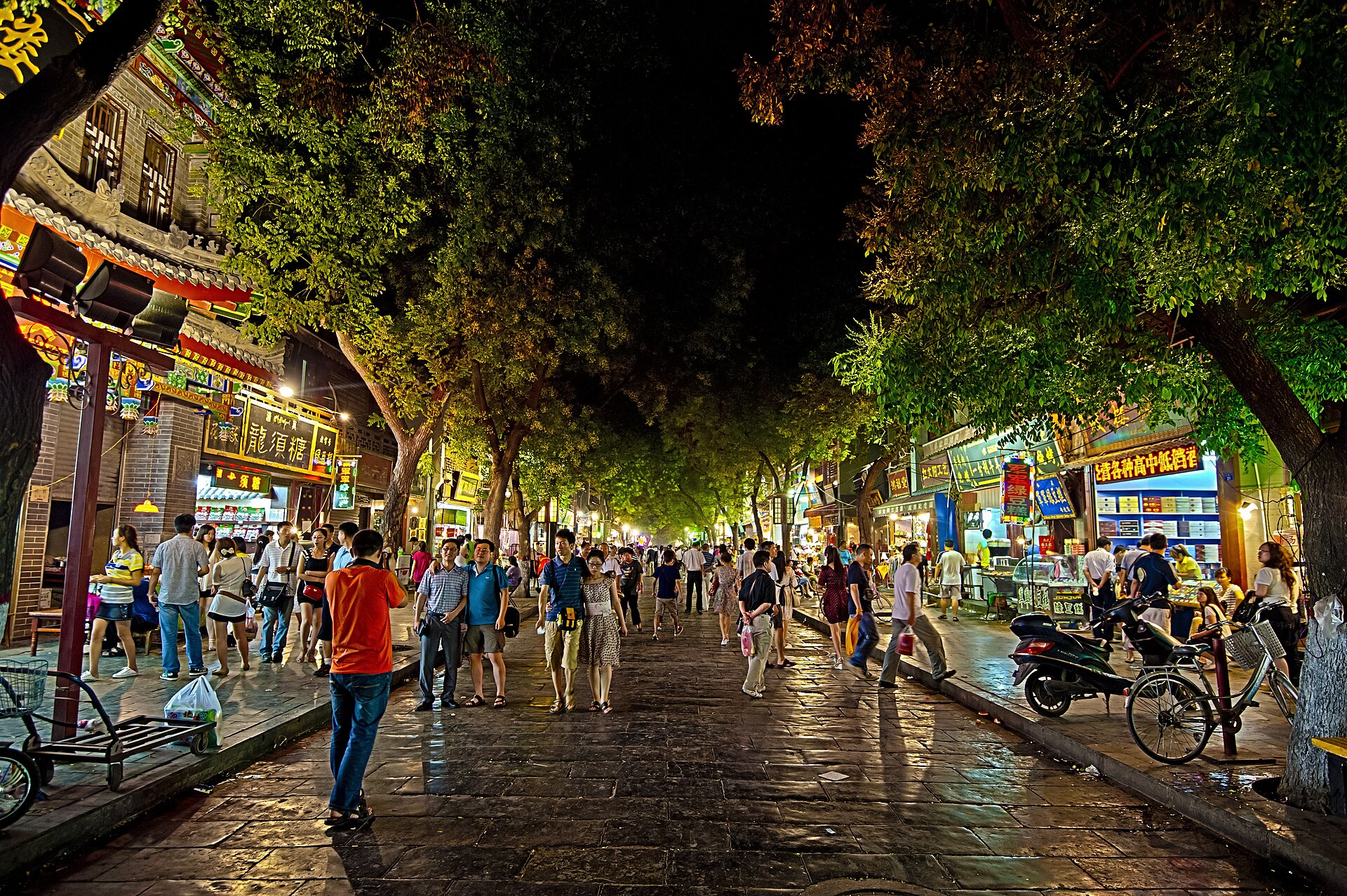
3 min walk
Muslim Quarter
- Must see
- Historic monument
Language · 11 published
Museum · Xi'an
西安鼓楼博物馆

| Monday | 09:00 – 17:30 |
|---|---|
| Tuesday | 09:00 – 17:30 |
| Wednesday | 09:00 – 17:30 |
| Thursday | 09:00 – 17:30 |
| Friday | 09:00 – 17:30 |
| Saturday | 09:00 – 17:30 |
| Sunday | 09:00 – 17:30 |
Checked 2026-08-31 · Source
Read from the OpenStreetMap access tags; anything not listed has no tag recorded.
Set the group type to family in the planner and the day window contracts to about three quarters of a solo day.
Xi'an Drum Tower is a Ming Dynasty landmark in the centre of Xi'an's walled city. It stands opposite the Bell Tower and is one of the city's defining historic buildings. Its traditional wooden structure, layered roof and elevated position reflect classical Chinese architectural design. The tower was associated with timekeeping, with drums used to mark the hours. For travellers, it is both a compact heritage visit and a useful starting point for exploring the central city and nearby Muslim Quarter. The Xi'an Drum Tower is a historic landmark in the heart of Xi'an, Shaanxi Province, China. Built during the Ming Dynasty, it stands opposite the Bell Tower as one of the city's most recognizable architectural symbols. The tower served traditional timekeeping functions, with drums beaten to mark the hours. Its wooden structure and multi-tiered roof exemplify classical Chinese design. The site remains a significant cultural monument and tourist destination within the ancient walled city center. The Drum Tower and Bell Tower stand in close proximity, facing each other across a central plaza in Xi'an. They were historically paired for timekeeping functions but are separate structures with independent access.
Checked 2026-08-26 · Source
Inside, visitors encounter large ceremonial drums and displays connected with traditional percussion and timekeeping. Painted decoration, timber beams and raised upper-level spaces give the building much of its character. The tower's elevated position provides views across the surrounding central district, while the building itself rewards attention to joinery, rooflines and ornament. The experience is focused rather than extensive: the drums, architecture and outlook form the main visit. From the surrounding plaza, the relationship between the Drum Tower and Bell Tower is especially easy to understand.
Checked 2026-08-26 · Source
Allow about thirty to sixty minutes for the tower itself. That gives enough time to inspect the drums, climb through the historic interior and pause for views from the upper levels. Visitors with a strong interest in architecture or photography may stay longer. The nearby Bell Tower can be added to the same central-city outing, while the Muslim Quarter provides a much larger follow-on walk. Treat the Drum Tower as a focused landmark stop rather than a full-day attraction.
Checked 2026-08-26 · Source
The tower sits in a busy part of Xi'an, so the surrounding streets and plaza can feel crowded, especially on weekend afternoons and during domestic holiday periods. Morning and late afternoon are comfortable times for combining the visit with a longer walk through the walled city. Evening brings a different exterior mood when the landmark is illuminated. Xi'an has hot summers and cold winters, so dress and plan outdoor time accordingly. The central location makes it easy to fit the tower into several styles of city itinerary.
Checked 2026-08-26 · Source
The Drum Tower is a dedicated monument visit rather than an open plaza experience. It may be paired geographically with the Bell Tower, which stands across the central space, but the two are separate structures with separate visitor access. Plan the outing around the tower's interior displays and upper levels.
Checked 2026-08-26 · Source
The Drum Tower occupies a prominent position at the centre of Xi'an's walled city. The Bell Tower is directly across the plaza, making the two landmarks simple to connect on foot. The surrounding central streets are served by public transport, and taxis or ride services can bring travellers to the broader landmark area. Vehicle access may stop short of the pedestrian space around the tower. Once there, walking is the most natural way to continue toward the Muslim Quarter and nearby historic streets.
Checked 2026-08-26 · Source
Reaching the upper parts of the tower involves stairs, making the visit demanding for anyone who cannot manage stair access. Wooden floors and historic structural elements call for careful movement. Crowds are strongest in the central tourist zone, where vendors and dense foot traffic can make a short approach feel slow. Keep belongings secure in busy areas and use care around the building's edges and steps. The Muslim Quarter nearby is lively and crowded, so allow extra energy and space when linking both experiences.
Checked 2026-08-26 · Source
Photograph the Drum Tower from the surrounding plaza to capture its layered roof and relationship with the Bell Tower. Inside, the drums and painted timber details provide more intimate subjects. Upper levels give elevated views over the central district, while evening illumination changes the exterior mood. The open plaza supports wide compositions, although people will be part of the scene during busy periods. Move patiently through the space and follow any posted rules for flash, tripods or recording equipment inside the historic building.
Checked 2026-08-26 · Source
No. They are separate historic towers facing one another across Xi'an's central plaza and can be visited as a paired landmark outing.
The interior includes large ceremonial drums, traditional timber details, painted decoration and elevated spaces associated with the tower's historic timekeeping role.
A focused visit generally takes about thirty to sixty minutes, with additional time useful for careful architectural viewing or photography.
It stands in the centre of Xi'an's walled city, directly opposite the Bell Tower and close to the historic Muslim Quarter.
The present landmark is associated with the Ming Dynasty and preserves traditional Chinese architectural and timekeeping features.
Upper exhibition levels require stair climbing, so travellers who cannot use stairs may find the visit difficult.
Loading the interactive map…
The interactive map could not be loaded.

Last updated:
Source: OpenStreetMap contributors, Wikidata ·