

3 min walk
Mirante do Vale
- Must see
- Historic monument
Language · 11 published
Historic monument · São Paulo
Mosteiro de São Bento
Reviewed by Elena Voss · SSMTour Travel Editor
Read from the OpenStreetMap access tags; anything not listed has no tag recorded.
Set the group type to family in the planner and the day window contracts to about three quarters of a solo day.
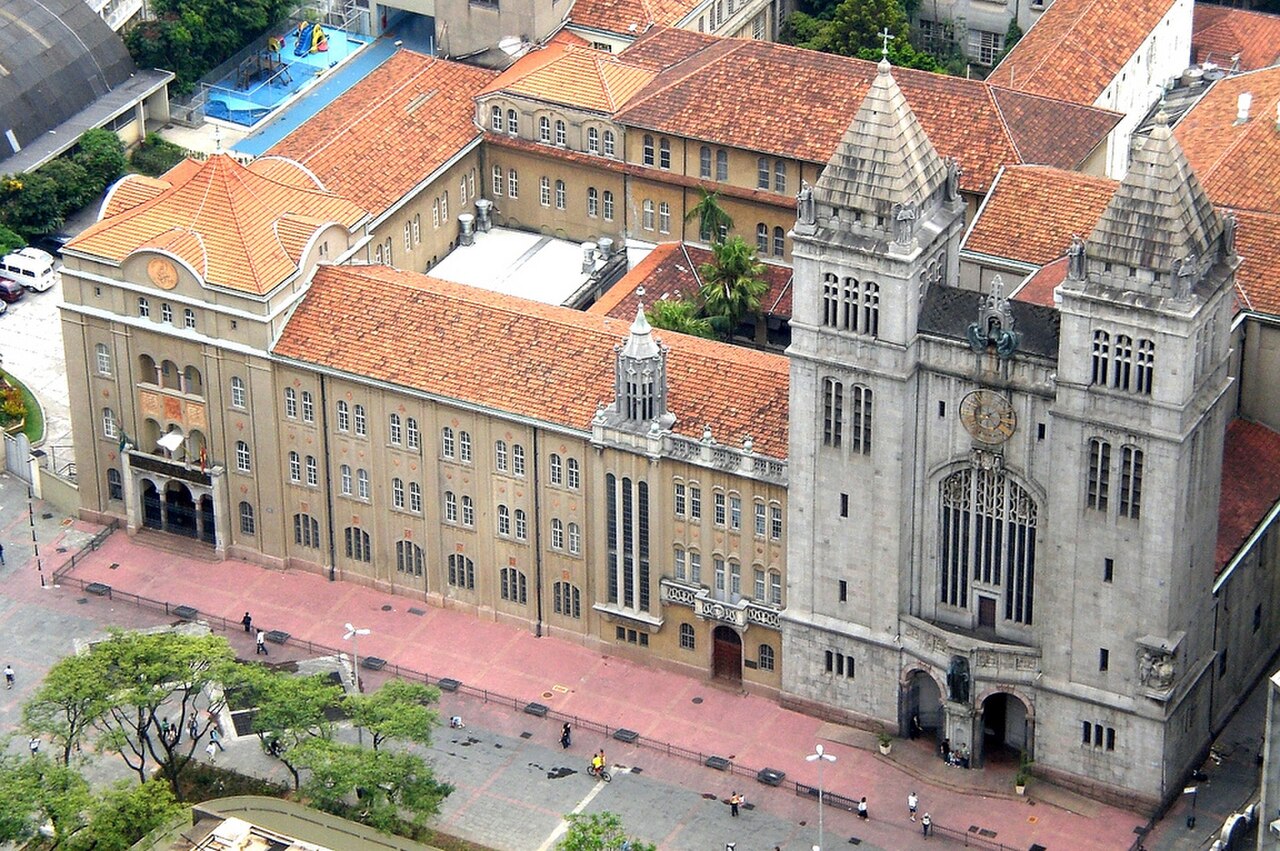
The Monastery of Saint Benedict is a historic Benedictine complex in Sao Paulo's old city center. It anchors one corner of the old-city triangle, a zone of significant historical concentration. The monastery has served as a religious and cultural landmark since the colonial period, representing one of the oldest continuous institutional presences in the city. The Benedictine order established this foundation during the early development of Sao Paulo, contributing to the region's religious, educational, and architectural heritage over multiple centuries.
Checked 2026-08-31 · Source
The complex contains a church and monastic buildings reflecting its long religious function. The interior typically features elements associated with Benedictine tradition, including spaces for liturgical celebration and communal prayer. Decorative and artistic components may include altarpieces, religious imagery, and architectural details accumulated through centuries of occupation.
Checked 2026-08-31 · Source
Visitors should allocate approximately one to two hours for a meaningful encounter with the Monastery of Saint Benedict. This estimate allows for contemplation of the church interior, observation of architectural features, and possible attendance at religious services depending on timing. The compact urban site does not require extensive walking. Those with particular interest in religious history, Benedictine tradition, or colonial architecture may wish to extend their stay. Casual visitors can complete a basic circuit more quickly, though rushed visits diminish appreciation of the atmosphere.
Checked 2026-08-31 · Source
Public liturgies: Monday–Friday Masses at 07:00 and 13:00, with Vespers at 17:30; Saturday Mass at 05:50; Sunday Masses at 08:00 and 10:00, with Vespers at 17:00. These are the operator’s published public-liturgy times, not continuous sightseeing hours. The schedule includes every day of the week and identifies no weekly closure day. Conservation and restoration work in the basilica and elsewhere in the complex is ongoing. Visitors should consult current information before planning. The monastery functions as an active religious community, so liturgical schedules may affect accessibility for tourists. Morning hours often suit those seeking quieter conditions for contemplation. Weekend masses typically draw larger congregations. Sao Paulo's climate presents mild winters and warm summers; the interior stone spaces offer relative coolness during hotter periods. Rainy season occurs during summer months. Check whether special religious observances restrict public access during your intended visit period.
Checked 2026-08-31 · Source
Free general access: São Paulo’s Municipal Tourism Department identifies the monastery as a free place to visit. Special activities, including brunches and ticketed events, are separate from general access. Many historic churches and active religious sites in Brazil do not charge formal admission, instead relying on voluntary contributions. Visitors should carry small denomination currency for donations if this practice applies. Special guided tours, if available, may involve separate arrangements. The monastery's status as a functioning religious institution rather than a commercial tourist attraction suggests access policies differ from conventional museums.
Checked 2026-08-31 · Source
The monastery is at Largo São Bento, s/nº, Centro Histórico, São Paulo, 01029-010. São Bento station on Metro Line 1–Blue is at Largo São Bento, 109; its principal entrance opens into the square at pavement level. Municipal bus routes identified by the city for the monastery are 2002/10, 408A/10, 4113/10, 508L/10, 8615/10 and 930P/10. This is the named approach for an independent visit. The monastery occupies a corner position in Sao Paulo's old-city triangle, accessible via the city's extensive public transportation network. Metro and bus services connect the historic center to other districts. The general downtown location means multiple approach routes exist. Traffic congestion characterizes central Sao Paulo during peak hours, affecting all transport modes. Walking from nearby metro stations represents a practical option. The surrounding old-city area contains additional historic sites, permitting combined itinerary planning. Consider personal security awareness appropriate to any major metropolitan center, particularly during evening hours.
Checked 2026-08-31 · Source
São Bento metro station has an elevator intended primarily for disabled passengers and people with reduced mobility. The station’s principal entrance connects to Largo São Bento at pavement level. The documented step-free route covers arrival at Largo São Bento; the responsible bodies do not describe step-free circulation through every part of the monastery complex. Accessible public toilets are available inside the paid area of São Bento station every day from 04:40 to 00:00. The access description applies to the documented visitor route. Active religious sites require respectful behavior regardless of personal beliefs. Modest dress covering shoulders and knees demonstrates appropriate courtesy. Photography restrictions may apply in certain areas; observe posted guidance and worshippers' privacy. The surrounding old-city district presents standard urban challenges including uneven pavements and variable street conditions. Maintain awareness of personal belongings in crowded conditions. Service times may interrupt tourist access without advance warning. The monastery's primary function remains monastic life and worship, not visitor accommodation. Silence protocols may be enforced in designated areas.
Checked 2026-08-31 · Source
Active religious sites frequently restrict or prohibit interior photography to preserve atmosphere and respect worshippers. Flash photography typically damages sensitive artworks and disturbs contemplative spaces. Exterior photography of the building facade generally encounters fewer limitations, subject to normal public space considerations. If photography is permitted, tripods and professional equipment may require special authorization. Always prioritize the monastery's religious function over documentation desires.
Checked 2026-08-31 · Source
The Benedictine community was founded on 4 July 1598 and has occupied the same site since its foundation.
The complex contains the Abbatial Basilica of Our Lady of the Assumption, the monastery, Colégio de São Bento and Faculdade de São Bento.
The operator highlights the Sunday 10:00 Mass as a particularly well-attended celebration in the basilica.
The church contains Beuron Art School frescoes and murals and an organ with approximately 7,000 pipes.
Yes. The operator states that conservation and restoration are underway in the basilica and across both interior and exterior parts of the complex.
No. The operator states that the free monthly introductory Gregorian-chant classes are suspended and that any return will be announced through its social-media channels.
Loading the interactive map…
The interactive map could not be loaded.

Last updated:
Source: OpenStreetMap contributors, Wikidata ·