.jpg)

13 min walk
Campo de Santana
- High · Heritage site
- Nature site
Language · 11 published
Historic monument · Rio de Janeiro
Sambódromo da Marquês de Sapucaí
Reviewed by Elena Voss · SSMTour Travel Editor
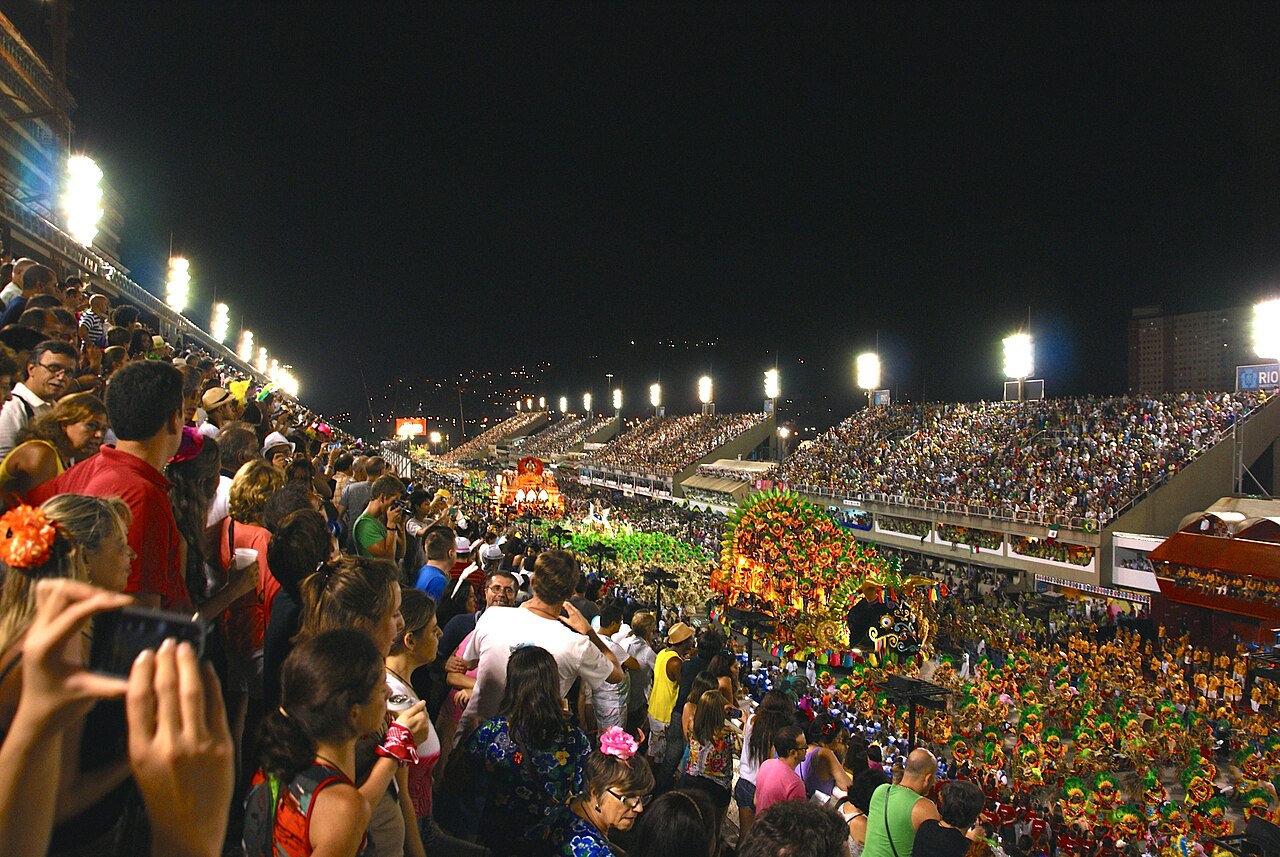
The Sambódromo da Marquês de Sapucaí is a purpose-built parade avenue in Rio de Janeiro designed by architect Oscar Niemeyer. It serves as the principal stage of Rio Carnival, hosting the annual samba school parades that constitute one of Brazil's most iconic cultural events. The structure consists of a long passageway flanked by spectator grandstands and VIP boxes, creating a linear performance space for processions. Its architectural significance and cultural function make it a landmark of modern Brazilian design and a globally recognized symbol of Carnival celebration.
Checked 2026-08-26
The Sambódromo comprises a central parade avenue with concrete surface, permanent concrete grandstands on both sides, and a distinctive arch structure at one end known as the Praça da Apoteose. The facility includes VIP boxes, press areas, and support infrastructure for large-scale productions. The concrete bleachers provide tiered viewing positions for spectators. The architectural ensemble reflects Niemeyer's modernist aesthetic with bold geometric forms. The space transforms annually to accommodate elaborate floats, costumes, and thousands of performers during Carnival parades.
Checked 2026-08-26
A visit to the Sambódromo varies substantially depending on purpose and timing. During Carnival, spectators typically remain for multiple hours as samba school parades proceed through the night, with each school allocated a fixed performance duration. Outside Carnival season, the structure functions as an architectural site that can be viewed in a brief visit. The parade avenue itself extends for a considerable linear distance. Specific duration measurements for the facility are Not recorded pending review from authoritative sources. Sambadrome Marques de Sapucai also earns time in a rio de janeiro itinerary because Oscar Niemeyer's parade avenue is the principal stage of Rio Carnival. Its value becomes clearer when the stop is compared with the surrounding streets and the other ranked places nearby.
Checked 2026-08-26
The Sambódromo operates most prominently during Rio Carnival, typically held in February or March according to the lunar calendar. Outside Carnival, the facility may host occasional events or remain largely inactive. Visitors should consult official Carnival programming and municipal sources for current information. The structure exists as permanent architecture year-round, though its cultural function peaks during the designated Carnival period when parades and related activities occur. Check the operator's own site for the travel date before relying on a schedule or fare.
Checked 2026-08-26
Ticketing arrangements for Sambódromo events vary by occasion and seating category. During Carnival, tickets are typically sold for designated sectors of the grandstands and VIP boxes. Visitors should verify current ticketing information through official Carnival channels and authorized vendors. Prices likely fluctuate based on event type, seating location, and demand. Advance purchase is generally advisable for major events, though specific recommendations are Not recorded pending review from authoritative sources. Check the operator's own site for the travel date before relying on a schedule or fare.
Checked 2026-08-26
The Sambódromo is located in the Marquês de Sapucaí area of central Rio de Janeiro. Access is possible via the city's public transportation network, including metro and bus services that serve the surrounding region. The facility's central location provides multiple approach routes. Visitors should consult current transit schedules and route maps, as these are subject to modification. During major events, traffic management and crowd control measures may affect access patterns. Walking from nearby transit points may be necessary. Specific route details are Not recorded pending review.
Checked 2026-08-26
Visitors should exercise standard urban precautions appropriate to large gatherings in Rio de Janeiro. During events, crowds may create congestion in access areas and seating sections. The concrete structure offers limited weather protection in open seating areas. Personal belongings require attentive management in crowded conditions. Hydration and sun protection merit consideration for daytime exposure. Nighttime events present standard considerations for movement in urban environments. Visitors should follow guidance from event staff and security personnel. Medical services and emergency exits should be identified upon arrival at any event.
Checked 2026-08-26
Photography opportunities at the Sambódromo center on architectural documentation and event capture. The Niemeyer-designed structure presents geometric forms and linear perspectives suitable for architectural photography. During parades, dynamic subjects include floats, costumes, and performers in motion. Lighting conditions vary dramatically between daytime architectural visits and nighttime event illumination. Equipment policies for professional photography are Not recorded pending review. Visitors should respect performer privacy and event regulations regarding image capture. Tripod use and flash photography may be restricted during performances. The Praça da Apoteose arch provides a recognizable compositional element.
Checked 2026-08-26
The structure exists as permanent architecture year-round, though its primary cultural function occurs during Carnival. Check the operator's own site for the travel date before relying on a schedule or fare.
Visitors should consult official Carnival channels and authorized vendors for current information. Check the operator's own site for the travel date before relying on a schedule or fare.
The facility may be viewable as architectural heritage outside event periods, though specific access arrangements and visitor services are Not recorded pending review from authoritative sources.
Public transportation including metro and bus serves the surrounding area. Specific routes, schedules, and optimal access methods are Not recorded pending review of current transit information.
Tour availability and scheduling are Not recorded pending review. Visitors should consult official sources and municipal tourism services for current programming information.
Specific accessibility features, accommodations, and services are Not recorded pending review. Visitors with accessibility requirements should contact operators directly for confirmed information regarding facilities and access provisions.
Loading the interactive map…
The interactive map could not be loaded.


Last updated:
Source: OpenStreetMap contributors, Wikidata ·