
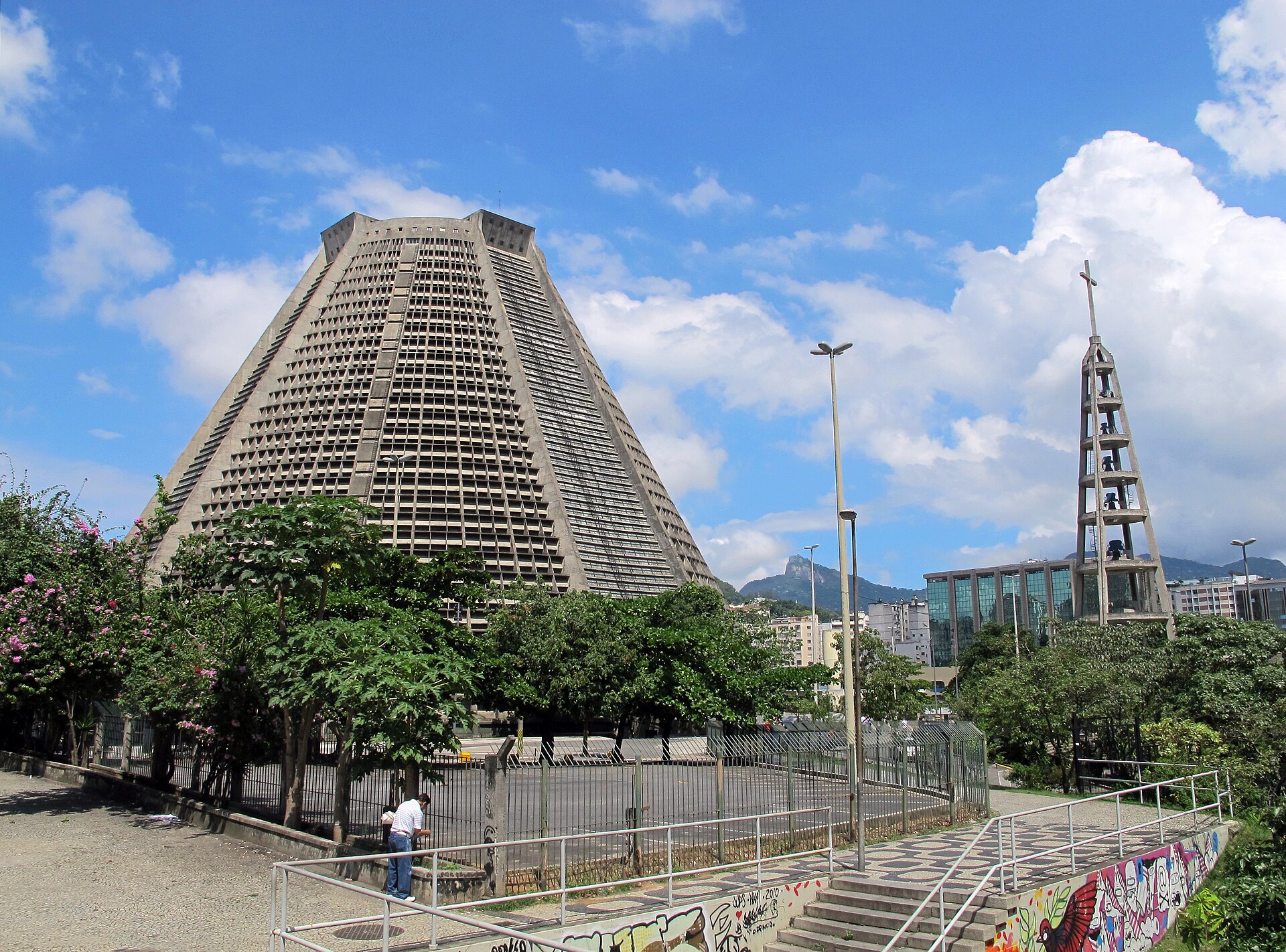
5 min walk
Rio de Janeiro Cathedral
- Must see
- Place of worship
Language · 11 published
Activity · Rio de Janeiro
Reviewed by Elena Voss · SSMTour Travel Editor

| Monday | 08:00 – 18:30 |
|---|---|
| Tuesday | 08:00 – 18:30 |
| Wednesday | 08:00 – 18:30 |
| Thursday | 08:00 – 18:30 |
| Friday | 08:00 – 18:30 |
| Saturday | 09:00 – 17:00 |
| Sunday | 09:00 – 17:00 |
Checked 2026-08-31 · Source
Read from the OpenStreetMap access tags; anything not listed has no tag recorded.
Set the group type to family in the planner and the day window contracts to about three quarters of a solo day.
The Santa Teresa Tram, known locally as Bondinho de Santa Teresa, is a historic tramway system operating in Rio de Janeiro. It serves the hillside neighbourhood of Santa Teresa, connecting it to the city centre. The system uses vintage-style streetcars running on narrow-gauge tracks. It is recognised as a heritage transport attraction and represents one of the few remaining traditional tram operations in Brazil. Monday–Friday 08:00–18:30; Saturday, Sunday and public holidays 09:00–17:00. No regular weekly closure day. The operator’s live status reports trams running to Paula Mattos at 20-minute intervals. Capacity is 32 passengers, and ticket sales may end before 16:00 on busy days.
Checked 2026-08-31 · Source
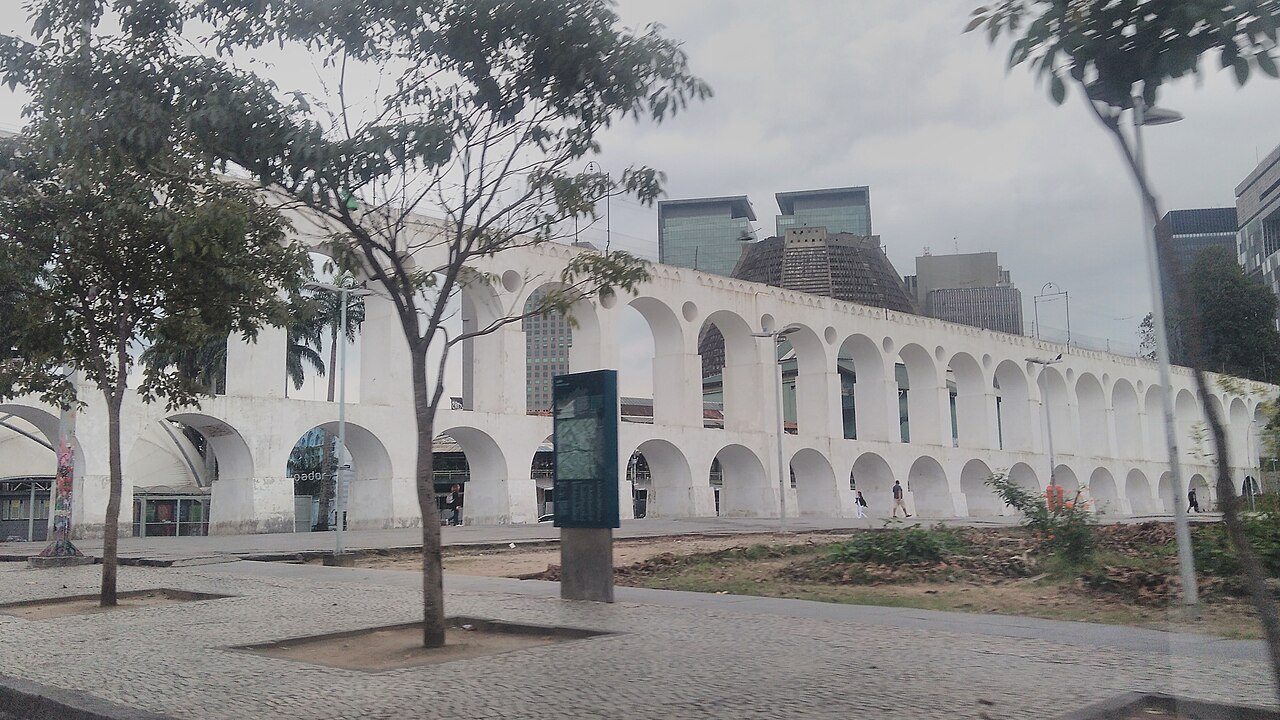
The tram experience centres on the wooden-bodied heritage vehicles themselves, which retain historical design elements. The route passes through Santa Teresa's winding streets, revealing colonial architecture, art studios, and vegetation. Passengers ride alongside open windows or from exposed sections, depending on car configuration. The journey includes the crossing of the Arcos da Lapa, an 18th-century aqueduct repurposed as a tram bridge. The neighbourhood at the line's upper terminus contains restaurants, galleries, and cultural spaces, though these are separate attractions accessed after disembarking.
Checked 2026-08-31 · Source
The complete journey duration depends on traffic conditions, passenger loading, and operational variables along the single-track route with passing loops. The line extends from downtown Rio de Janeiro into the elevated Santa Teresa neighbourhood. Visitors should allocate sufficient time for waiting, boarding, and the ride itself, plus exploration of the destination area. Return journeys require additional planning. The experience is not comparable to rapid transit; the heritage nature of the operation implies slower speeds and potential delays. Patience is essential.
Checked 2026-08-31 · Source
The tram operates during daytime and early evening periods, though specific schedules fluctuate. Weekends and holidays typically attract more visitors, potentially increasing wait times. Weather conditions affect comfort significantly due to partially open car designs. Rain may reduce visibility and passenger comfort. Morning departures may offer less crowded conditions. Local inquiry is advisable. Monday–Friday 08:00–18:30; Saturday, Sunday and public holidays 09:00–17:00. The fleet was produced in standard 32-passenger and wheelchair-accessible 25-passenger configurations, so accessible boarding is not available on every tram. The accessible design uses a wheelchair lift at equipped boarding points; step-free access therefore depends on both the dispatched vehicle and boarding location.
Checked 2026-08-31 · Source
Fares are collected per journey, with payment methods potentially including cash or transit cards. The tram operates as public transport with tourist appeal, so pricing may differ from standard bus or metro rates. Discount eligibility for specific groups is not confirmed. Visitors should carry small denomination currency. Pass-holders for Rio's integrated transport system should verify acceptance. BRL 20 general return fare, including one reboarding in each direction on the same day. No half-fare ticket. Credit cards, debit cards and cash are accepted; Pix is not accepted. The fleet was produced in standard 32-passenger and wheelchair-accessible 25-passenger configurations, so accessible boarding is not available on every tram.
Checked 2026-08-31 · Source
The downtown terminus sits near the Carioca metro station and the Arcos da Lapa, accessible by metro, bus, or taxi from Copacabana, Ipanema, and other districts. The aqueduct crossing is visually prominent and aids orientation. From the metro, walking distance is short. Use Estação Carioca at Rua Lélio Gama 2, Centro, as the principal boarding point. The state transport map identifies Carioca as the interchange for MetrôRio Lines 1 and 2, the VLT and the Santa Teresa tram. Tickets are sold at Estação Carioca; sales at Curvelo depend on availability.
Checked 2026-08-31 · Source
The open-sided cars present safety considerations; passengers must remain seated and supervise children closely. Street-running sections share space with vehicles and pedestrians. Boarding and alighting require care due to gaps and steps. Pickpocketing risk exists at stops and aboard crowded cars. The neighbourhood's hillside location involves narrow, uneven pavements. After dark, transport options diminish and some streets become isolated. The fleet was produced in standard 32-passenger and wheelchair-accessible 25-passenger configurations, so accessible boarding is not available on every tram. The operator’s live service page describes 32-passenger operation and does not list designated accessible departures.
Checked 2026-08-31 · Source
The aqueduct crossing provides the most distinctive photographic opportunity, with trams framed against the stone arches. Interior shots of wooden fittings and controls are feasible when not obstructing operations. Street-level angles from sidewalks capture passing trams against urban backdrops. Upper terminus areas offer neighbourhood vistas. Motion blur affects moving-vehicle shots. Early or late light enhances atmospheric quality. Tripod use may impede narrow walkways. Permission for commercial photography is not confirmed. Respect passenger privacy; avoid intrusive lens angles. Yes. On 31 August 2026, the operator reported service to Paula Mattos with trams approximately every 20 minutes.
Checked 2026-08-31 · Source
Yes. On 31 August 2026, the operator reported service to Paula Mattos with trams approximately every 20 minutes.
Service runs Monday–Friday from 08:00 to 18:30 and Saturdays, Sundays and public holidays from 09:00 to 17:00, with no regular weekly closure day.
The general fare is BRL 20 and covers the outward and return journeys plus one reboarding in each direction on the same day.
Tickets are sold primarily at Estação Carioca and only when the passengers are present on the platform; Curvelo sales depend on availability. Credit cards, debit cards and cash are accepted, but Pix is not.
Yes. Each tram carries 32 passengers, and the operator says sales may close before 16:00 on high-demand days.
No. The fleet includes standard and wheelchair-accessible configurations, making accessibility dependent on the tram operating and the boarding point used.
Loading the interactive map…
The interactive map could not be loaded.
Last updated:
Source: OpenStreetMap contributors ·