
31 min walk
Marino Conservation Park
- Must see
- Nature site
Language · 11 published
Nature site · Adelaide

Read from the OpenStreetMap access tags; anything not listed has no tag recorded.
Set the group type to family in the planner and the day window contracts to about three quarters of a solo day.
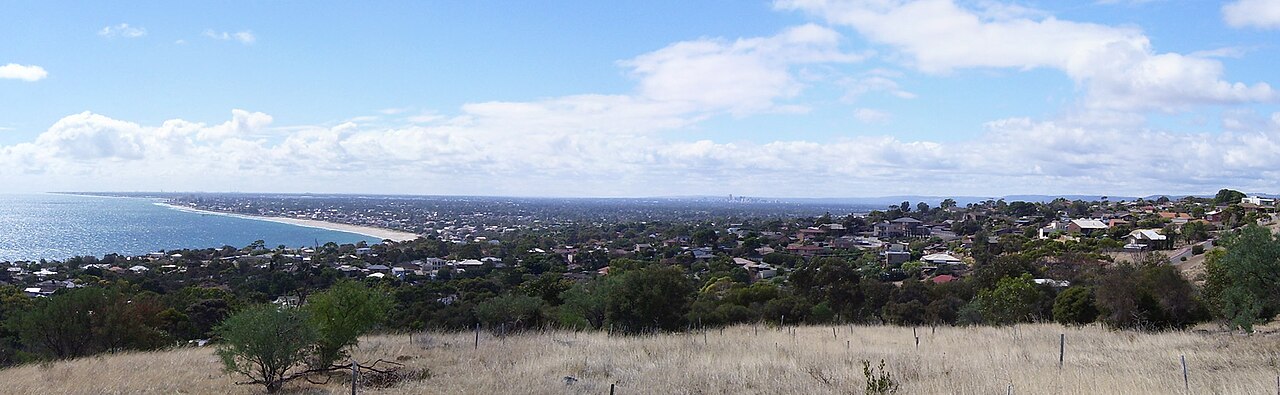
Hallett Cove Conservation Park is a protected coastal reserve in the Adelaide metropolitan area, South Australia. The park preserves significant geological formations and Aboriginal cultural heritage along the shoreline of Gulf St Vincent. It is managed by the Department for Environment and Water through the national parks system. The site is recognised for its scientific value, particularly the exposed glacial pavements that provide evidence of Permian glaciation. Open daily. Free entry. Free entry. Closed on days of Catastrophic Fire Danger and may also close on days of Extreme Fire Danger.
Checked 2026-08-31 · Source
The park contains notable geological features including glacial striations and pavements formed approximately 280 million years ago. These formations demonstrate that South Australia was once part of Gondwana near the South Pole. The Sugarloaf is a distinctive conical hill formed from sediments deposited in a glacial lake. Walking trails traverse the park, connecting various geological points of interest. The coastal location provides views across Gulf St Vincent. Vegetation consists of remnant coastal flora adapted to the limestone soils and maritime exposure. Closed on days of Catastrophic Fire Danger and may also close on days of Extreme Fire Danger.
Checked 2026-08-31 · Source
Visitor duration depends on interest level and walking pace. A basic circuit of the main geological features may be completed in approximately one to two hours. Those wishing to examine the glacial pavements in detail, read all interpretive material, and photograph extensively should allow longer. The walking trails vary in length and gradient. Visitors with limited mobility should assess trail conditions carefully before committing to longer routes. Combining the park visit with adjacent coastal walks would extend the overall experience substantially. Free entry. The park is outside the park-pass system and has no other entry fees or permits.
Checked 2026-08-31 · Source
The park is open to visitors throughout the year, with seasonal variations in weather conditions affecting comfort. Summer months bring higher temperatures and stronger ultraviolet exposure, requiring adequate sun protection and hydration. Winter visits may encounter cooler temperatures and stronger winds from the gulf. Coastal weather can change rapidly regardless of season. Open daily. From Adelaide, take an Adelaide Metro Seaford-line train to Hallett Cove Beach Railway Station; National Parks and Wildlife Service SA describes the main park entrance as a 15-minute walk from the station, passing the Boatshed Café. Drivers can use parking at the northern, eastern or southern.
Checked 2026-08-31 · Source
Entry to Hallett Cove Conservation Park may require payment of a vehicle or visitor fee as part of the South Australian national parks entry system. Annual passes and concession rates may be available for eligible visitors. Payment methods and exact fee structures should be verified through the official Parks SA website or contact centre prior to arrival. Free entry. The park is outside the park-pass system and has no other entry fees or permits. Two accessible parking spaces are provided in the council-owned car park at the park's southern end.
Checked 2026-08-31 · Source
The park is located in the southern Adelaide suburb of Hallett Cove, accessible by private vehicle via local road networks. Public transport options include train services to Hallett Cove station on the Seaford line, followed by walking distance to the park entrance. From Adelaide, take an Adelaide Metro Seaford-line train to Hallett Cove Beach Railway Station; National Parks and Wildlife Service SA describes the main park entrance as a 15-minute walk from the station, passing the Boatshed Café. Drivers can use parking at the northern, eastern or southern entrances; the two accessible spaces are at the southern end.
Checked 2026-08-31 · Source
The coastal environment presents several hazards requiring visitor awareness. Cliff edges and unstable formations exist along the shoreline; maintaining safe distances from edges is essential. The exposed terrain offers minimal natural shade, increasing sun exposure and dehydration risks. Walking surfaces include uneven rock, loose gravel, and steep sections that may become slippery when wet. Mobile phone coverage may be intermittent. Two accessible parking spaces are provided in the council-owned car park at the park's southern end. A bitumen path runs from the café toward Black Cliff Lookout, but its gradient reaches 12% and assistance is required on the steep section.
Checked 2026-08-31 · Source
The park offers substantial photographic interest for visitors with appropriate equipment. The Sugarloaf formation provides a distinctive subject against sky and sea backgrounds. Glacial pavement textures reward close examination and macro photography. Coastal panoramas across Gulf St Vincent are achievable from elevated positions. Golden hour lighting may enhance the warm tones of the oxidised rock surfaces. The exposed nature of the site means tripod stability can be affected by wind. The trail beyond Black Cliff Lookout is not accessible. The beach has no wheelchair access. The Grade 3 Glacier Hike is a moderate 3 km return walk taking about two hours.
Checked 2026-08-31 · Source
The Grade 3 Glacier Hike is a moderate 3 km return walk taking about two hours.
Its northern cliff-top glacial pavements preserve evidence of an Australian ice age about 280 million years ago and are recognised as Australia's best record of Permian glaciation.
Pet dogs are prohibited. Assistance dogs are welcome but must be restrained on a lead and kept under effective control.
No. Wood, solid-fuel, gas and liquid-fuel fires are prohibited throughout the year.
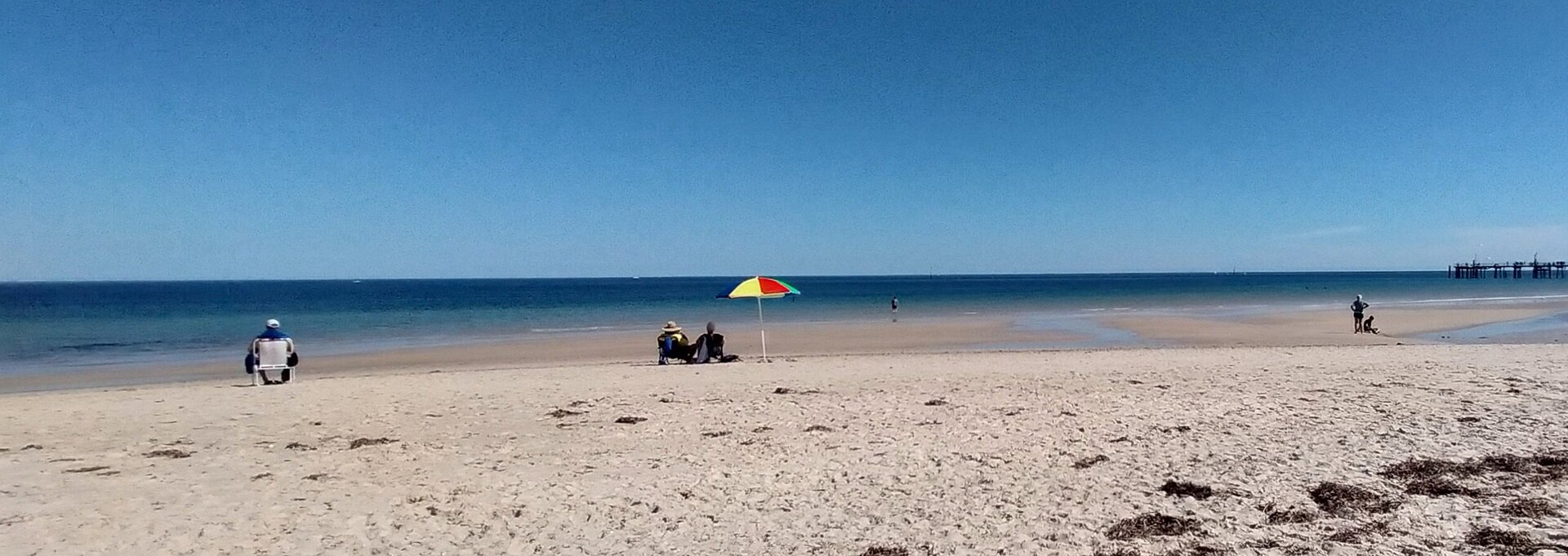
Swimming and snorkelling are permitted along the beach in the park's south-western corner, but strong currents and rips can make swimming dangerous.
Council-managed public toilets are in the Boatshed Café building at the Heron Way entrance; an accessible left-hand-transfer toilet is available there.
Loading the interactive map…
The interactive map could not be loaded.

Last updated:
Source: OpenStreetMap contributors, Wikidata ·