

2 min walk
Her Majesty's Theatre
- Must see
- Art and culture venue
Language · 11 published
Market · Adelaide
Adelaide Central Markets
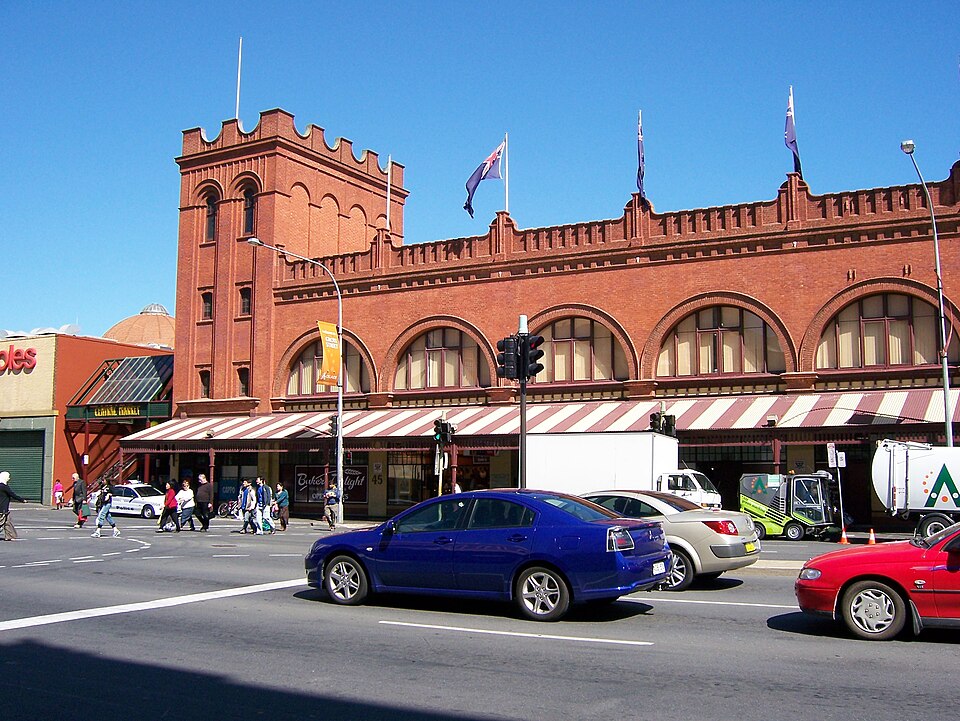
Adelaide Central Market is a covered public market in Adelaide, South Australia. Established in 1869, it stands as one of the oldest continuously operating markets in Australia. The market occupies a significant site in the city centre, near Gouger Street and Grote Street. It functions as a trading hub where vendors sell fresh produce, specialty foods, and various goods. The market holds cultural and historical significance for Adelaide, representing the city's commercial heritage and continuing role as a gathering place for residents and visitors seeking food and provisions.
Checked 2026-08-26
The market contains numerous stalls and shops operated by independent vendors. These include fruit and vegetable sellers, butchers, fishmongers, bakeries, delicatessens, and specialty food retailers. Cafes and food vendors serve prepared meals and beverages. The range of products reflects multicultural influences, with European, Asian, and Middle Eastern food traditions represented among the offerings. The market layout consists of aisles between stalls under a covered structure. Specific vendors and their exact products change over time as tenancies turn over, so visitors should expect variation in what is available on any given visit.
Checked 2026-08-26
The duration of a visit to Adelaide Central Market depends on individual purposes. Visitors browsing and purchasing fresh produce may spend thirty minutes to an hour. Those intending to eat at multiple food vendors, compare offerings across stalls, or engage with vendors about products could spend ninety minutes or longer. The market's compact central location means it can be combined with nearby attractions and dining on Gouger Street. Visitors should allocate sufficient time to navigate the aisles, particularly during busier periods when movement between stalls slows due to crowding.
Checked 2026-08-26
Operator-confirmed hours are Not recorded pending review. The market traditionally operates on multiple days per week, with variations between weekdays and weekends. Visitors should verify current opening times directly with official sources before planning their visit. Peak periods typically coincide with lunch hours and pre-weekend shopping times, when local residents purchase provisions. Quieter periods may offer easier navigation and more opportunity for interaction with vendors. Seasonal factors affect produce availability, though the covered nature of the market provides shelter regardless of weather conditions. Special events or public holidays may alter regular operations.
Checked 2026-08-26
Operator-confirmed prices are Not recorded pending review. Entry to Adelaide Central Market is generally free, as is typical for public markets in Australia. Individual vendors set prices for their goods and services. Food purchases from cafes and prepared food stalls incur costs comparable to central city dining. Fresh produce prices vary by vendor, season, and product quality. Visitors should carry payment methods accepted by individual traders, as not all vendors may accept card payments. Budget-conscious visitors can browse without purchasing, though the market is designed as a commercial venue where transactions support vendor operations.
Checked 2026-08-26
Adelaide Central Market occupies a central city location accessible by multiple transport modes. The Adelaide tram network serves the city centre, with stops within walking distance. Multiple bus routes service the surrounding streets. The Adelaide railway station lies to the north, requiring a walk through the central business district. For drivers, parking options exist in the vicinity, though availability and cost vary. The market's position near the intersection of major streets makes it navigable on foot from central accommodation. Cyclists can access the area via city bike routes, with bicycle parking available nearby.
Checked 2026-08-26
The market environment presents considerations typical of busy retail spaces. Floors may become wet or slippery near fresh produce and seafood areas. Crowding during peak periods requires awareness of personal belongings and spatial navigation. Food handling standards vary across individual vendors; visitors with specific dietary requirements or allergies should communicate directly with traders. The covered but not fully climate-controlled environment means temperature conditions follow external weather patterns. Some aisles have limited mobility access due to narrow passages between stalls. Visitors should observe posted regulations regarding photography, sampling policies, and conduct within the trading floor.
Checked 2026-08-26
Photography within Adelaide Central Market requires sensitivity to the commercial environment and individual vendor preferences. The covered interior presents variable lighting conditions, with artificial illumination and natural light from perimeter areas creating mixed exposures. The visual density of produce displays, signage, and human activity offers documentary and atmospheric photographic possibilities. Visitors should request permission before photographing individual vendors or their stalls closely, as traders may have concerns about commercial imagery. Tripods and elaborate equipment may obstruct narrow aisles and attract attention. Flash photography may disturb other visitors and affect food presentation lighting. Respect for the working market environment should guide photographic behaviour.
Checked 2026-08-26
Operator-confirmed hours are Not recorded pending review. Visitors should verify current opening days and times through official sources before visiting.
Operator-confirmed prices are Not recorded pending review. Public markets in Australia typically do not charge entry fees, though individual purchases from vendors incur costs.
The market contains cafes and food vendors serving prepared meals and beverages alongside stalls selling fresh produce and ingredients for home preparation.
Some aisles have narrow passages between stalls that may present challenges. The covered structure provides weather protection. Visitors with specific accessibility requirements should assess conditions on arrival.
Established in 1869, it is among Australia's oldest continuously operating markets. Its central city location and multicultural vendor mix distinguish it, though direct comparisons depend on visitor priorities.
Parking options exist in the vicinity, though availability and cost vary. The central location means public transport and walking are practical alternatives to driving.
Loading the interactive map…
The interactive map could not be loaded.
Last updated:
Source: OpenStreetMap contributors, Wikidata ·