.jpg)

4 min walk
National Museum of Fine Arts
- Must see
- Museum
Language · 11 published
Art and culture venue · Buenos Aires
Floralis Genérica
| Monday | 08:00 – 23:59 |
|---|---|
| Tuesday | 08:00 – 23:59 |
| Wednesday | 08:00 – 23:59 |
| Thursday | 08:00 – 23:59 |
| Friday | 08:00 – 23:59 |
| Saturday | 08:00 – 23:59 |
| Sunday | 08:00 – 23:59 |
Checked 2026-08-31 · Source
Read from the OpenStreetMap access tags; anything not listed has no tag recorded.
Set the group type to family in the planner and the day window contracts to about three quarters of a solo day.
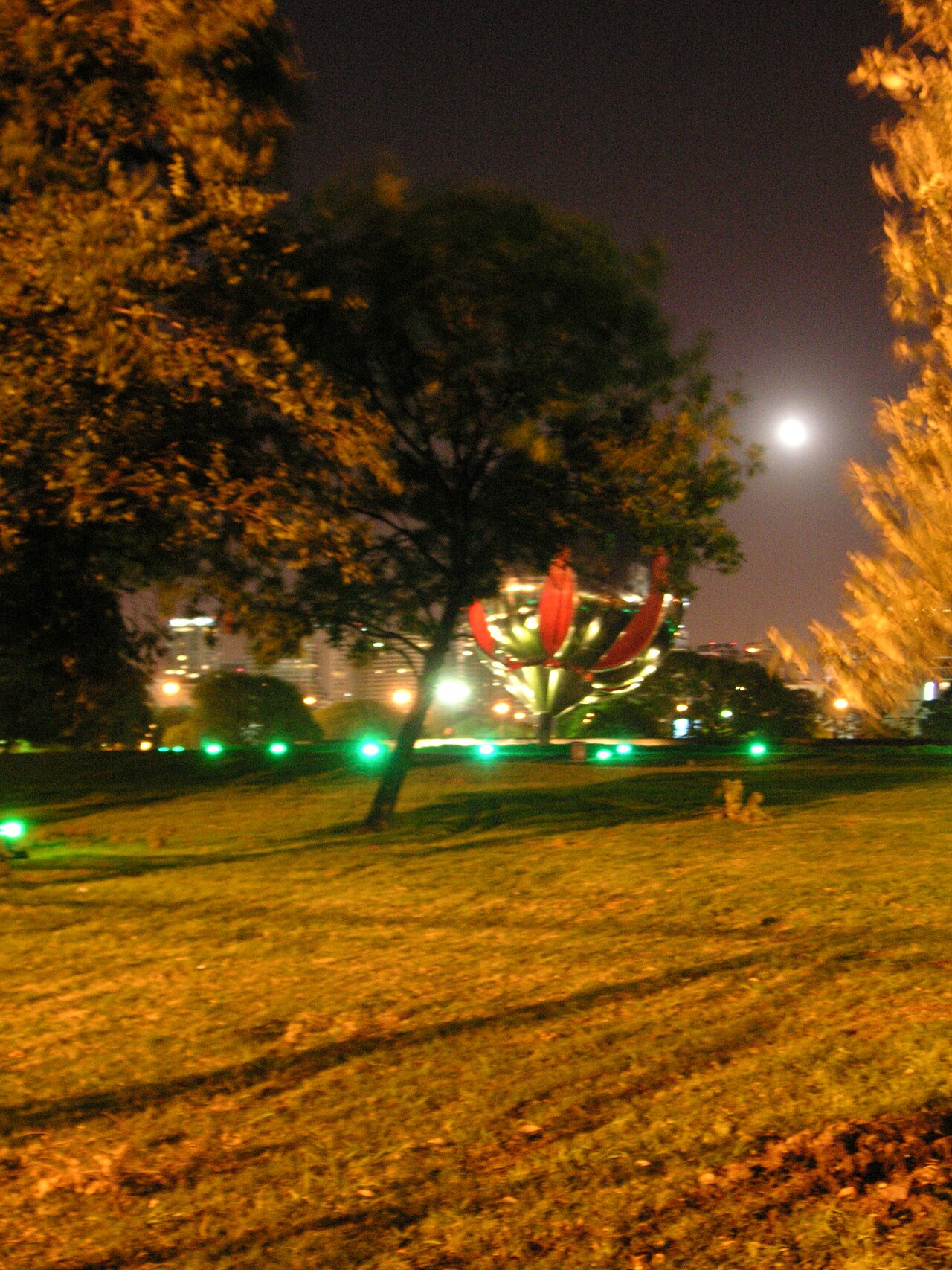
Floralis Genérica is a monumental kinetic sculpture created by Argentine architect Eduardo Catalano. The stainless steel and aluminum flower stands in the Plaza de las Naciones Unidas in the Recoleta neighbourhood of Buenos Aires. The structure functions as a working flower that opens its petals each morning and closes them at dusk, responding to solar conditions. It has become a widely recognised emblem of the modern city, representing the dynamism of Buenos Aires through its engineered natural form and public placement in a prominent park setting.
Checked 2026-08-31 · Source
The sculpture itself is the central feature, with no enclosed interior space for visitors to enter. The surrounding Plaza de las Naciones Unidas provides landscaped grounds for viewing and circulation. The area around the flower includes paved walkways, green spaces, and seating areas where visitors can observe the kinetic mechanism in operation. The plaza setting integrates the artwork within a broader urban park environment, with the flower positioned as a focal point against the backdrop of the city skyline and nearby cultural institutions.
Checked 2026-08-31 · Source
A visit to Floralis Genérica typically requires between twenty minutes and one hour, depending on individual interest in observing the kinetic mechanism and photographing the structure. Many visitors combine this stop with broader exploration of the Recoleta neighbourhood, including the nearby cemetery and cultural centres. Those wishing to witness both the opening and closing of the petals would need to visit at two separate times of day, effectively extending the experience across morning and evening hours. Casual observation demands minimal time commitment.
Checked 2026-08-31 · Source
Daily: petals open at 08:00 and close at 00:00. On Argentine patriotic holidays, they remain open all day. No weekly closure day. High winds trigger protective petal closure. The outdoor sculpture was fully restored and reopened in December 2025. The sculpture operates as a kinetic structure responding to daylight conditions, with petals opening in morning hours and closing at dusk. Specific seasonal variations in timing occur naturally with changing daylight patterns. Visitors should consult current official sources before planning. The structure is visible from public spaces at all times, though the kinetic performance requires daylight observation. Weather conditions may affect the mechanism's operation on any given day.
Checked 2026-08-31 · Source
Free outdoor attraction. Floralis Genérica is situated in a public plaza and is generally accessible without admission charge for viewing from surrounding areas. Visitors should verify current conditions through official tourism channels before visiting. It stands in Plaza de las Naciones Unidas at Avenida Presidente Figueroa Alcorta 2301 in Recoleta.
Checked 2026-08-31 · Source
Take Subte Line H to Facultad de Derecho–Julieta Lanteri, at Avenida Figueroa Alcorta and Avenida Pueyrredón, then continue to Plaza de las Naciones Unidas at Avenida Presidente Figueroa Alcorta 2301. The station has three elevators, two escalators, tactile guidance paving and Braille signs. The sculpture is located in Plaza de las Naciones Unidas in the Recoleta neighbourhood, accessible via multiple public transport options serving the area. The plaza sits near major avenues including Avenida del Libertador and Avenida Figueroa Alcorta. Visitors can reach Recoleta by bus, taxi, or rideshare services throughout Buenos Aires. The area is walkable from other Recoleta attractions including the cemetery and Museo Nacional de Bellas Artes. Specific route planning should use current transport applications or official tourism guidance for optimal connections from individual starting points.
Checked 2026-08-31 · Source
The Buenos Aires City accessibility profile classifies motor access as accessible. The same public-body profile classifies access for low-vision, deaf and hard-of-hearing visitors as accessible. The kinetic mechanism may not operate during maintenance periods or adverse weather conditions, meaning the flower could remain in fixed position. The surrounding plaza has open water features requiring standard caution, particularly for visitors with young children. As a popular landmark, the area experiences varying crowd levels throughout the day and week. Visitors should exercise normal urban awareness regarding personal belongings. The metal structure becomes hot under direct sun, so physical contact should be avoided during warm periods. Night visibility depends on functional lighting systems.
Checked 2026-08-31 · Source
The sculpture offers strong photographic opportunities from multiple angles within the plaza, with the flower's scale creating dramatic compositional possibilities against sky and city backdrop. Morning light illuminates the opening mechanism, while evening captures the closing sequence. Reflections in the surrounding water features can enhance images. The metallic surfaces respond distinctly to varying light conditions throughout the day. Tripod use in public spaces may attract security attention and should be conducted with awareness of surrounding pedestrian traffic. Night photography depends on operational illumination of the structure.
Checked 2026-08-31 · Source
It stands in Plaza de las Naciones Unidas at Avenida Presidente Figueroa Alcorta 2301 in Recoleta.
Argentine architect Eduardo Catalano created the sculpture and donated it to the City of Buenos Aires.
It was inaugurated on 13 April 2002 as a tribute to all flowers.
The aluminium and stainless-steel sculpture is 20 metres high and weighs 18 tonnes.
Its six petals are operated by a hydraulic system and photoelectric sensors; the published cycle opens them at 08:00 and closes them at 00:00, with protective closure during high winds.
Yes. Two petals damaged by the December 2023 storm were restored and reinstalled, and the City celebrated completion of the restoration in December 2025.
Loading the interactive map…
The interactive map could not be loaded.


Last updated:
Source: OpenStreetMap contributors, Wikidata ·