6 min walk
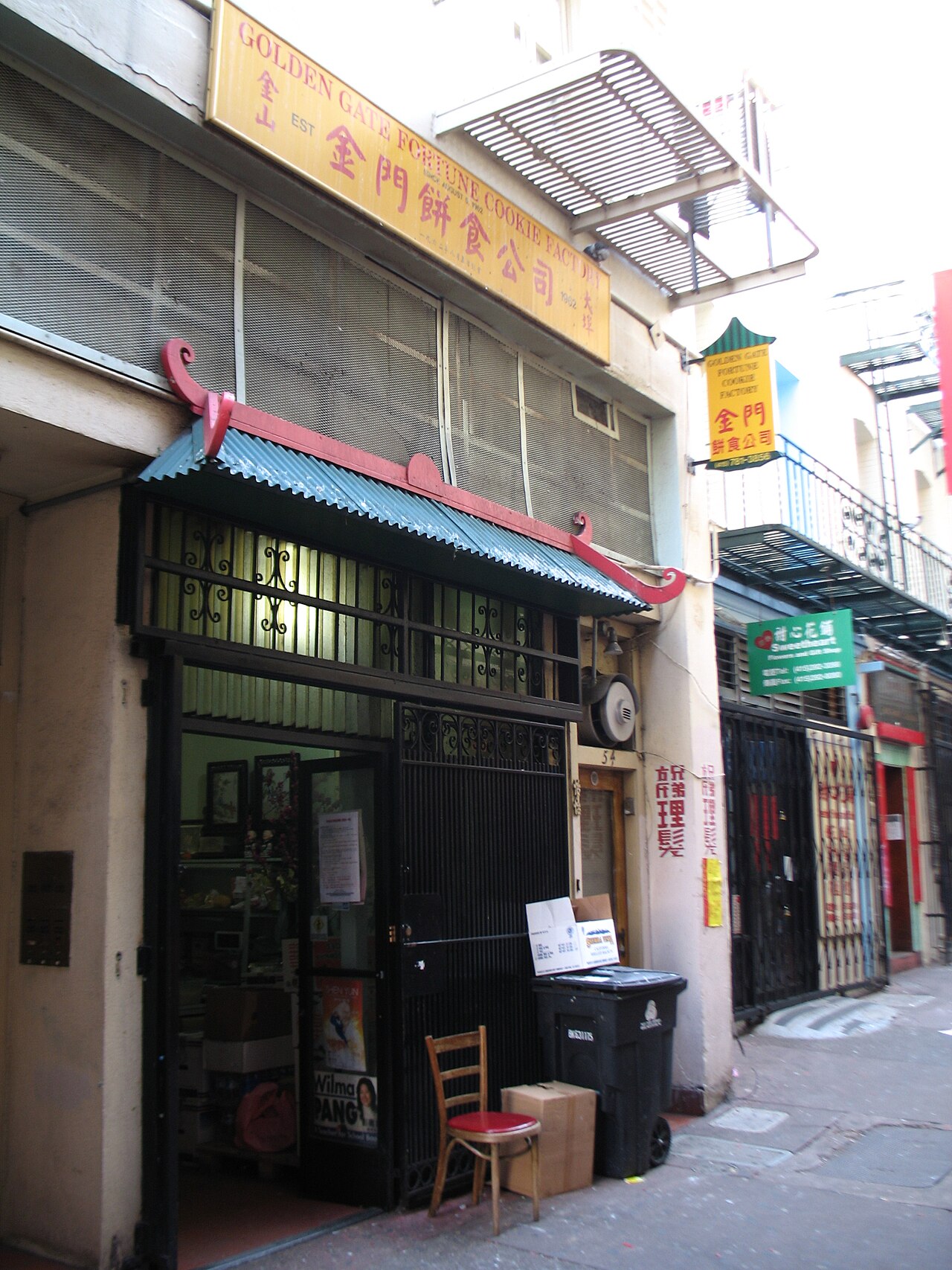
Golden Gate Fortune Cookie Company
- Notable
- Historic monument
Language · 11 published
Activity · San Francisco

Read from the OpenStreetMap access tags; anything not listed has no tag recorded.
Set the group type to family in the planner and the day window contracts to about three quarters of a solo day.
The San Francisco cable car system is a working municipal transit network and a National Historic Landmark, not a staged sightseeing ride. Street cables pull the cars while a grip operator controls how each car engages with the moving cable beneath the roadway. SFMTA maintains the vehicles and infrastructure as part of Muni. Three lines remain in service: Powell-Hyde, Powell-Mason and California Street. Riding one connects the city's steep topography with machinery first developed in San Francisco during the nineteenth century, so the journey is both transport and a direct encounter with an operating heritage system.
Checked 2026-08-28 · Source
The experience includes the car, its open exterior running boards, enclosed seating, manual controls, street turntables and the cable infrastructure hidden below the tracks. Powell-Hyde and Powell-Mason begin at Powell and Market before separating toward the Fisherman's Wharf area. The California line runs from California and Market toward Van Ness Avenue. Brown-and-white cable car stop signs mark intermediate boarding points, while crews physically turn Powell cars at terminal turntables. The changing street gradient, bell signals and grip operation are central to the ride. The separately operated Cable Car Museum explains the machinery in more depth but is not part of the fare or the onboard journey.
Checked 2026-08-28 · Source
SFMTA does not publish one systemwide cable car journey duration because the three lines follow different routes and current service conditions affect each trip. This planner reserves about 90 minutes for one ride, waiting and a short walk at the destination; that is an editorial planning allowance, not a scheduled running time or a promise from the operator. Check the detailed timetable and real-time predictions for the chosen line before leaving. Use the ride to advance the day's route rather than immediately returning on the same line, and avoid placing a fixed timed entry directly after it when a delay would cause a missed booking.
Checked 2026-09-07 · Source
SFMTA operates three cable car lines: Powell-Hyde, Powell-Mason and California Street. The agency publishes separate route pages and detailed timetables rather than one interchangeable systemwide schedule. Check the chosen line, real-time predictions and any temporary stop relocation before travel. A published service period does not guarantee an immediate departure or available space on a particular car, especially at a terminal. Select the line for its route and destination, then allow waiting time separately. Do not copy the timetable from one cable car line onto the other two or treat terminal fare-kiosk hours as service hours.
Checked 2026-09-07 · Source
A cable car single ride costs USD 9 and is valid for one one-way trip with no transfer between cable car lines. SFMTA lists a USD 4 fare for Senior, Disabled and Medicare riders before 07:00 or after 21:00, free travel for children aged four and under, and free travel for eligible San Francisco youth with a Free Muni for Youth Clipper card. At Powell and Market, Bay and Taylor, and Hyde and Beach, the fare must be purchased before boarding from 08:00 to 17:00 daily. At other non-terminal stops, or outside terminal kiosk hours, riders may pay the operator in cash with exact change. MuniMobile and Clipper are also listed payment options.
Checked 2026-09-07 · Source
Choose the terminal or intermediate stop that matches the day's geography. Powell-Hyde and Powell-Mason start at Powell and Market and travel toward Fisherman's Wharf; the California line starts at California and Market and continues toward Van Ness Avenue. Terminal boarding points include Powell and Market, Hyde and Beach, and Bay and Taylor. Intermediate stops use brown-and-white cable car signs. SFMTA's maps and MuniMobile provide the current route and service context. The system should be treated as part of a one-way city route: Powell lines can link downtown with the northern waterfront, while California Street crosses Nob Hill without requiring a detour to Fisherman's Wharf.
Checked 2026-08-28 · Source
Hold on firmly and never lean outward from the exterior poles. SFMTA instructs riders to wait for a complete stop before exiting, check nearby traffic and remember that the green X signal gives cable cars permission to move, not pedestrians permission to cross. Full-size and folding bicycles are not permitted. Cable cars do not have accessible boarding, so travellers who cannot use the steps or safely manage the moving vehicle need another Muni route. Service animals should ride inside where possible; on exterior sections they must remain on the owner's lap. Crowded platforms, steep streets and sudden weather changes also require controlled bags, secure phones and attention to crew instructions.
Checked 2026-08-28 · Source
Personal handheld photography and video are allowed on in-service Muni vehicles and publicly accessible SFMTA property when they do not interfere with transit operations. Follow operator instructions immediately, keep boarding areas, exits, doors and aisles clear, and remain aware of moving vehicles. SFMTA prohibits large cameras and ancillary equipment such as lighting, tripods and cables, and prohibits entering or recording non-public transit areas. Commercial photography is coordinated through the San Francisco Film Commission rather than covered by the personal-use guideline. Permission for personal photography never permits a passenger to obstruct service, ignore staff direction or enter an area that is not open to the public.
Checked 2026-09-07 · Source
SFMTA operates three lines: Powell-Hyde, Powell-Mason and California Street. The two Powell lines connect downtown with the Fisherman's Wharf area, while California Street runs toward Van Ness Avenue.
Board at a terminal turntable or at an intermediate stop marked by a brown-and-white cable car sign. Major terminals include Powell and Market, Hyde and Beach, and Bay and Taylor.
At Powell and Market, Bay and Taylor, and Hyde and Beach, SFMTA requires advance purchase from 08:00 to 17:00 daily. At other non-terminal stops, or outside those kiosk hours, exact-change cash may be paid to the operator.
No. SFMTA states that cable cars are not equipped with accessible boarding. Use the agency's trip-planning information to select an accessible Muni alternative.
No. SFMTA does not permit full-size bicycles or folding bicycles aboard cable cars and directs cyclists to other Muni routes.
SFMTA does not publish one duration for all three lines. This planner reserves about 90 minutes for one ride, waiting and a short walk, but that is an editorial allowance rather than a scheduled journey time.
A one-way cable car ride with no transfer costs USD 9. SFMTA also lists a USD 4 time-restricted Senior, Disabled and Medicare fare and specific free-youth provisions on its current fare page.
Loading the interactive map…
The interactive map could not be loaded.
Last updated:
Source: OpenStreetMap contributors ·
,_Cable_Car_--_2012_--_4178.jpg)