

2 min walk
Shakespeare Garden
- High
- Nature site
Language · 1 published
Museum · San Francisco
California Academy of Sciences
| Monday | 09:30 – 17:00 |
|---|---|
| Tuesday | 09:30 – 17:00 |
| Wednesday | 09:30 – 17:00 |
| Thursday | 09:30 – 17:00 |
| Friday | 09:30 – 17:00 |
| Saturday | 09:30 – 17:00 |
| Sunday | 11:00 – 17:00 |
Parsed from OpenStreetMap opening hours on 2026-08-26.
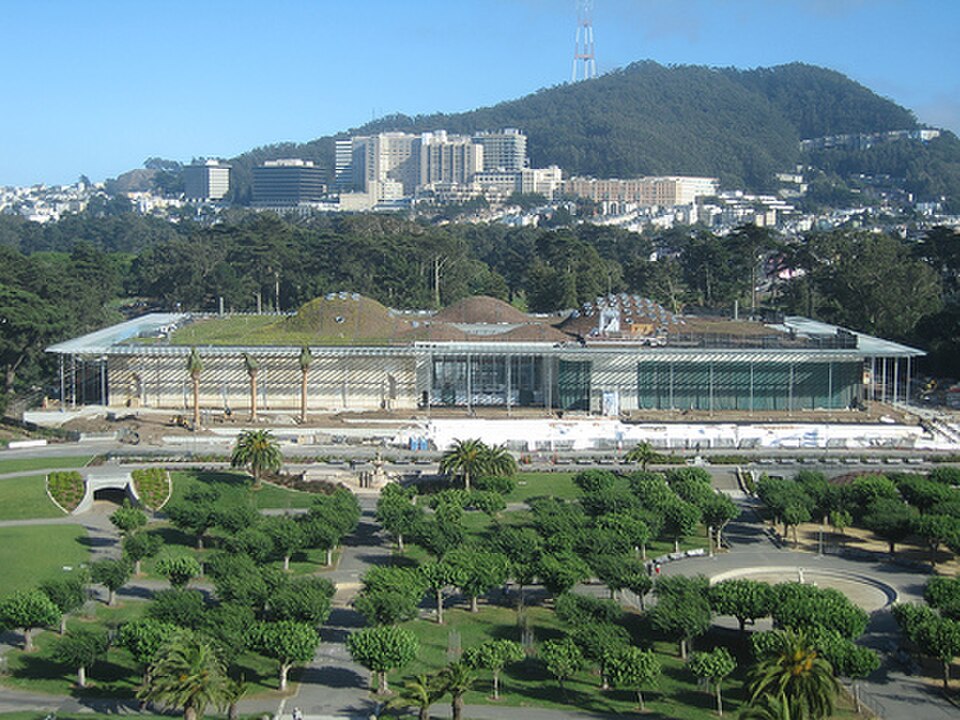
The California Academy of Sciences is a science institution in Golden Gate Park that brings an aquarium, planetarium, rainforest environment and natural-history museum into one building. Its living roof and transparent interior express the museum's emphasis on interconnected systems rather than isolated collections. The Academy is especially effective for mixed-age groups because live animals, specimens, immersive projections and research interpretation sit close together. It is also large enough that visitors need priorities; attempting every presentation, feeding and gallery in one uninterrupted circuit produces more queuing than learning.
Checked 2026-08-26 · Source
Steinhart Aquarium, Morrison Planetarium, Osher Rainforest and the Kimball Natural History Museum form the principal visitor areas. The aquarium ranges from reef habitats to local marine life; the rainforest rises through a warm enclosed sphere; and planetarium programmes use timed seating. The living roof is both an architectural viewpoint and an environmental exhibit. Daily programmes and gallery access vary, so consult the operator's schedule and choose timed elements first. Families should alternate dark or enclosed presentations with open halls to prevent younger visitors from tiring too quickly.
Checked 2026-08-26 · Source
Allow three to four hours for the major halls, one planetarium programme and a measured lunch or rest. Two hours can cover selected aquarium and rainforest highlights but leaves little margin for timed entry or queues. Visitors with children often need longer because live-animal exhibits reward repetition and the building contains many transitions. Check programme times immediately after entry, then arrange flexible galleries around them. Pairing the Academy with the de Young on the same day is possible, but only when one museum is intentionally treated as a short highlights visit.
Checked 2026-08-26
Arrive near opening on a weekday for the easiest access to the rainforest and popular programmes. School groups can make weekday mornings lively, while weekends create broader family demand. Exact public hours are Not recorded here; verify the chosen date on the Academy's official visit page because evening events, holidays and maintenance can change access. Planetarium and special programme capacity matters more than season. Outside, Golden Gate Park weather may be cool and foggy, but the rainforest interior is warm and humid, so removable layers are useful.
Checked 2026-08-26 · Source
Current admission prices are Not recorded here. The Academy uses dated ticketing and may distinguish general admission, programmes, events, members and eligible discounts. Read the official ticket page for the selected day rather than relying on a cached search result. Confirm whether a planetarium presentation requires a reservation after entry and whether any temporary experience carries a separate charge. Third-party passes should be compared against direct admission only after their reservation rules are understood. Keep enough schedule flexibility to avoid losing a timed programme to late arrival.
Checked 2026-08-26 · Source
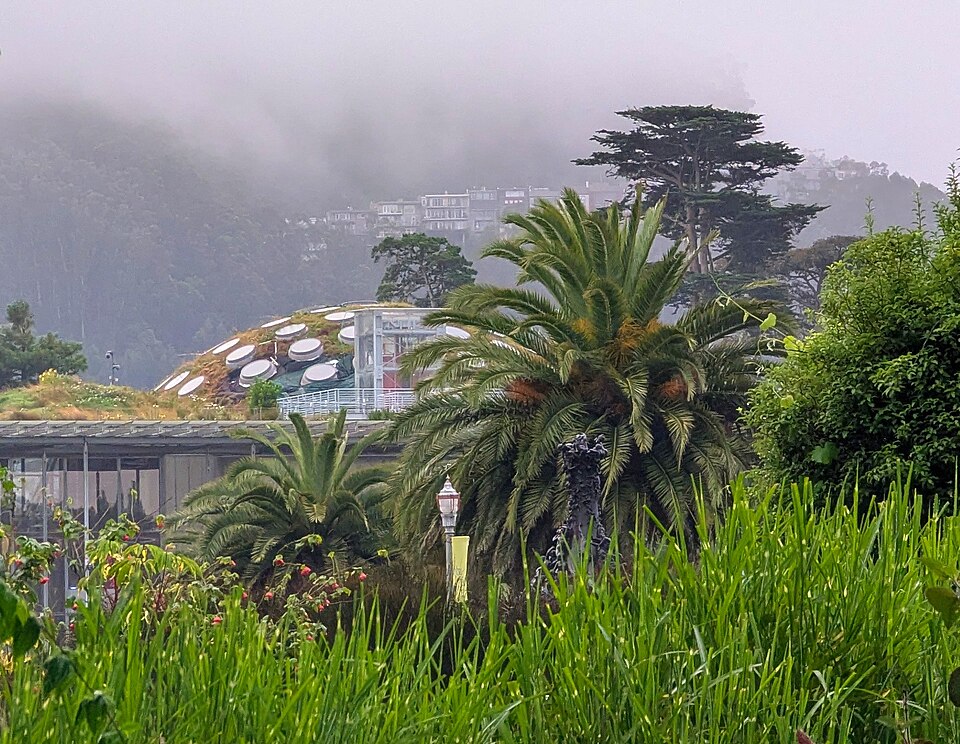
The Academy faces the Music Concourse in eastern Golden Gate Park, opposite the de Young Museum. Muni routes reach park entrances, followed by a walk through the concourse; the exact stop depends on the direction of travel. Cycling is practical on park routes, while driving introduces limited and paid parking near popular institutions. Do not navigate merely to Golden Gate Park, whose boundary extends several kilometres west. Use the Academy's official address and accessibility information, then allow extra time from the transit stop because the museum sits inside the park rather than on a main commercial street.
Checked 2026-08-26 · Source
The rainforest has controlled entry and a warm, humid environment; visitors sensitive to heat should plan a shorter circuit. Planetarium presentations can involve darkness, motion and loud sound, while aquarium spaces become crowded around major tanks. Check age, accessibility and bag rules on the official site before arrival. Do not tap glass, use flash around animals or cross barriers for a clearer view. The most common planning error is leaving all timed experiences until late afternoon, when capacity may be gone. Reserve or schedule them first, then explore flexible galleries.
Checked 2026-08-26 · Source
Aquarium glass requires patience: hold the lens close without touching, disable flash and wait for reflections to clear rather than pressing against other visitors. The rainforest's humidity can fog a cold lens, so give equipment time to acclimatise. The living roof works best with a wide view that includes the surrounding park, while specimen galleries benefit from careful label photographs for later identification. Planetarium photography is generally inappropriate and may be prohibited. Follow current operator signs because animal welfare, copyrighted presentations and temporary exhibitions can each create different restrictions.
Checked 2026-08-26 · Source
Allow three to four hours for the aquarium, rainforest, natural-history halls and one planetarium programme. Two hours works only for selected highlights.
The principal areas are Steinhart Aquarium, Morrison Planetarium, Osher Rainforest, Kimball Natural History Museum and the living roof, subject to current access and programming.
Exact hours and admission prices are Not recorded here. Check the official visit and ticket pages for the chosen date, eligibility and timed-programme requirements.
Yes. Programme schedules and capacity can shape the visit, so check the day's instructions soon after arrival and organise flexible galleries around any timed presentation.
Yes. Live animals, hands-on interpretation and varied environments suit mixed ages, though adults should supervise around crowded tanks, dark presentations and moving exhibits.
They face each other across the Music Concourse, but both are substantial museums. Combine them only when one is deliberately limited to selected highlights.
Loading the interactive map…
The interactive map could not be loaded.
Last updated:
Source: OpenStreetMap contributors, Wikidata ·