
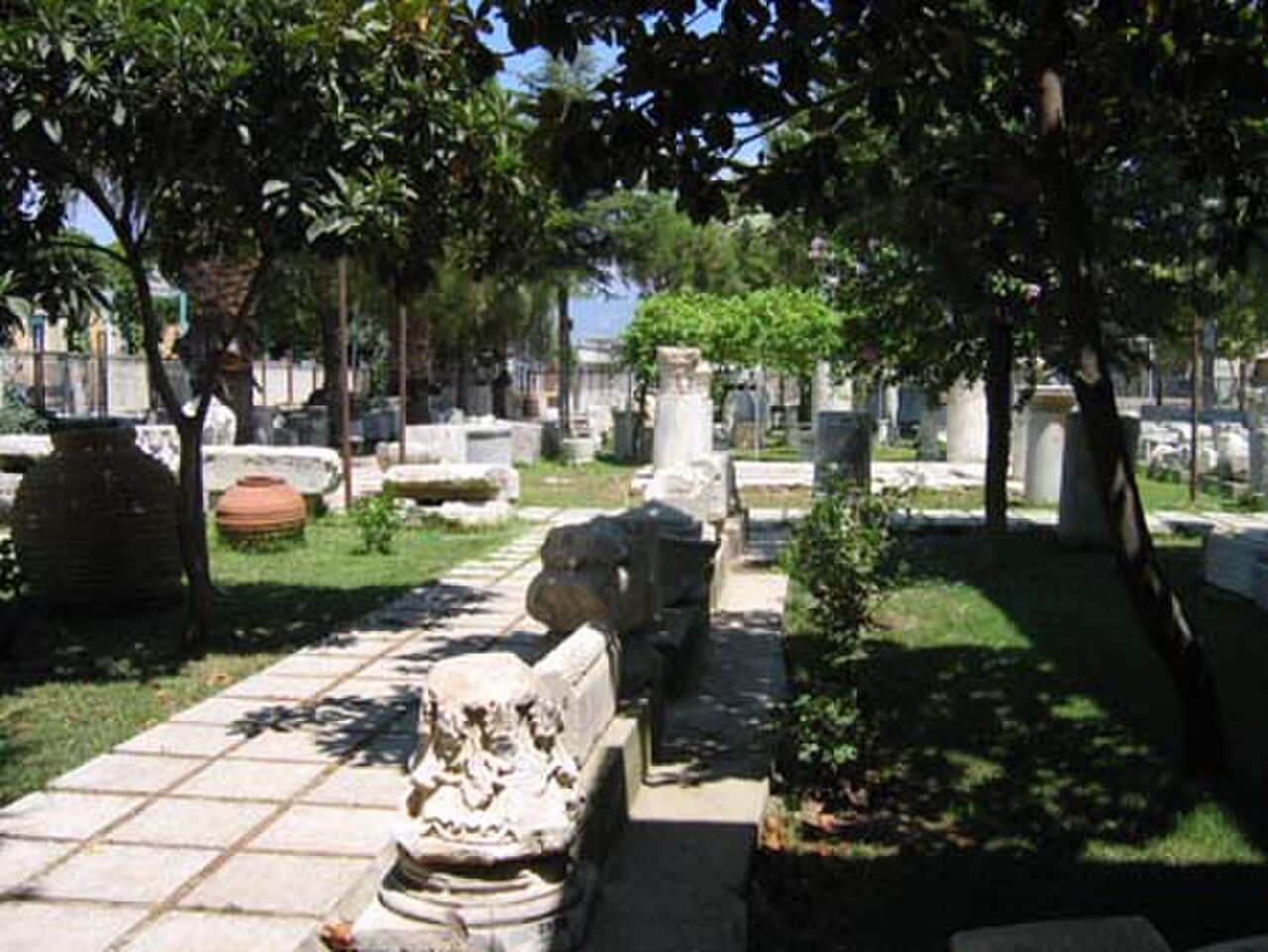
152 min walk · Milas
Milas Museum
- Must see
- Museum
Language · 11 published
Historic monument · Milas, Muğla
Labranda
| Monday | 08:30 – 17:30 |
|---|---|
| Tuesday | 08:30 – 17:30 |
| Wednesday | 08:30 – 17:30 |
| Thursday | 08:30 – 17:30 |
| Friday | 08:30 – 17:30 |
| Saturday | 08:30 – 17:30 |
| Sunday | 08:30 – 17:30 |
Checked 2026-09-02 · Source
Read from the OpenStreetMap access tags; anything not listed has no tag recorded.
Set the group type to family in the planner and the day window contracts to about three quarters of a solo day.
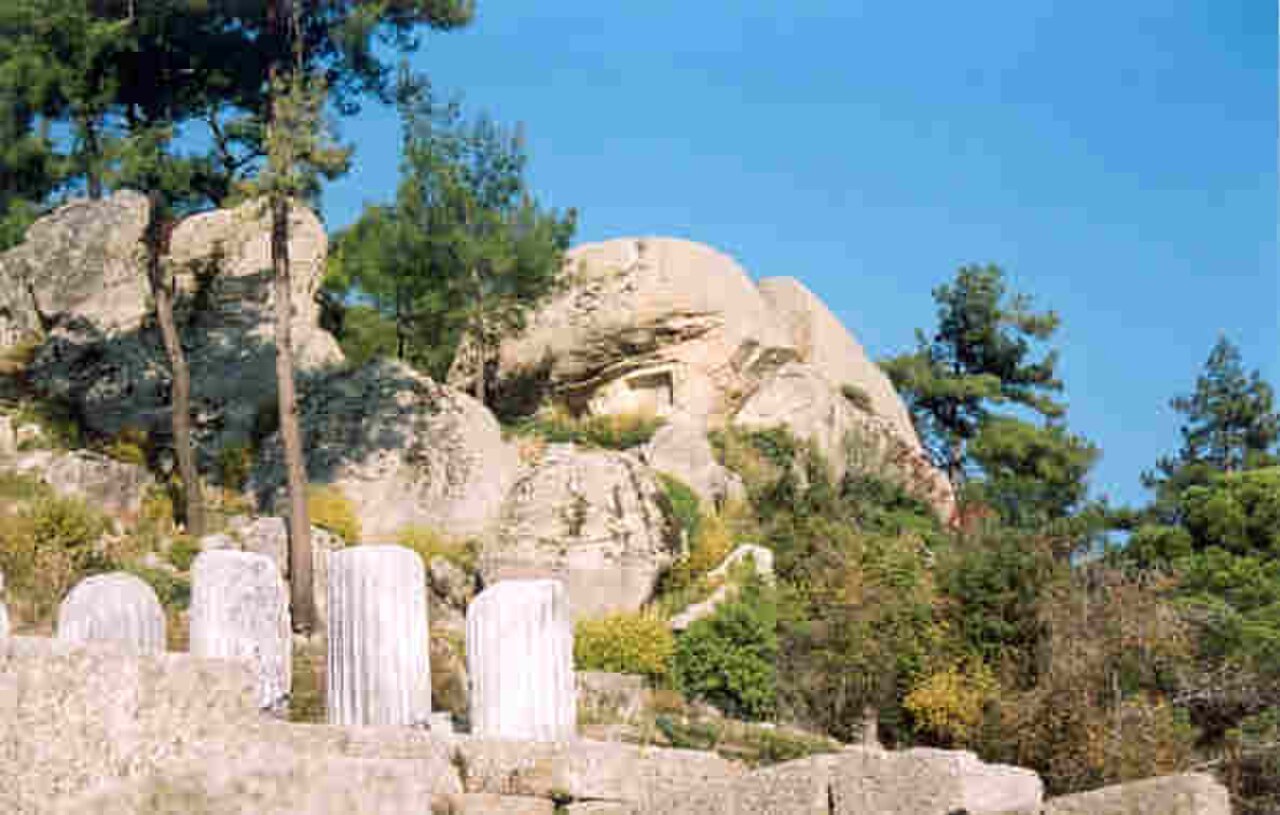
Labraunda is a mountain sanctuary near Kargıcak in Muğla Province, about 14 kilometres northeast of Milas. In antiquity it belonged to Mylasa and became one of Caria’s major sacred places. The sanctuary was dedicated to Zeus Labraundos, a form of Zeus associated with the double axe, or labrys. The ruins occupy a rugged highland landscape rather than a compact urban park, so a visit combines monumental architecture, long views and uneven ground. Classical and Hellenistic remains, later occupation and the elevated acropolis make Labraunda a ceremonial landscape as much as a collection of buildings.
Checked 2026-09-02 · Source
The central sanctuary contains two andrones, formal banquet halls associated with the cult and its elite patrons. Andron A is the best-preserved building; its south wall rises about 7.90 metres above the pronaos floor. The monumental staircase links the entrance with the andron terrace and shows how Labraunda functioned as a processional route. Surviving sections of the Sacred Way, the ancient paved connection from Mylasa, lie near the modern entrance. Higher ground leads to the fortified acropolis, with a 4th-century BCE wall about 300 metres long and 1.80 metres thick, reinforced by 11 towers. The stadium has starting blocks approximately in place, about 170 metres apart; its track probably held 14 runners.
Checked 2026-09-02 · Source
Allow around two hours for a focused first visit and closer to three hours if you want to study the architecture, cross the main terraces and climb towards the acropolis. Heat, footwear and the amount of exploration make a substantial difference. The monumental staircase and higher remains take more time than the 14-kilometre distance from Milas suggests. Leave time for photographs and pauses at Andron A, the Sacred Way and stadium viewpoints. Labraunda deserves more than a rushed roadside stop because the relationship between approach, terraces and elevated ruins is central to understanding the sanctuary. Early arrival makes the walking easier in hot weather.
Checked 2026-09-02 · Source
Labraunda is listed as open daily from 08:30 to 17:30, with the ticket office closing at 17:00. The official museum page lists no weekly closure day, allowing the site to fit any day of a Milas itinerary under the published schedule. Morning is the most comfortable period for walking the terraces, stairs and rougher mountain paths, particularly in warm weather. Arriving before midday leaves time for the higher remains without pressure from the ticket deadline. Shade and level surfaces are not continuous, and the landscape is exposed in places. Wear shoes suitable for uneven archaeological ground and treat 17:00 as the latest sensible arrival for admission.
Checked 2026-09-02 · Source
Admission is free according to the official museum listing, so an individual visit has no entrance charge to budget for. The ticket office still closes at 17:00, although the archaeological area is published as open until 17:30. That distinction matters when driving from Milas or arriving late. Keep the official museum page available for current visitor information, since practical arrangements may change. Free entry makes Labraunda an easy addition to a day exploring Milas and Carian remains, but the remote setting still requires transport, water and suitable walking equipment. Free admission does not mean the terrain is informal or fully accessible.
Checked 2026-09-02 · Source
The responsible museum lists Labraunda at Kargıcak Mahallesi, 48200 Kargıcak Köyü. By car from Milas, take the northeast turn described by the Labraunda project onto a narrow, winding mountain road for about 14 kilometres; the drive takes roughly 20 minutes in normal conditions. MUTTAŞ line 4-45, Milas–İkiztaş, serves the Milas–Kargıcak corridor and continues through Kargıcak towards İkiztaş. The published route does not solve the final approach, because the archaeological site lies up the mountain road. A car or arranged local transfer is the simplest direct option.
Checked 2026-09-02 · Source
Treat Labraunda as an outdoor archaeological site in mountain terrain. The official listing records parking and a WC, while the ruins include substantial historic stairways, uneven surfaces and changes of level. Step-free access is limited, and pushchairs are unsuitable for rougher sections. The stadium is not arranged for ordinary tourist access; its ends are relatively easy to view, but the full arena is not a normal walking route. Bring sturdy footwear, water and sun protection, and allow time for a careful descent. Respect barriers and unstable-looking masonry. Research identifies a toilet but does not establish drinking-water or baby-changing provision, so plan accordingly.
Checked 2026-09-02 · Source
Labraunda rewards photographs showing relationships between monuments. From the lower approach, frame the monumental staircase with the elevated terrace to convey the sanctuary’s processional design. Andron A is the strongest architectural subject: its preserved south wall, rising about 7.90 metres above the pronaos floor, provides scale and depth. Include the Sacred Way near the entrance to connect the modern arrival with the ancient route from Mylasa. Higher viewpoints can combine the acropolis, defensive towers and mountain landscape. Photograph the stadium from its accessible ends because the arena is not arranged for tourist circulation. Morning light helps reveal masonry, and climbing ruins for a better angle is inappropriate.
Checked 2026-09-02 · Source
Labraunda was a major sanctuary dedicated to Zeus Labraundos, the Carian form of Zeus associated with the double axe, or labrys.
Labraunda is about 14 kilometres northeast of modern Milas. The approach follows a narrow, winding mountain road and takes roughly 20 minutes by car in normal conditions.
The Sacred Way was the ancient paved route connecting Mylasa and Labraunda. Surviving sections can be seen near the modern entrance, helping explain the sanctuary’s processional approach.
Andron A is the best-preserved building at Labraunda. Its south wall still rises about 7.90 metres above the pronaos floor, making it one of the site’s most impressive surviving structures.
It is described as the only stadium in Anatolia where the starting blocks were found approximately in their original positions. The blocks are about 170 metres apart, and the track probably accommodated 14 runners.
The 4th-century BCE fortress retains a fortification wall about 300 metres long and 1.80 metres thick, with 11 defensive towers. Higher ground requires extra walking over uneven mountain terrain.
Loading the interactive map…
The interactive map could not be loaded.


Last updated:
Source: OpenStreetMap contributors, Wikidata ·