
1 min walk · Konak
İzmir Archaeological Museum
- Must see
- Museum
Language · 11 published
Museum · Konak, İzmir
İzmir Etnografya Müzesi
Closed today, Sunday. The next opening is not recorded — the planner will not place a stop here on a Sunday.
Plan around it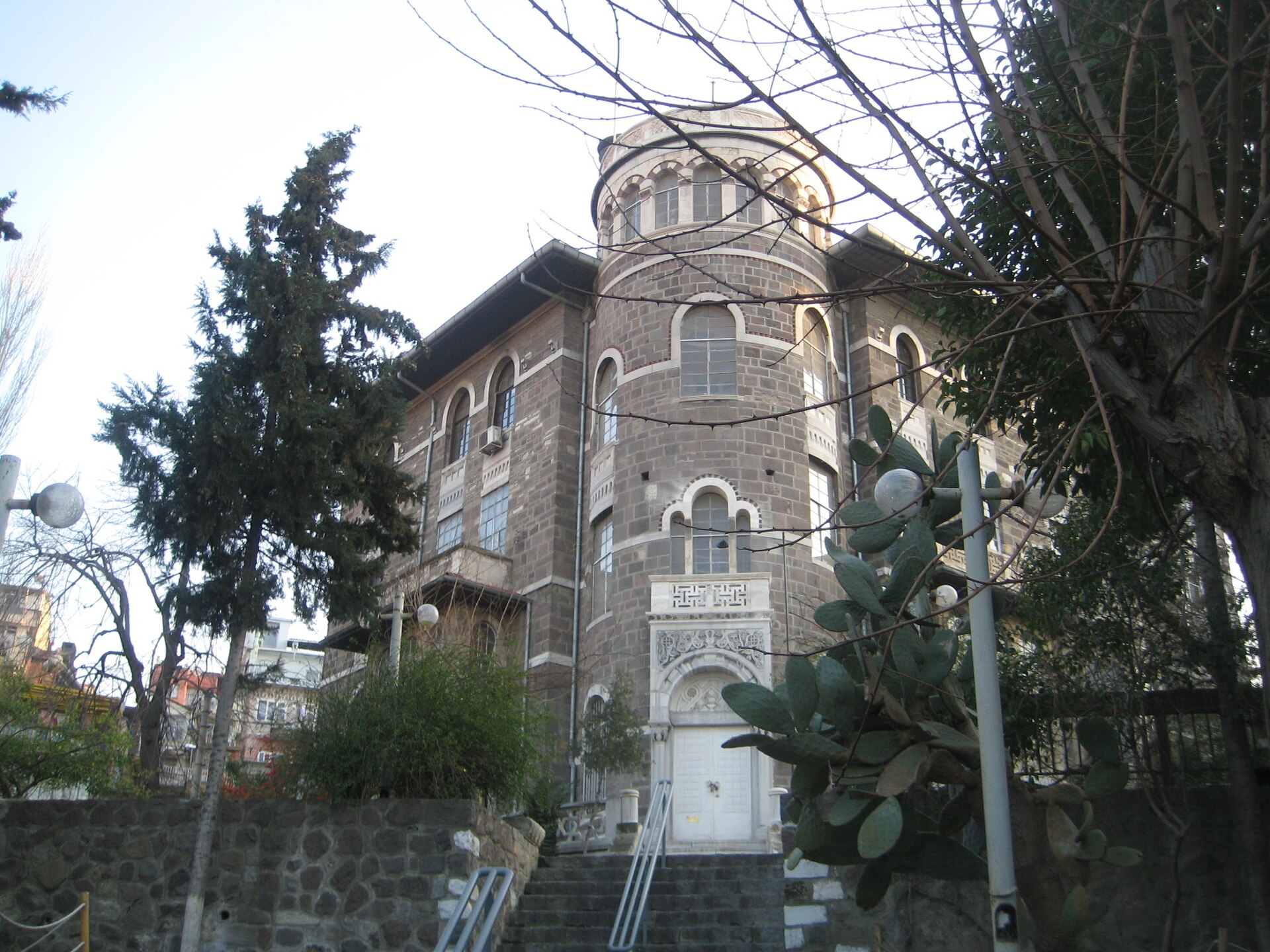
| Monday | Closed |
|---|---|
| Tuesday | Closed |
| Wednesday | Closed |
| Thursday | Closed |
| Friday | Closed |
| Saturday | Closed |
| Sunday | Closed |
Parsed from OpenStreetMap opening hours on 2026-09-02.
İzmir Ethnography Museum occupies a historic three-storey building in Konak, on Halil Rıfat Paşa Caddesi beside the Varyant route. The building was constructed in 1831 as St. Roch Hospital and later served healthcare purposes before becoming a museum. It was transferred to the Ministry of Culture and Tourism on 2 December 1984, then restored between 1985 and 1987 and arranged as an ethnography museum. The first and second floors are exhibition spaces; the third is used by the İzmir Provincial Directorate of Culture and Tourism.
Checked 2026-09-02 · Source
The museum presents İzmir and its surroundings through the social life of the nineteenth century and the crafts that shaped everyday experience. Displays cover nalın making, tinsmithing, pottery, nazar boncuğu production, woodblock printing, carpet weaving, rope making, felt making and saddlery. Recognisable arrangements include the İttihat Pharmacy, a nineteenth-century guest room, embroidered textiles, bathing sets, a bridal room, wedding clothing, a circumcision room and kitchen utensils. Ottoman-period coins and manuscripts add historical depth to the domestic and commercial story. As the building is currently closed to visitors, these details describe the museum’s documented collection and displays rather than a presently accessible exhibition.
Checked 2026-09-02 · Source
There is no current visitor duration because the museum is closed and its exhibition rooms cannot presently be entered. When public access resumes, the compact arrangement across the first and second floors should make the visit easier to structure than a large, multi-building museum, while the historic building and detailed domestic displays reward unhurried looking. Allow extra time for the surrounding Konak heritage area if combining this stop with nearby museums, the waterfront or the Varyant. Treat any future duration as dependent on which rooms and displays the operator reopens.
Checked 2026-09-02 · Source
Do not plan a sightseeing visit at present. The Ministry’s İzmir listing states that the museum has been closed to visitors since 2019 because of exhibition-hall maintenance, artefact care and restoration work. That is an explicit closure status, not a weekly timetable, so there are no reliable public visiting days or hours to select. The practical choice is to enjoy the exterior and the surrounding Konak route, then use the operator’s current museum information before making a dedicated future visit. Closure may continue until the responsible authority announces reopening.
Checked 2026-09-02 · Source
The museum is currently closed, so ordinary adult or general admission is not applied. There is consequently no visitor ticket price to budget for an active visit, and no ticket purchase should be assumed while the building remains unavailable. The closure information comes from the Ministry of Culture and Tourism’s İzmir listing, which records the reason as maintenance, artefact conservation and restoration work. If the museum reopens, admission arrangements may be issued with the reopening notice; until then, treat the absence of a current charge as a consequence of closure rather than as a free-entry offer.
Checked 2026-09-02 · Source
The address is Halil Rıfat Paşa Caddesi, between Birleşmiş Milletler Caddesi and the Varyant, No. 3/A, Konak, İzmir. From the Konak Metro station or Konak Pier transport hub, visitors can walk towards the museum through the central Konak area. ESHOT buses serving the Bahribaba stop provide another approach, followed by a walk to the building. Because the museum is closed, these directions are useful for locating the historic site or combining it with nearby sights, not for implying that the interior is currently accessible.
Checked 2026-09-02 · Source
The main entrance has stairs, and the rear-door ramp is not compliant with accessibility standards. Most internal circulation areas are reported as accessible, and an elevator connects the floors, but visitors should also account for an entrance threshold of approximately 5–10 centimetres. These details matter especially for wheelchair users and anyone using a pushchair or with limited mobility. Since the museum is closed, access conditions should be understood as a record of the building rather than a guarantee of entry. Contact the responsible public body if reopening is announced and access needs are important.
Checked 2026-09-02 · Source
The museum’s strongest visual interest begins with the former St. Roch Hospital building and continues through the documented period interiors and craft displays. The İttihat Pharmacy, nineteenth-century guest room, bridal room, circumcision room, embroidered work, wedding clothing and kitchen objects offer distinctive subjects when the exhibitions are open. At present, however, the museum is closed for maintenance, artefact care and restoration, so interior photography cannot be treated as currently available. Photograph the exterior respectfully, and follow any photography rules published by the operator if public access returns.
Checked 2026-09-02 · Source
It is at Halil Rıfat Paşa Caddesi, between Birleşmiş Milletler Caddesi and the Varyant, No. 3/A, in Konak, İzmir.
The building was constructed in 1831 as St. Roch Hospital and was later used for healthcare services.
It was transferred to the Ministry of Culture and Tourism on 2 December 1984 and arranged as an ethnography museum after restoration between 1985 and 1987.
The three-storey building has exhibition halls on the first and second floors, while the third floor is used by the İzmir Provincial Directorate of Culture and Tourism.
It presents nineteenth-century social life in İzmir and the surrounding area, alongside crafts including nalın making, tinsmithing, pottery, nazar boncuğu production, woodblock printing, carpet weaving, rope making, felt making and saddlery.
Documented highlights include the İttihat Pharmacy, a nineteenth-century guest room, embroidery, bathing sets, a bridal room, wedding clothing, a circumcision room, kitchen utensils, Ottoman-period coins and manuscripts.
Loading the interactive map…
The interactive map could not be loaded.

Last updated:
Source: OpenStreetMap contributors, Wikidata ·