City guide
Things to Do in Rome: 8 Essential Sights
Editorial responsibility: Elena Voss · SSMTour Travel Editor

Choose Rome sights by historical layer and district, from the Colosseum and Forum to Vatican art, the Pantheon, Baroque squares and fountains.
This guide is part of our Rome destination coverage. Rome
1. Colosseo
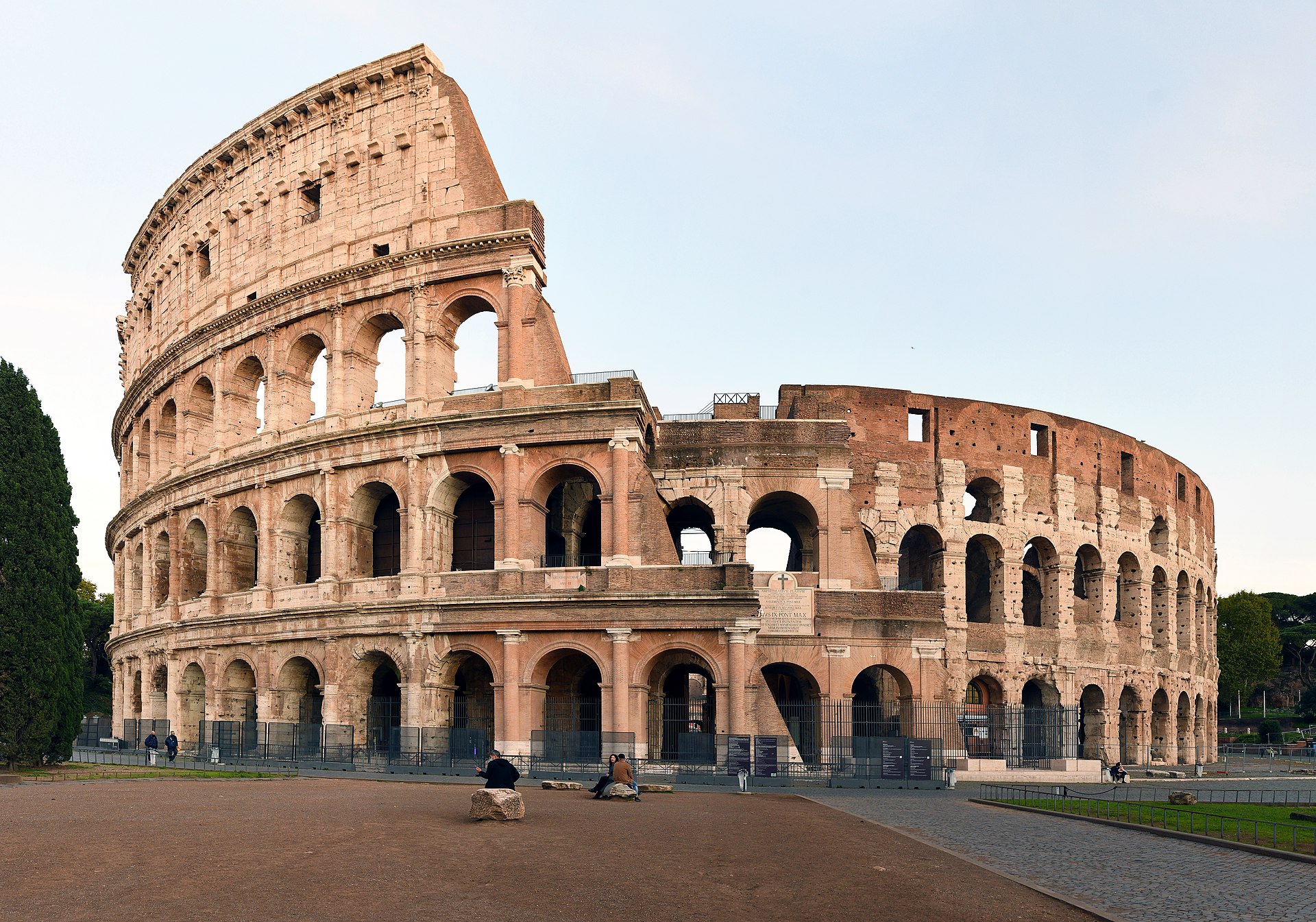
Colosseo is the clearest first choice for understanding imperial Rome through a single surviving building. The official archaeological park identifies it as the Flavian Amphitheatre, built in the first century CE under the Flavian emperors for spectacles including animal hunts and gladiatorial games. Its scale and surviving circulation spaces make it more than a famous exterior: the structure explains how Roman engineering moved performers, animals and spectators through a vast public venue.
Choose the Colosseum when the group wants architecture and social history in one stop. Look across the seating tiers, arena level and underground systems as parts of the same machine rather than separate photo opportunities. The monument later served as a source of building material and contained workshops and houses, so the surviving ruin also records how Rome reused antiquity. Keep the nearby Forum for a separate section of the day; the amphitheatre presents an enclosed venue, while the Forum requires reading a whole urban landscape.
Checked 2026-09-08 · Official site · colosseo.it
2. Forum Romanum
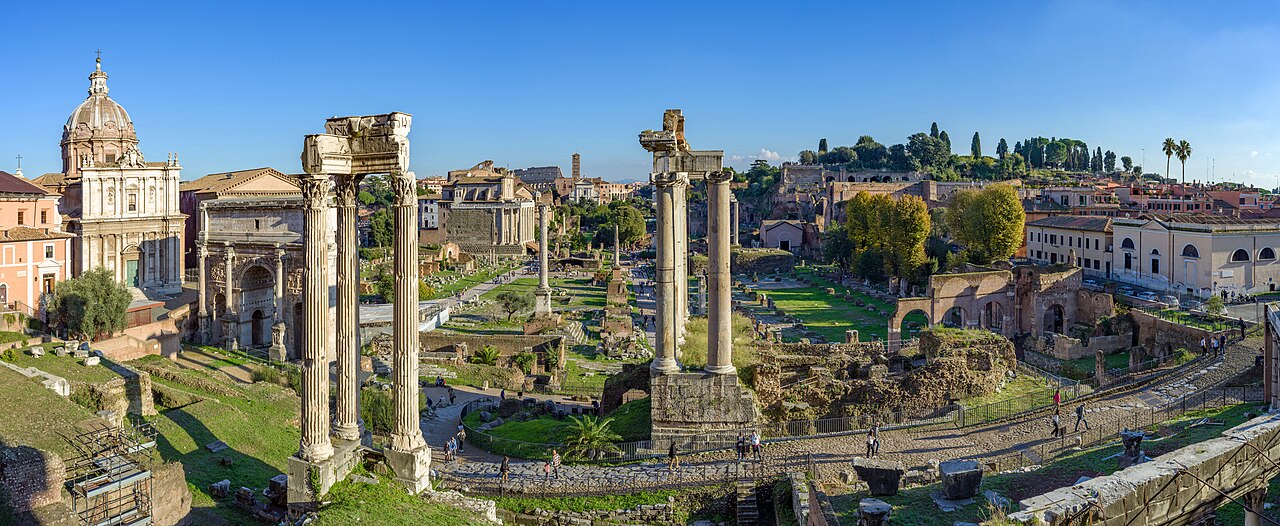

Forum Romanum reveals Rome as a working ancient capital rather than a collection of isolated ruins. The official park explains that the marshy valley was reclaimed in the late seventh century BCE and remained a centre of public life for more than a millennium. Political, religious and commercial buildings accumulated here, followed by civil basilicas and imperial monuments. That long sequence is the point of the visit.
Choose the Forum when the group wants to understand institutions, streets and changing uses. The Arch of Septimius Severus, Curia, temples and Basilica of Maxentius belong to different moments, so a good visit follows relationships rather than trying to photograph every stone. Several ancient buildings survived partly because they became churches, and systematic excavation only began after Italian unification. This makes the Forum a place to compare layers: republican civic space, imperial display, Christian reuse and modern archaeology. Pair it with the Colosseum for continuity, but keep enough attention for the Forum to function as a landscape in its own right.
Checked 2026-09-08 · Official site · colosseo.it
3. Pantheon

_-_Right_side_and_front.jpg)
Pantheon is the strongest compact lesson in Roman geometry and later continuity. Rome's municipal tourism service traces the site to Agrippa's temple of 27 BCE, while the present building comes from Hadrian's reconstruction between 118 and 125 CE. The portico leads into a cylindrical interior capped by a concrete dome whose height matches its diameter at just over 43 metres. An open oculus, 8.92 metres across, is the interior's only natural light source.
Choose the Pantheon when the group wants one building that can be read quickly but rewards close observation. Compare the rectangular portico with the circular room, the five rings of coffers with the moving light, and the ancient fabric with the church founded here in 609. The interior also contains the tomb of Raphael and memorials to Italian monarchs. Piazza della Rotonda outside changes the experience again: the ancient temple stands inside a later city rather than an archaeological enclosure. That contrast makes the Pantheon especially useful between the Forum and Baroque Rome.
Checked 2026-09-08 · Official site · www.turismoroma.it
4. Basilica di San Pietro


Basilica di San Pietro should be chosen for its religious function and its Renaissance-to-Baroque building story, not treated as an extension of the museums. The basilica's official history records that Julius II laid the foundation stone on 18 April 1506 and that the present church was completed in 1626, replacing the Constantinian basilica. Bramante, Raphael, Michelangelo, Giacomo della Porta and Carlo Maderno all contributed to the long project; Bernini later shaped St Peter's Square.
The building rewards a deliberate visual sequence. Begin with the scale of the square and colonnade, then compare Maderno's façade with the dome conceived by Michelangelo and completed by della Porta. Inside, allow the architecture, tomb tradition and continuing worship to set the pace. The basilica remains an active sacred space, so quiet conduct and local instructions matter more than completing a checklist. Keep this stop separate from Musei Vaticani in the plan: the two have different entrances, purposes and patterns of attention even though both sit within Vatican City.
Checked 2026-09-08 · Official site · www.basilicasanpietro.va
5. Musei Vaticani


Musei Vaticani are the right choice when collections and decorated palace rooms deserve the centre of the day. The official museum history describes art, archaeology and ethno-anthropology assembled by successive popes, displayed alongside rooms created for residence, prayer and ceremony. The route is therefore not one museum in the ordinary sense. It connects ancient sculpture, the Pio Clementino collections, the Gallery of Maps, the Raphael Rooms, the Borgia Apartment, the Pinacoteca and the Sistine Chapel.
Choose a small set of priorities before entering. A visitor drawn to classical sculpture will read the route differently from someone focused on Raphael, Michelangelo or the history of papal collecting. The official timeline begins with decorated papal apartments under Nicholas V and Alexander VI, marks Julius II's sculpture collection in the Octagonal Court, and continues through later museums and modern conservation. This breadth makes selection essential. Do not combine the museums and Basilica di San Pietro as if they were rooms on one continuous visitor circuit; give each a separate decision and release the second if attention is already exhausted.
Checked 2026-09-08 · Official site · www.museivaticani.va
6. Fontana di Trevi
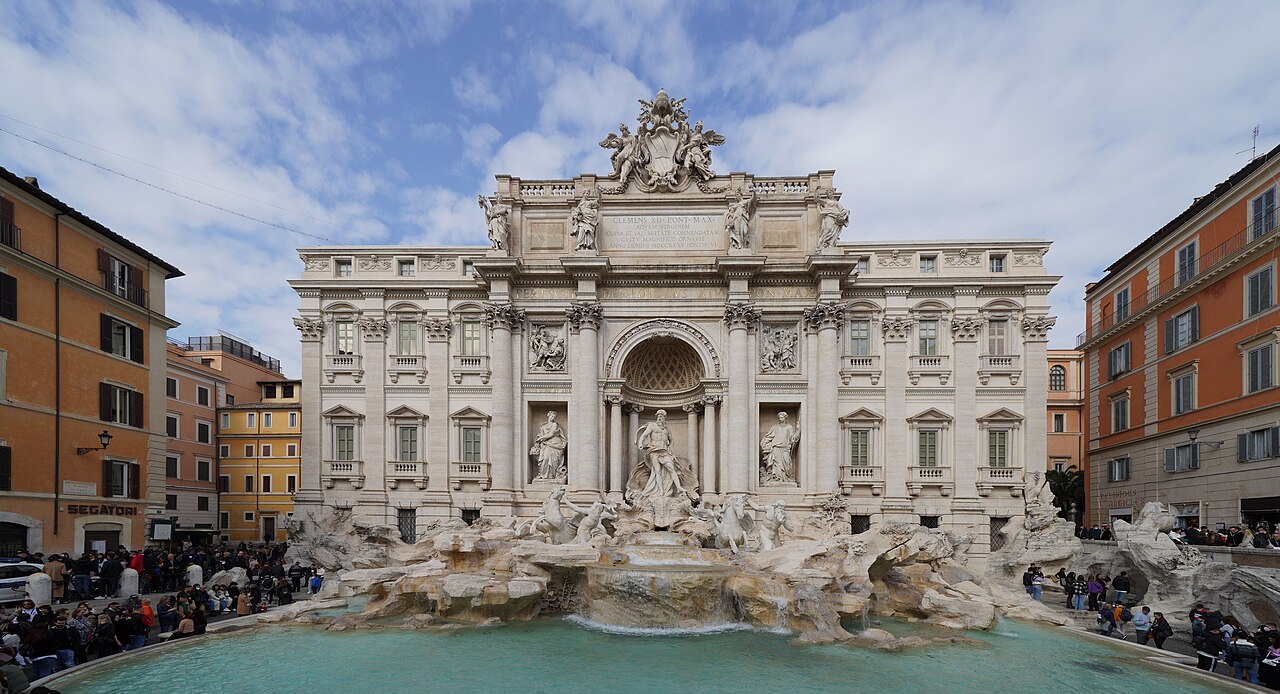

Fontana di Trevi turns an ancient water system into an eighteenth-century urban theatre. Rome's tourism service identifies the fountain as the terminal display of the Acqua Vergine, an aqueduct that has remained in continuous use since antiquity. Pope Clement XII launched the design competition in 1732, Nicola Salvi's proposal won, and Giuseppe Pannini completed the work. The composition uses Palazzo Poli as its architectural backdrop, with Oceanus, horses, tritons, rock and water filling a space that is much tighter than photographs suggest.
Choose Trevi for the meeting of engineering, sculpture and city life. Read the reliefs referring to the aqueduct before concentrating on the central figures, then step back to understand how the palace façade frames the basin. The fountain is not a reason to build an entire day around one crowded viewpoint. It works best as part of a walking arc with the Spanish Steps or Pantheon, where the route compares different Baroque and ancient uses of public space. Follow current on-site access controls rather than assuming the edge of the basin is always freely reachable.
Checked 2026-09-08 · Official site · www.turismoroma.it
7. Piazza Navona

_-_BEIC_6329173.jpg)
Piazza Navona is a Baroque square whose long outline preserves an ancient stadium. Rome's official tourism page states that Domitian built the stadium in 86 CE for athletic competitions and horse racing; its remains sit several metres below the present streets. The modern square follows that perimeter, so its curved north end and elongated open space are archaeological evidence as well as urban design.
Choose Piazza Navona when the group wants to see Rome reuse an ancient footprint without isolating it from daily city life. Bernini's Fountain of the Four Rivers occupies the centre, with figures representing the Danube, Ganges, Nile and Río de la Plata beneath an obelisk. Sant'Agnese in Agone and Palazzo Pamphilj turn the western side into a concentrated Baroque façade. Walk the full length rather than stopping only at the central fountain: the two end fountains and the stadium geometry explain why the space feels unlike Rome's smaller piazzas. The Pantheon is the natural comparison nearby, joining an ancient interior to a later public square.
Checked 2026-09-08 · Official site · www.turismoroma.it
8. Scalinata della Trinità dei Monti


Scalinata della Trinità dei Monti is an urban connection before it is a postcard. The municipal tourism service explains that Francesco De Sanctis built the travertine staircase between 1723 and 1726 to link Piazza di Spagna with the Pincio slope and Trinità dei Monti above. Eleven ramps divide, turn and rejoin across the change in level, while balustrades create pauses and shifting views. The design transformed what had been a steep, muddy separation into a public route and meeting place.
Choose the Spanish Steps for movement, perspective and eighteenth-century stagecraft. Approach from the square to see how the ramps open upward, then notice how the city view changes as the route rises. The value lies in the whole composition, including the church above and Barcaccia fountain below, rather than in occupying one step. This stop combines naturally with Trevi Fountain because both reward looking at how architecture shapes public flow. Keep the Pantheon and Piazza Navona for a second central arc if the group wants to avoid turning every major square into one continuous procession.
Checked 2026-09-08 · Official site · www.turismoroma.it
Read Rome by historical layer, not fame alone
Rome becomes easier to choose when each stop answers a different historical question. The Colosseum explains mass spectacle and imperial engineering. Forum Romanum explains civic, religious and commercial institutions across more than a millennium. The Pantheon compresses ancient geometry, Christian reuse and modern commemoration into one surviving interior. Piazza Navona shows an ancient stadium footprint becoming a Baroque public room, while Trevi turns an aqueduct terminus into sculpture and theatre.
Use those differences to remove repetition. A short visit does not need every famous exterior merely because each appears on a standard list. Choose the Colosseum when a single monumental building matters most; choose the Forum when the city system matters more. Add the Pantheon to compare survival through reuse. Select Piazza Navona or Trevi for Baroque urban space, then keep the other as an optional continuation rather than a compulsory box.
The Vatican pair belongs to a different historical and political setting. Basilica di San Pietro tells a building story spanning more than a century and remains a place of worship. Musei Vaticani present collections and palace rooms assembled by successive popes. Treating them as interchangeable 'Vatican sights' erases the reason to visit either. A strong Rome list is therefore a set of contrasts: arena and forum, temple and church, museum and square, water infrastructure and ceremonial architecture.
Checked 2026-09-08 · Official site · colosseo.it
Checked 2026-09-08 · Official site · colosseo.it
Checked 2026-09-08 · Official site · www.turismoroma.it
Checked 2026-09-08 · Official site · www.turismoroma.it
Give Vatican art and the basilica separate decisions
Basilica di San Pietro and Musei Vaticani deserve separate choices even when both appear on the same day's map. The basilica is an active sacred building organised around architecture, worship and the tradition of Peter's tomb. Its official history follows a construction campaign from 1506 to 1626 and the work of several leading architects. The museums are an extensive collection route through papal rooms, chapels, archaeology and art. Their official history extends from decorated private apartments to successive specialist museums and modern conservation.
Select the basilica when the group wants sacred architecture and can engage respectfully with a functioning church. Select the museums when collections are the priority and the group can sustain a long sequence of galleries. If both remain essential, put them in distinct blocks and decide in advance which can be released. That rule protects the second visit from becoming an exhausted afterthought.
Do not use a single highlight to stand for either place. Michelangelo's dome is part of the basilica's larger architectural sequence; the Sistine Chapel is part of a museum route containing ancient sculpture, maps, Raphael's rooms and later collections. The most useful choice is not 'the Vatican' in general, but which institution matches the group's attention that day.
Checked 2026-09-08 · Official site · www.basilicasanpietro.va
Checked 2026-09-08 · Official site · www.museivaticani.va
Build two central walking arcs instead of one marathon
Rome's central monuments form two useful editorial arcs. The Pantheon and Piazza Navona make the first: one is an ancient interior preserved through continued use, the other a Baroque square that keeps the outline of Domitian's stadium. Their proximity supports comparison without making a claim about exact walking time. Fontana di Trevi and Scalinata della Trinità dei Monti make the second: both turn infrastructure and changes of level into theatrical public space.
Keep the arcs separate when attention matters more than coverage. Around the Pantheon, read the portico, circular interior and oculus before moving to Piazza Navona's full stadium-shaped perimeter and three fountains. Around Trevi, step back from the basin to see Palazzo Poli as part of the composition; at the Spanish Steps, follow the ramps and changing views instead of reducing the site to the lower square. Each arc then has a clear visual subject.
Combining all four is possible as an open-ended central walk, but no completion target is needed. End after the first pair when the group wants to linger, weather turns, or another major interior remains ahead. The route works because every release point leaves a coherent experience: ancient geometry beside a reused stadium, or Baroque water beside a designed ascent.
Checked 2026-09-08 · Official site · www.turismoroma.it
Checked 2026-09-08 · Official site · www.turismoroma.it
Checked 2026-09-08 · Official site · www.turismoroma.it
Checked 2026-09-08 · Official site · www.turismoroma.it
Choose by attention and name the stop to release
A useful Rome shortlist begins with attention, not the number of pins. Pick one anchor for ancient Rome, one for Vatican art or architecture, and one central walking arc. The eight linked places then become a verified choice set rather than a compulsory sequence. This protects the monuments from becoming interchangeable backgrounds and keeps the day adaptable without inventing exact visit durations.
For ancient Rome, select Colosseo for the amphitheatre as a designed machine and Forum Romanum for civic landscape and historical layers; keep both only when that subject deserves the day. For Vatican City, decide whether Basilica di San Pietro or Musei Vaticani carries the main interest, then give the second an explicit release rule. In the centre, choose Pantheon with Piazza Navona for ancient-to-Baroque continuity, or Trevi Fountain with the Spanish Steps for water, movement and eighteenth-century stagecraft.
Write the release choice before setting out. If the Forum absorbs attention, release a later fountain. If the museums become the day's complete experience, do not force the basilica into a rushed remainder. If the central walk is working, stop after a coherent pair instead of crossing the city to preserve a ranking. The result is still recognisably Rome, but every included sight has a distinct reason for being there.
- Colosseum
- Roman Forum
- Pantheon
- St. Peter's Basilica
- Vatican Museums
- Trevi Fountain
- Piazza Navona
- Spanish Steps
Checked 2026-09-08 · Official site · colosseo.it
Checked 2026-09-08 · Official site · www.basilicasanpietro.va
Checked 2026-09-08 · Official site · www.turismoroma.it
Checked 2026-09-08 · Official site · www.turismoroma.it
Turn this list into a plan
Set your days, your pace and the hours you actually want to be out. The planner works around closing days and travel time, and leaves room to eat.