City guide
Things to Do in Hong Kong: 12 Highlights
Editorial responsibility: Elena Voss · SSMTour Travel Editor


Choose Hong Kong highlights by area and interest, from Victoria Harbour and The Peak to Lantau, film heritage and two destination theme parks.
This guide is part of our Hong Kong destination coverage. Hong Kong
1. Read the city from Victoria Harbour

.jpg)
Victoria Harbour is the clearest place to understand Hong Kong's geography. The water separates northern Hong Kong Island from southern Kowloon, while dense skylines on both banks turn that division into the city's defining view. The Tsim Sha Tsui waterfront places the island towers in front of their mountain backdrop; the opposite harbourfront reveals Kowloon's commercial and cultural edge. Neither panorama is a duplicate because the land rises, recedes and changes character behind each shore.
The harbour is also working infrastructure and public space. Passenger ferries, excursion boats and marine traffic share the water, while promenades convert former or active waterfront edges into long viewing platforms. Central's piers connect the business district to cross-water and outlying-island services. Farther east, island-side sections continue through Admiralty and Wan Chai. From Kowloon, the broadest compositions include both water and ridge. Daylight exposes topography and vessel movement; dusk emphasises glass, lighting and reflection. Programmed displays may appear above this setting, but the enduring subject is the harbour itself: a navigable channel that shaped settlement, transport, trade and Hong Kong's visual identity.
Checked 2026-09-08 · Official site · www.discoverhongkong.com
2. Look across Hong Kong from Victoria Peak

.jpg)
Victoria Peak changes the scale of the city. From the upper slopes, Victoria Harbour becomes a channel inside a much larger landscape of ridges, islands and built-up shorelines. The Hong Kong Tourism Board distinguishes several lookout experiences, including Lugard Road, Lion's Pavilion and High West, rather than reducing The Peak to one paid platform. High West rises to 493 metres and opens western sightlines toward Pok Fu Lam and the harbour; the better-known eastern outlook gathers Central, Kowloon and their surrounding hills.
The contrast between towers and vegetation is essential. Paths leave the commercial buildings quickly, and the Peak Circle Walk follows wooded contours where the skyline appears in intervals instead of filling every frame. Victoria Peak Garden occupies a former governor's summer-residence site and offers lawns, paths and pavilions above the main visitor cluster. The Peak Tower, Peak Galleria and public lookouts provide different degrees of enclosure and elevation. Cloud can remove distant detail but also reveals how high the ridge sits above street level. Lugard Road and High West reward different bearings, so decide whether the goal is the Central–Kowloon axis or the western water beyond Pok Fu Lam.
Checked 2026-09-09 · Official site · www.discoverhongkong.com
3. Cross the harbour on the Star Ferry
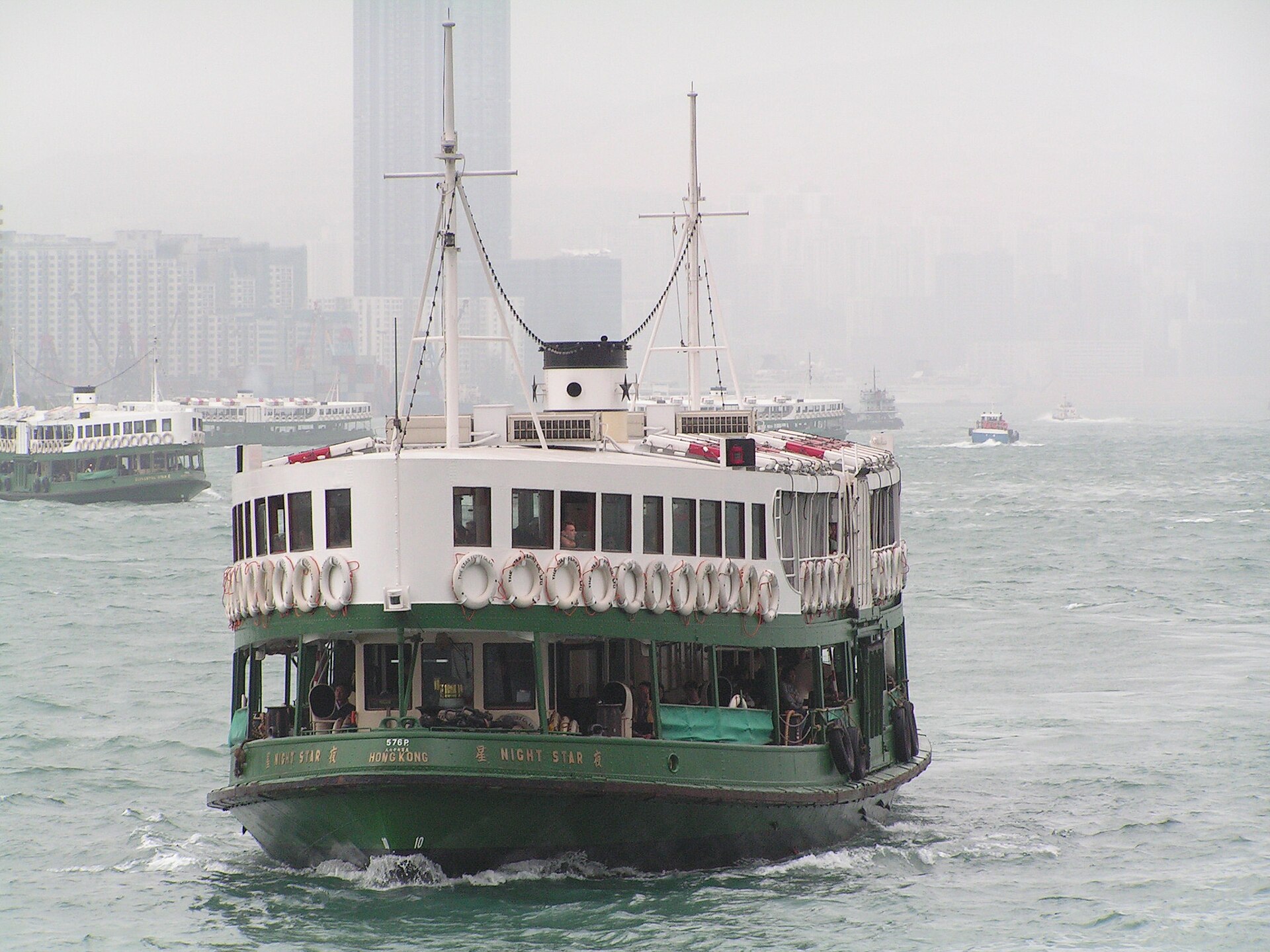

Star Ferry places passengers inside Hong Kong's most familiar panorama. Green-and-white boats connect Tsim Sha Tsui with Central and Wan Chai, temporarily replacing towers, roads and stations with open water. The Hong Kong Tourism Board traces the company to 1898 and describes a present fleet of nine diesel-electric vessels. Names such as Day Star, Radiant Star and Northern Star continue the fleet's distinctive identity, while double-deck profiles and open-air seating preserve a visual link with earlier harbour travel.
Each pier belongs to a different urban frontage. Tsim Sha Tsui opens onto Salisbury Road, the Clock Tower, cultural buildings and the long Kowloon promenade. Central Pier 7 sits among the Central ferry piers, the business district and the island's principal transport interchange. Wan Chai faces the convention-centre waterfront and a separate section of the northern shore. The short crossing reveals these districts simultaneously: Kowloon's broad edge recedes while Central's towers grow, or the perspective reverses. Modern tunnels may move larger volumes beneath the water, but the ferry keeps the harbour legible as physical distance, civic space and everyday transport.
Checked 2026-09-08 · Official site · www.discoverhongkong.com
4. Give Tian Tan Buddha a Lantau day


Tian Tan Buddha rises above Ngong Ping on Lantau Island beside Po Lin Monastery. The seated bronze figure measures 34 metres including its base, and 268 steps lead from the plateau to the upper level. Completed in 1993, the monument is oriented within a Buddhist complex rather than an isolated sculpture park. Its elevated position looks over monastery roofs, wooded slopes and the South China Sea landscape beyond Lantau.
The setting joins pilgrimage, monumental art and mountain scenery. Po Lin Monastery contributes active halls, courtyards and religious practice; nearby Wisdom Path uses upright timber columns inscribed with the Heart Sutra. Ngong Ping Village and transport terminals introduce a more commercial threshold before the sacred precinct. The shifts between those spaces are part of the experience. Visitors encounter worshippers as well as sightseers, so quiet conduct and clothing appropriate to a religious site matter independently of admission rules. Anyone who skips the 268-step climb can still see the bronze Buddha clearly from the Ngong Ping plateau, with Po Lin Monastery close by.
Checked 2026-09-09 · Official site · www.discoverhongkong.com
Checked 2026-09-09 · Official site · www.discoverhongkong.com
5. Reserve a full decision for Hong Kong Disneyland
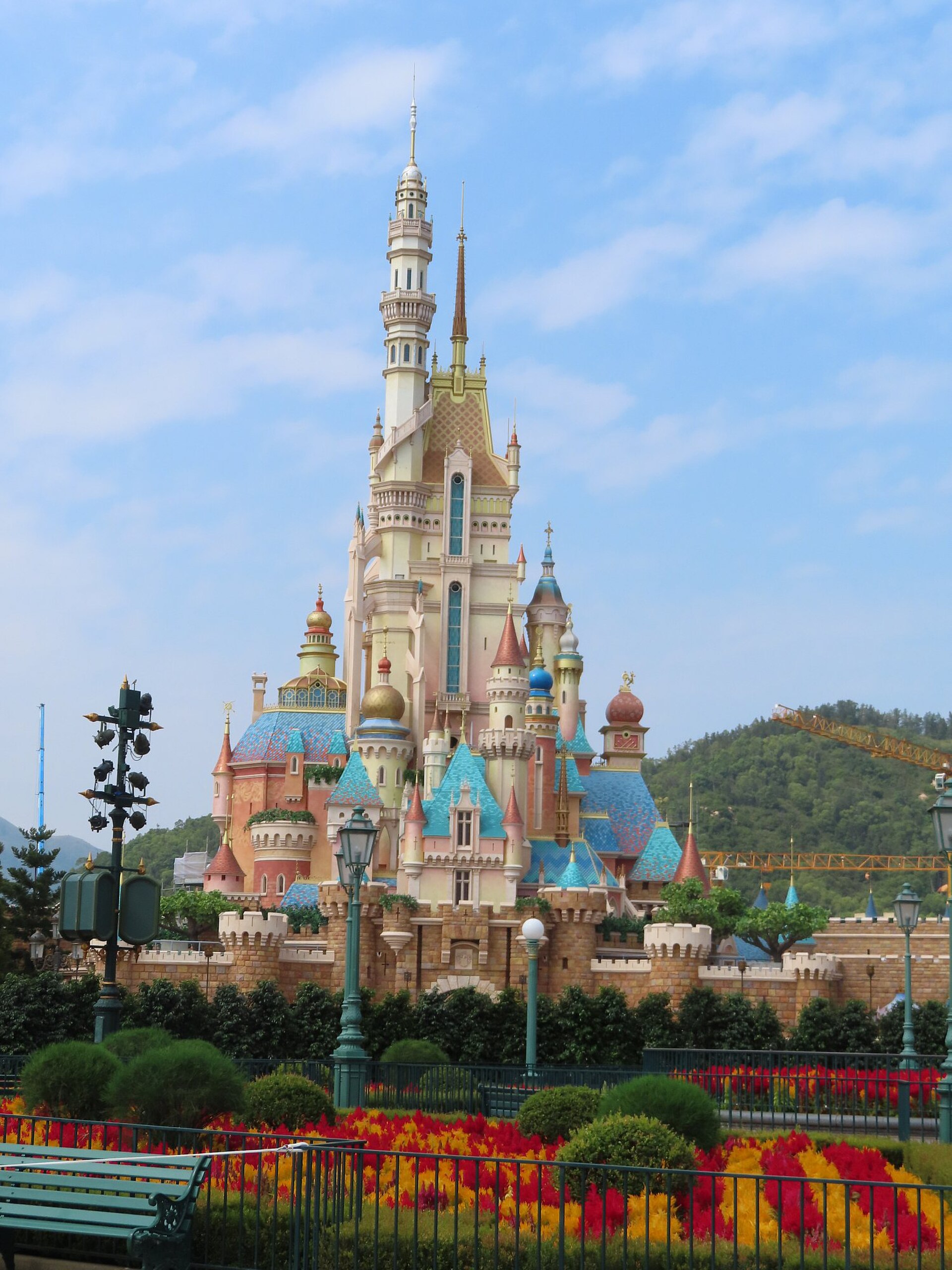

Hong Kong Disneyland occupies a resort cluster at Penny's Bay on Lantau Island. The Hong Kong Tourism Board describes eight themed lands and three themed hotels. World of Frozen recreates Arendelle around two rides and character experiences; Mystic Point and Grizzly Gulch are among the lands developed specifically for Hong Kong; Tomorrowland includes Marvel attractions; and the Castle of Magical Dreams forms the principal visual landmark. The compact resort is framed by Lantau's mountains rather than an urban skyline.
Its appeal extends beyond rides. World of Frozen and Tomorrowland contrast with the Hong Kong-developed Mystic Point and Grizzly Gulch, while the Castle of Magical Dreams anchors the resort map. Different age groups will value different layers: small children may focus on characters and gentler rides, older visitors on coasters, themed design or productions. The park's Hong Kong identity appears in localised food, seasonal celebrations and attractions not duplicated across every Disney resort. Calendars, admission products and individual availability remain operational information; the stable reason to visit is the concentration of Disney storytelling within a distinctly mountainous Lantau setting.
Checked 2026-09-09 · Official site · www.discoverhongkong.com
6. Choose rides or animal exhibits at Ocean Park
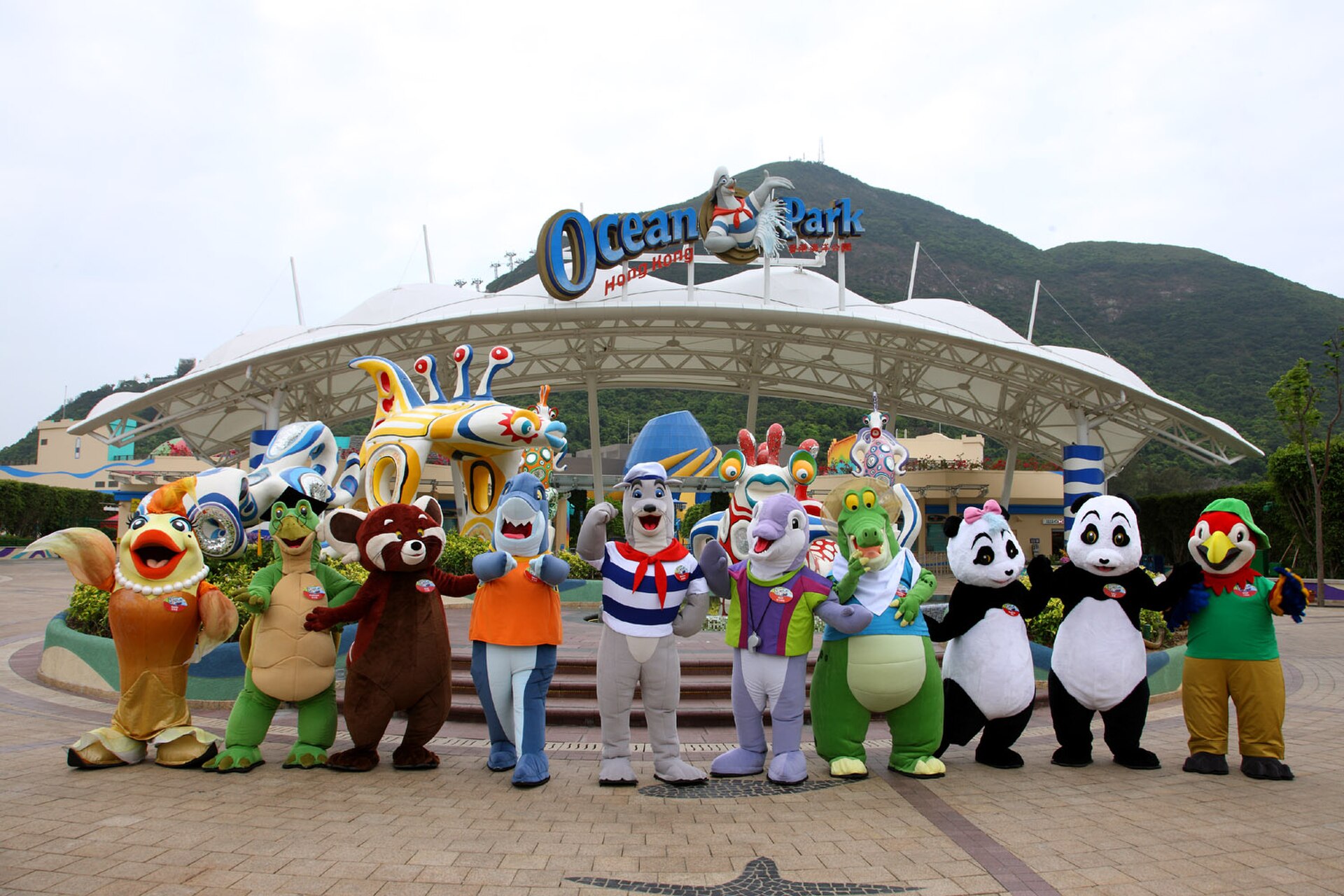

Ocean Park Hong Kong combines zoological exhibits, aquariums and amusement rides in the Southern District. The park is divided between the Waterfront and the Summit, linked internally across a steep coastal site. At the Waterfront, the Grand Aquarium presents sharks, rays, coral-reef species and other marine life; giant-panda exhibits are another major focus. Polar environments introduce penguins and seals. The Summit concentrates higher-intensity rides and opens views over the surrounding sea and hills.
This mixture distinguishes Ocean Park from a story-led resort. Animal interpretation, conservation messaging and habitat displays occupy the same institution as roller coasters and family rides. The geography is equally unusual: visitors move between lower and upper zones rather than through a flat sequence of themed streets. Younger children can use gentler attractions around the Waterfront, while visitors seeking stronger rides gravitate uphill. The park also supports education and conservation programmes beyond public entertainment. Individual animals, rides, shows and exhibits can change, so their current availability belongs to the operator. The lasting experience is the combination of marine setting, hillside movement and two different traditions of leisure within one Hong Kong institution.
Checked 2026-09-08 · Official site · www.discoverhongkong.com
7. Follow Hong Kong cinema along the Avenue of Stars


Avenue of Stars gives the Tsim Sha Tsui waterfront a subject beyond the skyline. The 400-metre promenade celebrates Hong Kong's film industry through plaques, handprints, statues and interpretive displays. Bruce Lee appears in a martial-arts pose against the harbour; Anita Mui has her own sculptural tribute; Jackie Chan and other performers are represented through handprints integrated into the railings. The Hong Kong Film Awards figure adds another recognisable silhouette to the boardwalk.
These objects turn regional cinema into public memory. They acknowledge actors, directors and production workers while inviting visitors to recognise how Hong Kong itself became a film location and global screen image. Informational panels place individual names within that larger industry. The promenade's open design prevents the tributes from becoming a conventional hall of fame: ships move behind them, towers provide a changing set and pedestrians continue along the waterfront. Early light makes inscriptions and handprints easier to examine; dusk lets the bronze figures merge with the illuminated city associated with decades of crime films, romances and action cinema. The value lies in that conversation between screen culture and the real harbour setting.
Checked 2026-09-08 · Official site · www.discoverhongkong.com
8. Treat the Peak Tram as part of The Peak
_10-09-2022(2).jpg)
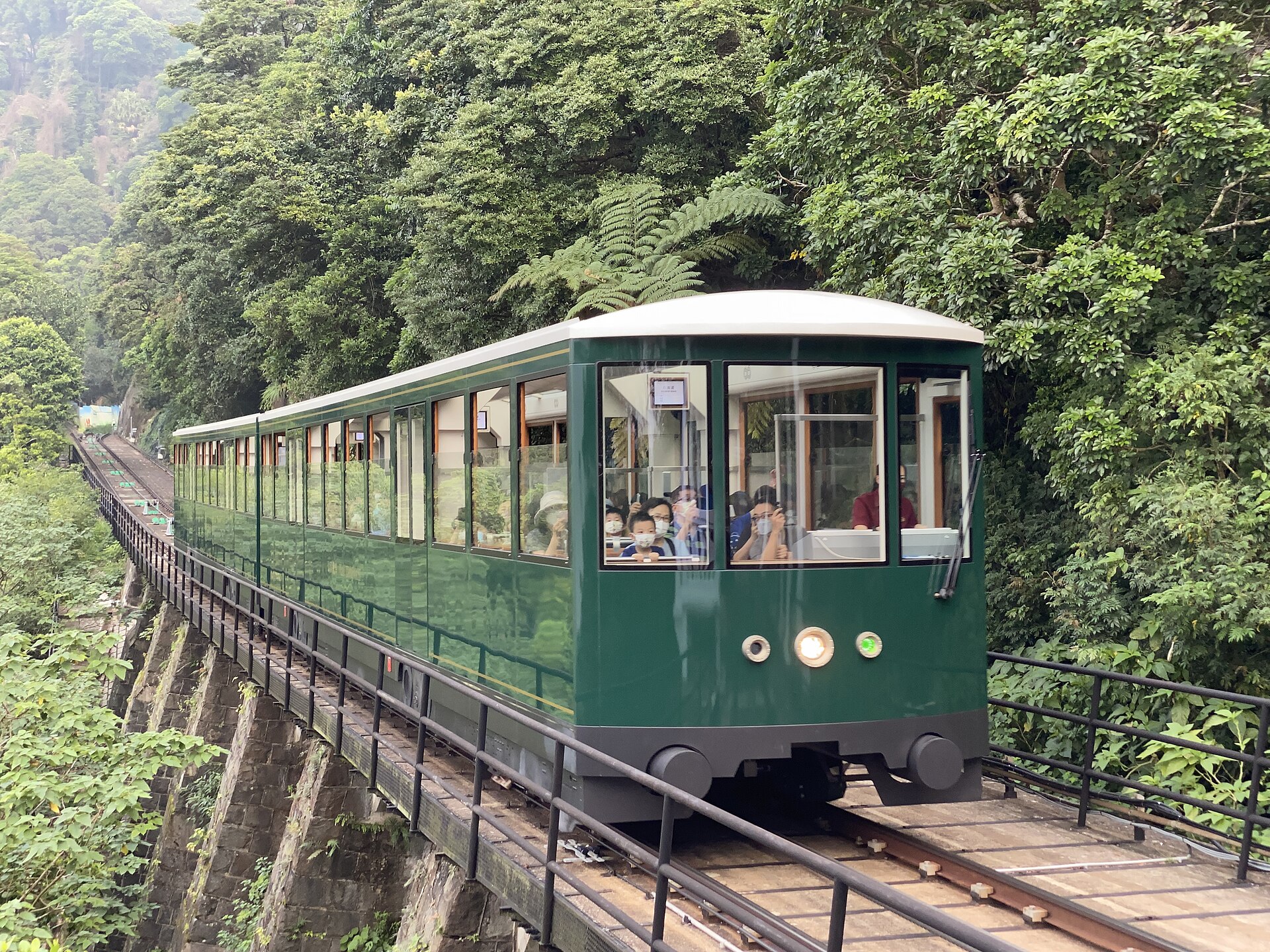
Peak Tram is the historic funicular between the Garden Road area and The Peak. Service began in 1888, making it Asia's first cable funicular system. The 1.27-kilometre alignment climbs sharply through built-up lower slopes and dense vegetation before reaching the upper terminus. That gradient produces the journey's distinctive visual effect: nearby buildings appear to tilt as passengers remain upright inside the carriage, and the Central skyline changes rapidly with elevation.
The railway began as access for residents of The Peak and became one of Hong Kong's defining visitor experiences. Modernised rolling stock and terminals now handle far more passengers, but the line still demonstrates a nineteenth-century response to difficult terrain. Its value comes from motion, engineering and continuity, not only the view at the top. The lower terminus sits within Central's urban fabric; the upper terminus releases passengers into the Peak Tower and nearby public viewpoints and paths. Service interruptions, ticket products and boarding arrangements are variable operator facts. Historically, however, the funicular remains evidence that vertical movement has shaped Hong Kong as strongly as movement across its harbour.
Checked 2026-09-08 · Official site · www.discoverhongkong.com
9. Walk the Kowloon waterfront before crossing
Start beside the Clock Tower at the Tsim Sha Tsui Star Ferry Pier and follow the harbour edge east. The official promenade route places the Hong Kong Cultural Centre and Museum of Art before the Avenue of Stars, so film history and the island skyline unfold on the same continuous walk. This order also keeps Victoria Harbour in view instead of treating each waterfront landmark as a separate return trip. Continue only as far as your interests and weather justify; the route extends through Tsim Sha Tsui East toward Hung Hom.
Return to the pier rather than taking the MTR beneath the view you came to understand. The Star Ferry then turns the promenade's distant Hong Kong Island frontage into the arrival shore. Central Pier 7 leads into the Central piers and the raised walkways around Hong Kong Station, while the Wan Chai route serves a different island-side waterfront. Choose the crossing that matches the next district. This is a compact Hong Kong sequence with a clear logic: read the island from Kowloon, move through the harbour itself, and finish inside the skyline you have been watching.
Checked 2026-09-09 · Official site · www.discoverhongkong.com
Checked 2026-09-09 · Official site · www.discoverhongkong.com
10. Choose one Lantau destination by purpose
Lantau is too large and varied to treat as a single attraction zone. Choose Ngong Ping when the priority is the Tian Tan Buddha, Po Lin Monastery and a mountain plateau. Choose Penny's Bay when the priority is a full resort day at Hong Kong Disneyland. The airport lies on the same island, but that map label does not make these destinations convenient add-ons to an arrival or departure day. Each deserves its own outward route, operating check and return plan.
A visitor seeking local island life has a third kind of Lantau day. The Tourism Board places Tai O's stilt-house waterfront in western Lantau and Mui Wo on a Central ferry route, while beaches and walking country occupy other parts of the island. Those experiences are not substitutes hidden inside Ngong Ping or Disneyland. Select the day's purpose first: Buddhist complex, themed resort, or village and coast. Then consult the relevant operator for current transport and access. This prevents a common itinerary error—combining names because they share 'Lantau' while ignoring the island's mountains, separated transport corridors and very different reasons to visit.
Checked 2026-09-09 · Official site · www.discoverhongkong.com
Checked 2026-09-09 · Official site · www.discoverhongkong.com
11. Choose the Hong Kong park that fits your group
Ocean Park Hong Kong and Hong Kong Disneyland both justify a large part of a day, but they answer different interests. Ocean Park combines marine life, giant pandas, conservation interpretation and rides across the Waterfront and Summit on a steep Southern District site. Disneyland builds its day around Disney stories, characters, performances and themed lands at Penny's Bay. Ask whether the group's strongest shared interest is animals and a hillside park, or story-led attractions and a resort environment.
Geography matters as much as branding. Ocean Park belongs to a Hong Kong Island itinerary and returns visitors toward the island-side city. Disneyland is a Lantau destination and should not be attached to Ngong Ping merely because both appear on the same island. Families with small children should compare the actual height, mobility and sensory needs of the group against the operators' current attraction information. A mixed-age party may value Ocean Park's exhibits even when some members skip rides; a Disney-focused group may prefer to keep the resort day intact. Make one deliberate choice before booking, and use a second park only when it is a real priority rather than a checklist obligation.
Checked 2026-09-09 · Official site · www.discoverhongkong.com
Checked 2026-09-09 · Official site · www.discoverhongkong.com
12. Continue from the Peak Tram onto Lugard Road
The upper Peak Tram terminus is a transport arrival, not the full Victoria Peak experience. From the Peak Tower and Peak Galleria cluster, the Tourism Board's route continues onto the Peak Circle Walk. The 3.5-kilometre loop follows wooded slopes around the mountain, with Lugard Road opening views toward Victoria Harbour and Kowloon. Victoria Peak Garden lies uphill from Mount Austin Road on the former Mountain Lodge site, so it is a separate extension rather than a viewpoint accidentally encountered at the tram exit.
Choose the route by visibility and walking capacity. For a short visit, use the public outlooks close to the upper terminus and sample part of Lugard Road before returning. For a longer walk, follow the signed circuit and decide separately whether Victoria Peak Garden fits. The commercial observation deck is optional: the mountain's public paths provide their own relationship between forest, steep relief and skyline. Rain, heat and cloud can make the shorter version the better decision, and current operator information should settle transport access. This structure leaves every visitor with a coherent Peak visit even when the complete circuit or paid deck is unsuitable.
Checked 2026-09-09 · Official site · www.discoverhongkong.com
Turn this list into a plan
Set your days, your pace and the hours you actually want to be out. The planner works around closing days and travel time, and leaves room to eat.