City guide
Hong Kong Itinerary: One Day to One Week
Editorial responsibility: Elena Voss · SSMTour Travel Editor


Build a Hong Kong itinerary from one day to a week by grouping harbour sights, The Peak, Lantau and theme parks without overloading each day.
This guide is part of our Hong Kong destination coverage. Hong Kong
One day in Hong Kong: use the harbour as the route

.jpg)
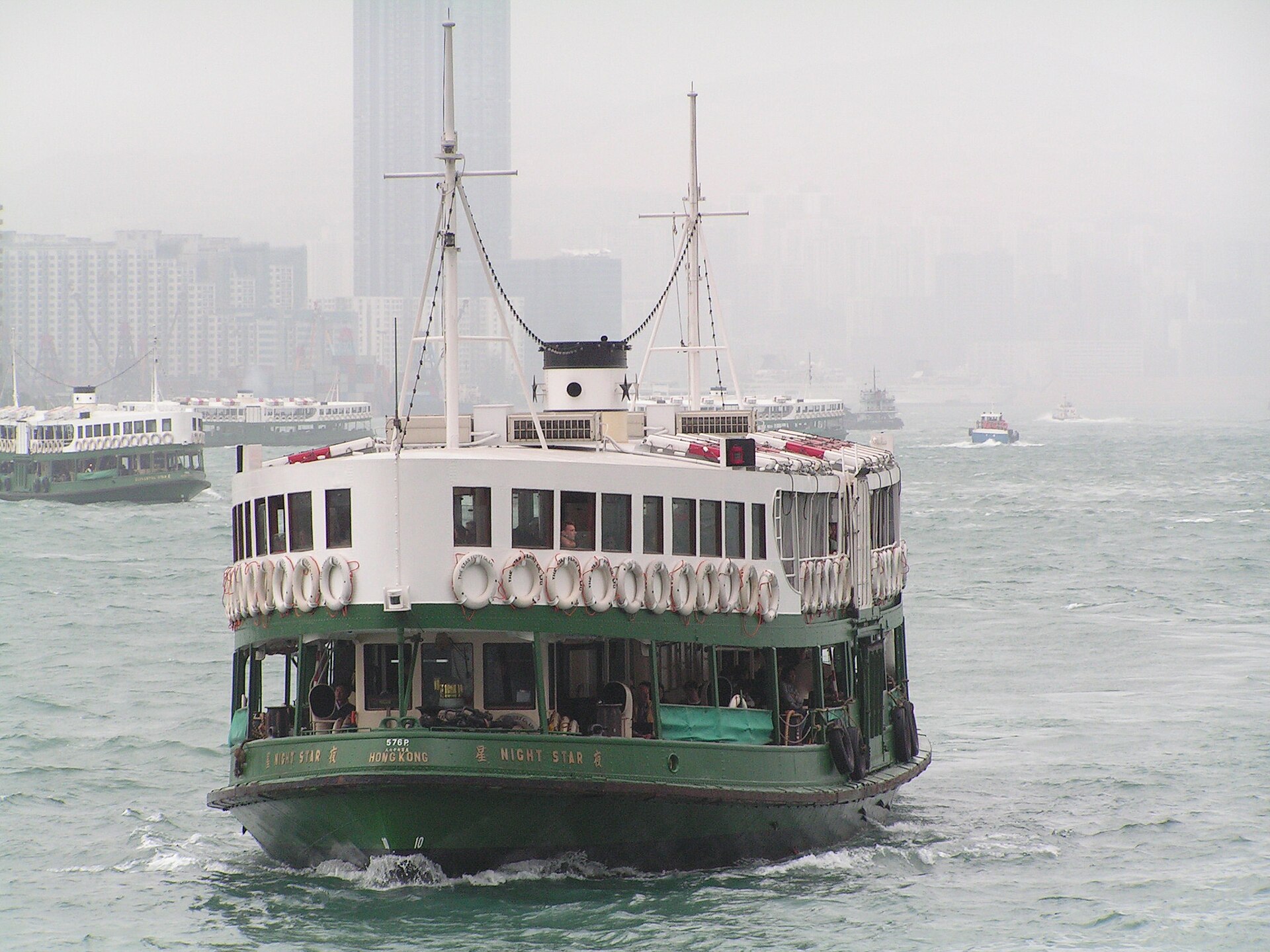
For a single day, draw one continuous stroke across the map. A Kowloon hotel makes the southern waterfront the natural beginning: move west along the promenade and take the historic passenger boat to Central. An island hotel reverses the stroke. Either direction supplies a home shore, a water passage and a destination shore. Three connected stages are easier to understand than a collection of pins reached through unrelated station changes.
Let lunch divide the sequence. Stay on the departure side beforehand and on the arrival side afterwards. Central then offers two endings: street-level exploration through adjoining neighbourhoods, or the steep railway and upper viewpoint when the sky and demand permit. Decide at that moment. Low cloud removes the elevated ending; an interruption removes the preferred vehicle. Neither event invalidates the completed passage across the water.
Five ideas are sufficient: departure edge, film promenade, boat, Central streets and conditional ridge. Lantau and the two large admission attractions are substitutes for this outline, never its afternoon tail. Someone who chooses one of those for the only available date should accept a shorter central introduction.
Write the route in a notebook as home shore → walking edge → boat → Central → / high ground. The slash marks the last stage as expendable. A late start drops it; rain contracts the walk. Finish beside the last completed stage and eat nearby. Do not cross again merely for a restaurant saved without reference to the map.
The result is modest by design. It lets the visitor experience opposing urban fronts, the water between them and one dense street district. When conditions cooperate, elevation adds the wider terrain. That connected picture is a better introduction than a longer inventory whose order cannot be reconstructed at the end of the day.
Old Town Central becomes easier to navigate when its edges are named: Wyndham Street, Possession Street, Queen's Road Central and Caine Road. Inside them, Hollywood Road, Tai Ping Shan Street, Central Market, Tai Kwun, PMQ and Man Mo Temple offer distinct heritage, art and market threads. Select a few contiguous stops after landing at Pier 7; the vocabulary prevents an aimless uphill zigzag.
Checked 2026-09-09 · Official site · www.discoverhongkong.com
Checked 2026-09-09 · Official site · www.discoverhongkong.com
Two days in Hong Kong: separate skyline and island culture


Split a two-day stay into an urban card and a Lantau card. The urban card begins on one shore, crosses the water once and finishes in Central or Kowloon. The Lantau card points to Ngong Ping and the Tian Tan Buddha complex. Write the accommodation at the top of both cards and the final meal area at the bottom. Those two notes expose a wasteful return journey before it reaches the schedule.
Prepare the remote card the previous evening. Carry what is needed for an exposed plateau. When the preferred journey cannot operate, exchange the complete cards; never leave their outward and return legs attached to different dates.
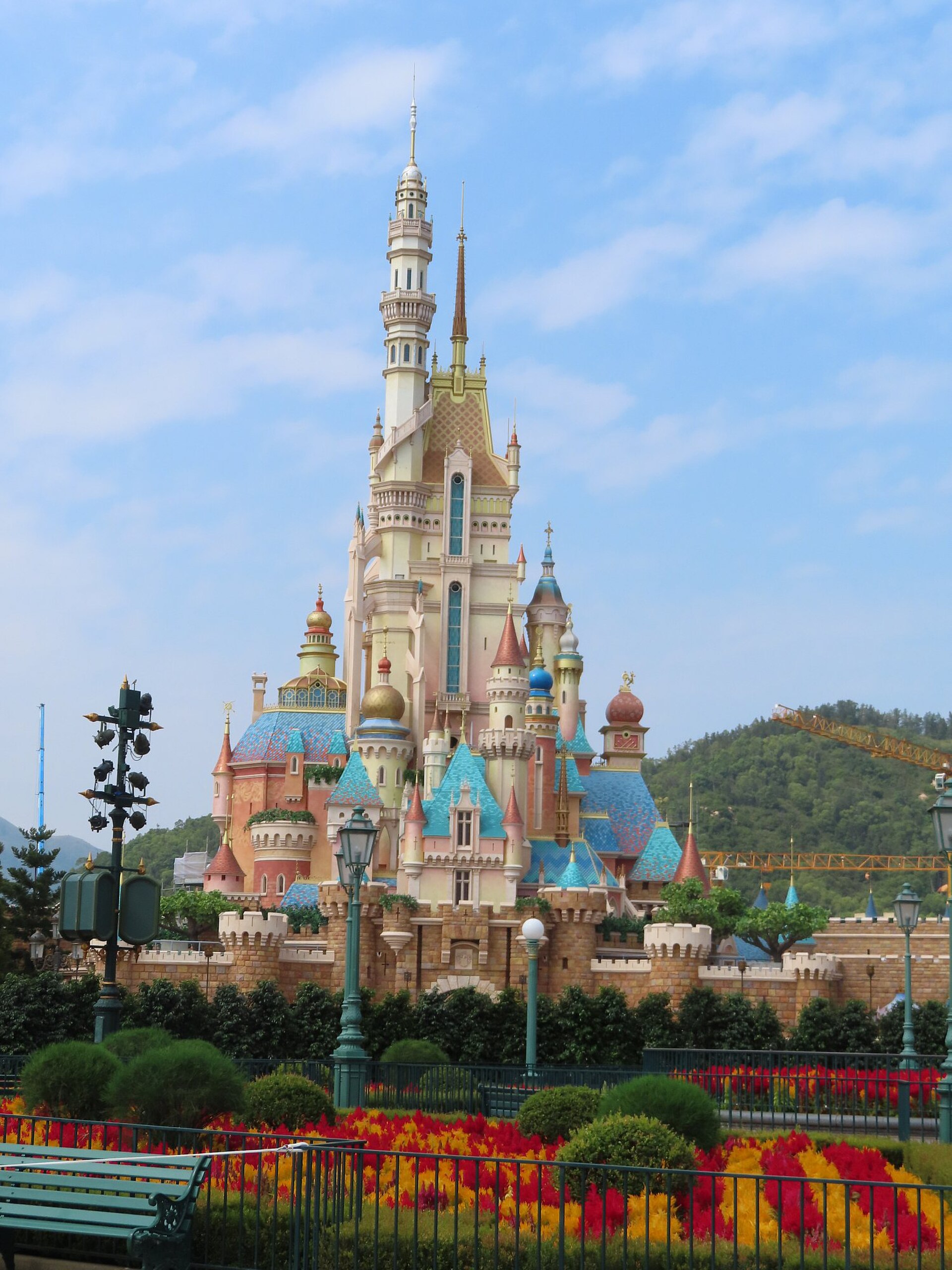
The Disney resort is an alternative title for the remote card. If its stories and attractions are the trip's priority, replace the religious plateau rather than placing both underneath the same heading. Make that choice before committing money. The option left behind is a conscious trade, not a failure to finish the island.
Each card responds differently to uncertainty. Ngong Ping requires an early go or no-go decision. Give the stronger operational window to the remote excursion and let street-level districts accept delay. A summit panorama can remain as a loose final note on the urban card, ready to move or disappear with the cloud.
Leave the Southern District park outside this compact version. Two dates are enough for contrast but not for completion. One card reveals dense opposing shores and their connection; the other leaves the central grid for a Buddhist landscape. The traveller gains a usable mental model because each outing has room to reach its own conclusion.
Lantau's transport labels prevent false proximity. Tung Chung serves as a gateway, Ngong Ping sits on the plateau, Tai O lies farther west, Mui Wo opens the southern ferry side, and Sunny Bay leads toward Penny's Bay. Write the chosen corridor beside its operator.
Checked 2026-09-09 · Official site · www.discoverhongkong.com
Checked 2026-09-09 · Official site · www.discoverhongkong.com
Three days in Hong Kong: add one major attraction


Treat the third date as a selection slot. Preserve the cross-water card and the Ngong Ping card from the shorter schedule. For the open slot, compare the Southern District park, the Disney resort and a district explored without an admission gate.
Aberdeen and Wong Chuk Hang locate the Southern District choice on Hong Kong Island. Disney stories and resort entertainment favour Penny's Bay. Food, street life, independent stops or a current museum programme favour the district option. It prevents the loudest preference from quietly becoming compulsory for everyone. Record the winner and one reason; stop reopening the contest unless operating conditions change.
Place the selection slot between the two outings expected to demand the most energy. A long mountain excursion followed immediately by a large park may be reasonable for some adults and wrong for a multigenerational group. A self-paced district can act as a buffer. At breakfast, consult the chosen destination's own notice. Remove an unavailable internal activity rather than replacing it with a venue across the territory.
Night plans inherit the daytime region. The Southern District choice returns to an island-side finish. Penny's Bay returns without a late summit diversion. A Kowloon exploration stays north of the water unless the boat ride is the intentional transition. A meal is not improved merely because it forces the group into a fourth zone after dark.
Keep the high viewpoint on a movable token across all three dates. Attach it to a Central block only when the ridge is visible and access makes sense. Otherwise put the token back in the envelope. This rule protects the larger commitments from being rebuilt around a single uncertain panorama. The resulting trip uses three different modes—linear orientation, remote excursion and chosen interest—while acknowledging that many valid Hong Kong experiences remain outside the frame.
A non-park third date has a precise Kowloon option. Sham Shui Po joins Pei Ho Street market, Yu Chau Street beads, Ki Lung Street buttons, Tai Nan Street leathercraft and Apliu Street electronics. Mei Ho House adds public-housing history. These trades create a connected district walk whose usefulness does not depend on a ticket, ride roster or panoramic weather.
Checked 2026-09-09 · Official site · www.discoverhongkong.com
Checked 2026-09-09 · Official site · www.discoverhongkong.com
Checked 2026-09-09 · Official site · www.discoverhongkong.com
Four days in Hong Kong: deepen Kowloon and Central


Retain one water-crossing orientation, one Ngong Ping excursion and the personal-interest selection. Assign the new chapter entirely to Hong Kong Island or entirely to Kowloon. It must not become a storage box for every pin rejected from the first three cards. Give it a direction and a stopping rule.
Choose whichever shore received less attention on arrival. In Kowloon, begin by the western promenade and allow cultural venues, streets and meals to pull the line inland. On the island, begin in Old Town Central and follow adjoining streets before deciding whether to finish beside the water. Circle the accommodation, then reject any dinner pin that creates an unplanned late crossing. The map exposes that waste immediately, while a list often hides it.
Use this chapter as the exchange unit when conditions change. A clouded summit can move into the island chapter on a clearer date, leaving street-level Central in its place. A disrupted remote excursion can swap with the shore chapter. Move the entire card, including its first transport and evening zone. Moving only the headline creates orphaned transfers that no longer serve the revised day.
Give the chapter two anchors and an empty middle. The first anchor supplies momentum; the last brings the party toward food or home. The open span accepts a current exhibition, a market, a cafe, an unexpectedly rewarding street or rest. Its lack of a third promise is deliberate. Current programmes end, appetites change and energy becomes measurable only after the trip begins.
Write four verbs at the top of the schedule: orient, journey, choose and deepen. Add ascend as a movable note rather than another full page. These verbs reveal duplication more clearly than attraction names. If two dates both say cross, one probably contains avoidable travel. Four days are useful because the opposing shores can become lived neighbourhoods rather than scenery on the way to another icon.
Wan Chai supplies another island-side chapter without repeating the Central grid. Stone Nullah Lane and Pak Tai Temple introduce older fabric; Jaffe Road shows commercial frontage and neon heritage; Bowen Road rises into a wooded corridor above Happy Valley.
Checked 2026-09-09 · Official site · www.discoverhongkong.com
Checked 2026-09-09 · Official site · www.discoverhongkong.com
Checked 2026-09-09 · Official site · www.discoverhongkong.com
Five days in Hong Kong: keep both parks optional

Add an effort code beside each of five dates: H for a demanding destination, M for a directed urban route and R for a self-paced block. The religious plateau will often be H. A full day in either large park is another H. The initial shore-to-shore orientation is M. A district selected for wandering, food and one optional interior can be R.
Never stack three H codes. Families, older relatives and travellers adapting to humidity or a new time zone need a morning that can slow down without becoming a failed itinerary. Insert R after the first major destination. Begin it near the accommodation and nominate only one endpoint. When everybody feels strong, let the middle expand. When they do not, reaching that endpoint is enough.
The fifth row creates a fork. A party with two genuine park advocates can use it for the second park. Other travellers can select a deeper district, a current museum programme or one ferry-served island after researching the actual sailing and terrain. The existence of another date does not create an obligation to purchase admission. An island excursion changes its code to H or M and forces a review of the next morning's load.
Keep the summit on a weather token outside the grid. Insert it into a compatible island-side row when visibility and access align. The historic uphill railway may be preferred without being allowed to determine whether the entire viewpoint remains possible.
A useful pattern might read M–H–R–H–M, although the sequence can rotate. Under every letter, write a region, a first movement and a release point. Material below the release line is optional. The notation holds meals near the endpoint, reveals duplicated transfers and makes fatigue discussable before it becomes conflict. Five days add value when they create attention and recovery, not when they simply multiply compulsory names.
For a ferry extension, Central Pier 5 identifies Cheung Chau. San Hing Praya Street, Pak She Praya Road and Tung Wan anchor its settlement, waterfront and beach. Lamma's Sok Kwu Wan, quieter Peng Chau, Mui Wo and Tai O are alternatives with distinct paths and terrain. One named pier and return sailing make a better plan than an island checklist.
Checked 2026-09-09 · Official site · www.discoverhongkong.com
Checked 2026-09-09 · Official site · www.discoverhongkong.com
One week in Hong Kong: alternate regions and energy levels

Build a seven-row board with four columns: fixed commitment, weather candidate, interchangeable district and recovery. Only a purchased or capacity-limited activity enters the first column. The summit waits under weather until the view and access are known. A free-form Central or Kowloon block sits under interchangeable. One recovery cell stays genuinely blank; naming it in advance would turn it into another obligation.
Begin with orientation and remoteness. One row crosses the central water and establishes both shores. Another travels to Ngong Ping for the Buddhist complex. These supply the map's grammar: lateral movement inside the dense core and a destination journey beyond it. Later rows must add a new purpose rather than repeat those movements with slightly different pins.
Permit no more than two park rows. One can hold the Southern District attraction and one the Penny's Bay resort, but both enter only when each has a named advocate. Otherwise return the unused row to a shore neighbourhood, a current exhibition or an outlying island selected after ferry and terrain checks. Write the displaced option beside any second park. Time is finite, and the board should show the trade rather than hiding it.
Reserve separate depth rows for Hong Kong Island and Kowloon. Give each a starting zone, one priority and an endpoint near dinner or the accommodation. Leave the middle unfilled. Street discoveries, a long meal or an unexpectedly absorbing museum can occupy it without making anything late. A further island row requires an explicit desired walking level and verified sailing information before it receives a date.
Review the board once each evening using official notices. When weather, closure or pace requires change, move an entire row with its transport and meal zone. Alternate demanding rows with self-directed ones and place the blank cell after whichever destination proves most tiring. Stop replanning when the next morning's first movement is clear.
A credible week may contain orientation, religious Lantau, one park, island-side depth, Kowloon depth, an optional island or second park, and recovery. This is a dependency map rather than a command. It allows the trip to decide its order while keeping substitutions local and visible. The result reaches beyond the skyline without confusing breadth with a duty to consume every attraction.
The open row can reach a district absent from the landmark shortlist: Kowloon City for its walled-city history and market, Kai Tak for the former-airport waterfront, West Kowloon for the Art Park and M+ surroundings, Sai Kung for a coastal emphasis, or Kennedy Town and Sai Ying Pun for western island streets. Pick one vocabulary after the earlier days reveal the missing perspective. Diamond Hill, Wong Tai Sin, Sha Tin, Tai Po, Yuen Long, Lei Yue Mun, Stanley, Repulse Bay and Shek O remain separate research directions rather than filler for the same afternoon.
- Victoria Harbour
- Star Ferry
- Avenue of Stars
- Victoria Peak
- Peak Tram
- Tian Tan Buddha
- Ocean Park Hong Kong
- Hong Kong Disneyland
Checked 2026-09-09 · Official site · www.discoverhongkong.com
Checked 2026-09-09 · Official site · www.discoverhongkong.com
Checked 2026-09-09 · Official site · www.discoverhongkong.com
Turn this list into a plan
Set your days, your pace and the hours you actually want to be out. The planner works around closing days and travel time, and leaves room to eat.