City guide
Barcelona: 12 Essential Things to Do
Editorial responsibility: Elena Voss · SSMTour Travel Editor
.jpg)
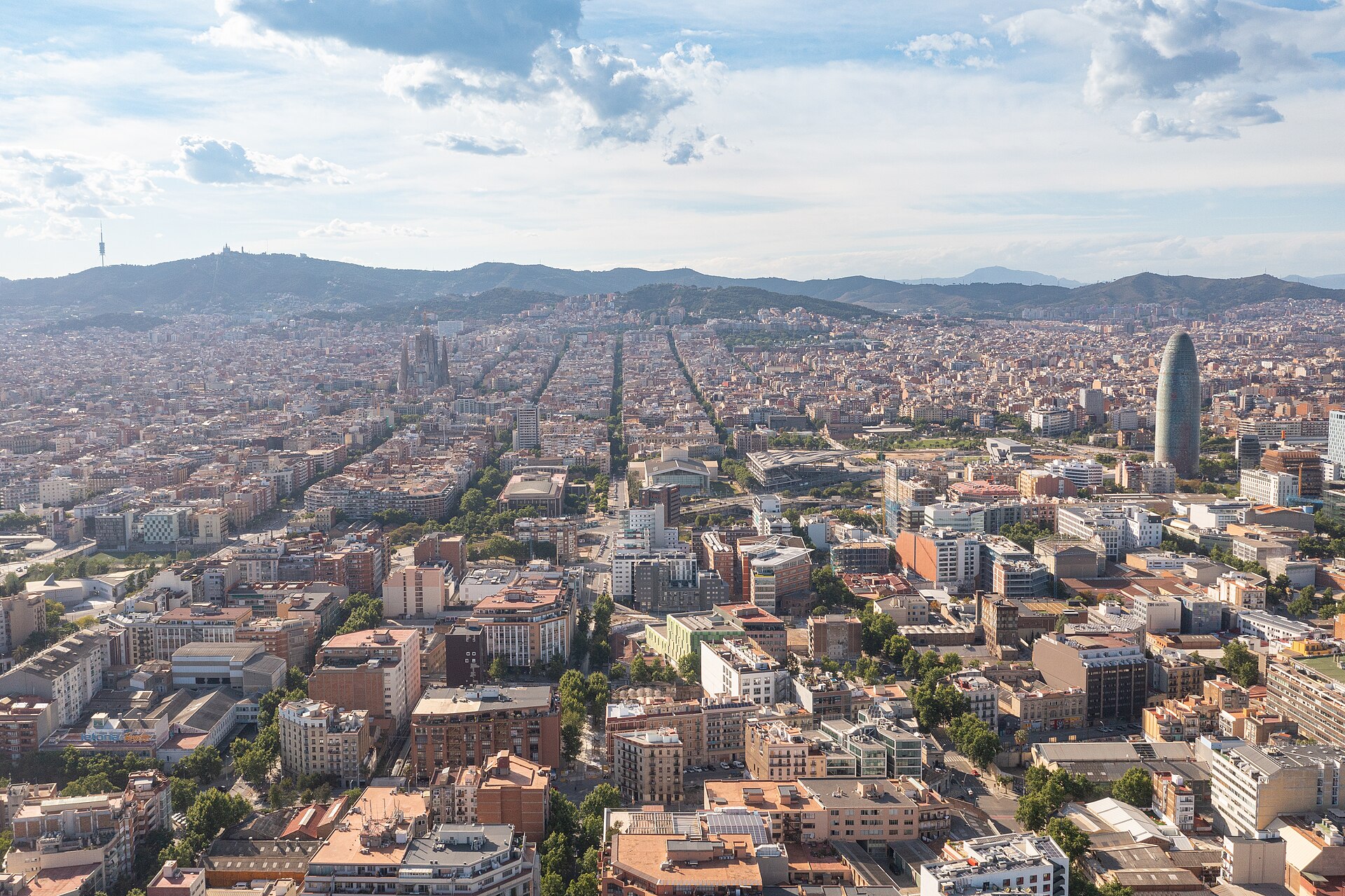
Compare 12 essential Barcelona experiences, from Gaudí landmarks and medieval lanes to Catalan art, a working market, Montjuïc and the city beach.
This guide is part of our Barcelona destination coverage. Barcelona
1. Sagrada Família
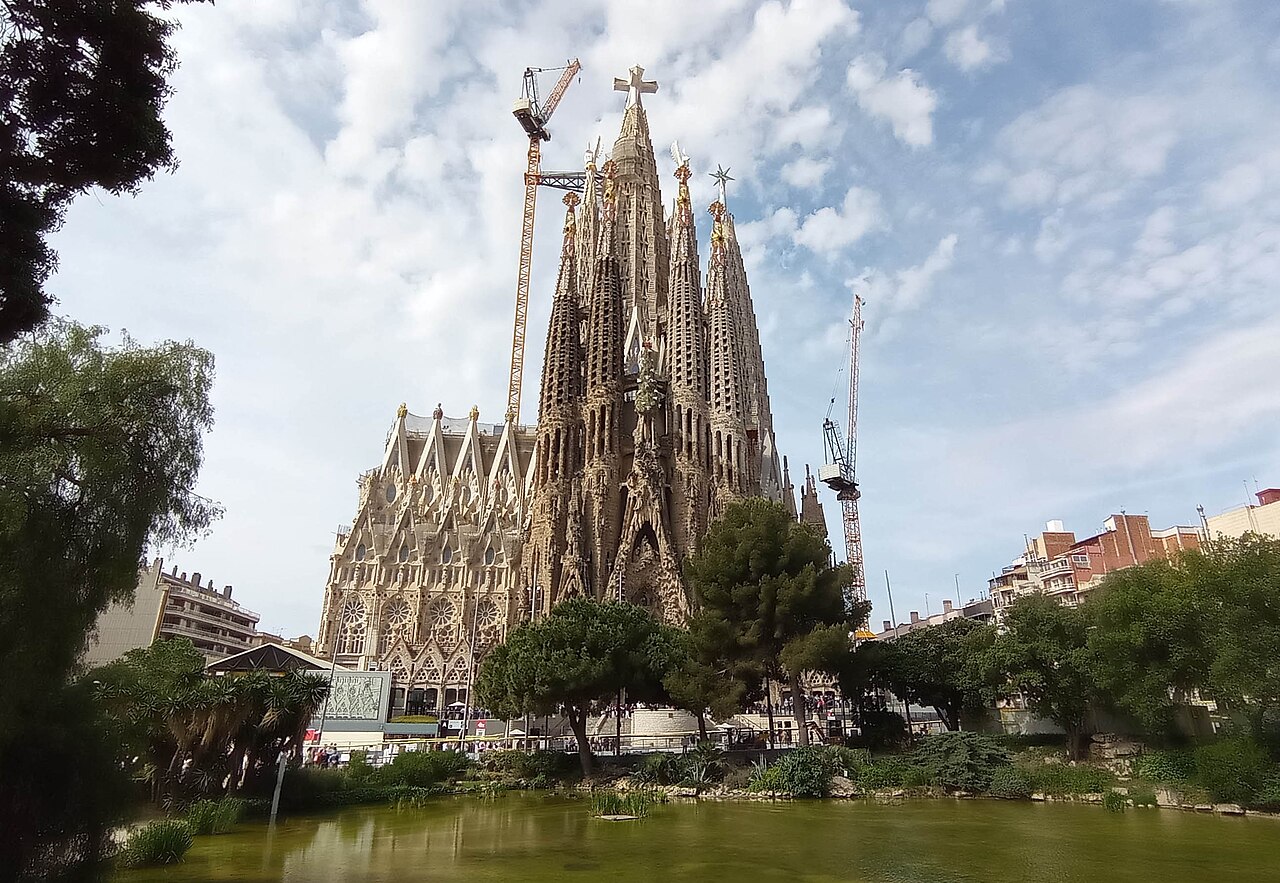

The Sagrada Família expresses the scale of Antoni Gaudí’s religious and architectural ambition. The cornerstone was laid in 1882, Gaudí inherited an earlier project, and construction still continues more than 140 years later. That unfinished chronology is part of the monument’s identity. The Nativity façade gathers plant, animal and biblical forms into dense stonework, while the Passion façade uses a more severe geometry and a different sculptural language.
Inside, branching columns distribute structural loads while changing in form and material as they rise. Light enters through coloured glazing and crosses a nave whose proportions are easier to understand from several viewpoints than from the central aisle alone. The basilica remains a place of worship and an active building project, so the visible work belongs to a continuing history rather than a frozen museum display. Models, drawings and successive construction milestones also show how later teams translated incomplete documentation into buildable geometry. Its principal subjects are structure, Christian symbolism and the transmission of one project across generations of architects and craftspeople. Current official information governs which components visitors can access.
Checked 2026-09-08 · Official site · sagradafamilia.org
2. Park Güell
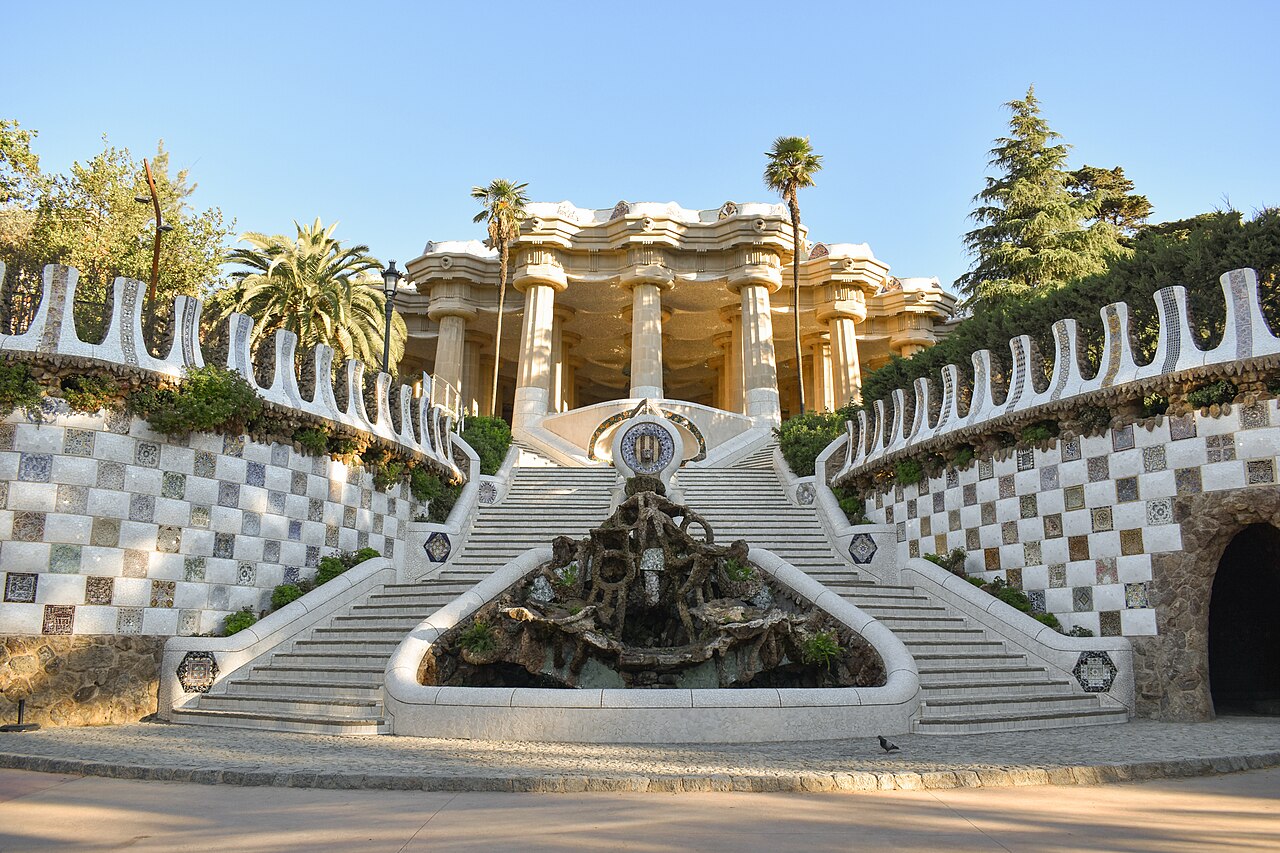

Park Güell shows Gaudí working with terrain, infrastructure and shared space. Eusebi Güell commissioned a residential park in 1900, when Barcelona’s Eixample was rapidly expanding. The housing project failed, but the city later acquired the site and opened it as a public park in 1926. The entrance lodges, roads, viaducts and communal spaces therefore belonged to an intended neighbourhood rather than a collection of independent garden ornaments.
Inclined columns and rough stone allow the viaducts to merge visually with the hillside. The Hypostyle Room supports the broad terrace, engineering a covered space below an open gathering place. Broken-tile mosaic appears most intensely around the monumental zone, while planted slopes and circulation paths occupy a much larger landscape. The project also belongs to the wider rise of Catalan Modernisme, which connected artistic renewal with Barcelona’s rapid industrial and urban transformation. These contrasts reveal how Gaudí combined architecture, drainage, movement and vegetation. The official site currently reports work on drainage, sewerage and irrigation systems, evidence that the park still functions as managed urban infrastructure as well as protected heritage.
Checked 2026-09-08 · Official site · parkguell.barcelona
Checked 2026-09-08 · Official site · parkguell.barcelona
3. Casa Batlló
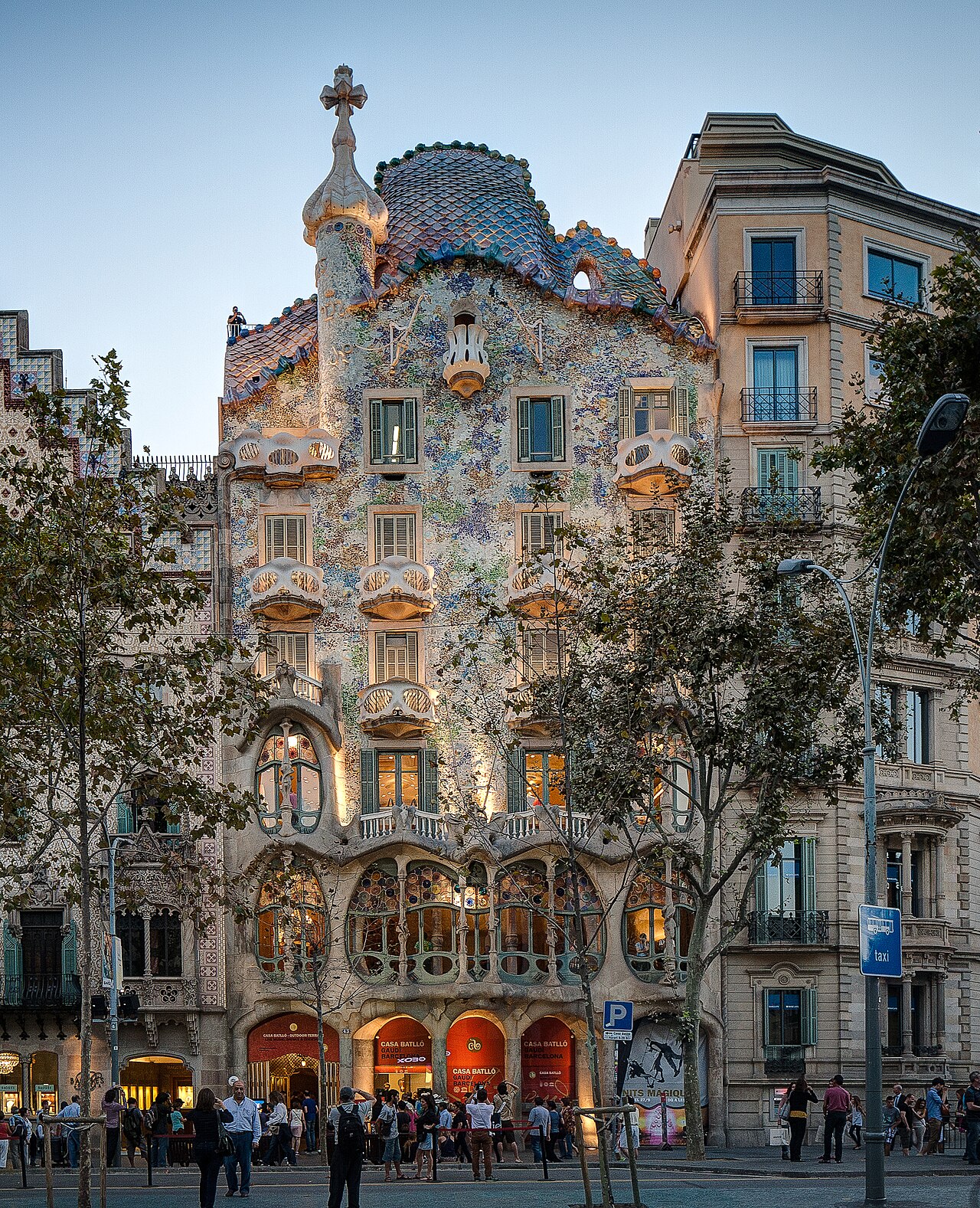

Casa Batlló compresses architecture, furniture and decorative craft into a transformed Eixample house. Gaudí did not begin with an empty plot: between 1904 and 1906 he remodelled an 1877 building for textile industrialist Josep Batlló. He altered the façade, enlarged the light well, redistributed rooms and reshaped the roof without demolishing the existing structure. The neighbouring houses by other architects form the Block of Discord, a concentrated display of competing Modernista approaches.
Door handles, railings, glazing and ventilation show that the design reaches beyond theatrical surfaces. Blue tiles become darker towards the top of the light well to balance the available light, while distorted glass changes the view across landings. Outside, stone columns, cast-iron balcony masks, glass fragments and ceramic pieces create an undulating surface. The scaled roof and cross-topped turret support the popular Saint George and dragon reading; marine forms suggest another interpretation. Gaudí did not publish a single explanation, leaving the imagery open while the building’s functional alterations remain concrete.
Checked 2026-09-08 · Official site · www.casabatllo.es
Checked 2026-09-08 · Official site · www.casabatllo.es
4. La Pedrera–Casa Milà
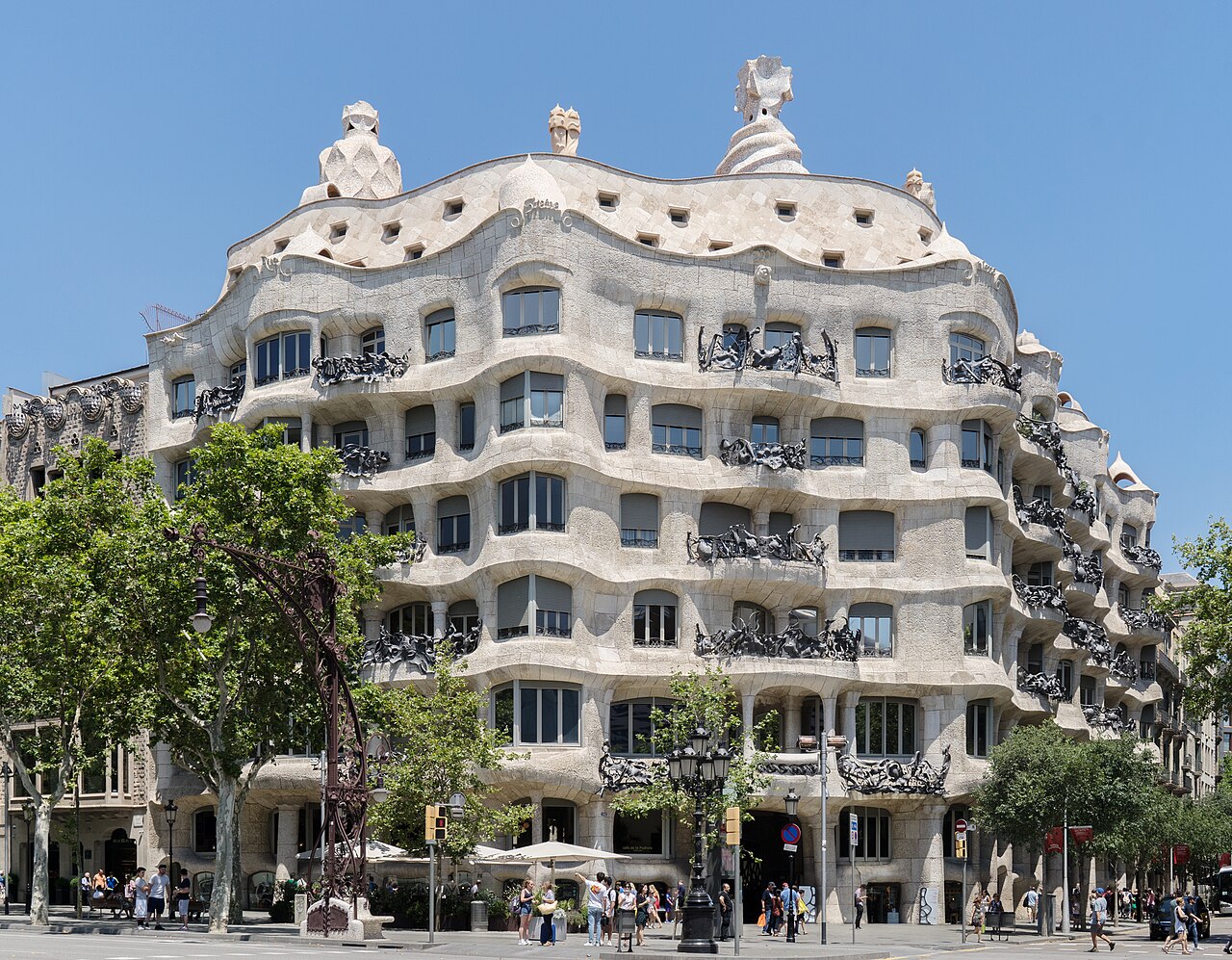

La Pedrera–Casa Milà treats an apartment block as an engineering problem and a total work of design. Pere Milà and Roser Segimon commissioned the house, built from 1906 to 1912 as Gaudí’s last civil project. Two blocks wrap around large courtyards, while stone and brick pillars replace conventional load-bearing walls and allow freer apartment plans. Vehicle ramps address a changing city, and the stone curtain façade moves independently of much of the internal structure.
On the roof, chimneys, ventilation towers and stair enclosures give necessary services sculptural form. The attic’s repeated catenary arches expose an economical structural system beneath that skyline. Two courtyards bring light and air into the depth of the block; different window sizes respond to the amount of light reaching each level, and painted surfaces turn internal façades into deliberate compositions. Wrought-iron balconies, irregular entrance glazing and surviving basement grilles extend the same logic to metalwork. The building’s continuing residential, cultural and commercial uses preserve its original status as more than a monument.
Checked 2026-09-08 · Official site · www.lapedrera.com
Checked 2026-09-08 · Official site · www.lapedrera.com
5. Museu Picasso


The Museu Picasso concentrates on artistic formation and the painter’s relationship with Barcelona. Picasso’s family moved to the city in 1895, when he was almost fourteen, and Barcelona became central to his academic training, friendships and early exhibitions. The museum describes a collection of about 5,000 works, particularly strong in those formative years. Painting, drawing, printmaking, ceramics, sculpture, illustrated books and sketchbooks show changes in medium as well as style.
Early academic studies reveal the discipline beneath later experimentation. Barcelona landscapes connect the collection to the surrounding city, while portraits preserve members of Picasso’s family and artistic circle. The Las Meninas group records an extended reinterpretation of Velázquez rather than a single response. Historic buildings on Carrer Montcada in La Ribera supply the setting: courtyards, arches and stone stairs place twentieth-century art inside an older urban fabric. The collection therefore answers how Picasso developed and why Barcelona remained important to his story, rather than attempting to represent every famous period equally.
Checked 2026-09-08 · Official site · museupicassobcn.cat
Checked 2026-09-08 · Official site · museupicassobcn.cat
6. Gothic Quarter
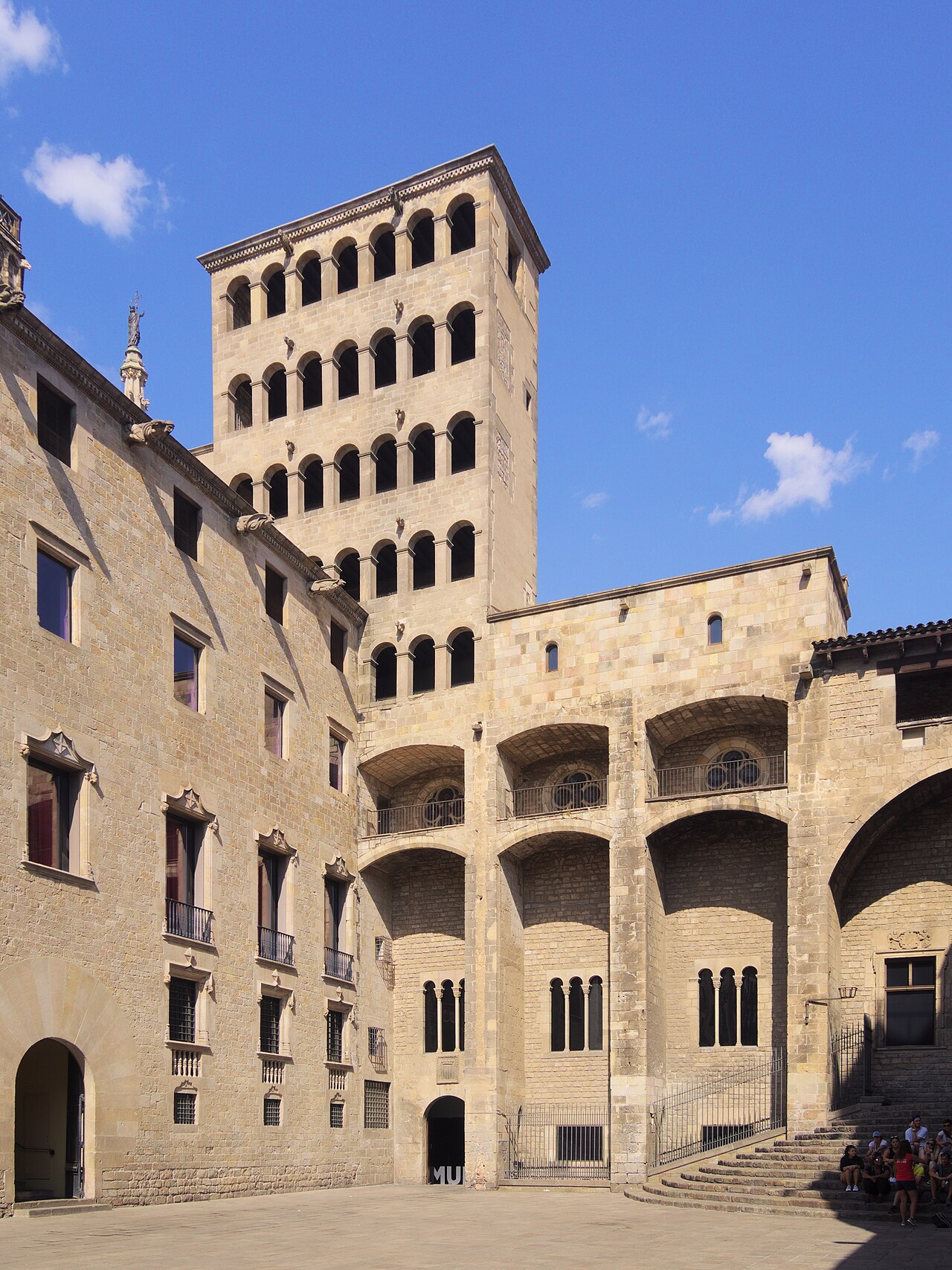

The Gothic Quarter contains Roman, medieval and modern Barcelona within the same compact core. Carrer del Bisbe and Carrer Llibreteria follow the axes of Barcino, and columns from the Temple of Augustus survive nearby. Plaça Sant Jaume holds the city hall and seat of the Catalan government. Plaça del Rei gathers royal buildings above archaeological remains, while the Cathedral, Jewish quarter and smaller churches represent different religious and civic communities.
The district is not a preserved medieval stage set. Government offices still operate, residents use the narrow streets, and later interventions shape the image visitors see today. Roman fragments sit below or inside later buildings; Gothic structures acquired new façades; commercial streets connect solemn squares. Plaça Sant Felip Neri offers a Baroque church within this older fabric, and the Call preserves the street pattern associated with the Jewish quarter. Reading those layers separately makes the neighbourhood more intelligible than labelling every pointed arch or stone wall “Gothic.”
Checked 2026-09-08 · Official site · bid.barcelonaturisme.com
7. Palau de la Música Catalana
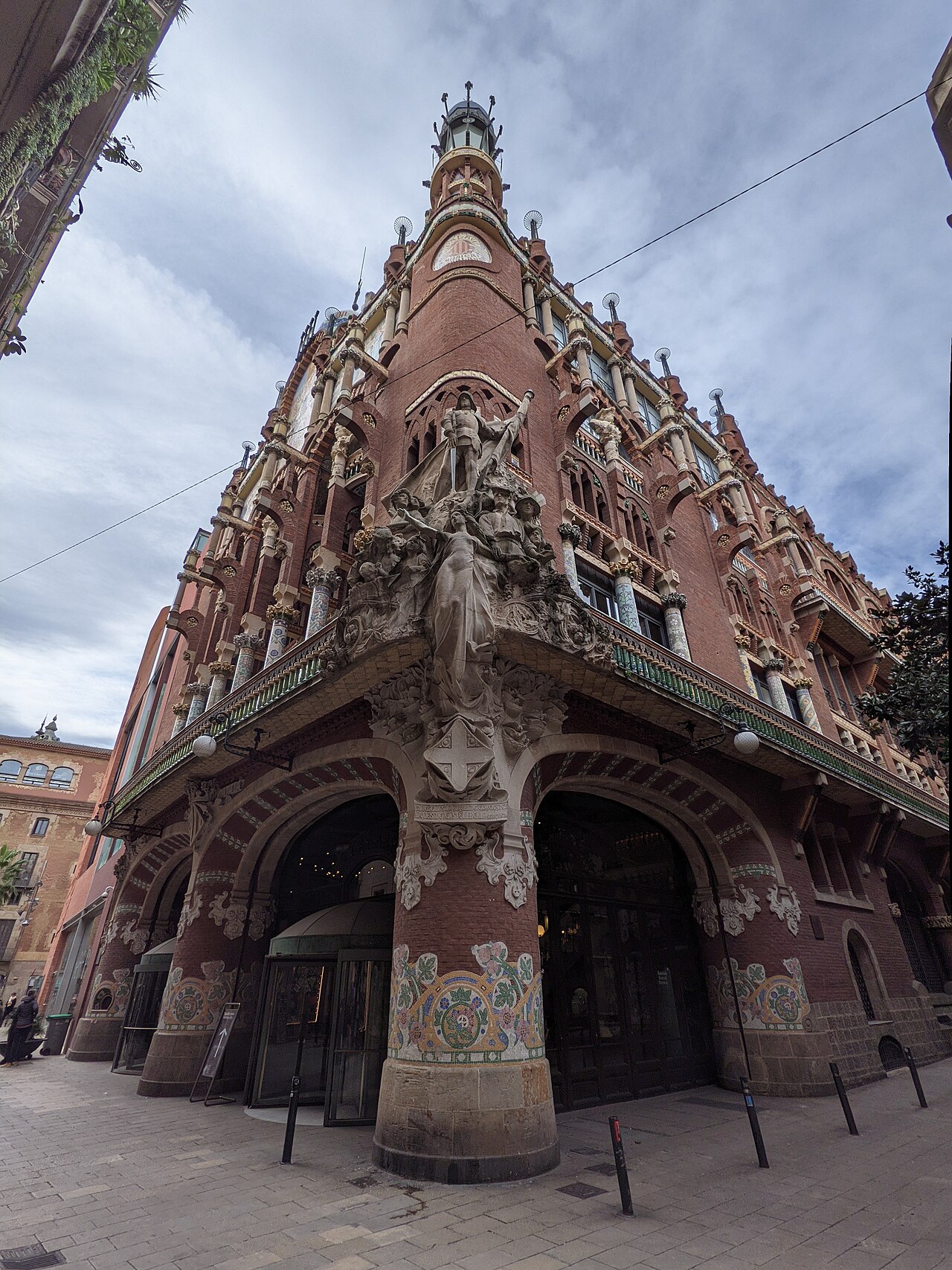

The Palau de la Música Catalana presents Catalan Modernisme through a working concert hall. Lluís Domènech i Montaner combined brick, iron, ceramic, mosaic, stained glass and sculpture in a building constrained by the narrow streets of Sant Pere. The historic façade includes Miquel Blay’s sculptural group for Catalan popular song and a mosaic pediment tied to the Orfeó Català. Ornament carries musical and civic references rather than serving as a detached skin.
Inside, slender columns and broad areas of glazing help the auditorium feel lighter than the surrounding street suggests. The inverted stained-glass skylight concentrates daylight above the seating, while sculpture around the stage joins classical and popular musical traditions. Balconies, floral capitals and ceramic surfaces remain visible during performances, preserving the room’s dual identity as architecture and instrument. The Palau demonstrates that Modernisme in Barcelona extended beyond Gaudí and private commissions: choral culture, collective patronage and a public musical institution produced a different kind of total artwork.
Checked 2026-09-08 · Official site · www.palaumusica.cat
8. Barcelona Cathedral


Barcelona Cathedral anchors the old city with a building history deeper than its nineteenth- and early twentieth-century façade. The present Gothic cathedral began in 1298 over earlier Christian and Romanesque churches and was substantially complete by the middle of the fifteenth century; the cloister was finished in 1448. Three naves, a single apse, an ambulatory and chapels placed between buttresses create the broad spatial character associated with Catalan Gothic architecture.
The cloister’s galleries surround a garden and pond inhabited by the traditional thirteen white geese. Reliefs on pillars and carved keystones carry biblical subjects, while chapels preserve links to guilds, institutions and families. The choir contains late medieval stalls and shields connected with a Golden Fleece chapter held in Barcelona in 1519. Rooftop access, when offered under current conditions, reveals bell towers, pinnacles, the dome and the old-city roofscape. The cathedral remains an active place of worship; the Chapel of the Holy Christ of Lepanto is reserved for prayer during celebrations, keeping devotional use distinct from display.
Checked 2026-09-08 · Official site · catedralbcn.org
Checked 2026-09-08 · Official site · catedralbcn.org
9. La Boqueria
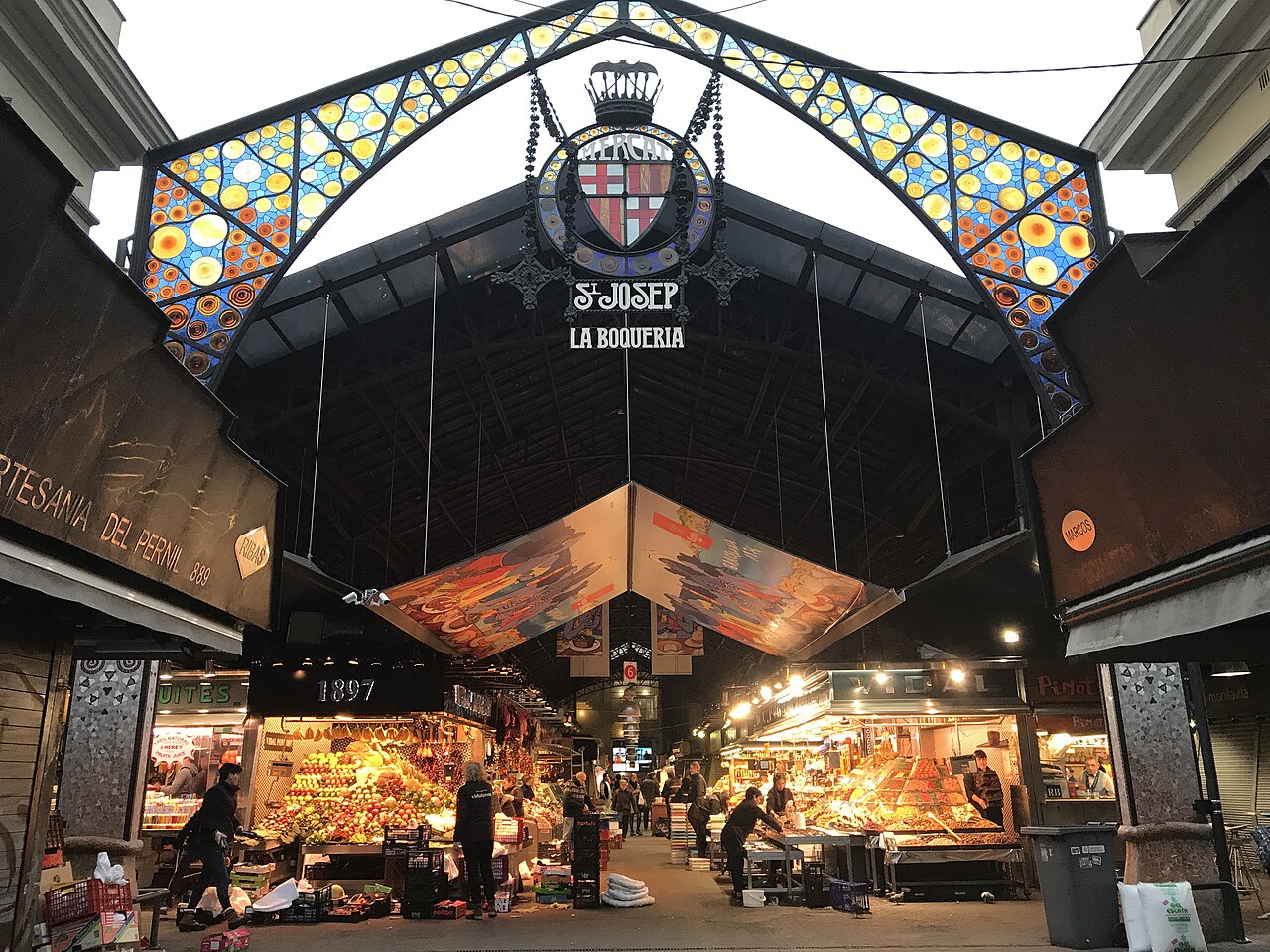

La Boqueria is a functioning municipal market with a documented relationship to La Rambla stretching across centuries. Records place meat stalls on Pla de la Boqueria in 1217, when temporary open-air markets brought products from surrounding villages. Traders moved through several nearby sites before occupying the former convent grounds in the nineteenth century. Regulation in 1827 described two hundred stalls, including one hundred selling fresh or salted meat and forty-eight selling fish. The foundation stone was laid in 1840, and Antoni de Falguera’s Modernista entrance arches and metal roof followed in 1913 and 1914.
The Rambla entrance announces the market, but the internal aisles and Gardunya side reveal its larger working structure. Specialist counters organise meat, fish, fruit, vegetables, preserved goods and prepared food; loading, selling and eating overlap within the same institution. The busiest central passage can obscure quieter stalls farther inside. Products, vendors and prices change, so no individual counter defines the whole market. Architectural layers—from the former convent plot and nineteenth-century plan to the twentieth-century roof—make La Boqueria evidence of how food distribution, regulation and public space developed beside Barcelona’s most famous promenade.
Checked 2026-09-08 · Official site · www.boqueria.barcelona
10. Sant Pau Art Nouveau Site
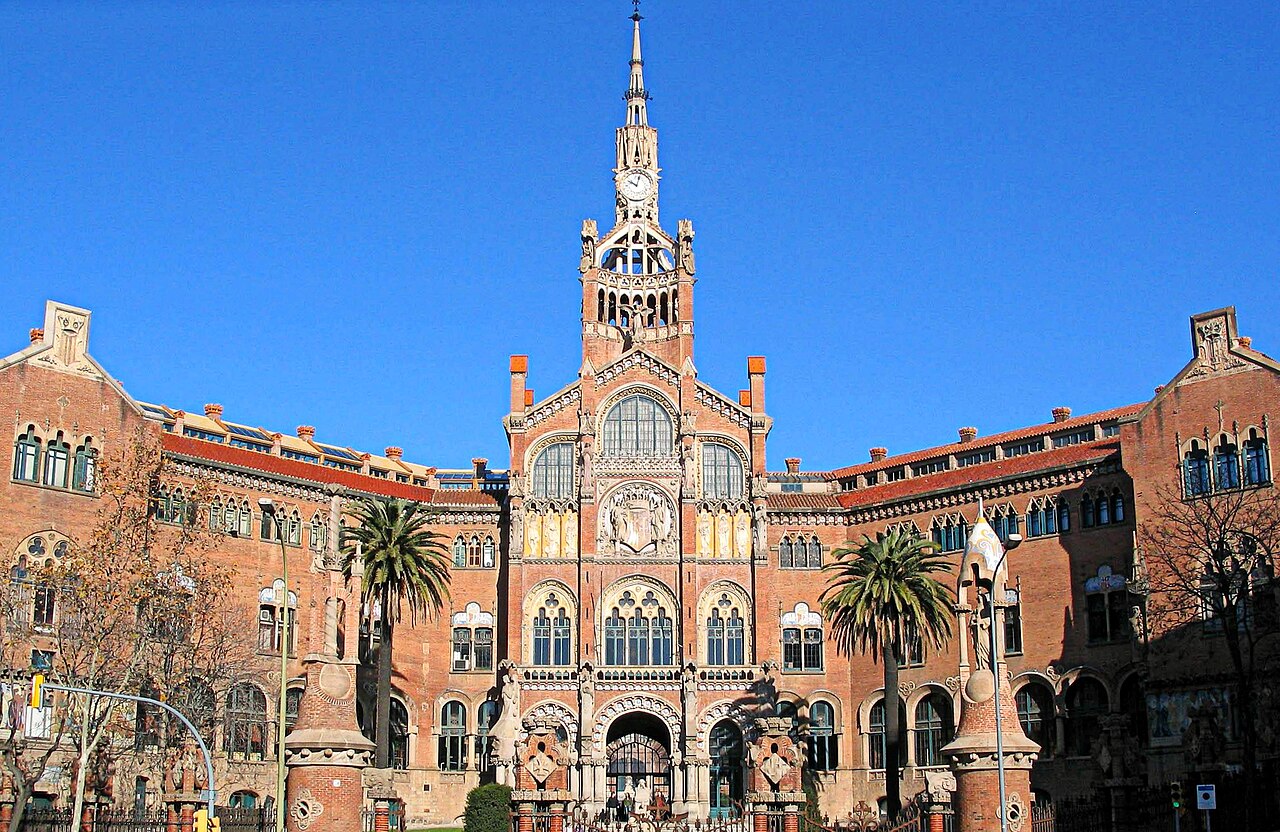

Sant Pau Art Nouveau Site explains how Modernisme served public health as well as wealthy households and concert audiences. Banker Pau Gil’s bequest funded a new hospital for a rapidly growing Barcelona. Lluís Domènech i Montaner organised specialist pavilions within gardens and connected them through underground tunnels. Natural light, ventilation and open space belonged to the medical concept. Of forty-eight planned buildings, twenty-seven were constructed and sixteen followed the original Modernista design. Healthcare moved to a newer complex in 2009, enabling restoration and cultural use of the historic campus.
Two diagonal axes establish the layout before decoration is considered. Gardens isolate wards while maintaining visual unity; brick, tile, sculpture and stained glass distinguish individual pavilions. Administrative buildings present a more ceremonial face, whereas patient spaces reveal the hygienist programme. The complex connects architecture, urban expansion, philanthropy and the history of care, making it a necessary counterweight to Barcelona narratives centred only on private houses. Its separate pavilions also show Modernisme operating at institutional scale rather than through a single façade or room sequence.
Checked 2026-09-08 · Official site · santpaubarcelona.org
11. Museu Nacional d’Art de Catalunya


The Museu Nacional d’Art de Catalunya presents Catalan art across a much wider chronology than a single-artist museum. It occupies the Palau Nacional, built for the 1929 International Exposition on Montjuïc. The collection is particularly known for Romanesque mural painting, then continues through Gothic art, Renaissance and Baroque works, photography and modern art. The modern galleries place Gaudí, Ramon Casas, Santiago Rusiñol, Picasso, Joaquim Mir and other artists within social and international contexts rather than defining Modernisme through architecture alone.
Romanesque church ensembles preserve relationships among mural images, apses and liturgical settings. Gothic rooms extend the medieval account into panels, sculpture and metalwork. The modern collection brings painting and sculpture together with decorative arts, posters, photography, cinema and architectural material from the nineteenth century into the avant-gardes. The Palau Nacional contributes its own 1929 monumental language: broad stairs, a domed silhouette and a commanding position above Plaça d’Espanya. Museum, exposition building and hilltop setting thus describe three different stages in Barcelona’s cultural representation.
Checked 2026-09-08 · Official site · www.museunacional.cat
Checked 2026-09-08 · Official site · www.museunacional.cat
12. Barceloneta Beach

.jpg)
Barceloneta Beach shows a dense Mediterranean city meeting the sea beside its historic fishing quarter. It belongs to a continuous urban waterfront rather than a remote resort strip. The official tourism service identifies it as one of Barcelona’s oldest and best-loved beaches and connects it closely with the neighbourhood’s maritime identity. Promenades, harbour infrastructure and the narrow street grid expose the transition among sand, housing and Port Vell.
The shore is also a managed public space. Accessible routes, showers, toilets and other services are documented by the city, but their operation can vary by season and current conditions. Weather, water quality, crowding and lifeguard coverage remain live information rather than permanent attributes. Barcelona’s beaches are smoke-free, and temporary safety instructions apply even when the setting feels informal. The beach’s cultural importance comes from this overlap: bathing place, neighbourhood edge, public promenade and evidence of the city’s continuing relationship with the Mediterranean.
Checked 2026-09-08 · Official site · bid.barcelonaturisme.com
Turn this list into a plan
Set your days, your pace and the hours you actually want to be out. The planner works around closing days and travel time, and leaves room to eat.