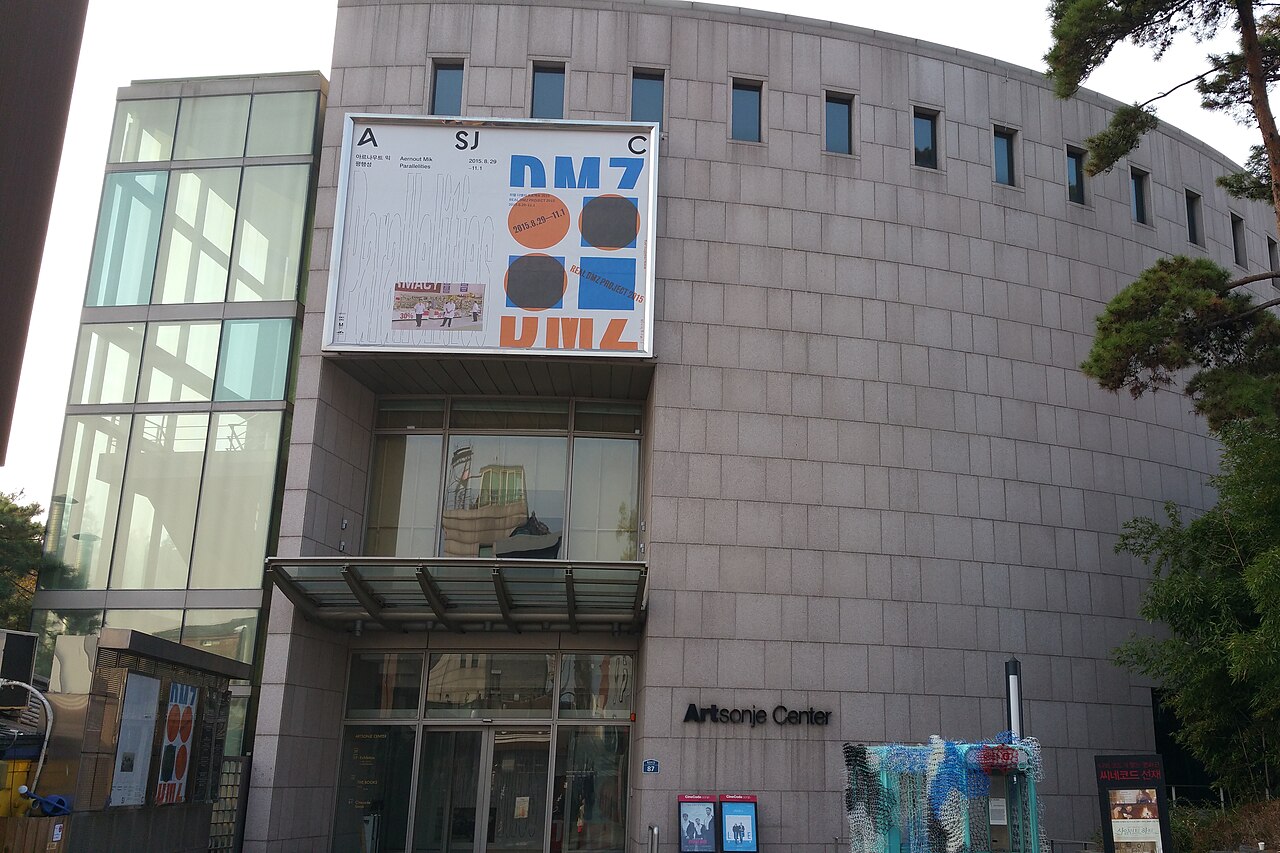
Art Sonje Center, also known locally as 아트선재센터, is a contemporary art institution in Seoul. The center presents modern and contemporary exhibitions and related cultural programmes in a dedicated setting for artistic discussion. Its role is different from a broad historical museum: the experience is shaped by the current exhibition and by the questions raised through contemporary practice. Travelers interested in Seoul's cultural life can use Art Sonje Center as a focused stop for visual art, exhibition design and public engagement with artists and ideas.
The center's exhibition spaces are designed for contemporary artworks across several media. A visit may involve installation, video, painting and sculpture, with the arrangement shaped by the exhibition on display. Contemporary art often rewards attention to the relationship between the work, the room and the route through the gallery, so Art Sonje Center is best approached as an exhibition experience rather than a checklist of permanent objects. The center's programmes add an element of artistic discourse, making the visit useful for travelers who enjoy ideas, interpretation and changing visual environments.
Allow one to two hours for a meaningful visit to Art Sonje Center. That window gives enough time to move through the exhibition spaces, read the available explanations and pause with works that need longer looking. Visitors with a strong interest in a particular artist, medium or theme may stay longer, especially when several spaces are in use. Travelers combining the center with other Seoul cultural stops can make a shorter, concentrated visit. The right pace depends on the exhibition's scale, but rushing through contemporary installations usually loses the relationship between the works and their setting.
Choose the center according to the exhibition you want to see and the amount of time available for looking. Weekday visits, particularly earlier in the day, generally provide a quieter atmosphere for reading and reflection. Seoul's spring and autumn weather makes walking between cultural venues comfortable; summer is hot and humid, while winter is cold. Exhibition openings and popular programmes can make the galleries more active. Art Sonje Center works well in a day built around contemporary culture, because the indoor visit can balance walks through Seoul's changing streets and nearby cultural districts.
The center's admission arrangement is tied to its exhibition programme, and the guide does not state a price or free-entry rule. Plan the visit around the art rather than a presumed ticket category. Contemporary exhibitions can differ in scale and presentation, so the amount of time you spend inside may also vary. If Art Sonje Center forms part of a museum day, leave room for the current exhibition to set the pace. The center is most rewarding when travelers treat each gallery as part of one curated argument instead of moving through it only as a quick photo stop.
Art Sonje Center is in Seoul, a city served by an extensive subway and bus network. Use the center's name and location in a current mapping application to plan the final walk from public transport. A taxi offers a direct approach when the route is spread across several districts, although traffic affects journey time. Seoul's transit system makes it practical to combine the center with other cultural venues in one day. Keep the Korean name, 아트선재센터, available when asking for directions, since Korean signage and destination names are common throughout the city.
Contemporary exhibitions can include challenging, provocative or conceptually demanding material, so the center suits travelers who are comfortable with art that may not offer an immediate narrative. Keep a respectful distance from works and follow barriers and staff directions. Gallery spaces are intended for quiet looking and discussion at a considerate volume. English support may vary, while Korean labels can carry more of the exhibition's detail. Crowding is possible around popular displays or programme events. Secure personal belongings and allow extra attention for installations that use sound, light or unusual spatial layouts.
Photography rules can differ between exhibitions at Art Sonje Center, so posted instructions at each gallery matter. Flash is unsuitable for artworks and disrupts the viewing experience. Tripods, selfie sticks and other large equipment can obstruct a contemporary installation or narrow passage. When photography is permitted, frame personal images without blocking another visitor or standing too close to the work. Copyright remains relevant to displayed art, especially for commercial or publication use. A travel photograph is not the same as permission to reproduce an artwork, so keep personal and professional use separate.
Nothing non-essential is set before you choose, in regions where consent is required. If you decline, ads still appear but they are non-personalised, and analytics is switched off entirely.



.jpg)