
01
1 hour
말
- Notable
- Art and culture venue
Language · 1 published
City guide · South Korea
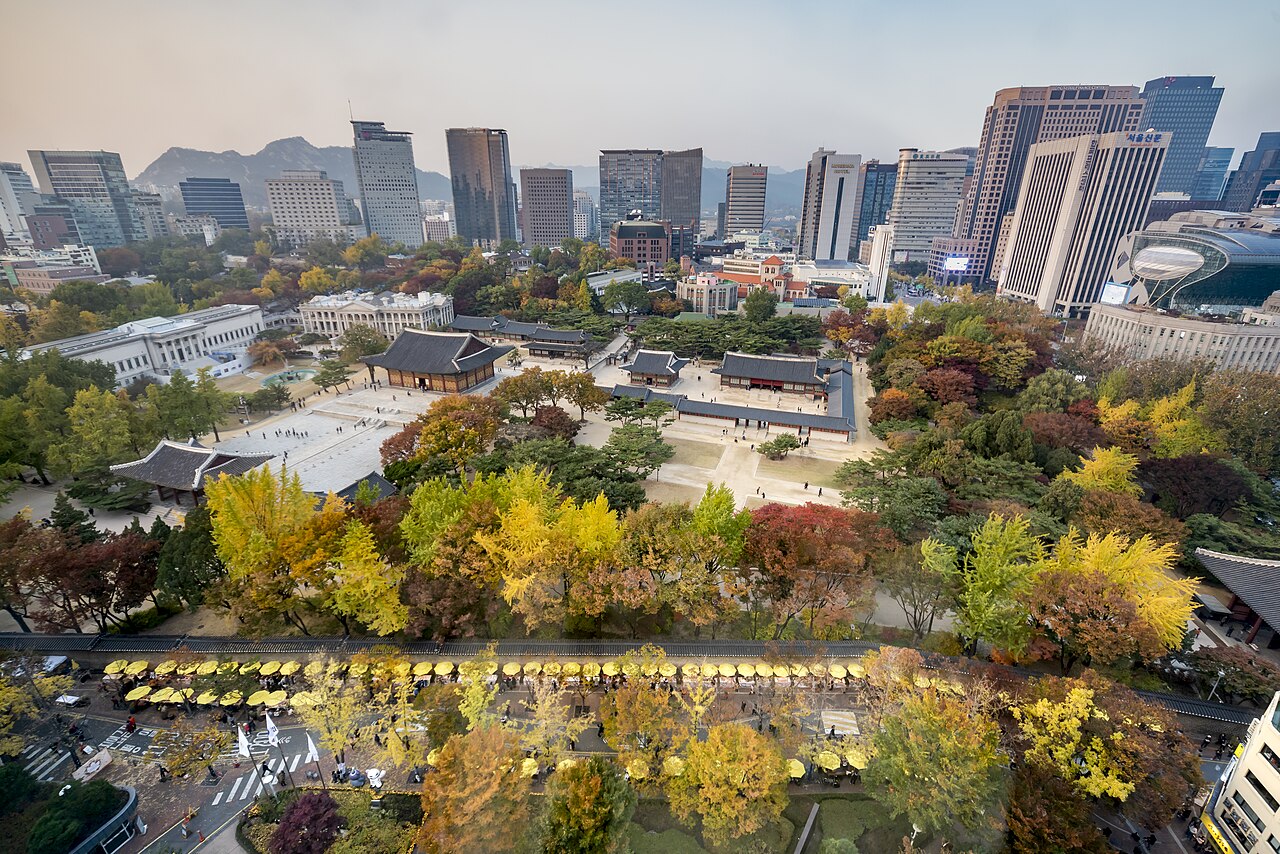
Seoul is 605.21 km² holding 9,579,449 people at the start of 2026, inside a metropolitan area of 26,037,000 spread over 12,685 km². The Han River bisects it, and the halves are not interchangeable: Gangbuk to the north carries the Joseon capital, Gangnam to the south was built in the last fifty years. Four mountains — Bugaksan, Inwangsan, Naksan and Namsan — frame the old centre, and Gyeongbokgung, completed in 1395, sits under the first of them. Twenty-five gu and 467 administrative dong are stitched together by a metro that carried around seven million passengers a day in 2024. A visitor will use six or seven of those districts.
Ranked by importance — sitelinks, pageviews and heritage status, not editor preference.
Seoul is a river city with a mountain frame. The Han River runs east-west through the metropolis and splits the older north from the newer south. North of the river, the historic centre sits between Bugaksan and Namsan: Gyeongbokgung, Changdeokgung, Bukchon, Insadong, Myeongdong and City Hall are all short subway hops from one another. South of the river, Gangnam, COEX and the wide boulevards feel newer and more corporate. The city is divided into twenty-five gu, but a visitor usually thinks in clusters: palace district, Jongno and Insadong, Myeongdong and Namsan, Hongdae and Sinchon, Itaewon, Gangnam, and the Han riverfront parks.
Checked 2026-08-26
The subway is the spine and the buses fill the gaps. Seoul's official visitor information tells first-time riders to buy a public transportation card such as T-money or Cashbee, reload it, and use it across subway, bus, taxi and public bike trips. That matters because Seoul is too large to walk as one city: a palace-to-Gangnam transfer can be a full cross-town journey, while two sights in Jongno may be a ten-minute walk. Use subway exits carefully, because a wrong exit can put a wide road between you and the place you came for. Buses are useful for slopes, late evenings and routes that cut across the subway grid.
Checked 2026-08-26
Four to five. Two days cover the palace core, Bukchon, Insadong, Myeongdong and Namsan at a brisk pace. A third adds a modern district such as Gangnam or Hongdae, and the fourth and fifth let the city breathe: river parks, markets, museums and a slower evening route.
North of the river is easier for a first visit because it holds the palace district, Bukchon, Insadong, Myeongdong, City Hall and Namsan. South of the river is essential for Gangnam, COEX and some nightlife, but it works better as a subway trip than as the base for a first historical itinerary.
Seoul's own visitor guidance names T-money and Cashbee as the two public transportation cards and says they can be used not only for buses and subway trips but also for taxis and public bikes. Buy one early, because transfers are much smoother with a card than with single tickets.
Neighbourhood by neighbourhood, yes. Across the city, no. Jongno, Insadong, Bukchon and the palace area can be walked as one cluster; Myeongdong and Namsan can be another. Gangnam, Hongdae, Yeouido and the river parks are subway or bus trips.
April to May and September to October. Spring and autumn give the city its best walking weather; winter can be sharp and dry, while summer is humid enough that indoor breaks and subway transfers become part of the plan.
Set your days, your pace and the hours you actually want to be out. The planner works around closing days and travel time, and leaves room to eat.