

2 min walk
Art Sonje Center
- High
- Art and culture venue
Language · 11 published
Art and culture venue · Seoul
국립현대미술관 서울관
Reviewed by Elena Voss · SSMTour Travel Editor
| Monday | 10:00 – 18:00 |
|---|---|
| Tuesday | 10:00 – 18:00 |
| Wednesday | 10:00 – 21:00 |
| Thursday | 10:00 – 18:00 |
| Friday | 10:00 – 18:00 |
| Saturday | 10:00 – 21:00 |
| Sunday | 10:00 – 18:00 |
Checked 2026-08-31 · Source
Read from the OpenStreetMap access tags; anything not listed has no tag recorded.
Set the group type to family in the planner and the day window contracts to about three quarters of a solo day.
This place is a Art gallery.
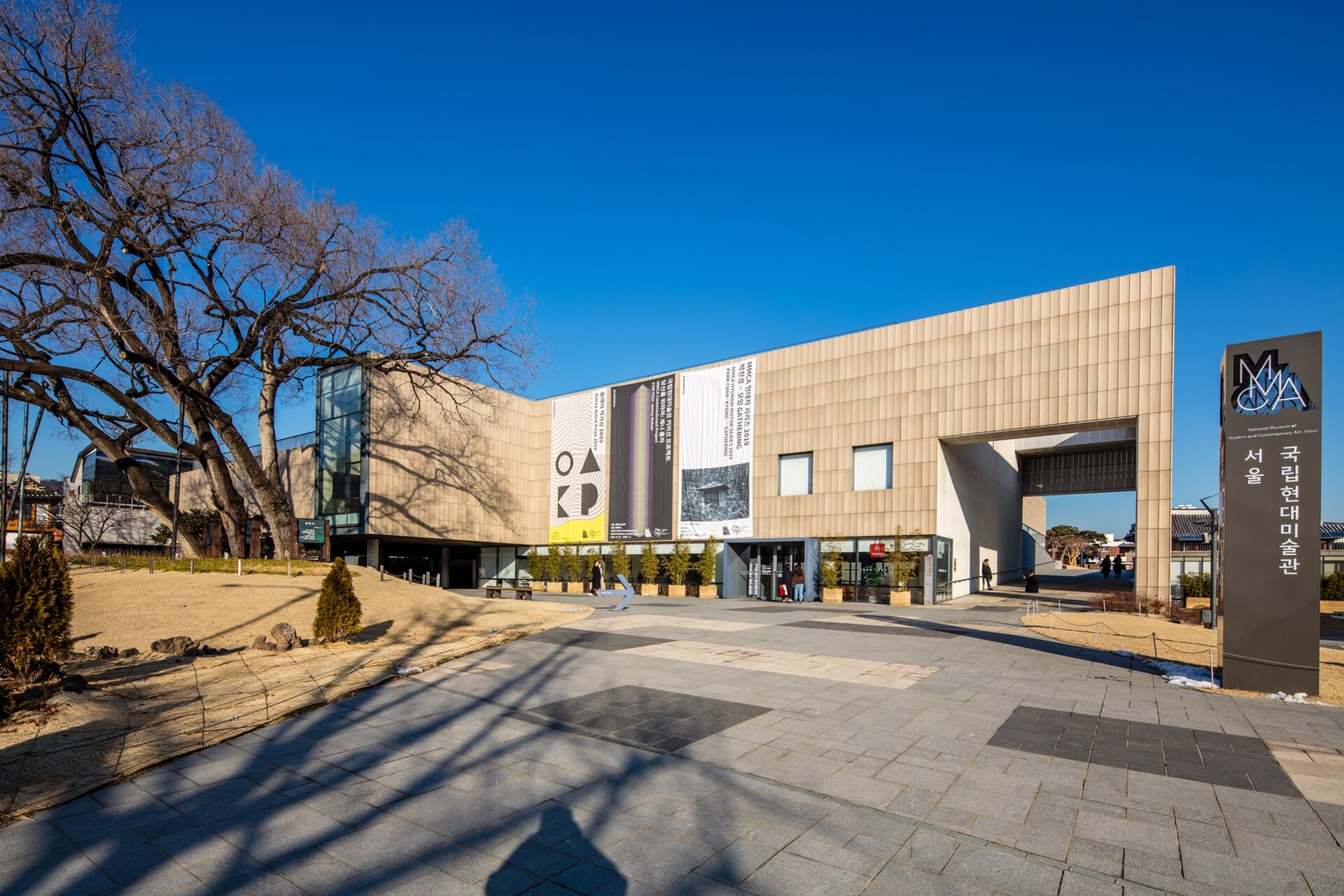
The National Museum of Modern and Contemporary Art, Seoul (MMCA Seoul) is a branch of South Korea's national museum system dedicated to contemporary art. Located in the Samcheong-dong area near Gyeongbokgung Palace, it occupies a renovated military compound. The Seoul branch was established to complement the existing Gwacheon branch, focusing on modern and contemporary Korean and international art within a central cultural district. The building integrates historical structures with contemporary architectural elements, creating dialogue between past and present. It serves as a major cultural institution for exhibitions, education, and research in contemporary visual arts.
Checked 2026-08-31 · Source
MMCA Seoul presents rotating exhibitions of modern and contemporary art across multiple gallery spaces. Collections and displays encompass Korean modern art history alongside international contemporary practices. The museum includes exhibition halls, a digital art space, education facilities, a library, and conservation studios. Site-specific installations frequently engage with the architectural character of the former military compound. The compound's original structures, including some preserved buildings, contribute to the visitor experience. Public programs, lectures, and workshops extend the museum's educational mission. A museum shop and café serve visitors within the complex.
Checked 2026-08-31 · Source
Visitors typically allocate two to four hours for a meaningful visit to MMCA Seoul, depending on exhibition scale and personal engagement. The museum's layout across multiple buildings and levels requires walking between spaces. Those with strong interest in contemporary art may spend additional time with individual works or attend scheduled programs. The surrounding Samcheong-dong neighborhood, with its traditional hanok houses, galleries, and cafés, encourages extended exploration. Combining the museum visit with nearby cultural sites such as Gyeongbokgung Palace or Bukchon Hanok Village commonly constitutes a full day in the area.
Checked 2026-08-31 · Source
Monday, Tuesday, Thursday, Friday, and Sunday 10:00–18:00; Wednesday and Saturday 10:00–21:00. MMCA Seoul has no regular weekly closing day. It closes on January 1, Lunar New Year, and Chuseok. Visitors should consult the official website at https://mmca. go. kr/eng/visitingInfo/seoulInfo. do for current opening times before planning. Seoul's climate features cold, dry winters and hot, humid summers; spring and autumn offer more comfortable conditions for walking the outdoor areas between buildings and exploring the surrounding neighborhood. Rainy season occurs in July and August. Evening visits may be possible if extended hours are offered for special exhibitions or seasons.
Checked 2026-08-31 · Source
There is no single general-admission price: individual exhibition ticket prices vary. A combined ticket costs KRW 10,000 when at least three paid exhibitions are open, excluding multidisciplinary art. Admission is free Wednesday and Saturday from 18:00 to 21:00 and on Culture Day, the last Wednesday of each month. go. kr/eng/visitingInfo/seoulInfo. do before visiting. National museums in South Korea sometimes offer free admission to permanent collections with special exhibitions requiring separate tickets. Discounts may apply for students, seniors, or groups. Some national museum branches have implemented free admission policies for permanent exhibitions. Special exhibition pricing typically differs from general admission. Visitors should confirm whether advance reservation is required, particularly for popular exhibitions or during peak periods when capacity limits may apply.
Checked 2026-08-31 · Source
The address is 30 Samcheong-ro, Jongno-gu, Seoul. From Anguk Station Exit 1 on Line 3, the museum's accessible directions give a 13–20 minute walking or wheelchair route via Anguk-dong and Gyeongbokgung intersections. Gyeongbokgung Station Exit 4 on Line 3 is 16–25 minutes away by the documented walking or wheelchair route; Jonggak Station Exit 3-1 on Line 1 is 20–25 minutes away. Jongno 11 bus passengers can alight at Beopryonsa Temple and walk 184 metres, about three minutes, to the museum. This is the named approach for an independent visit. MMCA Seoul is situated in the Jongno-gu district, accessible via Seoul's extensive public transportation network. The nearest subway stations include Anguk Station (Line 3) and Gyeongbokgung Station (Line 3), each requiring walking through the Samcheong-dong or palace-area streets. Bus routes serve the broader palace district.
Checked 2026-08-31 · Source
MMCA states that every area of the museum is wheelchair accessible. A ramp to the right of the main entrance provides step-free entry; additional ramps connect toward the Education Building and behind the museum café. Elevators serve the B1 exhibition hall, B2 and B3 parking levels, Library, Digital Archive, and Education Building. Accessible toilets opposite the first-floor information desk have automatic doors, grab bars, and assistance-call buttons. Two manual wheelchairs and one powered wheelchair are available from the first-floor coatroom desk. Ten accessible parking spaces are on B2 and five are on B3. The access description applies to the documented visitor route. The museum complex incorporates preserved historical buildings alongside modern construction; visitors should mind uneven surfaces, steps between levels, and weather-exposed outdoor connecting paths. The Samcheong-dong area attracts substantial tourist foot traffic, particularly near palace gates and traditional village boundaries.
Checked 2026-08-31 · Source
Many museums permit non-flash photography in permanent collection areas while prohibiting it in special exhibitions or loaned works. Visitors should observe posted signage and staff instructions regarding image capture. Tripods, selfie sticks, and professional equipment typically require special permission. Video recording may face additional restrictions. Commercial or promotional photography usually demands advance authorization. Visitors respecting artwork and fellow patrons by refraining from flash use and maintaining appropriate distances supports continued photography allowances. When uncertain, asking gallery attendants prevents policy violations.
Checked 2026-08-31 · Source
Admission is free during the Wednesday and Saturday evening sessions from 18:00 to 21:00 and throughout Culture Day, the last Wednesday of each month.
Visitors under 24 or over 65 and undergraduate students receive free admission when they present identification or supporting documents.
Yes. The first-floor coatroom desk has two manual wheelchairs and one powered wheelchair available for rental.
Yes. Five strollers are available from the first-floor coatroom, and the Baby Care Room has seating, nursing space, diaper-changing stations, and a microwave.
Yes. Korean and English audio guides are available through the MMCA website, the MMCA Exhibition Guide app, and QR codes at exhibition entrances.
The B2 and B3 garages have 384 spaces and operate from 08:00 to 23:00. The first hour costs KRW 4,200, each additional ten minutes costs KRW 700, and the daily maximum is KRW 30,000.
Loading the interactive map…
The interactive map could not be loaded.

Last updated:
Source: OpenStreetMap contributors ·