_(crop).jpg)


1 min walk · New Belgrade
Spomenik Borisu Kidriču u Beogradu
- High
- Historic monument
Language · 1 published
Museum · Градска општина Нови Београд, Belgrade
Музеј савремене уметности
| Monday | 10:00 – 18:00 |
|---|---|
| Tuesday | Closed |
| Wednesday | 10:00 – 18:00 |
| Thursday | 10:00 – 18:00 |
| Friday | 10:00 – 18:00 |
| Saturday | 10:00 – 18:00 |
| Sunday | 10:00 – 18:00 |
Parsed from OpenStreetMap opening hours on 2026-08-25.
Read from the OpenStreetMap access tags; anything not listed has no tag recorded.
Set the group type to family in the planner and the day window contracts to about three quarters of a solo day.
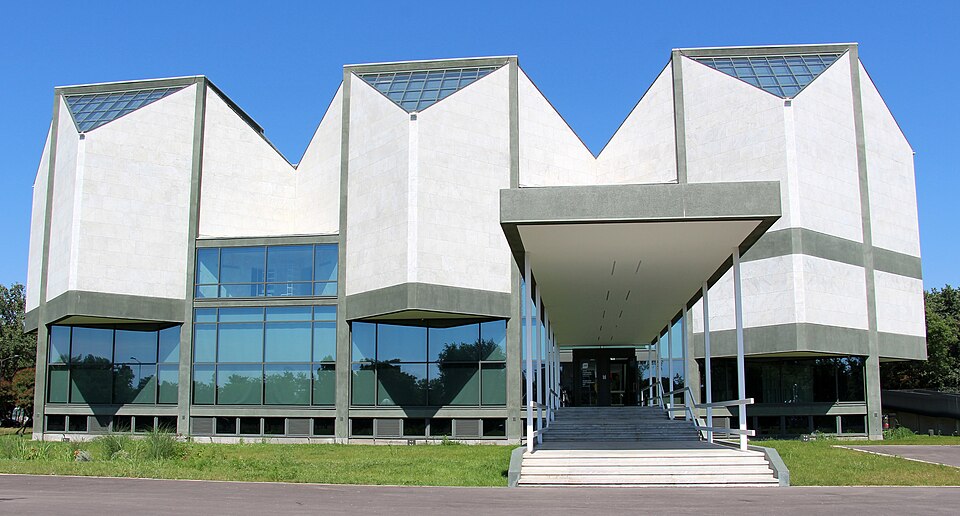
The Museum of Contemporary Art is Belgrade's dedicated institution for 20th- and 21st-century Yugoslav and Serbian art, standing on the tip of Ušće park in New Belgrade, at the point where the Sava river meets the Danube. It opened in 1958 under the name Modern Gallery and moved into its current building in 1965, making it one of the earliest museums of its kind anywhere.
The building itself is the subject as much as the collection inside it. Architects Ivan Antić and Ivanka Raspopović designed a structure of stacked, angled glass and marble cubes that critics nicknamed the "crystal at the confluence" for the way it catches river light from two sides. The design won the two architects Belgrade's October Prize on the day it opened in 1965. Because it sits across the water from the old town, on the New Belgrade bank rather than among the fortress, Knez Mihailova and the other central-Belgrade sights, it reads as its own destination rather than a stop folded into a walking route through the centre.
Checked 2026-08-23 · Source
The museum holds more than 35,000 works in total, with roughly 8,000 paintings and sculptures drawn on for exhibition since the 2017 reopening. The core of the collection is Yugoslav and Serbian art from the early 20th century onward — painting, sculpture, drawing and photography that track the region's modernist and postwar movements through to contemporary practice.
Beyond the domestic holdings, the museum keeps a foreign art collection of 323 works, mostly graphic prints and drawings, alongside a sculpture collection of 752 pieces spanning both Yugoslav and international artists. The permanent display is arranged across the building's several split levels, so a visit moves up and down short flights of stairs between rooms rather than along one continuous floor, with the galleries changing configuration periodically as different parts of the collection rotate into view.
Checked 2026-08-23 · Source
One and a half to two hours covers the permanent collection at a reading pace, more if a temporary exhibition is running alongside it. The building is compact rather than sprawling, but its split levels mean the visit does not move in one direction, so it rewards backtracking to a room passed too quickly the first time.
The riverside park around the museum, part of the same renovation that reworked the building, is worth folding into the same trip on a clear day — the walk along the confluence gives the best view of the building's angled glass from outside, which is not something the interior alone conveys.
Checked 2026-08-23
Weekday mornings are the quietest time to see the galleries, before any tour groups arrive. The current building reopened on 20 October 2017 after a ten-year closure for renovation — a gap that ran from 2007 to 2017 — so every part of the structure now on show, from the darker-tinted glass dome to the surrounding park, is recent work rather than original 1965 fabric left to wear.
The museum recorded 98,826 visitors in the roughly nine months between its October 2017 reopening and July 2018, a figure that reflects strong local curiosity after a decade with the building closed; a new visitor arriving today is unlikely to find it as busy as those first reopening months.
Checked 2026-08-23 · Source
Current ticket rates are not published on the sources this page uses and are not reproduced here. The museum is a public institution, so a standard admission and reduced-rate structure for students, children or seniors is the norm for Belgrade's major museums, but the specific figures should be checked at the museum itself or its official channels rather than assumed.
Checked 2026-08-23
The museum sits in Ušće park in New Belgrade, on the west bank where the Sava joins the Danube, across the river from the old town and Kalemegdan fortress. Belgrade has no metro, so the practical route from the centre is by tram or bus across the Brankov most or the Branko's Bridge crossing into New Belgrade, followed by a short walk into the park.
Because the museum is separated from Republic Square and Knez Mihailova by the river, it is not a stop to fold casually into an old-town walking circuit — it is worth planning as a half-day trip on its own, ideally combined with a walk through Ušće park itself.
Checked 2026-08-23
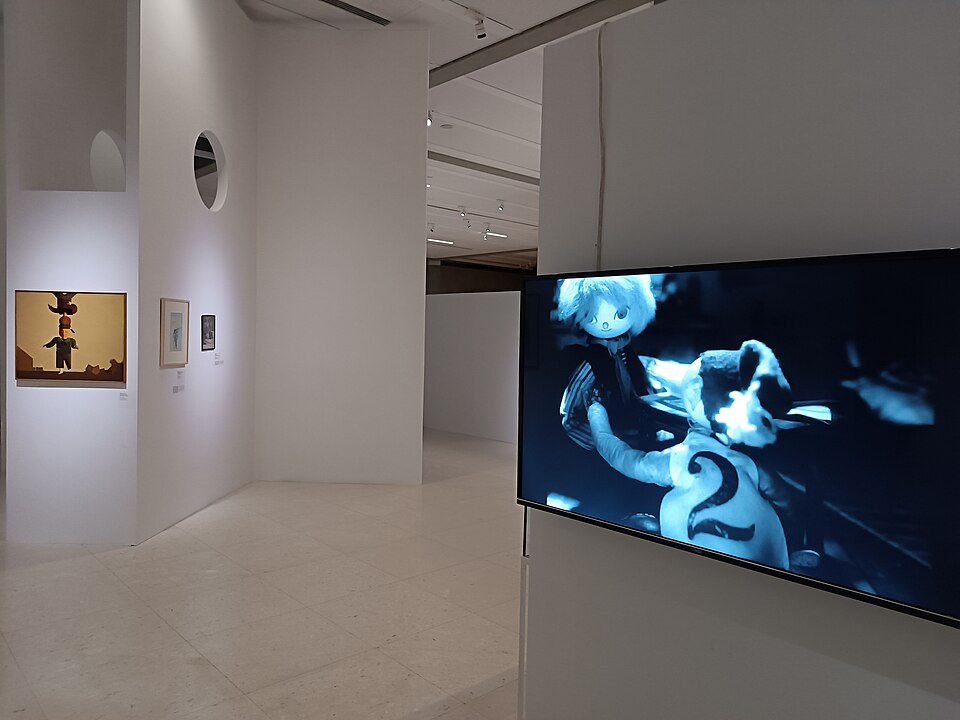
The split-level layout means signage matters more here than in a single-floor museum; a visitor who skips the stairs at the wrong point can miss a whole gallery without realising it. Large bags are typically required to go into a cloakroom or locker before entering the exhibition floors, a standard practice for museums handling fragile contemporary works, so travelling light avoids a queue at the entrance.
Temporary exhibitions sometimes carry their own restrictions on photography or filming that differ from the permanent collection's rules, so checking the gallery-entrance signage on the day, rather than assuming the same policy applies throughout the building, avoids a confrontation with staff partway through a room.
Checked 2026-08-23
Photography rules vary by gallery inside a museum built around loaned and rotating contemporary work, so checking the posted signage at each room's entrance is the reliable approach rather than assuming a single museum-wide policy. Flash is typically restricted regardless of the specific room, since it can damage light-sensitive works on paper and canvas.
The building's exterior, especially the angled glass facade seen from the park at the river's edge, photographs well in the low light of early morning or late afternoon, and unlike the interior galleries carries no restriction at all since it is a public park.
Checked 2026-08-23
It opened in 1958 as the Modern Gallery and moved into its current building at Ušće in 1965. The building closed for renovation from 2007 and reopened on 20 October 2017.
Architects Ivan Antić and Ivanka Raspopović, who received Belgrade's October Prize for the design on its opening day in 1965.
More than 35,000 works in total, including a foreign art collection of 323 works and a sculpture collection of 752 pieces; around 8,000 paintings and sculptures have been drawn on for display since the 2017 reopening.
In Ušće park in New Belgrade, at the confluence of the Sava and Danube rivers, on the opposite bank from Belgrade's old town.
Not casually — it sits across the river in New Belgrade, reached by tram or bus since Belgrade has no metro, so it is better planned as its own half-day trip than folded into a Knez Mihailova walk.
Ten years, from 2007 to 2017. It reopened on 20 October 2017, exactly 52 years after the building's original 1965 opening.
Loading the interactive map…
The interactive map could not be loaded.
Last updated:
Source: OpenStreetMap contributors, Wikidata ·